
Versico Roofing Systems in Missoula, MT
Versico Roofing Systems
The attachment method is the first decision on a single-ply roof, and in Missoula, MT it answers to two numbers at once: a 102 mph basic design wind speed and a 40 psf ground snow load. Versico sells single-ply roofing in categories that include TPO, EPDM and PVC, with insulation and accessories alongside. Roofs of those types are what we install and repair. The work begins with how the sheet is held to the building, because uplift at the edges and weight under drifted snow are the two forces that find a weak attachment first.
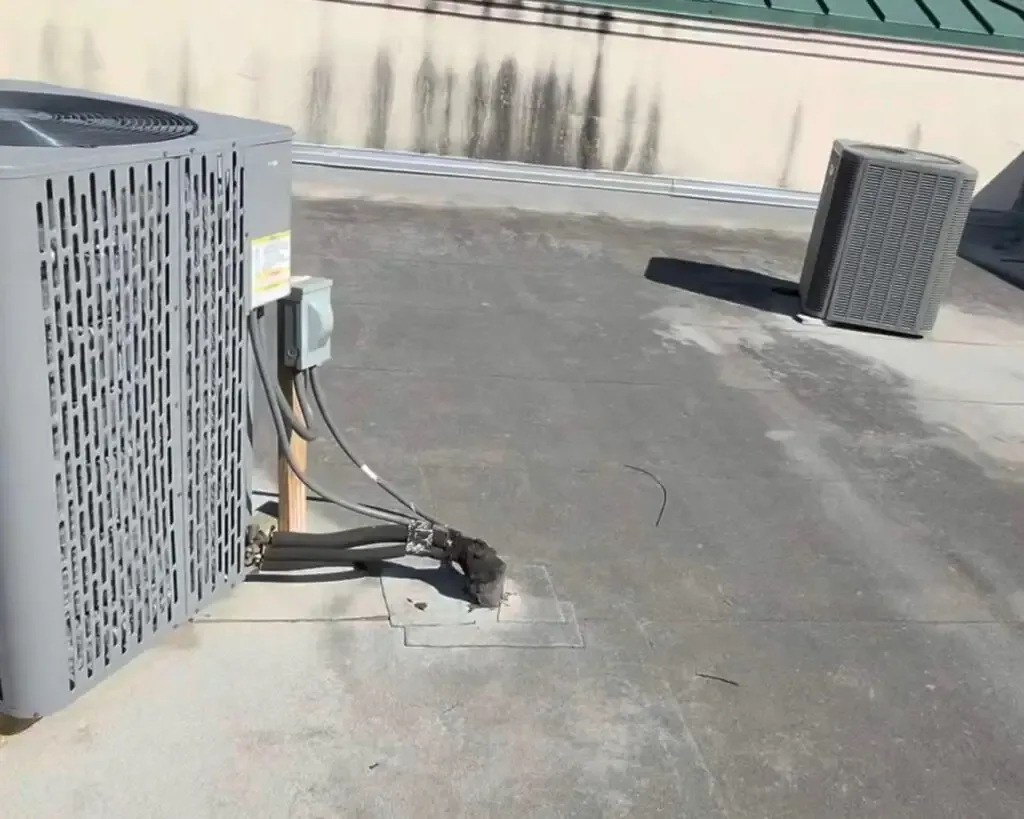
Choose Attachment by the Forces on the Roof
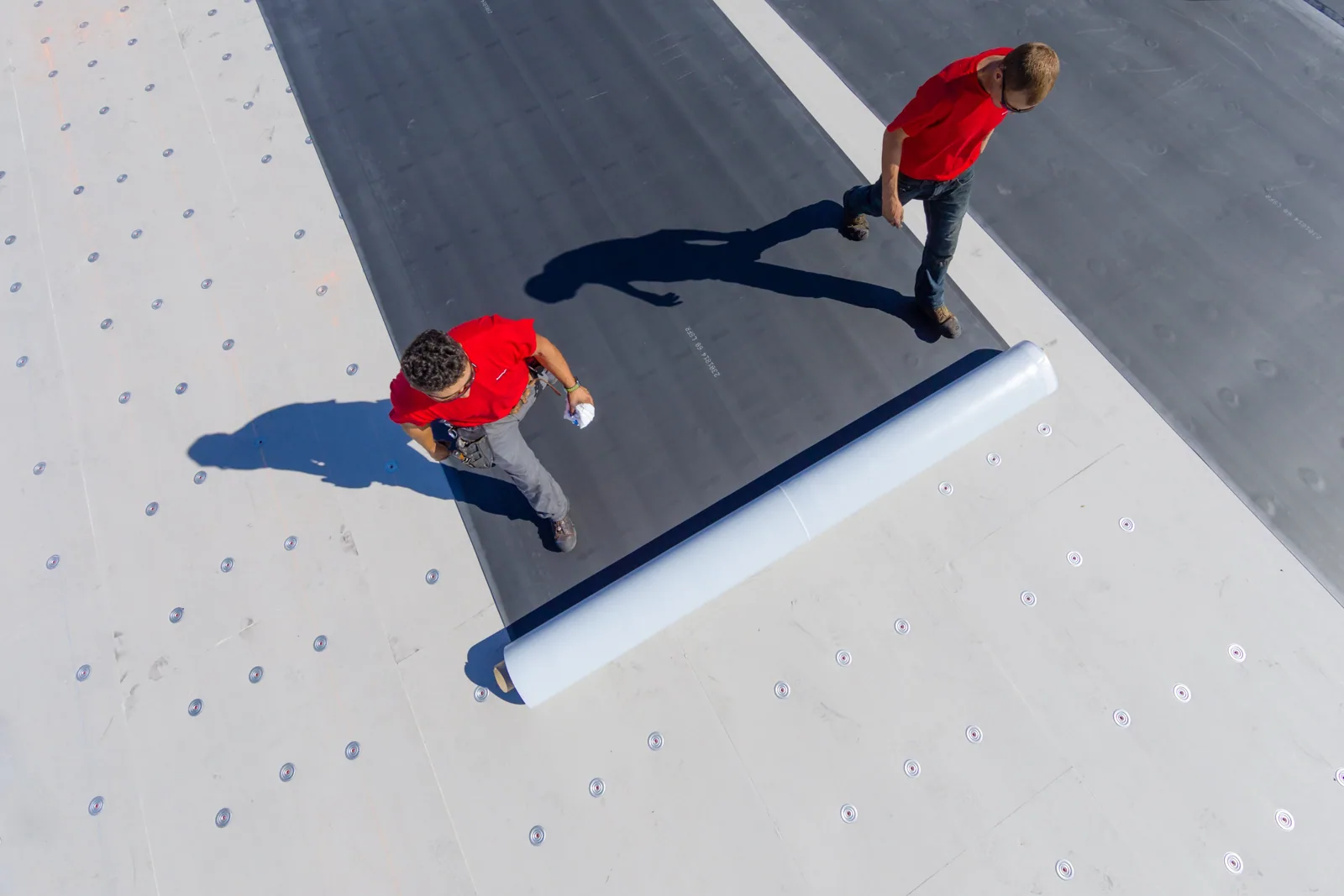
A fully adhered sheet is bonded to the substrate across its area. It resists uplift without penetrating the deck and gives a smooth surface, but it needs clean, dry, warm conditions to cure. A mechanically attached sheet is held by fasteners and plates at set spacing. It installs faster and tolerates cooler weather, but the fasteners and the plates must be placed to the wind design. A ballasted sheet lies under stone, which adds load that framing must carry with snow.
We read the existing attachment by core and by pull checks where we can, and we mark the perimeter and corner zones on the roof plan. Those zones take the highest uplift, and a missed fastener there shows up in the first major wind event.
Snow adds the second force. Roof snow loads come from the state ground load of 40 psf under ASCE 7-16, and drifts pile against parapets and rooftop equipment. Ballast and added insulation both add dead load on top of that. We flag the deck type, any visible deflection and the drift areas for the owner's engineer, and we never treat added weight as free. The 2011 snow collapse at the former Bonner mill is the reason load paths get checked before a heavier assembly is chosen.
Sequence the Install Around Cure and Dry-In
Adhesive needs time and temperature. If the sheet goes down in a cold afternoon and a thaw cycle arrives overnight, the bond may not set. So we schedule adhered sections for the warm part of the day and the warm months, and we keep mechanically attached sections for shoulder days.
The dry-in sequence matters as much. Each day closes with the tie-ins sealed, because an open edge in a storm is worse than the original leak. Crane, hoist and laydown yard are set so deliveries stay clear of tenant access. The occupied building reroofing plan lists the zones, the quiet hours and the dry-in line for each day.
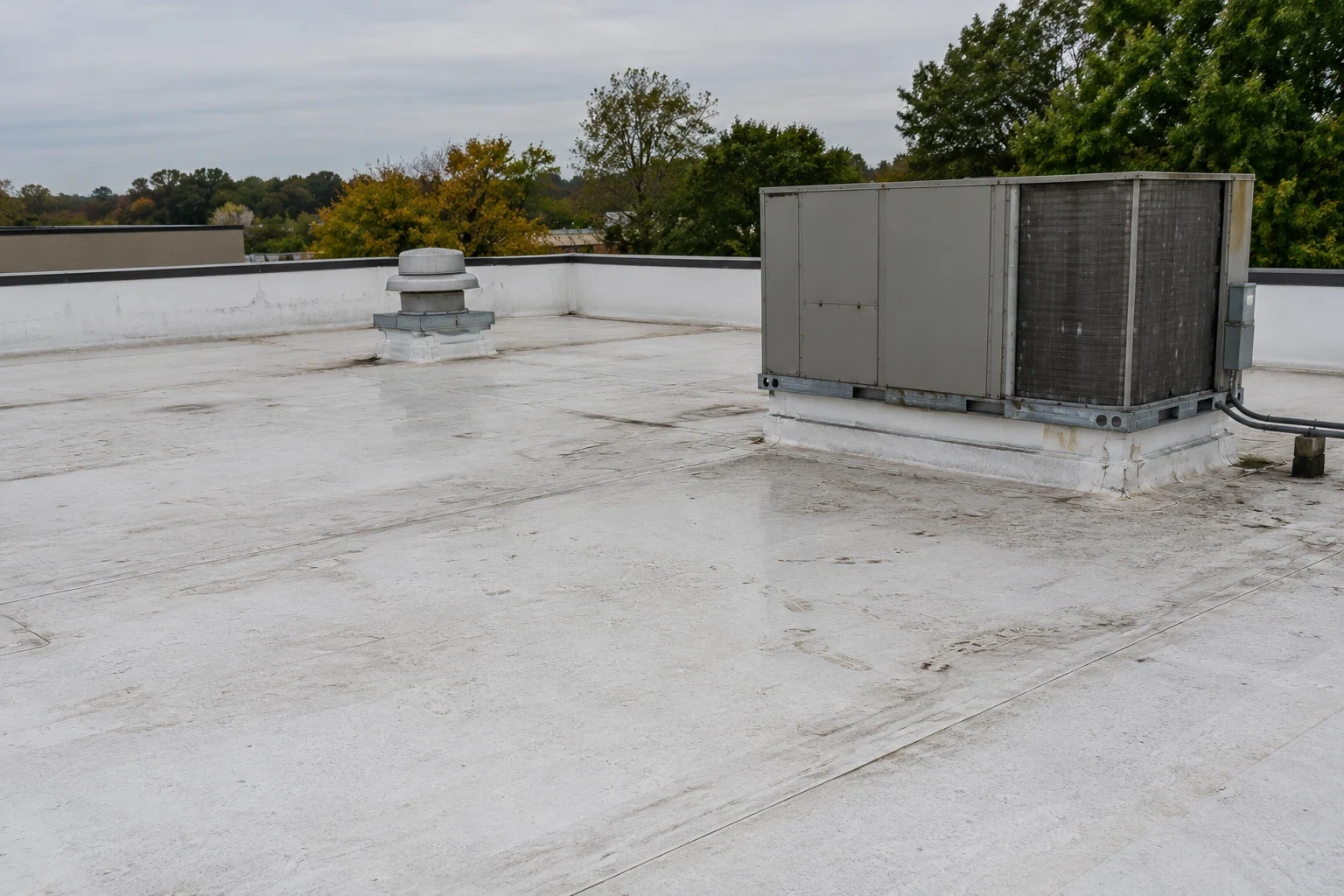
Handle Wide Roofs and Long Seams
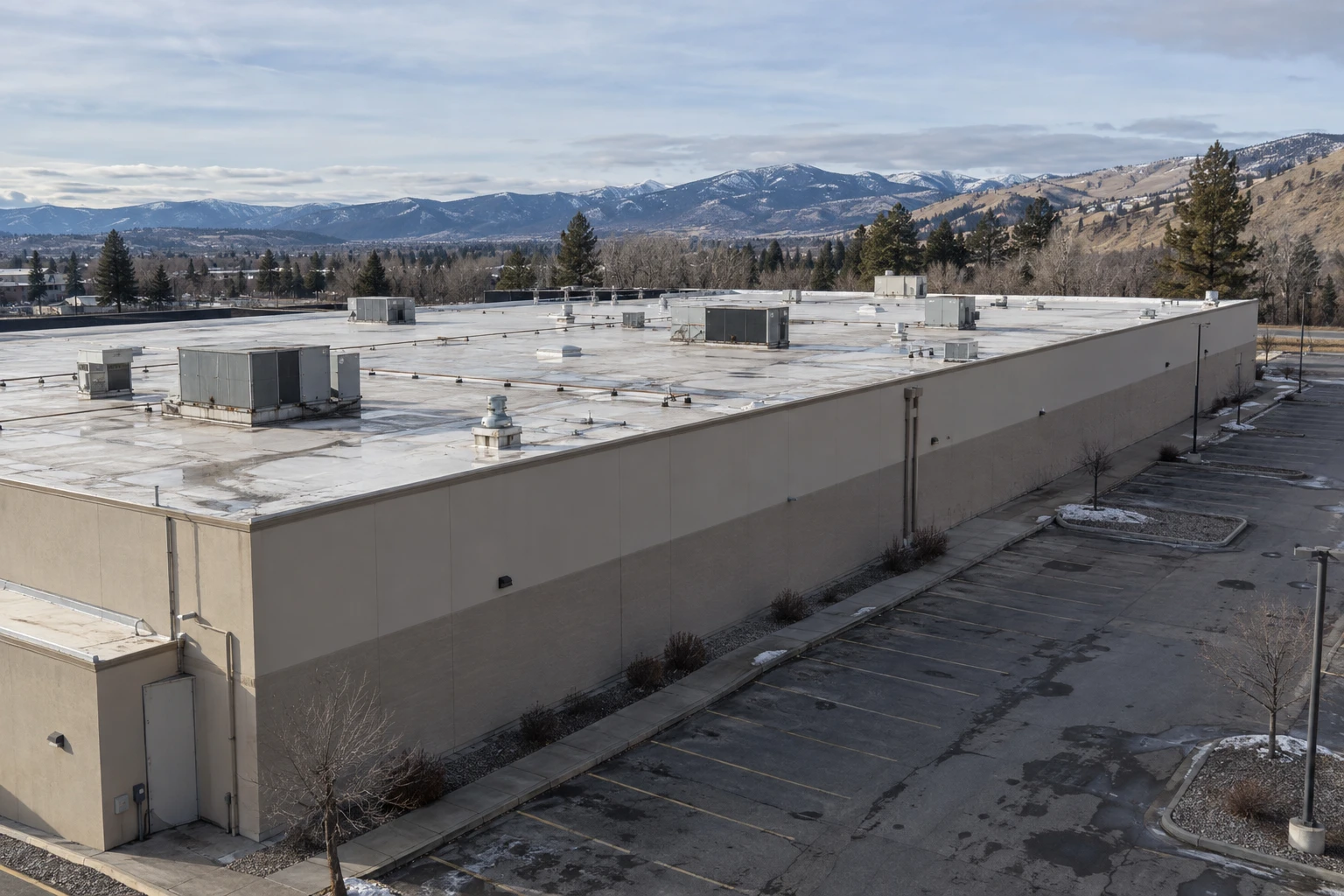
Industrial and big-box roofs have long runs and few penetrations. South of the airfield, the county plans about 400 acres for light manufacturing, and the development park there has been described as largely filled. A building there may have a wide, plain roof that suits a wide sheet. Fewer seams mean fewer weak points, but the seams that exist are long, and we probe each one.
Wye, immediately south of I-90, and Frenchtown, at Exit 89, sit on the interstate corridor, and any wide-roof building in either is read the same way: core first, then the seams. The roof type is something the walk and core tell us on each building.
Large retail roofs add their own wrinkle. A big-box roof beside North Reserve Street may carry many rooftop units, each with a curb and a service path. A curb flashing is a short seam in a long roof, and it takes the vibration of the unit above. We press every curb corner, photograph it and add walk pads on the service routes. A big-box retail roof may have many such details.
Check the Spring Seams After Every Thaw
Snow covers the ground about four months here, and roughly 45 days never get above freezing. Each thaw cycle moves water across the roof, and a lap that was marginal in October may be open in April. We probe seams after the final spring thaw and photograph any lift. On adhered sheets we also look for blisters, where trapped moisture has lifted the bond.
Hail adds its own check, and retail roofs along North Reserve Street, with their many tenants and rooftop units, show it clearly. A sheet over soft insulation bruises under hail, and the 2016 hailstorm over central and south Missoula is the local example. We mark each bruise on the plan and watch it. A seam failure repair begins with the probe, and a wind damage repair begins at the perimeter.
Record the System So Repairs Match It
A repair is only as good as its match to the system. We record the sheet type, the thickness where known, the attachment, the insulation and the cover board in the roof file. When a leak appears, the repair uses a compatible patch, primer and sealant. The roof warranty management record holds the terms and each repair with its date and photographs.
Owners weighing makers can set Carlisle SynTec and GAF beside this one, since they sell in overlapping categories; the assembly and its record matter more than the logo. Two roofs from different makers with the same assembly tend to fail in the same places, and two roofs from one maker with different assemblies do not.
At closeout, the punch list lists open items, final photographs, the drain tally and the updated register entry. The roof then moves to a visit schedule: one before the first freeze, one after the final thaw and one after any hail or high-wind event. The owner holds the file, and the file carries the system data forward to the next repair, the next sale or the next replacement decision. Fastener pull-out tests on the existing deck are logged by bay before an attachment pattern is chosen, because a weak bay changes the pattern.
Related Roofing Pages
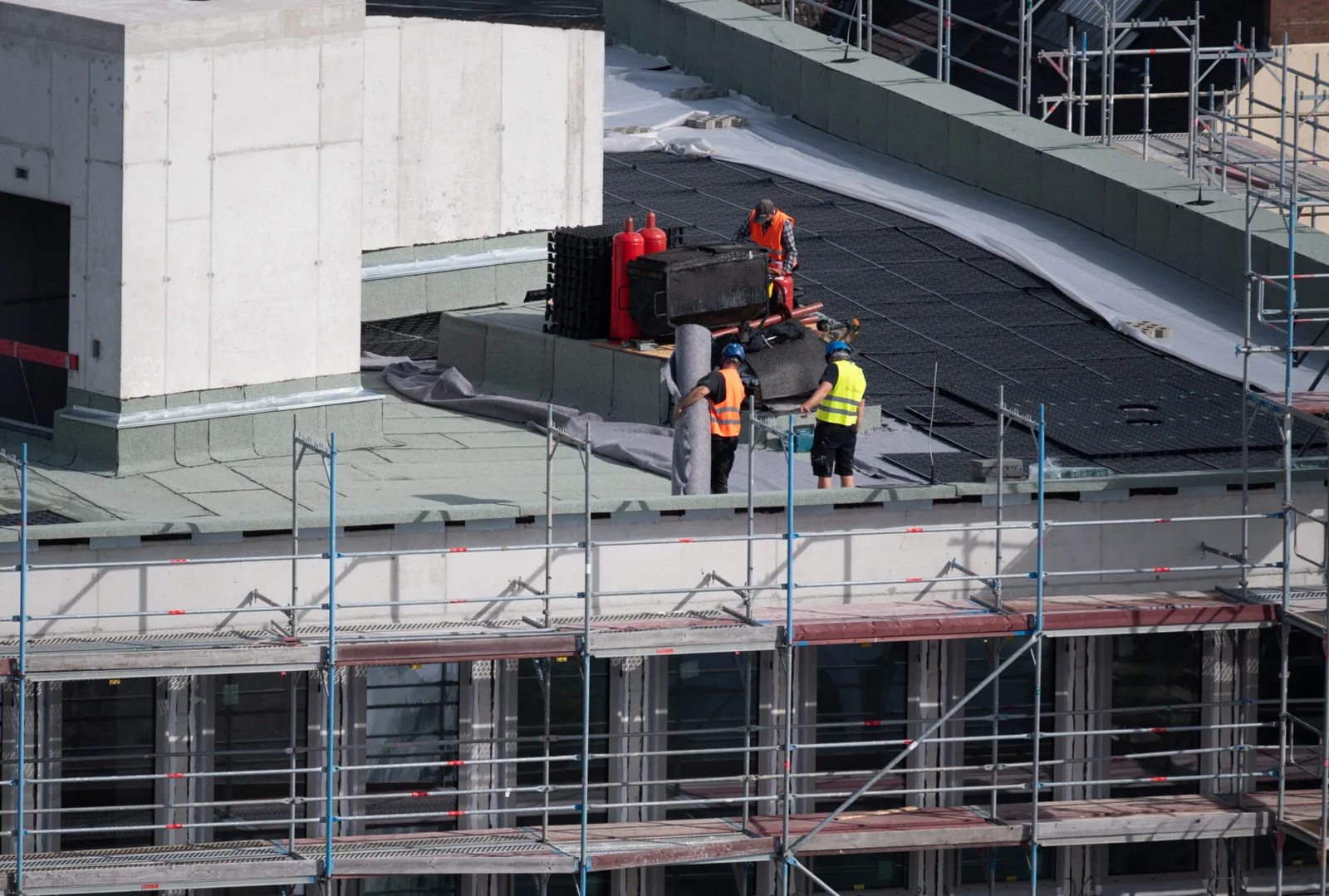
Send the Roof Plan and the Wind Design Data
Send the roof plan, any wind or structural data and the occupancy schedule, and we will map the attachment zones, the staging area and the dry-in sequence before any material is ordered.
Call 555-555-5555 or email [email protected].
Questions About Versico Roofing Systems
Is fully adhered or mechanically attached better for Missoula?
Neither wins everywhere. Adhered sheets resist uplift without penetrations but need warm, dry weather to cure. Mechanically attached sheets install faster in cool weather but rely on fastener layout. The wind design, the deck and the schedule pick the winner, and we price both when the owner is choosing.
What does a blister on an adhered sheet mean?
A blister is trapped air or moisture under the sheet where the bond has lifted. Small, stable ones can be watched. Growing or cracked ones need repair, and a field of them points to moisture in the layers below. We cut a core to check and photograph the result.
Can single-ply be installed late in the season?
Mechanically attached sections tolerate cooler days, and welds can be made on dry, frost-free surfaces. Adhesive-based work needs warmth. We watch the overnight low as well as the afternoon high, and we stop when conditions fail. Late-season work is planned with extra dry-in capacity.
How do you check the perimeter after a windstorm?
We walk the edges and corners first, pressing the edge metal, looking for lifted sheet, loose fasteners and gaps at the coping. We photograph each finding and mark it on the plan. Small edge repairs made quickly prevent the sheet from tearing back from the perimeter.
Do you service roofs installed by other crews?
Yes. A core identifies the assembly, the warranty terms get read and repairs use compatible materials. When the terms call for notice before a repair, the owner gets a draft and the reply goes in the file.