
Wind Damage Roof Repair in Missoula, MT
Wind Damage Roof Repair
The first repair after a Missoula, MT windstorm is the edge, and the last is the field. If a crew patches the field first, the next gust lifts the loose edge and tears the patch out with it. Wind design here is 102 mph for Risk Category II, and the roof edge is where that load is highest. The sequence we follow is protect, secure the perimeter, repair the damaged membrane and flashing, then document. Each step gets a time and a photograph, so the repair can be explained to an owner and an adjuster in the same terms.
The order goes on the roof plan before material is ordered, along with the days of the crane pick and the dry-in.
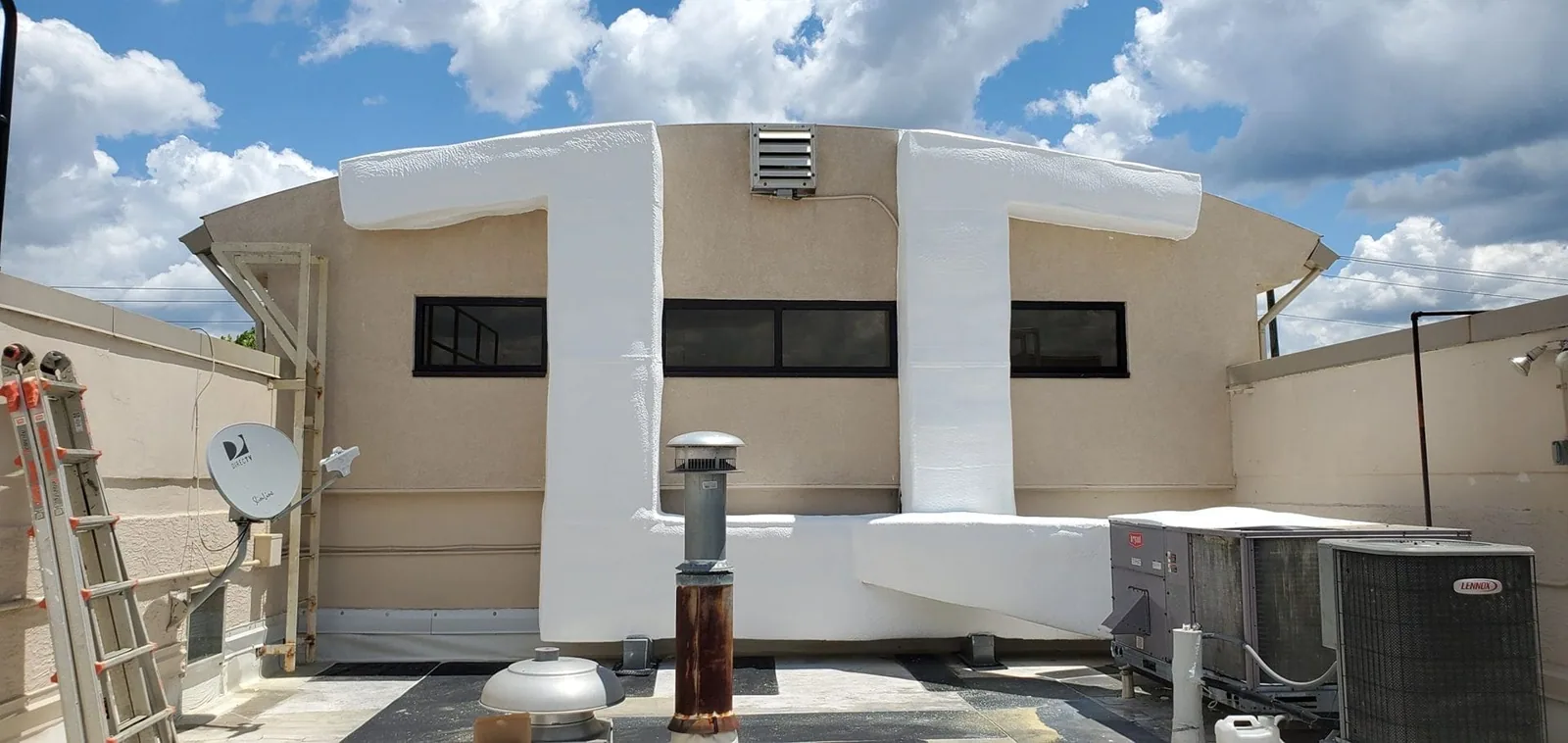
Secure the perimeter first
Wind finds the corners and the edges, where uplift is highest. The line that holds the roof to the building is edge metal, fasteners and the first few feet of membrane. When that line opens, each gust acts like a lever on the next row.
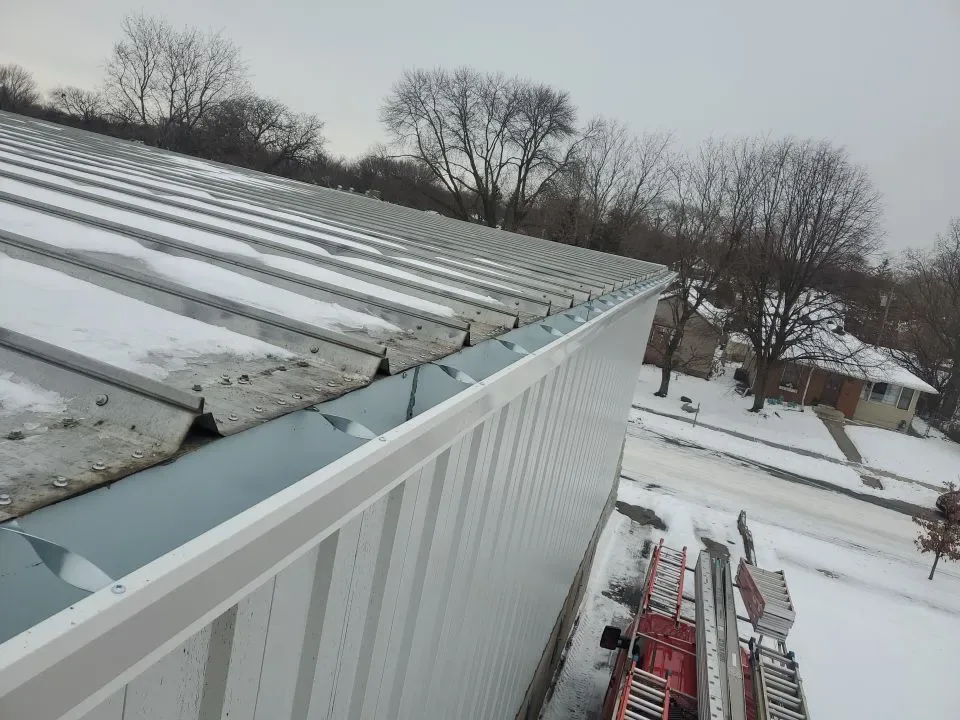
We check the edge metal first: loose or bent coping, missing fasteners, open joints in the cap and gaps between metal and membrane. Edge metal and coping work is often the cheapest part of a wind repair and the part that prevents a second event. If the membrane has peeled back, we measure how far the pull-back reaches. The repair extends past the visible damage into the zone that has lost its bond.
Temperature adds to the problem. Freeze-thaw cycles and summer heat add to it. Fasteners that cycle through that range work loose before any storm arrives.
A caution on edge metal: new coping fastened into old, soft substrate holds no better than the old coping did. We test the substrate with a pull check before we reattach anything, and we replace blocking where it has rotted. That step adds a day, and it keeps the same edge from lifting at the next gust.
Clear debris before it punctures anything else
Wind damage is not only uplift. Loose gravel, sheet metal, plywood and light rooftop covers become projectiles and strike the membrane far from where they started. A scuffed surface is a note. A puncture is a leak path. We walk the whole roof after the storm, mark every strike on the plan and separate patches from larger repairs.
Strikes are handled the same way as ordinary membrane puncture repair, except that wind produces several at once, so the scope is a count and not a single item. Each strike gets a number on the plan, a photograph and a repair method.
Debris also blocks drains. A drain sump packed with gravel and sheet metal turns the next thaw or storm into ponding. We clear the sumps in the same visit.
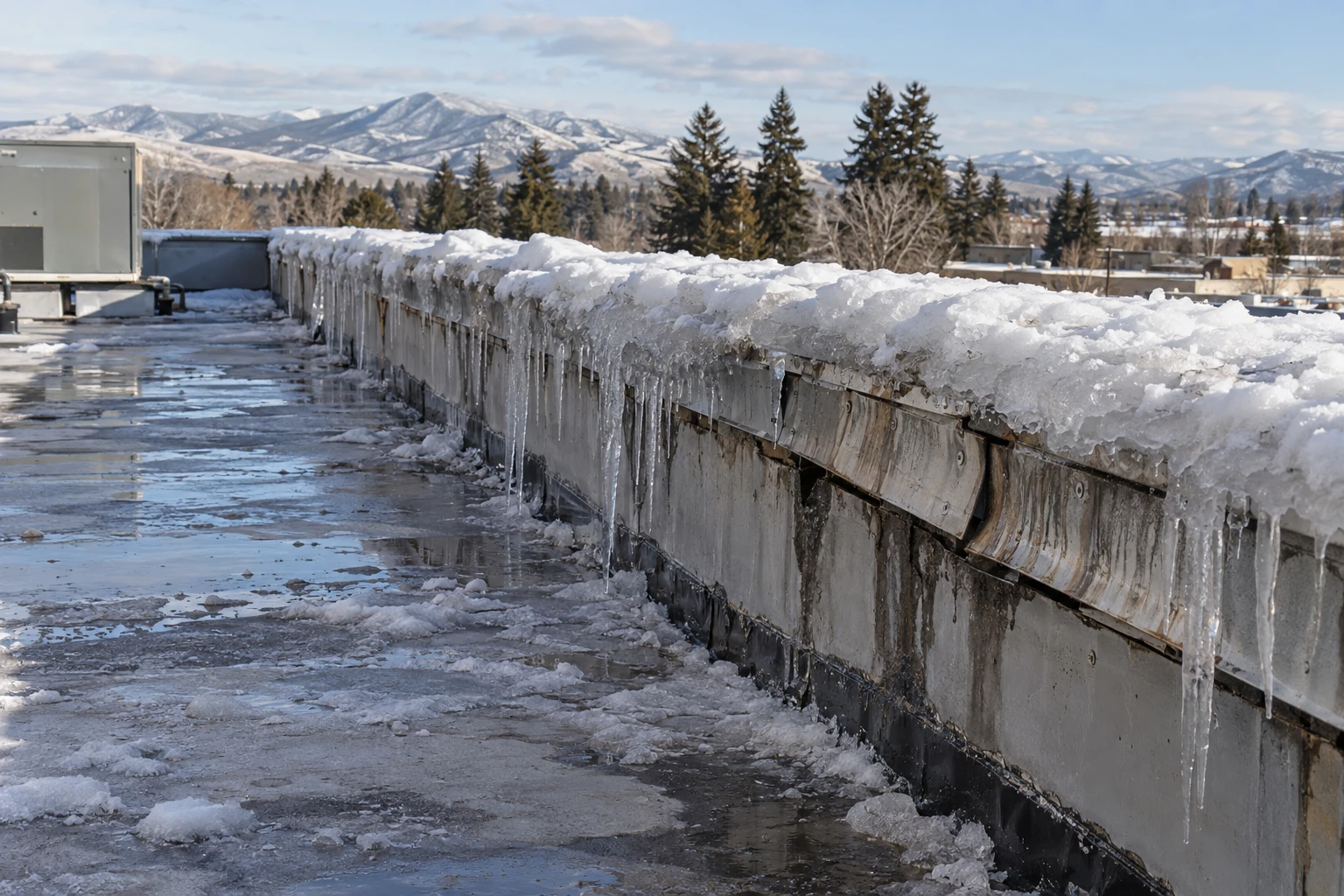
Plan for where the building sits
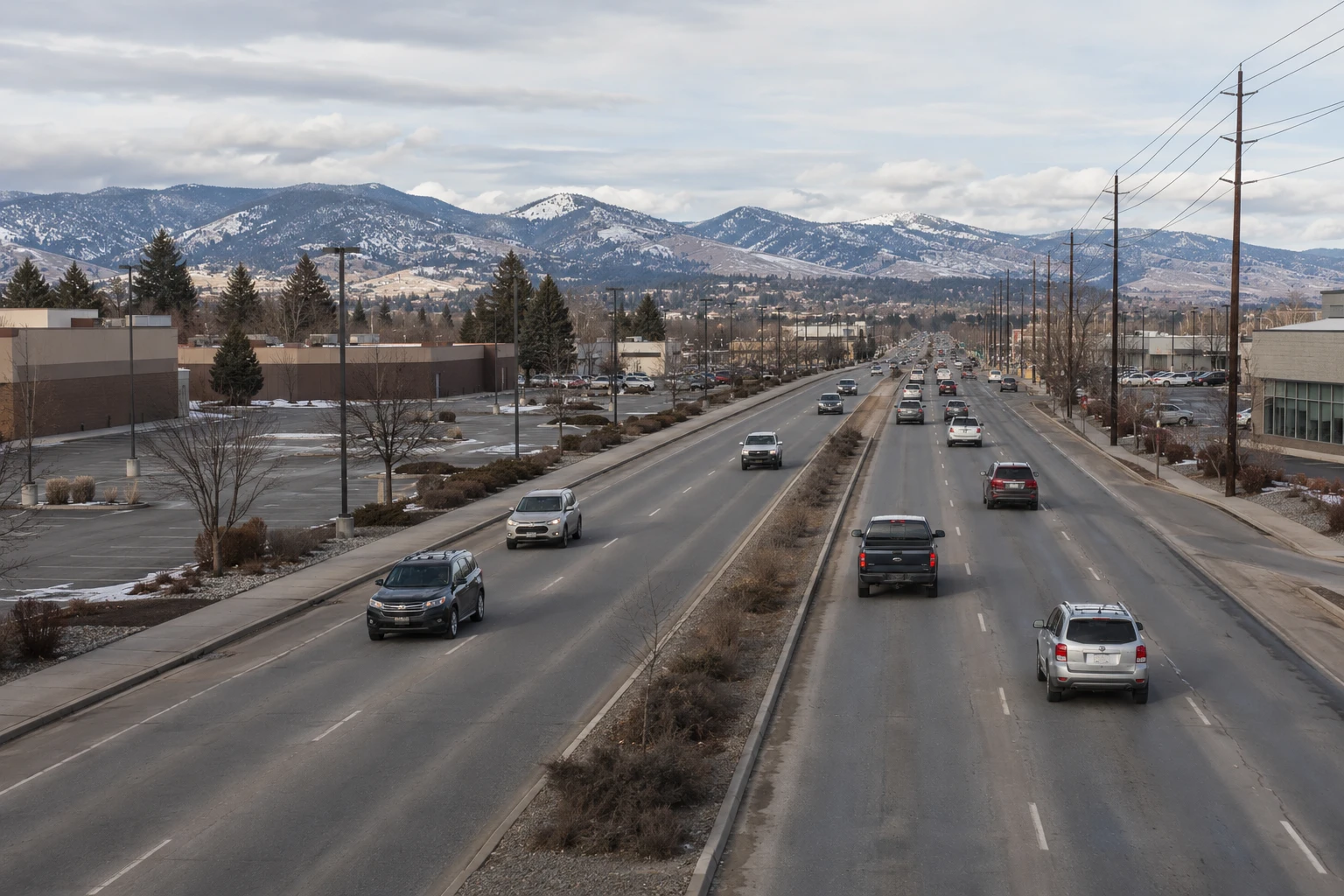
Exposure changes the repair. Retail along the North Reserve Street corridor sits on a wide, busy road with parking lots on every side, and a lifted edge there can throw debris into traffic. Buildings in the Missoula airport area, including private hangars west of the terminal, have large roof areas and wide doors, so wind can pressure the roof from below as well as from above.
Older masonry buildings downtown have tall parapets that take wind differently from a low-slope retail roof. For each building we note the exposure, the roof type and the attachment method, since a mechanically fastened system fails differently from a fully adhered one and a ballasted one differently again.
Fasteners that backed out, plates that worked loose and membrane torn at the fastener row each call for a different fix.
Distance changes the sequence. A building in Lolo, about 10 miles southwest where US 12 and US 93 meet, or in Wye, about 8 miles northwest and immediately south of I-90, needs a crew that arrives with the right fasteners, edge metal and sealant in one trip. We pack the truck from the survey list, not from memory, so a second trip does not cost another weather day.
Sequence the repair around the weather window
The repair window here runs from the thaw to the first hard freeze. Adhesives and sealants need steady temperatures to cure, so a cold morning can stop a seam repair that was ready at noon. We plan the permanent work for days when the forecast holds, and we use cold days for tasks that tolerate them: debris removal, drain clearing, edge fastening and flashing prep.
The crane pick comes first in a large repair. A single lift brings the membrane, edge metal and fasteners to the roof, and the staging area stays small so tenant parking and truck lanes stay open. Tear-off is phased so each opened section is closed the same day. A roof left half open in a storm is a bigger problem than the damage that started the job.
The last step is the punch list. We test drains, probe every new seam, check each fastener row and photograph the completed work against the opening photo set. Once the owner signs, the record joins the building file with the date of the next review. Seam failure repair follows the same close-out, since wind and heat both open seams.
Price temporary work as temporary
A tarp held down with sandbags through a second storm is a different purchase from a permanent repair, and the owner should see both. Our emergency roof repair crews answer at any hour. The first visit stops water, secures loose material and photographs the damage.
We note the expected life of each temporary measure. In a cold month, a tarp that holds in still air may fail in a thaw wind, so the plan includes a check after the next major event. The permanent repair is scheduled into the first weather window that allows adhesives to cure and the crane to run.
If the damage extends across a large area, the scope may call for partial replacement of the affected section with the rest left in service. A TPO roof with lifted seams near the damage gets a seam probe for several runs beyond the visible tear.
Document the loss for the insurer
A claim file holds the storm date, photos dated before cleanup, a roof plan with each location marked and a scope with quantities. We take photographs from several distances with a scale reference, and for large roofs we add drone imagery. Our claim documentation keeps temporary and permanent repairs on separate lines.
How a carrier rules is the carrier's call; the owner gets a record the carrier can evaluate and a scope that works whichever way the claim goes. If the carrier approves part of the repair, the unapproved items stay on the list with their prices.
Related Roofing Pages
Send the storm date and the roof plan
Send the date of the wind event, the roof plan and the photographs you have, and we will map the repair sequence, the crane pick and the staging area before any material is ordered.
Call 555-555-5555 or email [email protected].
Questions About Wind Damage Roof Repair
How soon after a gust should the roof be walked?
The same day, if access is safe. Debris moves and snow or rain can arrive within hours. A drone pass is a quick first look when the surface is wet or icy.
Will a patch hold through the next windstorm?
A patch on a secure edge usually does. A patch on an edge that is still loose will not, which is why the perimeter is secured before anything else.
Is a lifted edge a repair or a replacement item?
A repair when the bond loss is limited to a few feet. When the membrane has lost its bond across a wide area, partial replacement costs less than repeated patching.
What does a wind repair cost?
Perimeter length, membrane type, access and how much of the roof is damaged set the price. We write a numbered scope with a price per item so the owner can compare it to the claim estimate.
Should rooftop equipment be checked after a wind event?
Yes. Wind can shift units, loosen panels and break curb seals. We check each curb and support and note any that need resealing or a mechanical contractor's review.