
Commercial Roofing at Missoula Development Park and Mullan Road, MT
Missoula Development Park and Mullan Road
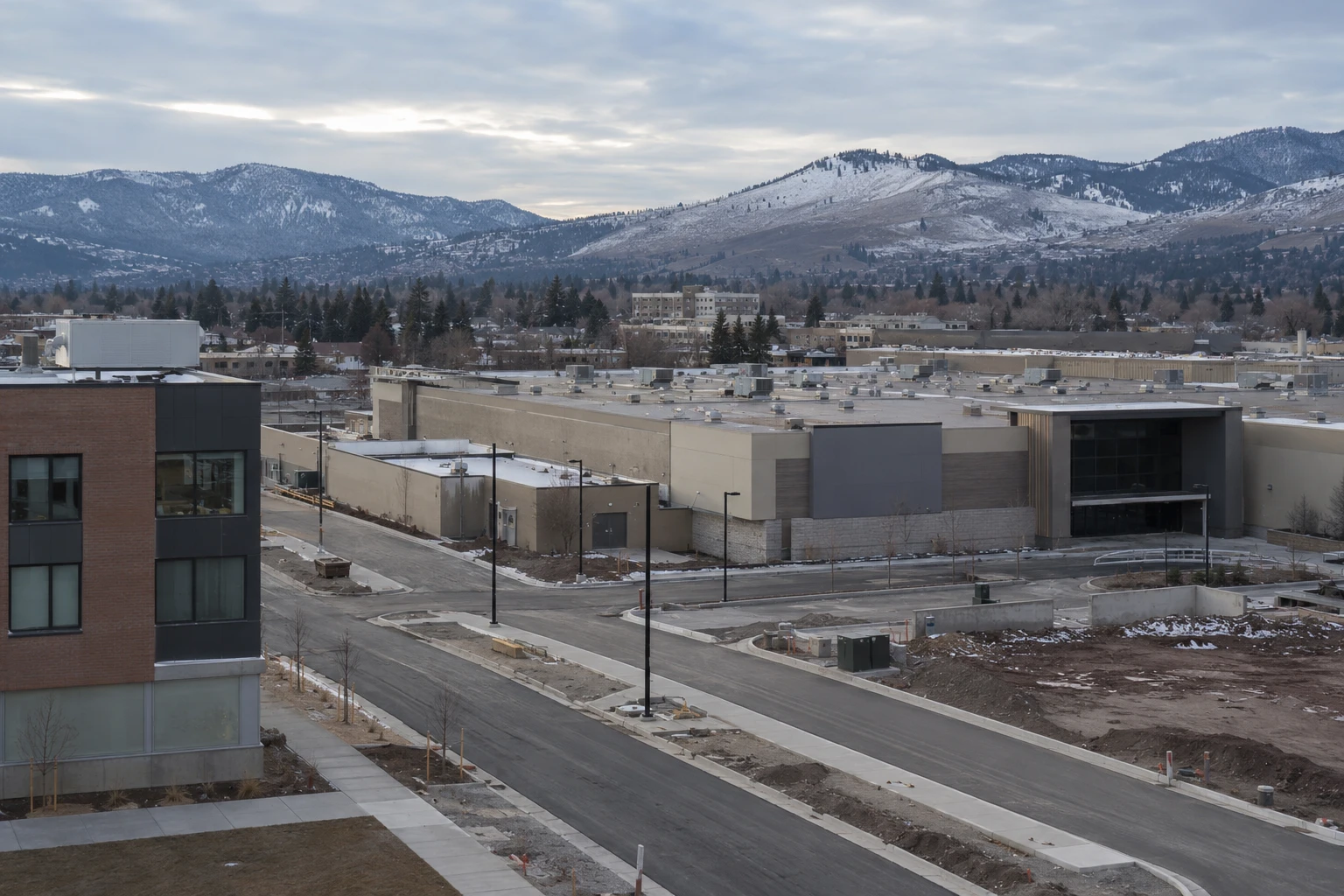
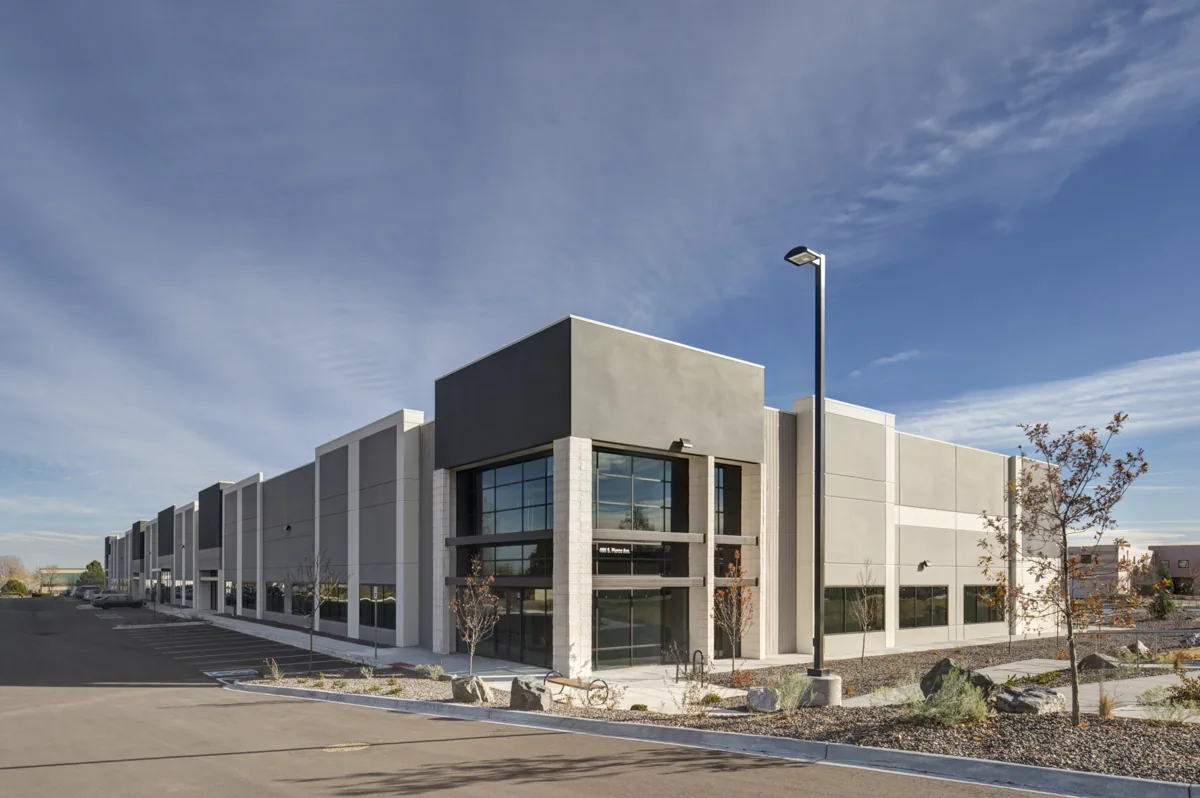
On a long industrial roof, the edge goes first and the field goes second. Wind finds a loose perimeter metal and works inward, and a building with a long roof line gives wind a long run to work with. The county plans about 400 acres south of the airfield for light manufacturing and industry, and the county development park along Mullan Road has been described as largely filled.
Our work in this industrial district of Missoula, MT covers repair, replacement, recover and maintenance. The work starts with a roof plan, a perimeter check and a phasing sheet that follows the owner's shifts, dock schedule and deliveries.
Secure the perimeter before the field
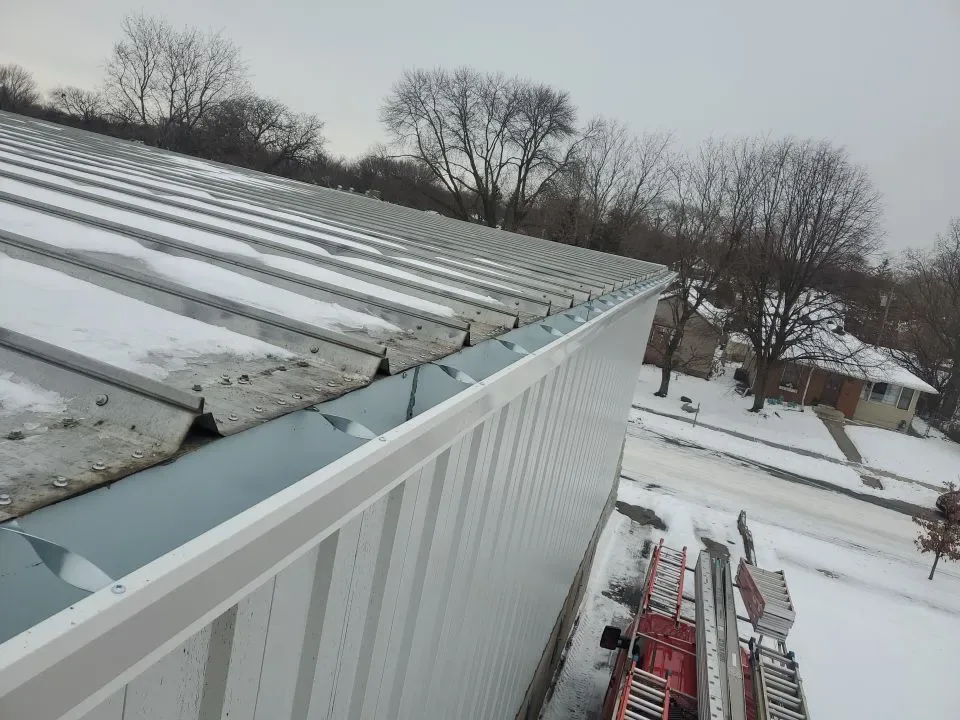
Wind design is 102 mph for Risk Category II, and an open industrial site gives gusts little to slow them. The first walk covers edge metal, coping, gutters and the last row of fasteners. We tug each length by hand, mark the loose ones and count missing fasteners. Our edge metal and coping work is often the cheapest repair on the roof and the one that prevents the biggest failure.
If wind has already lifted a corner, wind damage repair starts with a temporary seal. Then we look at how far the lift ran, because a peel that began at a corner can continue across the field under the sheet. The photos show how far it traveled and where the permanent repair must end.
Plan long spans for 40 psf and drifting
Roofs here are designed for 40 psf of ground snow, and an average winter drops about 39.5 inches that lie for months. A wide industrial roof holds a great deal of snow, and units, parapets and level changes stack drifts into a single heavy strip.
We map the drift zones on the plan. We check that drains and overflow scuppers serve the low areas where melt collects. Freezing holds all day on about 45 days a year, so a drain blocked in December may stay blocked until March. Frozen melt then backs up behind the sheet, and the seam that opens in a cold snap leaks in the first thaw. Clearing sumps before the first snow is the cheapest protection on the roof.
Phase around shifts, trucks and the crane pick
Industrial tenants do not stop for a roof. A manufacturer runs shifts, a distributor runs trucks, and a flex tenant may run a showroom and a warehouse under the same roof. We set the phasing so one bay is open at a time, torn off and dried in within a single dry-weather day, and we start with bays over low-risk areas.
Laydown space is easier here than in a dense district, but it is not unlimited. A yard on a lot shared with trucks needs fencing and a clear route. The crane pick and material hoist are placed so they do not block dock approaches or fire lanes. The staging area appears on the plan, and the owner signs off on it before material is ordered. For a flex industrial roof, the plan also divides the work between office and warehouse sections, since each has its own tenant rules.
Weather sets the last limit. If a front is coming, we do not open a bay we cannot close. The crew moves to drain clearing, curb work or edge metal, and the open area stays small. An open bay that cannot be closed by nightfall costs more than the delay of waiting a day.
Coordinate with the new road grid
The Mullan-area plan calls for about 20,000 feet of new collector roads linking George Elmer Drive and Mary Jane Boulevard to Mullan Road and West Broadway. Sewer service along Mullan Road and right-of-way acquisition are complete. The road network is meant to ease congestion on Mullan Road and North Reserve Street.
New roads mean new construction traffic, and truck routes to a roof job can change from one month to the next. We confirm access the week before a crane pick. When a road is closed or reduced, the pick moves, and the schedule shows the change. Owners with a building planned for the new grid can ask for the roof detail early. Our warehouse roof and manufacturing plant roof plans both begin with drainage and load path, which are easiest to set before the walls are up.
Choose a sheet or a metal panel for the span
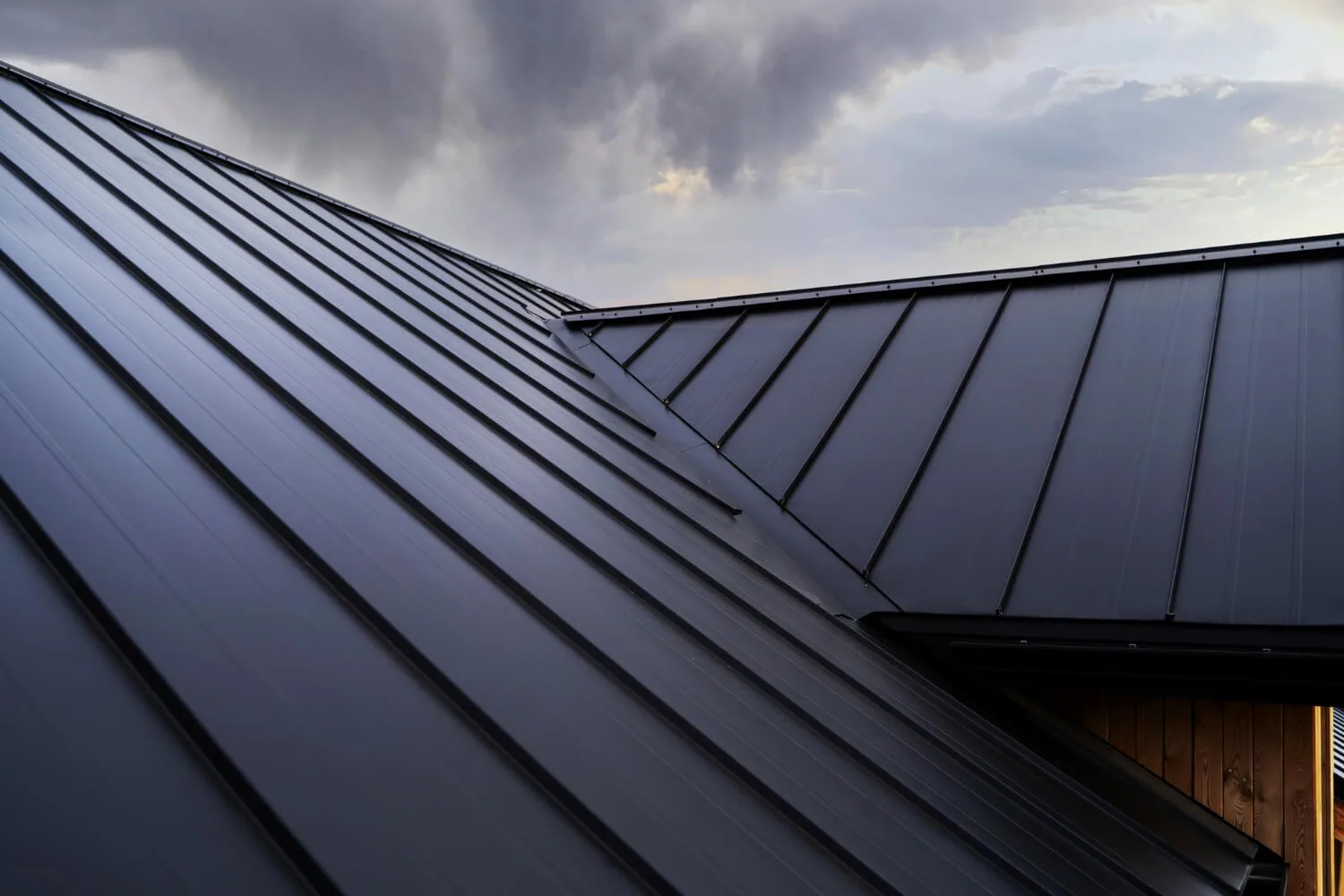
Large low-slope fields often use a welded single-ply sheet, and the weld quality decides how the roof ages. Steeper or longer-span buildings often carry metal. A metal retrofit can go over an aging low-slope roof if the structure carries the weight and the insulation is dry. A core cut and a structural check come before any price.
Late-summer days swing more than 30 F. Metal panels move with that swing, so fastener type and slotting matter. We check clips, sealants and laps at each visit, and we photograph the results. Snow guards protect equipment and walkways below a metal slope.
Check for hail bruises and blocked sumps after storms
Central and south Missoula had storm drains overwhelmed by hail and a 20-minute cloudburst in 2016, a reminder of what a burst like that can do to any large roof. Hail leaves bruises in single-ply sheets, dents in metal and bare spots on cap sheets, and a big field takes a long time to inspect from the ground.
After a storm we walk the roof, photograph marks with a scale for size and cut a core at the deepest ones. We clear sumps and test overflow routes. Those records separate storm damage from age, which matters if an insurer is involved. The punch list for repairs names what to fix now and what can wait for the next dry window.
Close out with warranty papers and a punch list
At the end of a job, the owner and the property manager walk the roof with us. Every open item gets a date. Photos of every detail, the drain map and the warranty terms go into the roof file. A warranty file built this way proves care when a claim comes later.
Owners who also hold property near the Missoula airport area, or on North Reserve Street, can keep every roof on one ledger. A yearly walk before the first snow and after the spring thaw keeps the record current, and it takes less time each year. Tenants who share a building each get a copy of the phasing sheet for their bay, with the dock doors and the hours marked.
Related Roofing Pages
Send the roof plan and shift schedule
Send the roof plan, the shift and dock schedule and the access constraints for your building near Mullan Road, and we will map the phasing and the staging area before any material is ordered.
Call 555-555-5555 or email [email protected].
Questions About Missoula Development Park and Mullan Road
What decides whether an industrial roof is recovered or replaced?
The insulation and the deck. If both are dry and sound, a recover avoids tear-off. If insulation holds water across a wide area, replacement is the cleaner path.
How is a plant roof worked without a shutdown?
In sections, with process vents and intakes protected, truck routes agreed and quiet hours set. A leak over machinery gets a temporary repair first.
What decides the number of fasteners on an edge?
The wind zone, the edge type and the building height. Corners and edges take the highest uplift, so they take the closest spacing.
Can a new building roof be inspected before the owner takes it?
Yes. A walk at turnover records the seams, flashings and drains, and the punch list goes back to the installer with dates.
How do you handle a road closure on pick day?
We confirm access the week before, hold a backup date and move the pick if a lane is closed. The schedule shows the change.