
Occupied Building Reroofing in Missoula, MT
Occupied Building Reroofing
An occupied reroof fails when the roof opens faster than it can close. A section torn off at noon and left open at dusk puts a tenant's ceiling under the next storm, and in Missoula, MT the storm may be snow. The ground stays covered about 120 days a year and the work window is short, so the sequence is built backward from the dry-in: how much roof can be opened, dried in and inspected in one day with the crew and the weather available. We map the phases, the staging area and the tenant access on the roof plan first, then price the work.
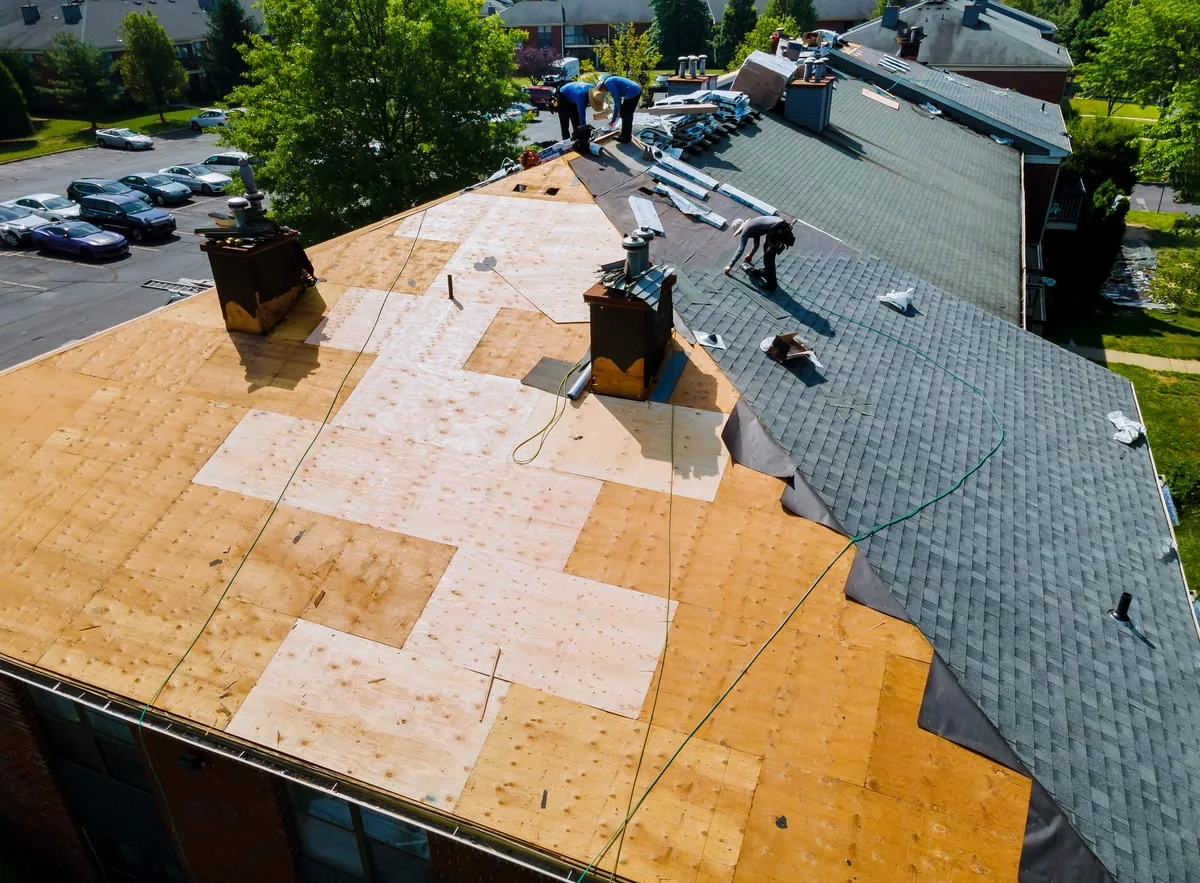
Fix the Dry-In Rule Before the First Day
The rule is simple: no section is opened unless it can be closed the same day. That sets the size of each phase. A crew that tears off one bay and installs insulation and membrane to a temporary tie-in, then leaves the roof watertight, is working correctly. A crew that opens three bays because the morning looked clear is gambling with the tenant's inventory.
Missoula weather punishes the gamble. Daily swings pass 30 F from late June through late September, and storms come with little warning. We check the forecast each morning, set the day's phase and adjust it. The tie-in at the edge of the day's work is sealed, inspected and photographed before the crew leaves.
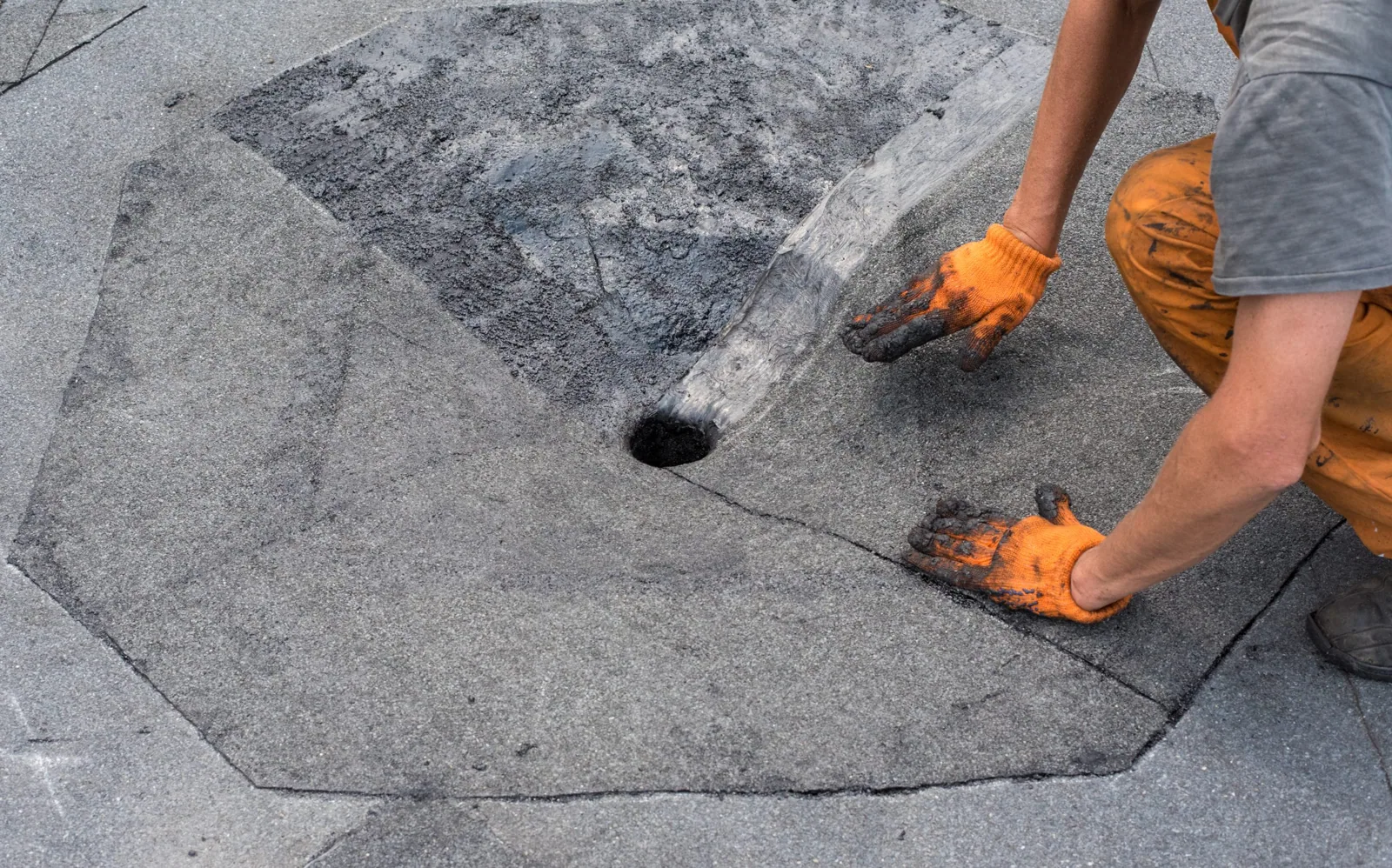
Tear-off phasing follows the drainage. We start at the high side so meltwater and rain run off finished roof, not into an open section. The first phase also includes the drains, because a drain that is last to be reset sends one thaw cycle's runoff behind a membrane that has not yet cured. The drain and scupper work is staged first for that reason.
Map Staging, the Crane Pick and the Laydown Yard
Material has to reach the roof without blocking the building. The staging area, the material hoist and the crane pick are placed where they do not cut off an entrance, a loading dock or a fire lane. The laydown yard stays small and tidy so that nothing blows off in a gust.
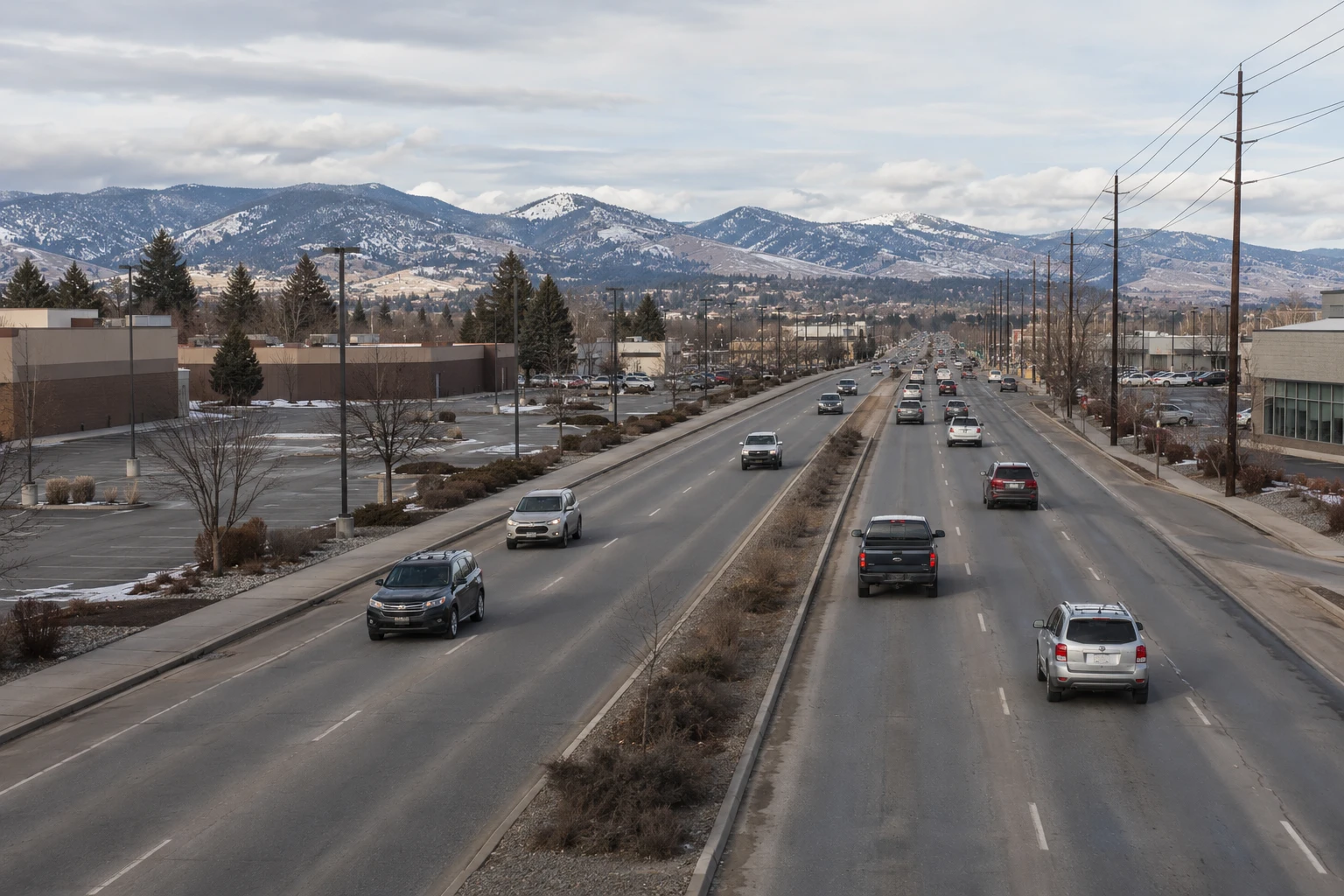
On a busy corridor such as North Reserve Street, which carries more than 30,000 vehicles a day, a delivery truck that blocks a driveway costs the tenant sales. We schedule deliveries outside peak hours and agree on the crane's footprint with the property manager. The map goes to every tenant before the first delivery.
Hotels and big-box stores sit side by side on that corridor, with Costco, Lowe's and Walmart as the large stores and Hilton Garden Inn, Courtyard Marriott and Homewood Suites nearby. Each has its own peak hours, and where a driveway is shared the staging plan lists the hours when each tenant needs the lane, with the crane pick set to the quietest.
Keep Tenant Access Open and Sorted
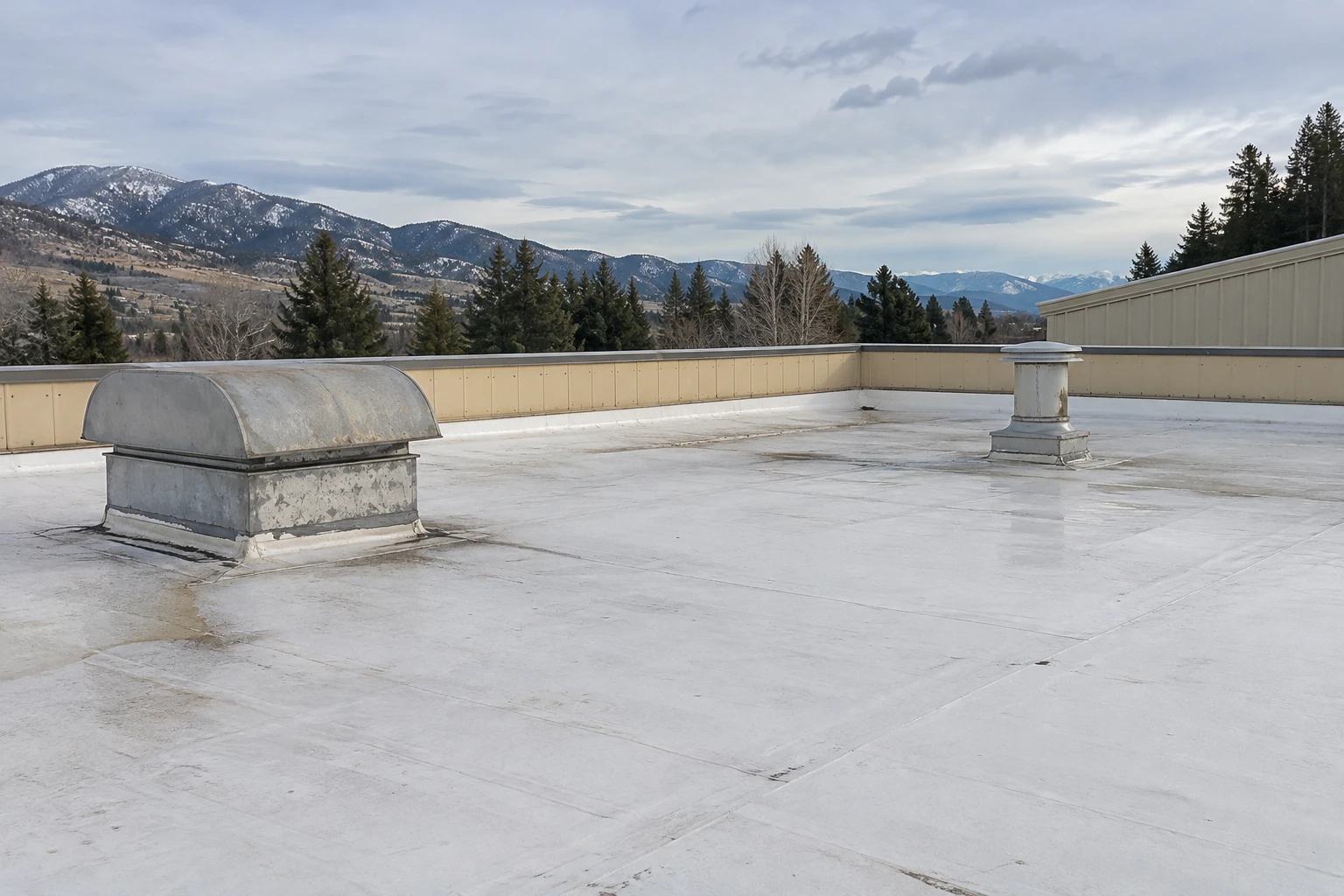
Every tenant needs a way in and a way out, and the crew needs a way up. We separate the routes so they do not cross: customers use the front, the crew uses the back or a side ladder, and materials go up by hoist. Roof hatches inside tenant spaces are used only with permission and an escort.
Notice goes out in writing, with dates, hours and what to expect. Tenants with sensitive operations, such as a clinic, a lab or a data room, get a separate conversation. Retail tenants on the ground floor often want the crane pick done before opening, and office tenants want the loud work after the morning meetings. At a hospital such as St. Patrick Hospital, the region's only Level II trauma center, infection control and shutdown windows are set with the facility team before any plan is final.
Control Noise, Dust and Odor Below
Tear-off is loud, and adhesives smell. Noise carries through the deck into the rooms below, so the loudest work is scheduled for the hours the tenant picks. We ask each tenant to name the quietest hours, and we keep the list at the foreman's desk. Air intakes near the work are covered or shut down for short periods, and a spotter watches for odor complaints.
The roofing system matters. Cold-applied adhesives, heat-welded single-ply and mechanically attached systems each produce different smells and different noise. A TPO roof can often be installed with little odor, and a built-up roof needs closer control. The choice is part of the tenant plan.
Hot work gets extra care. Torches and kettles need fire watches, hot-work permits and a clear route to an extinguisher. Where a building has a fire alarm tied to the roof, the system is told in advance. If the tenant cannot accept open flame, the plan uses cold-applied or mechanically attached materials instead.
Protect the Interior Before the Deck Opens
Before any section is opened, the space below is protected. Ceiling tiles in the zone are checked, equipment is covered, and a catch layer goes in where the deck is thin. The crew carries tarps for the unexpected squall. Equipment that cannot be moved, such as server racks, lab benches and refrigerated cases, is wrapped and the wrapping is checked each morning before the crew goes up.
When the building has a hard ceiling or an open deck, the plan shows where the deck can be seen from below, since a gap becomes a light leak or a water leak. A new insulation layer goes down before the membrane, and the deck is protected until it does. Inspectors confirm the layer before the next one is placed. The pull test for the fastener pattern is run before the membrane goes down, and the result is written on the roof plan.
Close Out With a Punch List the Tenant Signs
The final walk includes the owner, the roofer and, where relevant, the tenant's facility lead. Items go on the punch list with a photograph: a loose cap, a missing label, a smear of sealant, debris on a lower roof. Each is closed and signed off.
The closeout folder holds the layer schedule, the pull test results, the product data and the warranty paperwork. For an owner with several roofs, a multi-site roof program repeats the same sequence building to building. A campus owner with dozens of buildings, such as the University of Montana with its 64, gains the most from repeating one sequence.
Related Roofing Pages
Send the Roof Plan, the Tenant List and the Access Rules
Send the roof plan, the occupancy schedule and any access constraints, and we will map the phases and the staging area before any material is ordered. You will see which days the crane pick happens and which entrances stay open.
Call 555-555-5555 or email [email protected].
Questions About Occupied Building Reroofing
Can tenants stay in the building during a full replacement?
Yes, in most cases. The roof is replaced in phases, each dried in the same day, with access, noise and odor controlled, and a daily outline goes to the property manager. Tenants with the least tolerance get the earliest notice.
How long does an occupied reroof take?
Duration follows roof size, the number of phases and the weather window, and the schedule states the days lost to weather as a separate line. Missoula's snow season shortens the season for tear-off, so most projects run from late spring to early autumn.
What if it rains or snows mid-phase?
The dry-in rule protects against it. The open section is small, the tie-in is sealed and tarps are on site. If the weather turns, the crew closes the section and stops.
Who coordinates with the tenants?
The property manager and our site lead share that job. We supply the schedule and the notices, and the manager passes them to tenants and receives their questions.
Can a hospital or clinic roof stay in service?
Yes, with a plan that sets shutdown windows, dust and odor controls and infection-control rules. The facility team approves the plan before work begins.