
Commercial Roof Leak Repair in Missoula, MT
Commercial Roof Leak Repair
A leak call in March reads differently than one in August. In March, Missoula, MT roofs are shedding weeks of stored snow, and every seam, drain and flashing line is carrying meltwater at once. The drip that lands on a break room table may come from a failure fifty feet away, where ice has lifted an edge and water has run along the deck before dropping through.
We trace leaks as a sequence problem. First comes stopping the water, then finding where it enters, then deciding how to fix it, and last, repairing it in the right season. Skipping a step usually means a second call within the month.
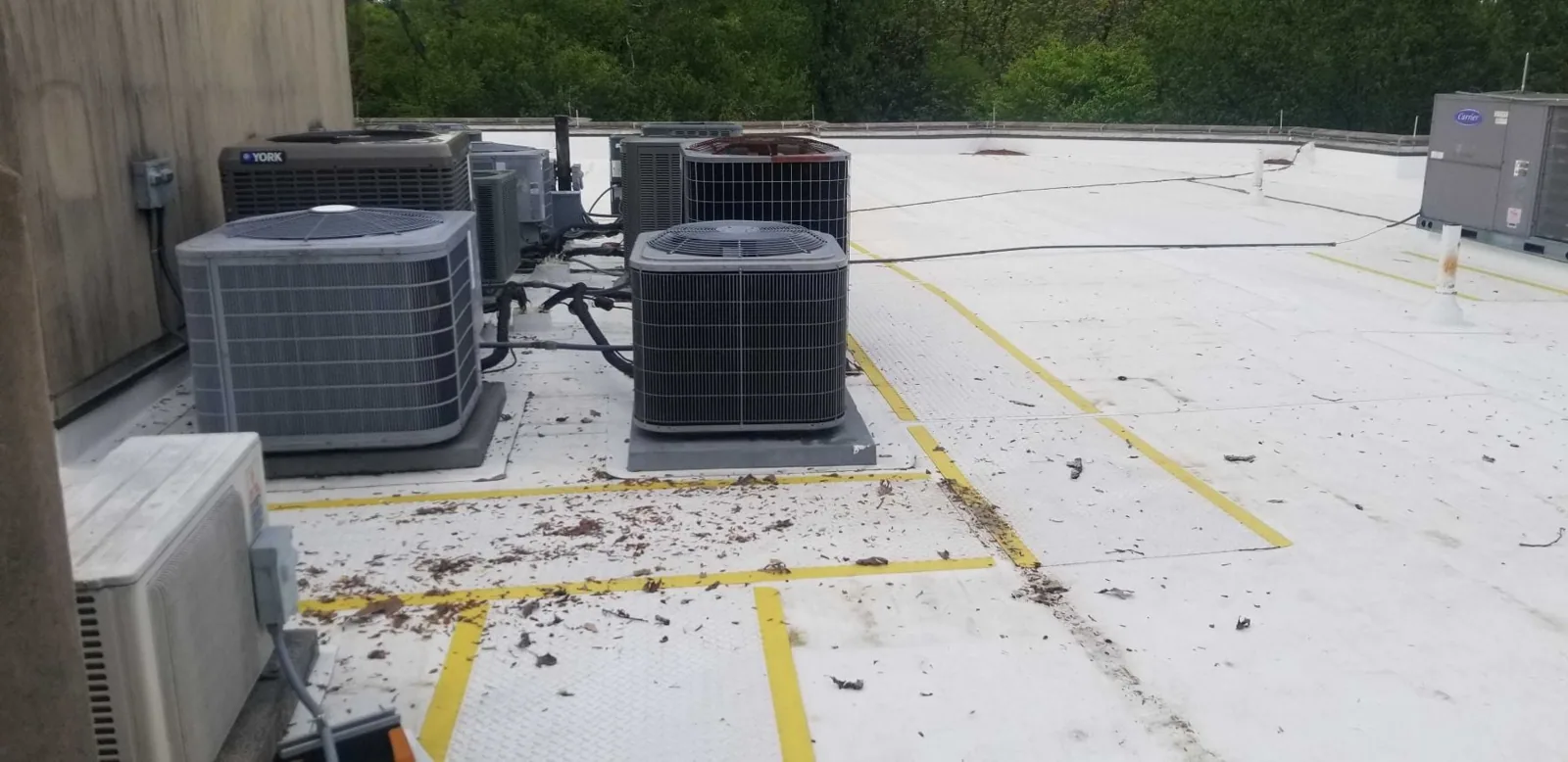
Tracing the Entry Point Along the Deck
Water on a ceiling tile rarely sits directly beneath the opening. On a low-slope roof, water enters at a failure, travels over the deck or along insulation joints, and drops at the first gap it meets. A tile stain is a clue to where to start, not a diagnosis.
We work backward from the interior stain, mapping the likely path along the structural lines of the building. Then we go up and inspect every detail within that zone: drains, parapets, penetrations, seams and any place two materials meet. A flood test, where water is applied to one area at a time, can confirm the entry when visual inspection is not enough. An infrared moisture survey shows where insulation is saturated and where it is not.
On large roofs such as the big-box stores along the Reserve Street corridor, the trace may cover a wide area. We divide it into grids and rule out each one, so the work does not rely on a guess.
Reading Thaw Cycles for the Cause
Winter leaks follow the thaw. Missoula averages about 39.5 inches of snow a winter, and on roughly 45 days each year the temperature stays under freezing, so ice forms and releases repeatedly. Snow packed against a parapet melts at the base and refreezes at night, and the resulting ice dam forces water under flashing that would stay dry in rain.
That pattern shows in the repair. A flashing that leaks only when the temperature crosses freezing is a termination issue, not a field failure. A drain that backs up during a melt but not a summer storm has a blockage or a ponding problem that ice makes worse. Reading when the leak occurs narrows the cause before anyone climbs a ladder.
The scale varies across the region. Seeley Lake averages about 118.9 inches of snow a year against Missoula's 39.5, so the same melt pattern plays out at very different volumes. We ask for the timeline: when the stain appeared, whether it follows weather, and whether the leak stops when it dries. Those answers shorten the search and guide the repair toward the real failure.
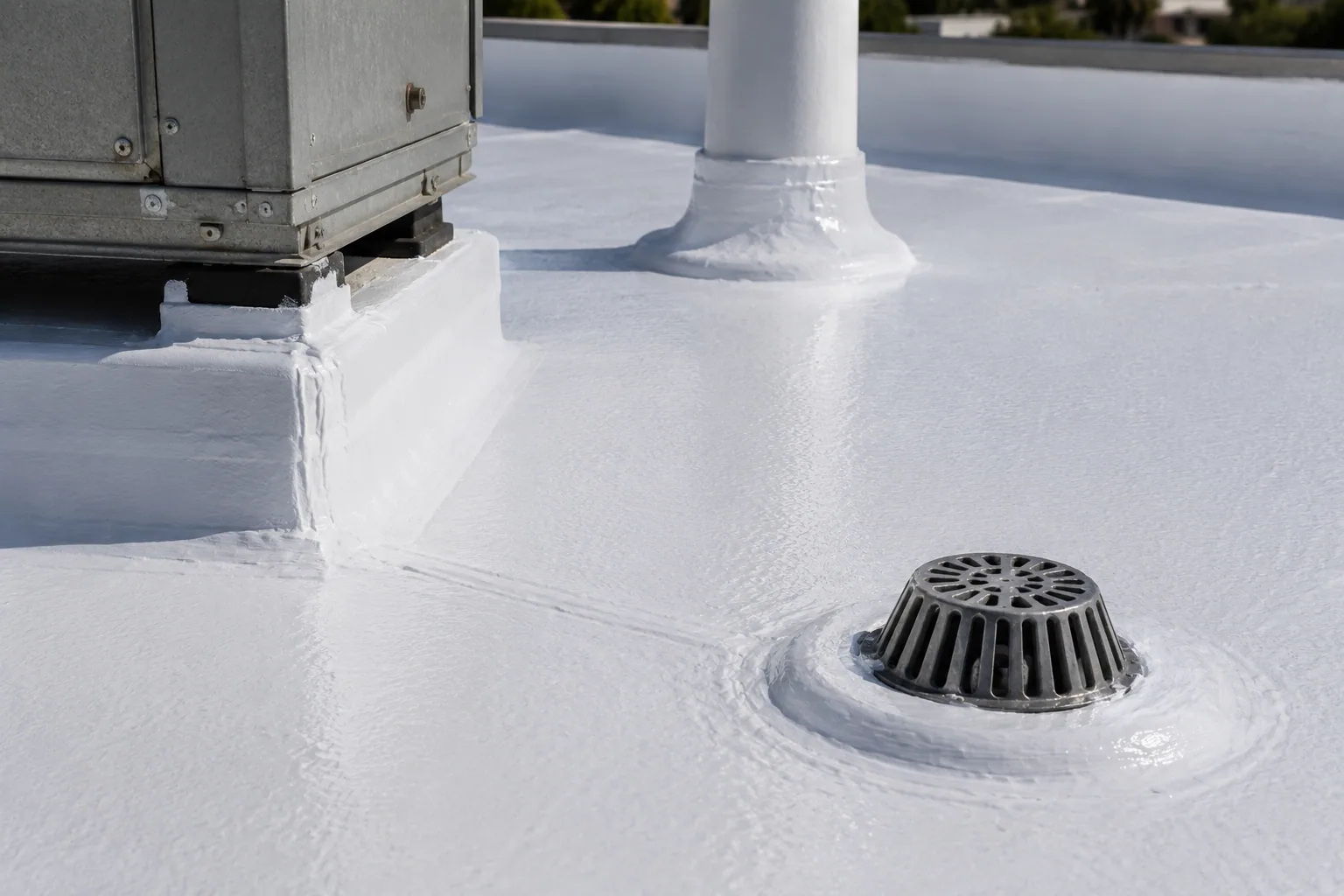
Holding the Roof Dry While the Fix Is Planned
When water is actively entering, the first job is to stop it, and an after-hours call goes through emergency roof repair response. We place temporary seals, tarps or patches that will hold until a permanent repair is possible. Snow, ice and cold limit what we can bond to, so winter dry-ins are built for the short term, and we label them as such on the roof plan.
Temporary work is designed to be removed. Tape and mastic over a seam can be cut out and replaced when the weather allows, and a tarp is held down with ballast or battens instead of puncturing the membrane. Nothing we place should make the permanent repair harder.
If saturated insulation is spreading, we cut test squares to confirm the extent, then decide whether to remove the saturated section now. Leaving saturated insulation under a patch for a season invites mold and adds weight on a roof that already carries a design snow load of 40 psf.
Completing the Permanent Repair in the Right Season
A permanent leak repair removes the cause. For a failed seam, that means cleaning and rewelding or replacing a strip of membrane. For flashing, as in flashing failure repair, it means new material secured to the substrate. For a drain, as in drain and scupper repair, it means resetting the body and sealing the clamping ring against the membrane. Each fix is matched to the failure we found.
Warm weather makes the best repairs. Adhesives cure, welds fuse and cover boards seat. The summer temperature range here, with about 24 days at or above 90 F, is generous for most materials, though extreme heat limits how long a crew can work on a dark membrane. We start early and finish fastening before midday where the roof calls for it.
Every repair ends with a test. We flood or hose the area when practical and check the interior for any sign of water. Our commercial roof repair work and leak service share the same closeout record, with before-and-after photos tied to a location on the roof plan.
Spotting Repeat Leaks Before They Multiply
A building that leaks twice in the same place has a pattern. Recording each leak, its cause and its repair builds a history that shows where the roof is weakest. Three calls from one corner of a warehouse suggest a drainage or slope issue that patches cannot solve.
Those records also help with insurance. A hail event dropped quarter-size stones on central and south Missoula in 2016. If a roof shows new punctures after such a storm, a dated record of earlier repairs distinguishes storm damage from old wear. Owners who can show what the roof looked like before give an adjuster something concrete to compare.
We also walk the roof for cause beyond the leak itself. A roof that leaks at one drain may have four other drains in the same condition. In Bonner-West Riverside, where heavy snow collapsed much of the former mill roof in 2011, and in Frenchtown, the first leak is the cheapest moment to find those patterns. The dry-in sequence for a leak is short: stop the water, protect the room, then plan the permanent repair for the weather window.
Related Roofing Pages

Tell Us When the Water Shows Up
Send the interior location of each leak, the dates it appeared and any weather that came before it. We will use that timeline to plan the trace, the dry-in and the permanent repair.
Call 555-555-5555 or email [email protected].
Questions About Commercial Roof Leak Repair
Why does the water appear far from the actual opening?
Water travels along the deck, insulation seams and structural members before it finds a gap. The interior stain marks where it drops, not where it entered. We map the likely path and inspect every detail inside that zone, then confirm with scanning or a flood test.
Should I wait for dry weather to call about a leak?
No. Saturated insulation spreads, and each thaw cycle can move water into new areas. We can place a temporary seal immediately and plan the permanent repair for a warm window, which costs less than letting a saturated area grow.
Can a leak be fixed with sealant alone?
Sealant can slow a small seam or fastener leak, but it fails where the roof moves, such as terminations and cracked flashing. A permanent repair replaces the failed material and attaches it to a sound base, with sealant as a secondary layer.
How do you tell a leak from condensation?
Timing and location help. A leak follows rain or snowmelt and clusters near roof penetrations and seams. Condensation forms during cold weather and shows up on cold surfaces such as metal ducts and deck undersides. A moisture scan and a close look at the building's air movement separate the two.
What records should I keep after a leak repair?
Keep the date, location on the roof plan, cause, repair method and photos. Those records support warranty and insurance claims and show whether the same area keeps failing, which helps decide between more repairs and a larger project.