
Seam Failure Repair on Missoula, MT Commercial Roofs
Seam Failure Repair
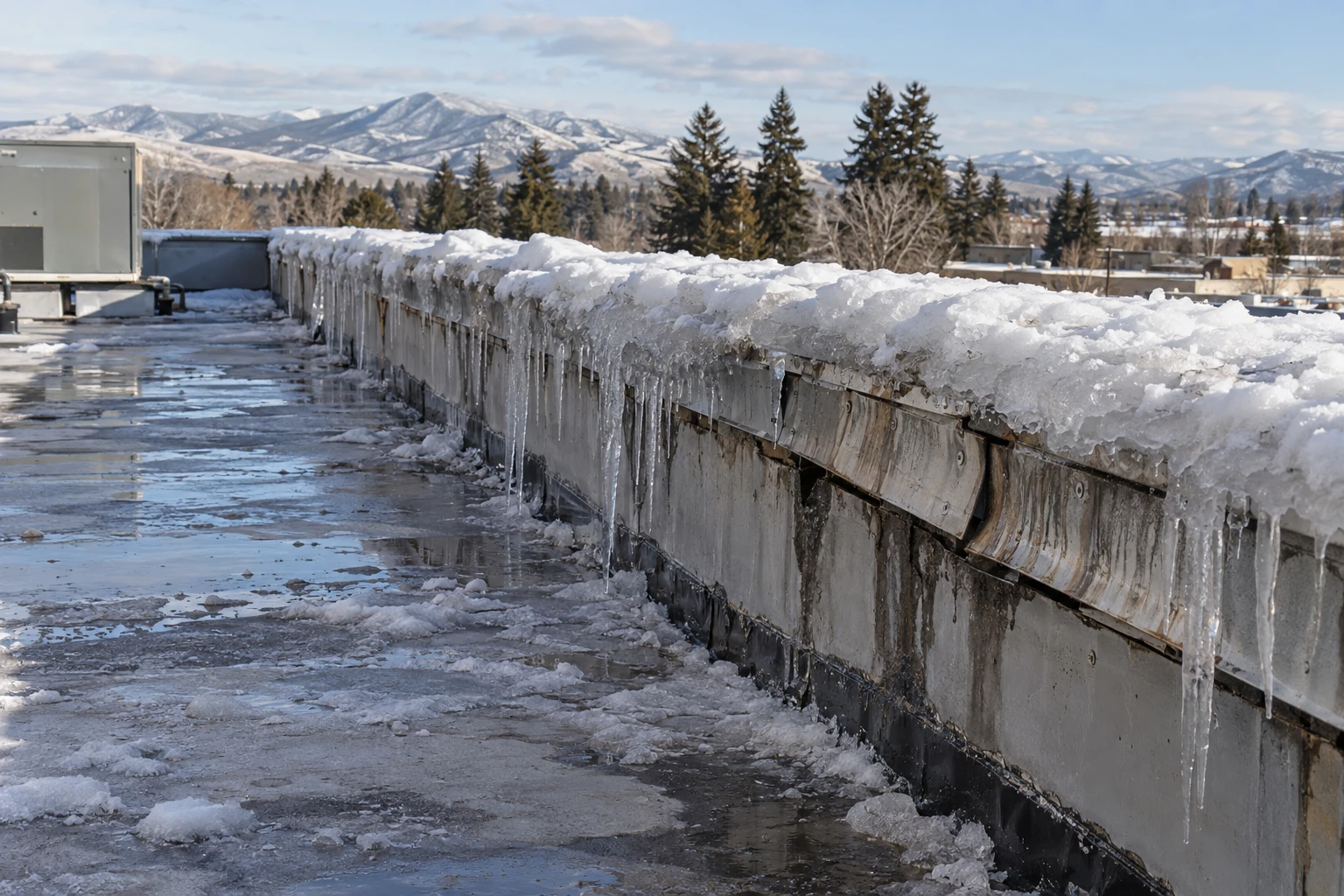
A seam on a Missoula, MT roof fails in the same order every year, and the repair follows that order: probe the runs, mark the open ones, clean the surface, weld or bond, then probe again after the weld cools. A seam sits in the middle of about 45 all-day freezes a year and summer swings beyond 30 degrees, which gives it the largest thermal range of any detail on the field. Each cycle puts a small strain on the weld or adhesive line, and meltwater that gets in freezes and pries the lap open a hair more. A seam that passed inspection in July can be an open run by March.
We map seams the way a project manager maps a punch list, run by run, with a number, a photograph and a price for each.
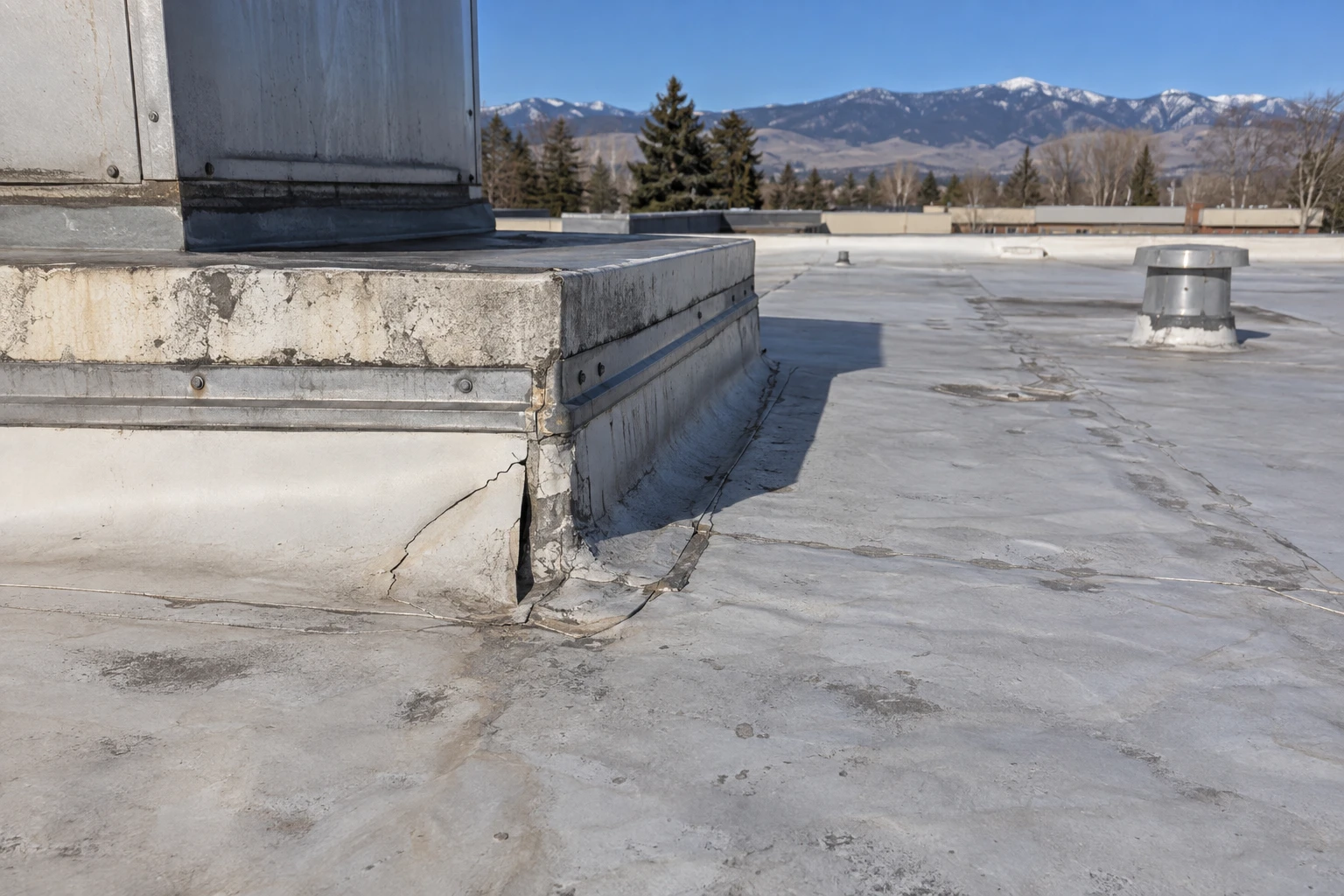
Identify which force opened the seam
Four forces work together. Thermal movement is the constant, since sheets expand and contract and the seam is where the movement concentrates. Freeze and thaw is the second: water in a lap expands as it freezes. Aging is the third, as plasticizers leave the membrane and the sheet stiffens and shrinks. Poor original workmanship is the fourth. A weld made when the membrane was damp, dirty or too cool leaves a weak line that opens early.
Mechanical stress adds to all four: foot traffic along a seam, equipment vibration or a snow slide dragging across a lap. We identify which force applies before writing the repair, since a seam opened by age needs a different fix than one opened by a bad weld. The answer drives the price and the method.
Probe every run and build the seam map
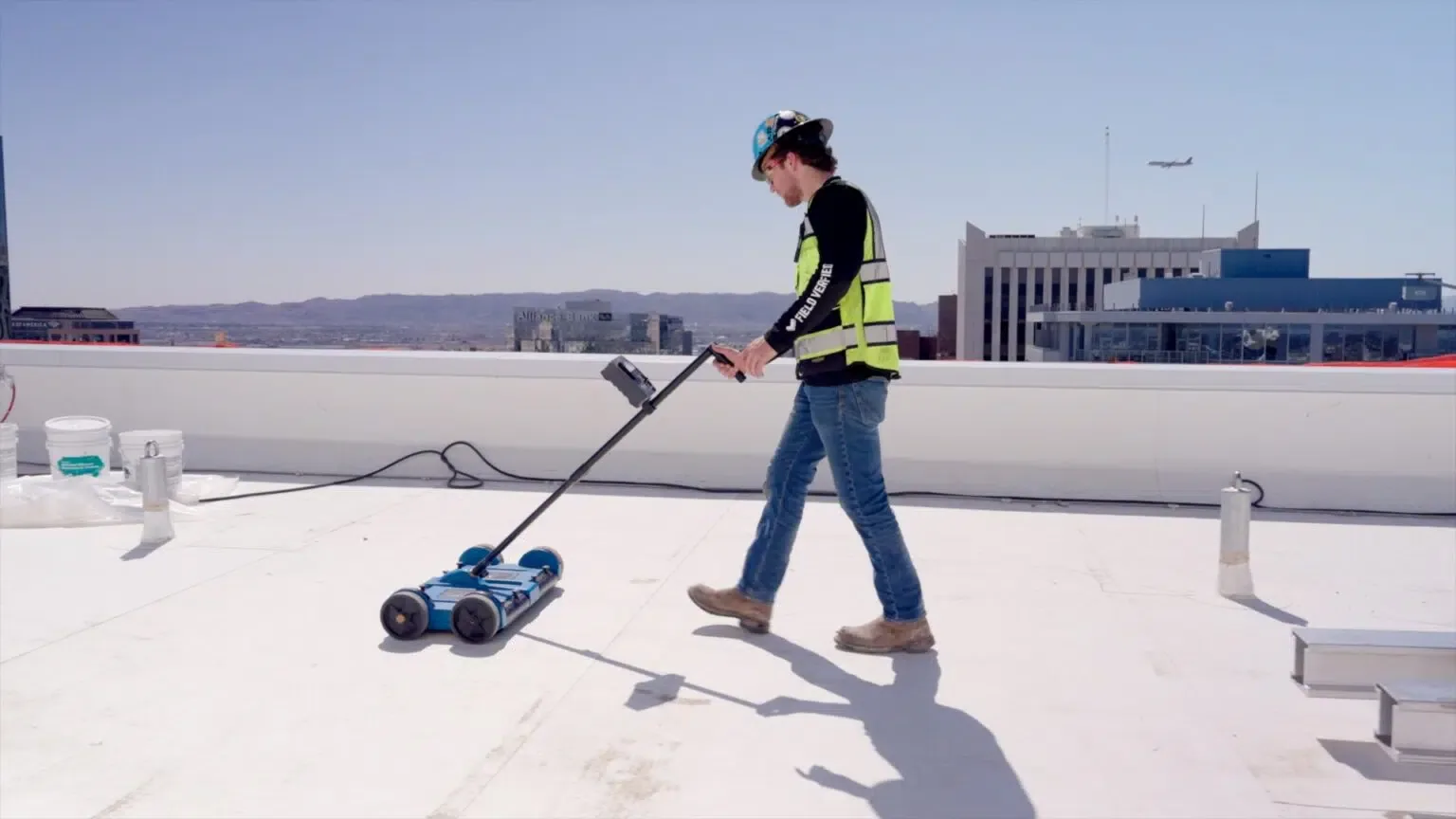
We walk each seam run with a probe, testing the edge of each weld for adhesion and marking any run where the probe slides in. Each run gets a number on the roof plan, a dated photograph and a condition note: sound, lifting, open or split. An infrared moisture survey adds the question of whether meltwater has already reached the layers below an open seam.
The map turns a vague complaint into a count. An owner who knows which runs are open and which are sound can budget the repair, while an owner who is told the seams are tired cannot. The same map becomes the baseline for the next visit, and it shows whether a lifting run is stable or moving. A seam still intact but under strain is recorded so that it can be watched and not repaired before it needs it.
The best time to probe is a dry fall day, before the freeze locks the laps in place and hides the gap.
Weld, bond or cap, in that order of preference
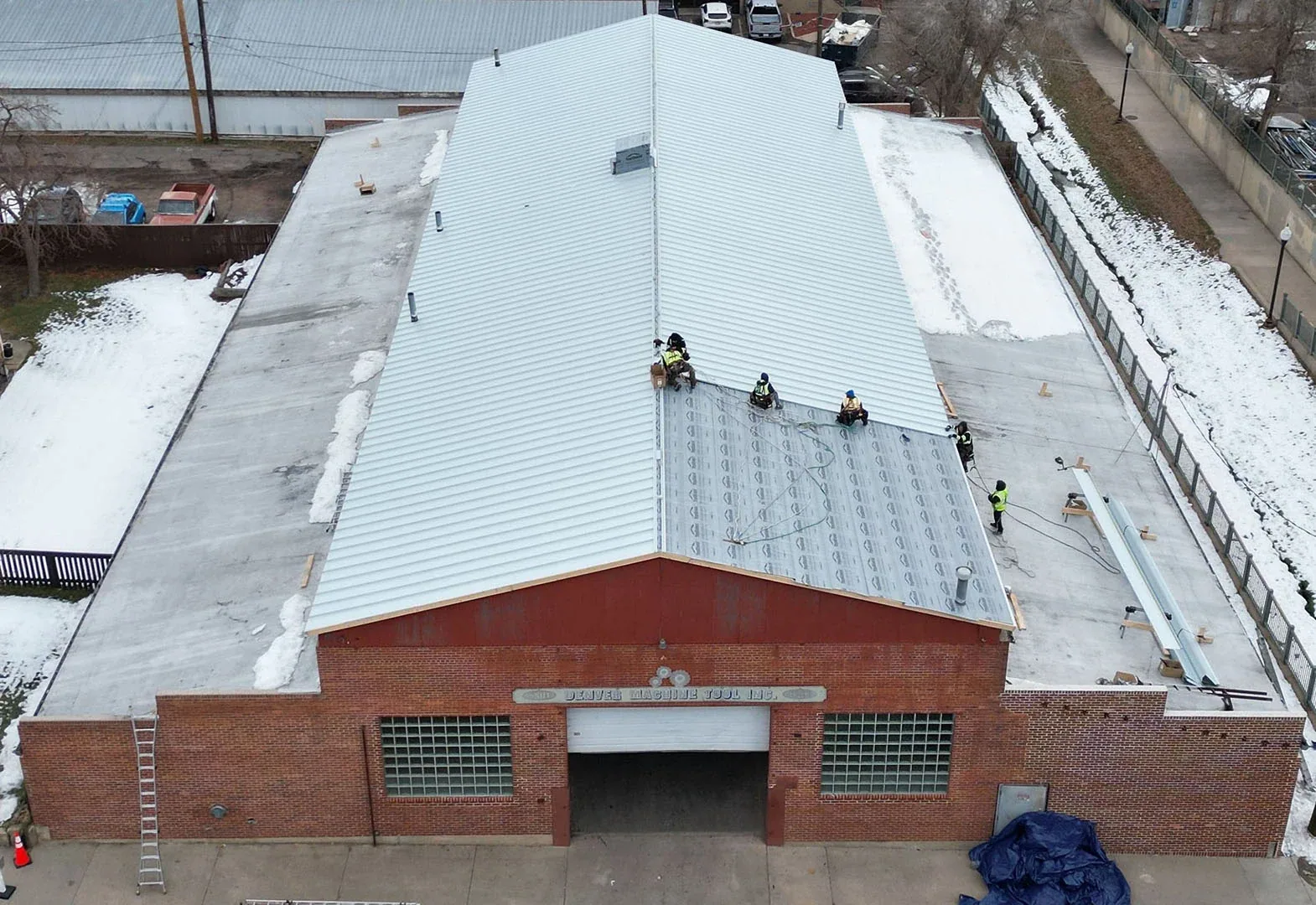
On a TPO roof or a PVC roof, a lifted or open seam is cleaned, prepared and re-welded with hot air, or covered with a welded cap strip of compatible membrane. Preparation matters more than the weld. Dust, grit and surface oxidation must be removed or the new weld will not hold, and the membrane must be dry and above the temperature the manufacturer allows. On a cold morning, we hold the seam work and use the day for tasks that tolerate the cold.
An EPDM roof takes a different repair: primer and a cured or self-adhering patch or seam tape, applied to a clean, dry surface. We probe each repair after it cools and photograph it. Where the membrane has shrunk or gone brittle, a weld does not last and the repair becomes a patch over a wider area.
A single repair is part of broader commercial roof repair. A roof with widespread seam failure belongs in a replacement conversation, and we put the options side by side.
Time and temperature set the work window. A weld needs steady heat and a dry surface. In Missoula that usually means late spring through early fall. Outside it, we limit the work to temporary measures and schedule the permanent seam repair for the first stretch of steady weather.
Repair modified bitumen, built-up and metal seams on their own terms
Other systems fail at their joints in their own ways. Modified bitumen laps open when the asphalt hardens in cold and the lap moves, and the repair is a heat-welded or cold-applied patch over the lap. Built-up roofs have felt laps and flashing joints that blister and split. Metal roofs have panel seams and fastener holes that loosen from thermal movement, and the fix is resealing, replacing fasteners and in some cases adding a coating over sound panels.
A coating over a sound seam can extend its life, and roof coating restoration is often part of a plan for roofs whose seams are tired but not open. A coating laid over an open seam only masks the leak for a season. We repair first, then coat, and each step carries its own line in the scope. Where seams in a ponding area have opened, the repair pairs with ponding water repair.
Look first where the movement and the traffic are
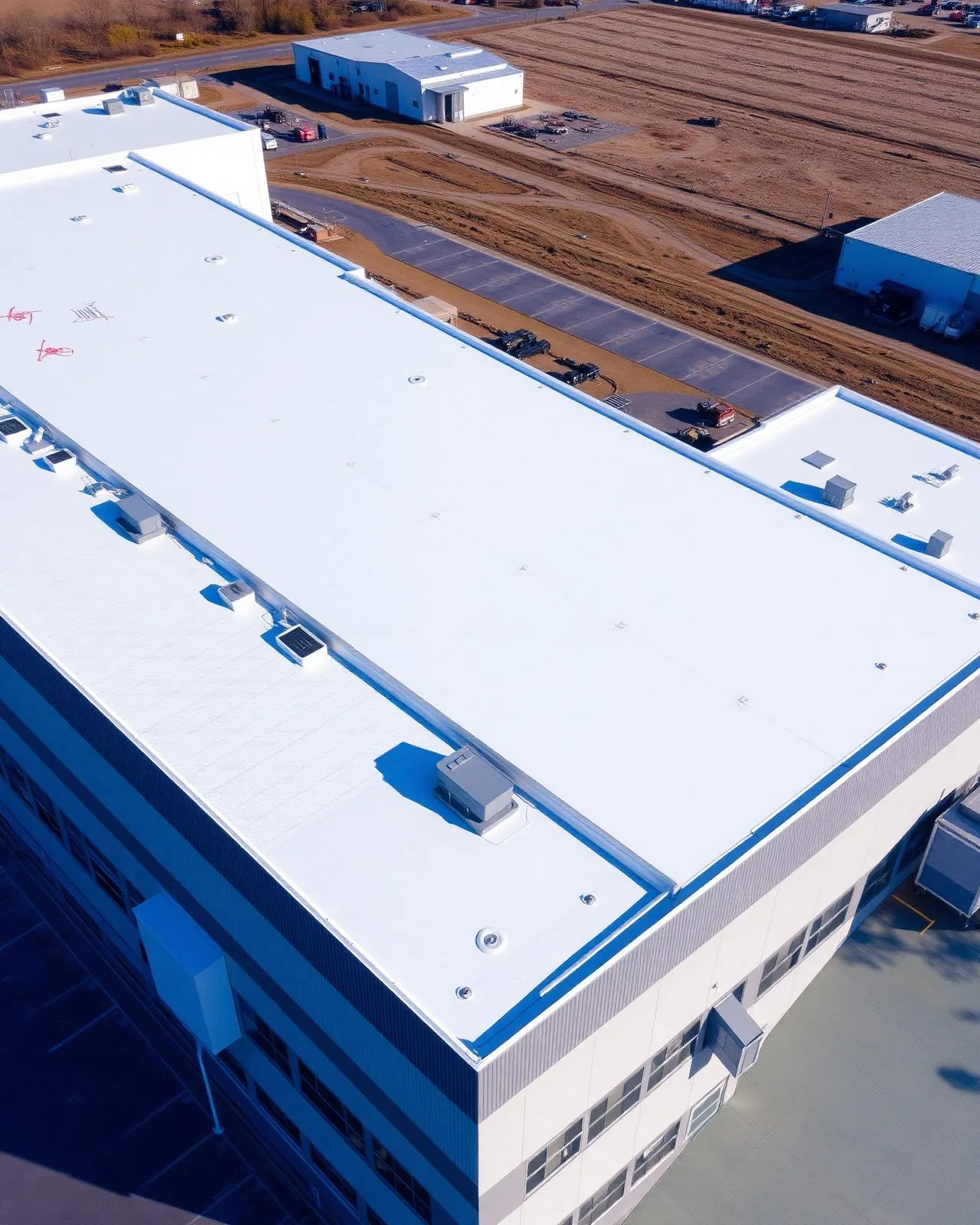
Seam damage collects where the roof moves most and where people walk. On a multi-tenant retail roof, such as those on North Reserve Street where each tenant's rooftop units need service, it collects along walk routes and around equipment. On a large industrial roof, such as the buildings in the Missoula Development Park and Mullan Road area, we look at expansion points and the long edges.
The pattern tells us where to look first on the next roof of the same type, and it belongs in the report. An owner who learns that most failed seams sit along a service route can add walkway pads and reduce the problem at far lower cost than repairing it every year. The mechanical contractor, who sets the route, is part of that conversation. Flashing failure often accompanies seam failure on the same detail, and the two are assessed together.
Newer roofs carry a baseline advantage. Industrial space going up near the airport and in the proposed West Bonner Log Yard subdivision, where 27 industrial lots are planned, will face the same freeze-thaw range from its first winter. A seam map taken at turnover gives those owners a reference against which later movement can be read, and it also dates any weld problem to the install, inside the warranty period.
Warranty dates matter. A seam found open inside the manufacturer's coverage is a different conversation from one found after it, and the dated map shows which side of the line the finding falls on. The staging area for welding equipment is set on the first visit.
Related Roofing Pages
Send the roof plan and the last inspection record
Send the roof plan and any past inspection photographs, and we will map every seam run, test it and return a numbered repair list with the sequence and a price for each run.
Call 555-555-5555 or email [email protected].
Questions About Seam Failure Repair
Can a seam be repaired without replacing the roof?
Yes, when the membrane on either side is still flexible and clean enough to weld or bond. A brittle or shrunken sheet will not hold a new seam, and the scope will say so.
How can a manager tell an open seam from a normal seam line?
A sound seam is flat, tightly bonded and even along its length. An open seam shows a gap, a lifted edge or dirt tracking inside the lap, and a probe slides in where it should meet resistance.
Do open seams always leak?
Not immediately. A seam can sit open for months, but it is a path for the next thaw or storm, and saturated insulation costs far more than the seam.
What does the warranty file need after a seam repair?
Photographs of the repaired run, the date, the material and the method. Many warranties require repairs to follow the manufacturer's details, so we record how each was done.
How long does a welded seam repair last?
A repair on a sound membrane can last as long as the surrounding roof. A repair on an aging sheet may need redoing as the sheet continues to shrink, and the report notes which case applies.