
Emergency Roof Repair in Missoula, MT
Emergency Roof Repair
The first hour of a roof emergency is a sequencing problem. Someone has to make the building safe, someone has to stop the water, and someone has to record what happened for the insurer, all before the weather changes again. In Missoula, MT that sequence also has to cross a county of highways and valleys, so the route to the roof is part of the plan.
We answer emergency calls at any hour, on any day, holidays included, and we run each one the same way. Make the area safe, stop the intrusion, protect what is inside, document the damage, then plan the permanent repair. Nothing about the order is accidental.
Giving the Dispatcher What the Crew Needs
A good call saves time before the truck leaves. We ask where the building is, what the roof is made of if you know, where water is entering, whether the area below is occupied and whether any part of the structure looks damaged. Photos help if they can be taken safely from the ground or from inside.
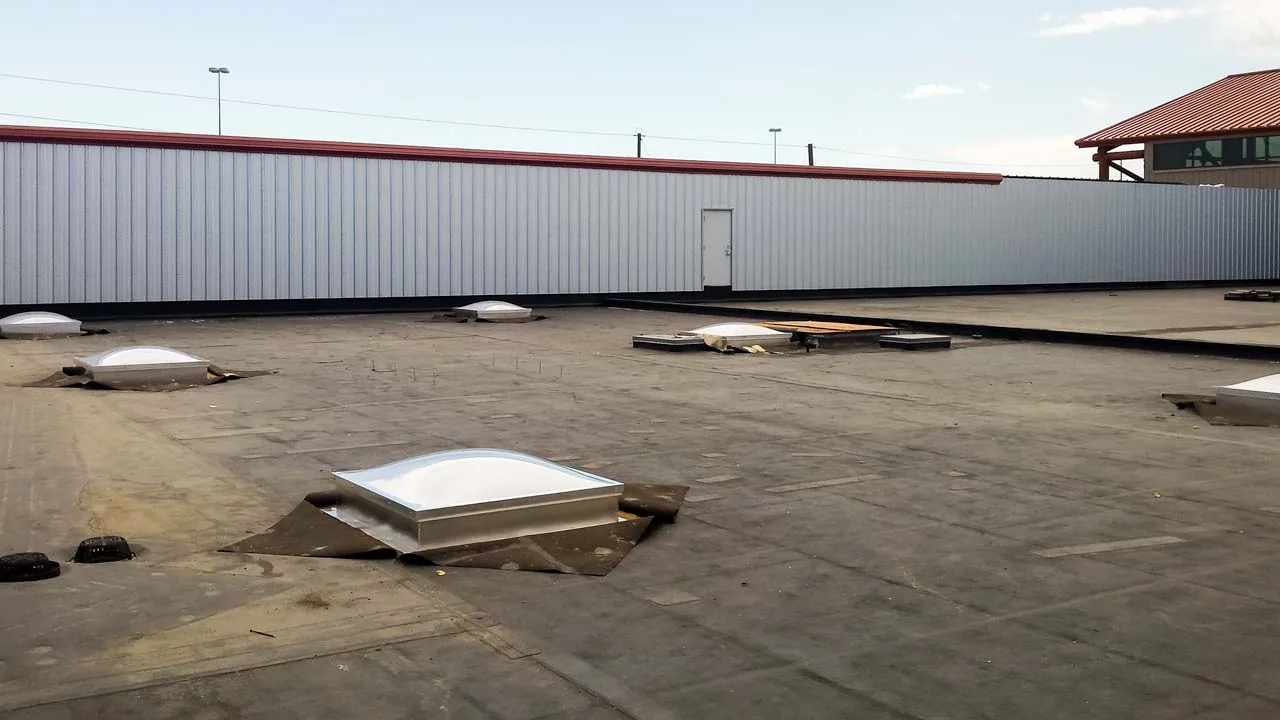
We also ask about access. A flat roof reached by an interior hatch needs different equipment than one reached by an exterior ladder or a lift. If the building is on a busy corridor such as Reserve Street, where more than 30,000 vehicles pass daily, the crew needs a spot to park and stage away from customer traffic.
Safety comes first. If a roof has partly collapsed, or if snow load is a concern on a building that has carried a heavy winter, we hold the crew back until the area is cleared and the structure can be judged. Heavy snow collapsed much of the former Bonner mill roof in 2011, a reminder that a loaded roof is an emergency of its own.
Stopping the Water Before Anything Else
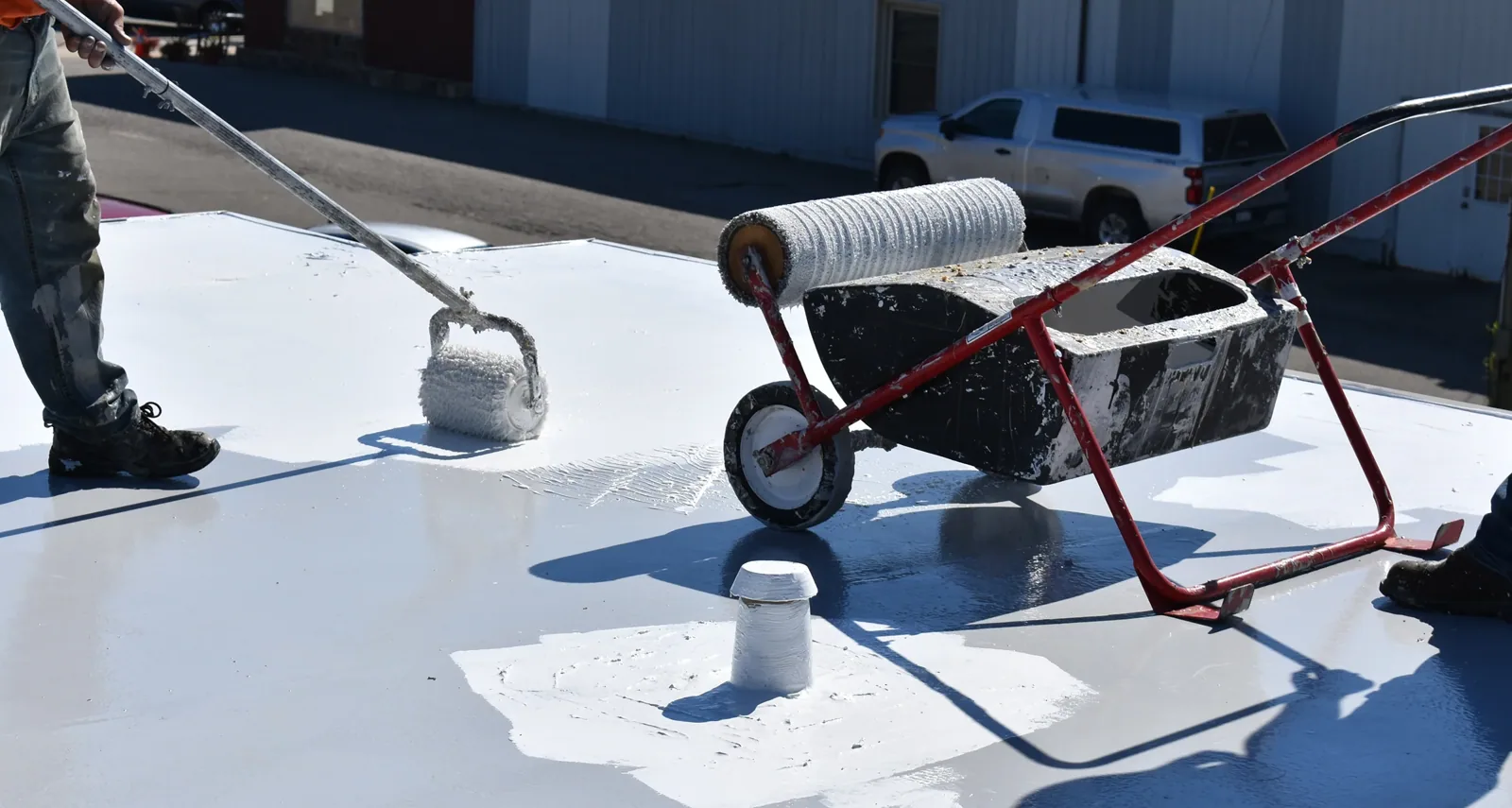
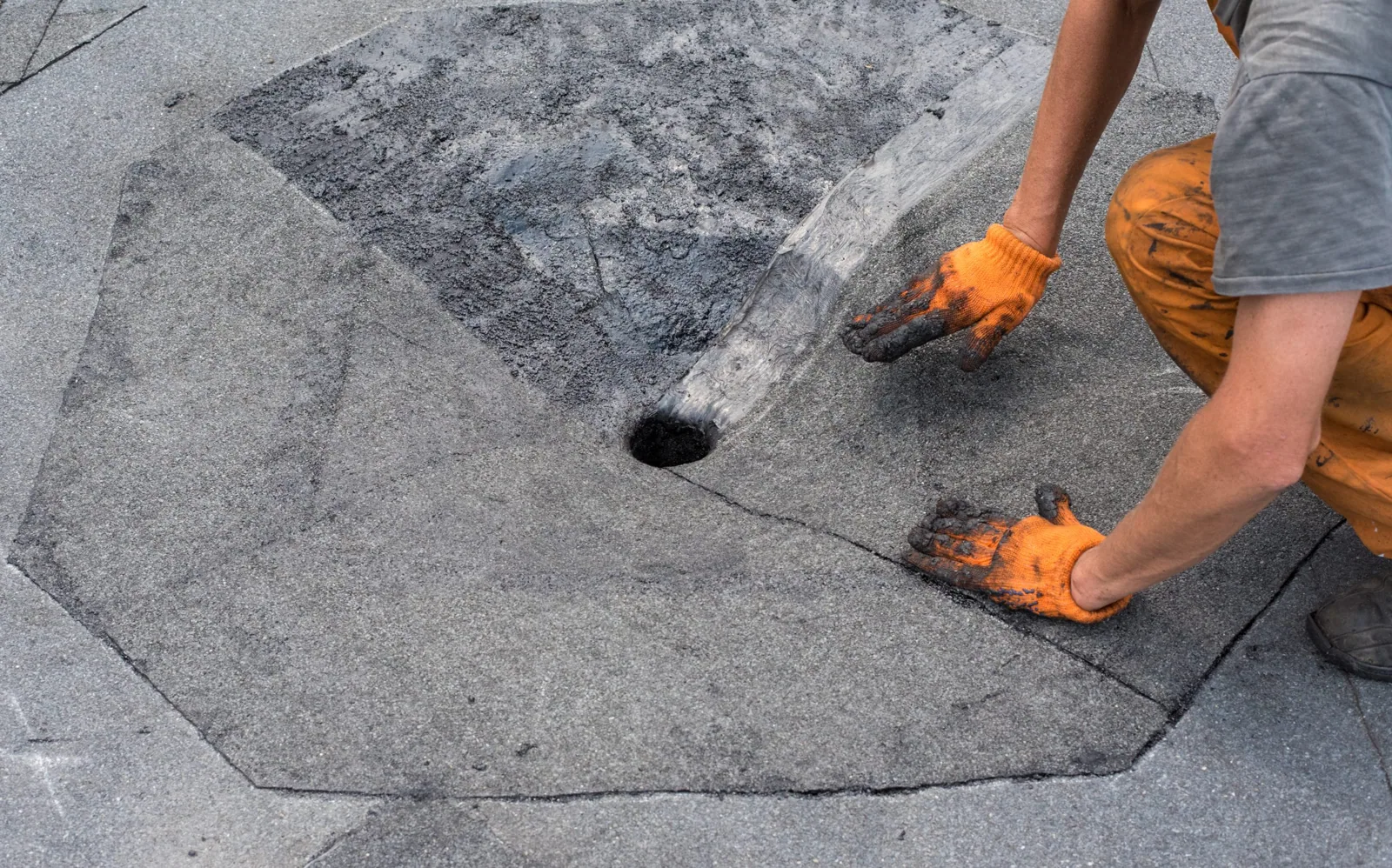
The crew arrives with tarps, temporary membrane patches, sealants and fasteners suited to the roof. Where possible, we cover the opening with a material that sheds water and hold it down with battens, ballast or adhered edges. The goal is a dry-in that survives the next storm, not just the current one.
Interior protection runs in parallel. Plastic sheeting over equipment, buckets and diversion under active drips, and moved inventory keep the damage from growing while the roof is sealed. In a hospital, data room or food storage area, that interior protection may matter more than the roof work, and we coordinate with building staff accordingly.
Cold complicates every step. Roughly 45 days a year stay under freezing in Missoula, and adhesives that work in July will not bond to a frozen surface. We carry products rated for cold, and we plan to revisit the temporary seal once the weather lets us build the permanent repair.
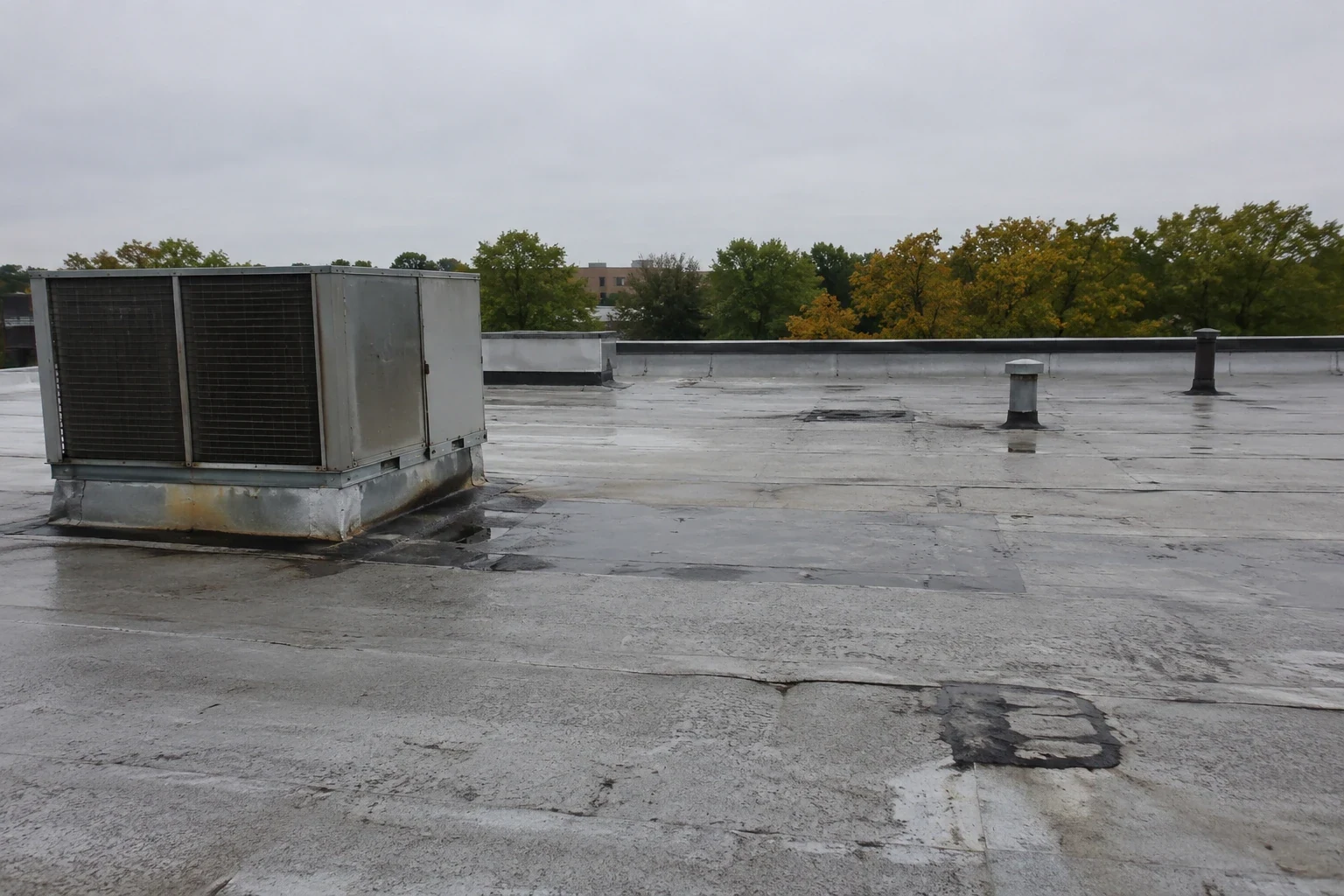
Drains deserve attention in any emergency. Blocked drains hold water against the membrane, and melting snow adds to the load. We clear them first, check the clamping rings and make sure water has a path off the roof before turning to the damaged area.
Assessing Hail and Wind Damage Quickly
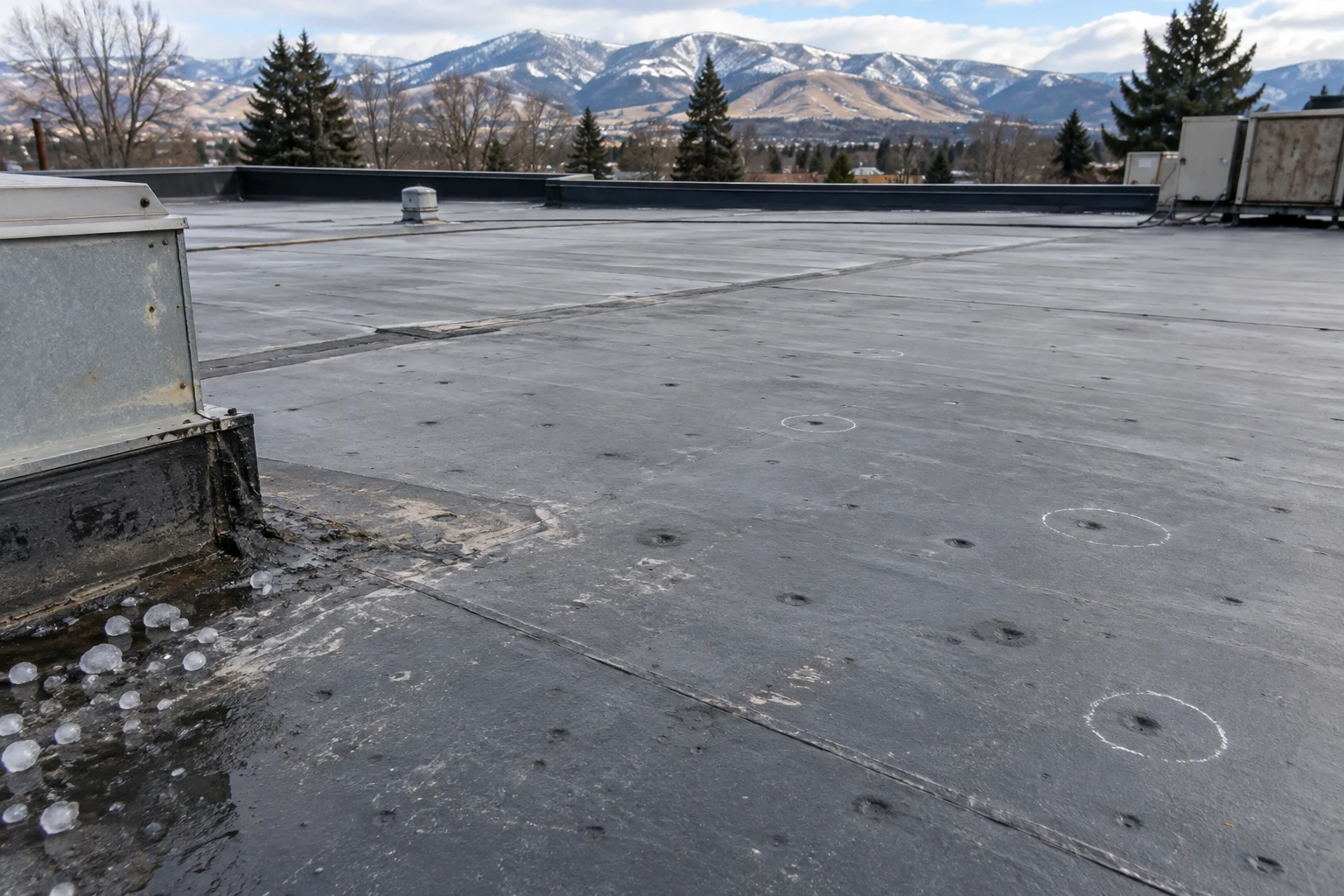
Many emergency calls follow a storm. Quarter-size hail fell on central and south Missoula in 2016, and half an inch of rain fell in 20 minutes, enough to overwhelm storm drains. A storm like that can bruise membranes, split seams and clog drains with debris at once.
We look for the quick signs first: punctures, displaced edge metal, torn flashing, blocked drains and standing water. Then we check the less obvious ones, such as fastener backout and lifted seams that may not leak today but will during the next rain. Each finding goes on the roof plan with a photo and a note.
Wind damage has its own pattern. Edge metal that has lifted or peeled becomes the starting point for membrane peel, so we secure the perimeter first, then work inward. Loose rooftop equipment, displaced coping and torn flashing around curbs all get a temporary hold before the crew leaves, because a second gust can undo a repair that was finished an hour earlier.
This record becomes the basis for an insurance claim. Our hail damage repair and claim documentation work start from these first-hour photographs, taken before temporary repairs cover the evidence.
Reaching Buildings Across the Valley
Missoula County is served by Interstate 90, US 93, US 12, Montana 83 and Montana 200, and the roads decide how fast any crew can reach a building. A call from Lolo runs down US 93 and US 12, and one from Frenchtown follows I-90 northwest. Calls from Florence and Carlton run south on US 93.
Winter travel slows every one of those drives. With snow cover lasting about 120 days of the year in Missoula, crews plan for chains, sanding and longer drive times. We tell you what the arrival window looks like given the roads, and we send temporary instructions you can follow while the crew is on the way, such as moving stock or shutting off power to a wet area.
For more distant calls, such as Seeley Lake, about 52 miles from Missoula on Highway 83, we confirm road conditions before dispatch.
Planning the Permanent Repair After the Emergency
The temporary repair is only a stopgap. Once the crisis passes, we walk the roof again in good conditions, look at the full extent of the damage and write a scope. Some emergencies need a limited fix, such as a new section of membrane and flashing. Others reveal larger problems that point toward a planned repair or a replacement.
We compare the cost and the remaining life of the roof. If the damage touched saturated insulation across a large area, a patch may not be the right investment. If the damage was isolated, a clean permanent repair can restore the roof for years.
The emergency record travels with the project. Dated photos, temporary materials used and the damage map all feed into the final proposal, and into any insurance paperwork you are working through. The crew's first stop is the staging area for tarps and patches, and the dry-in sequence follows from what the roof shows.
Related Roofing Pages
Call With the Address and the Access Route
Tell us where the building is, where water is entering and how the roof is reached. We will dispatch a crew with the right materials and send you steps to take while they travel.
Call 555-555-5555 or email [email protected].
Questions About Emergency Roof Repair
What should I do first when water starts coming through the ceiling?
Move people and equipment out of the wet area, shut off power to affected circuits if it is safe to do so, and contain the water with buckets and plastic. Take photos from the ground or interior, then call us. We take it from there.
Can you work on a roof covered in snow or ice?
We can place temporary protection in those conditions when the roof can be reached safely. Permanent repair waits for clean, dry surfaces and workable temperatures. If the load on the roof is a safety concern, we assess before anyone goes up.
Will a temporary repair affect my insurance claim?
A documented temporary repair usually supports a claim, since insurers expect owners to limit further damage. We photograph the condition before we cover it and keep receipts for materials and labor, which gives the adjuster a clear record.
How long will a tarp or temporary patch last?
That depends on the weather, the roof surface and how well it is secured. A well-fastened temporary cover can hold through repeated storms, but it is built to be replaced. We note a target date for the permanent repair on the work order.
Do you handle emergencies at occupied buildings?
Yes, and we plan around the occupants. We coordinate with the facility manager about access, protect interior spaces and schedule noisy steps for times that do the least harm to tenants or patients.