
Commercial Roofing in Downtown Missoula, MT
Downtown Missoula
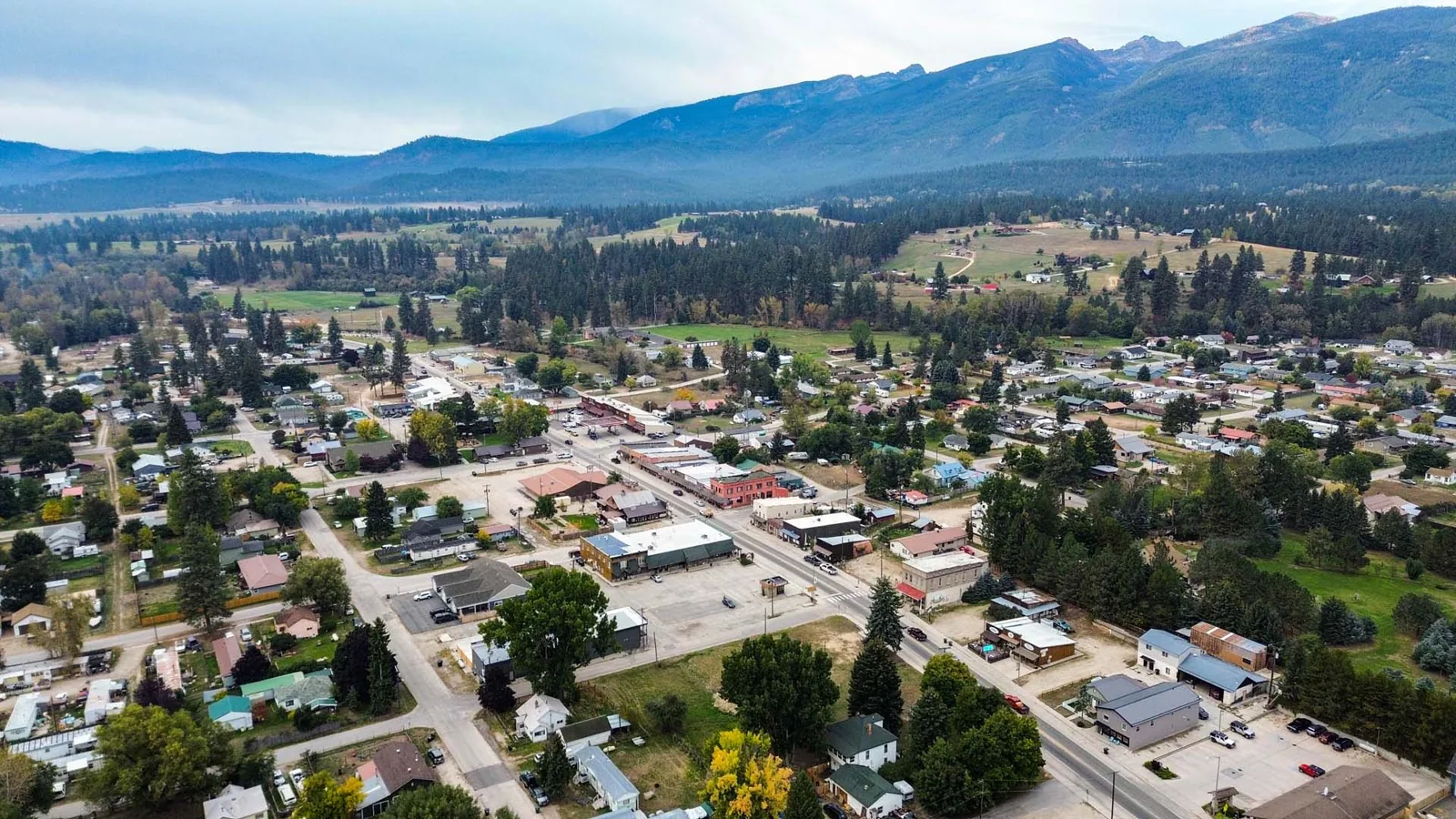
On a downtown roof, the drains have to be right before anything else is touched. If the sump is blocked while the old membrane is open, meltwater from a thaw has nowhere to go and finds the nearest ceiling. Downtown Missoula, MT is the central business district, bounded roughly by the Clark Fork River to the south, Madison Street to the east, North Orange Street to the west and West Alder Street to the north. It holds office buildings such as the nine-story Millennium Building and the First Interstate Center, the Florence Hotel and a share of the city's more than 60 National Register buildings.
We repair, replace, recover and maintain commercial roofs in that district. The job opens with a roof plan, a drain map and a phasing sheet showing which sections come off on which days and which entrances stay clear.
Read what fails first on an older downtown roof
The Wilma Building, finished in 1921, was the first steel-framed structure in Missoula, and a downtown with that much history carries roofs of many ages. A historic facade says nothing certain about the assembly above the top floor, which may have been replaced more than once.
So we walk each roof and note where parapet caps have opened, where wall flashing has pulled and where scuppers are choked. Where a parapet exists, those three details fail first on a low-slope roof, because they sit at the joints between materials that move at different rates. Each gets a photo and a position on the plan.
Each of these details gets a ranking on the sheet: act before the next thaw, act this season, or watch. The ranking makes the budget talk shorter. An owner with an office building roof and a hotel roof on the same ledger can see which one carries the bigger risk and spend there first.
Plan around 40 psf of snow and a short weather window
The design ground snow load is 40 psf, a winter brings about 39.5 inches, and snow stays down roughly four months. Freezing holds all day on about 45 days a year. Those numbers shorten the season in which a membrane can be installed and cured.
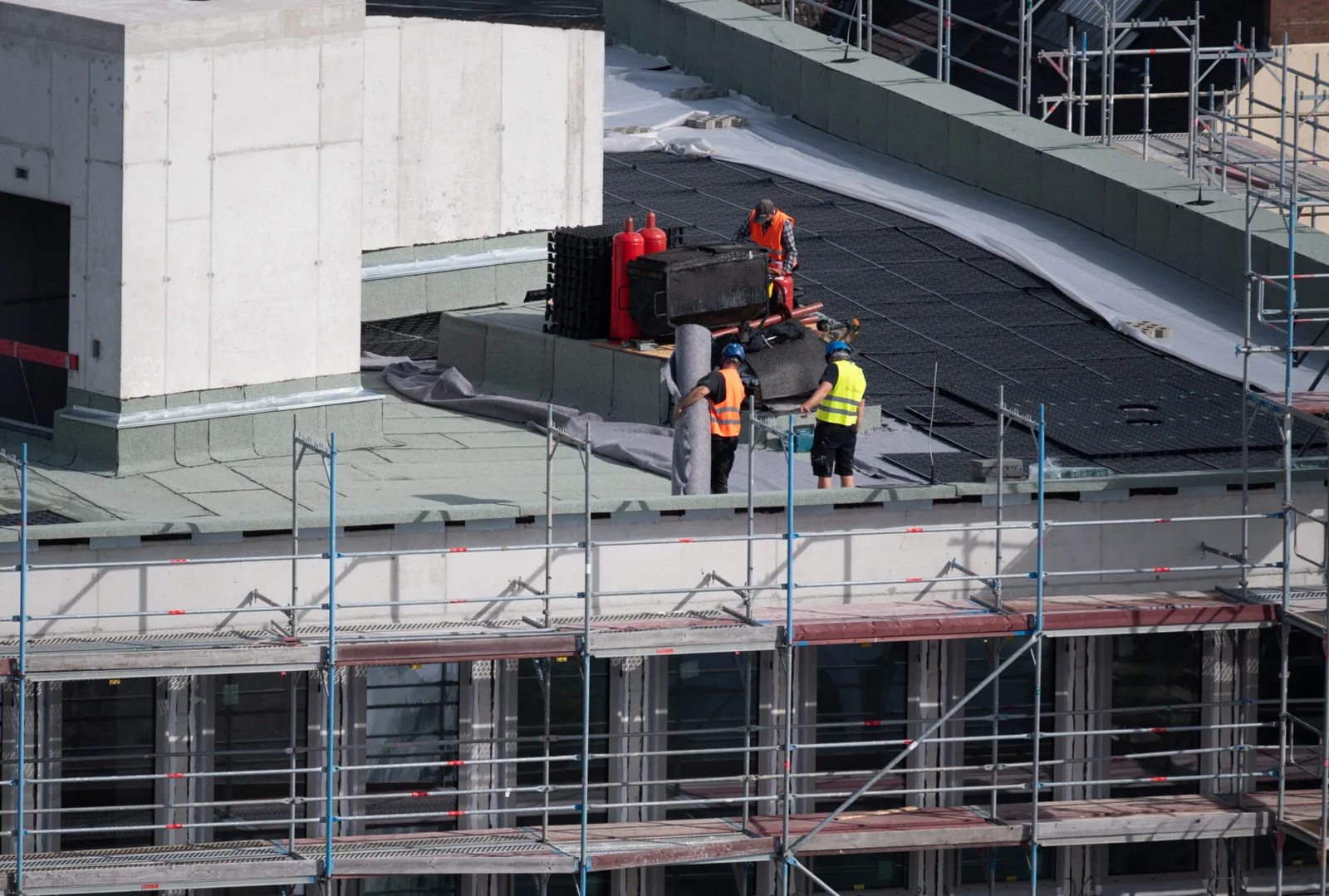
That means tear-off phasing is chosen by the calendar before it is chosen by the crew. Sections are sized so each can be torn off, insulated and dried in within one day of dry weather. A large low-slope roof is divided into bays, and the drain sump for each bay is finished first. A thaw cycle then drains toward finished work, not toward an open edge.
Summer work has its own limit, since late-summer days swing past 30 F. Membranes handle differently at midday than at dawn, and seams welded in cool morning air can differ from seams welded on a hot afternoon. We schedule welds for the part of the day when the sheet and the substrate are close in temperature, and we probe the seams after they cool.
Stage the crane pick and the material hoist early
In a dense district the laydown yard may be an alley, a lane or the roof itself. Material arrives by truck, moves by crane pick or material hoist, and waits on the roof itself. That puts the weight question on the load path: stacked rolls and pallets must sit over beams and columns, not mid-span.
We map the pick, the hoist, the laydown area and the street or alley access on the roof plan before material is ordered. Sidewalk and lane closures need city approval, so those dates go on the schedule first. Tenant entrances, loading doors and fire access get their own notes. A job that starts without those notes can stop at the first complaint.
Protect tenant access during tear-off
Hotels, offices and the University of Montana, the area's largest employer at 2,842 jobs, sit close to the downtown core, and occupied buildings do not close for a roof. Our occupied building reroofing approach sets noise windows, dust control and a named contact for each floor below the work.
Hot work is the other question. Torch-applied systems need a fire watch and a permit. Cold-applied, heat-welded and mechanically attached systems give alternatives, and the sheet lays out the trade-offs by cost, time and risk. Rooftop units need planning too, and curb and support work has to be sequenced with the mechanical contractor.
Choose a system that suits the load and the thaw
Snow load is a structural question first and a roofing question second. A new membrane adds little weight, but a second layer, a ballast course or a rebuilt parapet changes the load path, and the structure has to carry it. We check the existing layer count before we propose a recover, and we ask for the structural drawings where they exist.
Thaw cycles then pick the winner among the systems that pass. A sheet that stays flexible in a hard freeze and welds into continuous seams handles repeated freeze and melt well. A modified bitumen assembly brings redundancy at the cost of weight and hot work. Installed cost, expected service and repair path sit side by side, and the owner chooses with all three in view.
Clear the drains and keep them clear
Central and south Missoula had storm drains overwhelmed in 2016 by hail and a 20-minute downpour, and roof drains that tie into the same storm system face the same limit. Debris in a sump slows even a normal rain. We clear each drain, flush the line where access allows and record how long water stands after a test.
Where ponding persists, a new or enlarged drain or tapered insulation may be cheaper than patching every season. We price each fix as its own item, so the owner can choose by cost per year.
Close out with a punch list the owner can sign
The last step is a walk with the owner or manager. We check each flashing, each drain, each curb and each edge against the plan, and we list anything open on a punch list with a date. Photos of the finished work join the roof file, along with warranty terms and the drain map. A later inspector can open that file and see what was done, where and when.
Owners with several buildings can fold downtown roofs into a capital plan, so the next replacement year is known before it arrives. Neighboring areas such as the Old Sawmill District and the University District follow the same format. Sidewalk and alley closures are applied for early, because the permit date can move the crane date as much as the weather does.
Related Roofing Pages
Send the roof plan and occupancy schedule
Send the roof plan, the occupancy schedule and the access limits for your downtown building, and we will map the phasing and staging before any material is ordered.
Call 555-555-5555 or email [email protected].
Questions About Downtown Missoula
What decides whether a historic downtown roof is repaired or replaced?
Moisture in the insulation and the condition of the parapet and wall joints. If they are sound, repair and restoration can carry years. If the insulation holds water across a wide area, replacement is cleaner.
How is a downtown tear-off scheduled in winter?
It usually is not. The weather window runs late spring through early fall, and winter work is limited to temporary repairs and snow-related fixes.
What decides the crane pick date?
Street closure approval, the load limit of the roof, and a dry forecast. We lock the date only after all three are confirmed.
Can tenants stay in place during reroofing?
Yes, with noise windows, dust control and a contact per floor. Work on the floors directly below is sequenced for off-hours when possible.
What goes in the closeout file?
Photos of every detail, the drain map, warranty terms, the punch list with dates and notes on any change from the plan.