
EPDM Roofing in Missoula, MT
EPDM Roofing
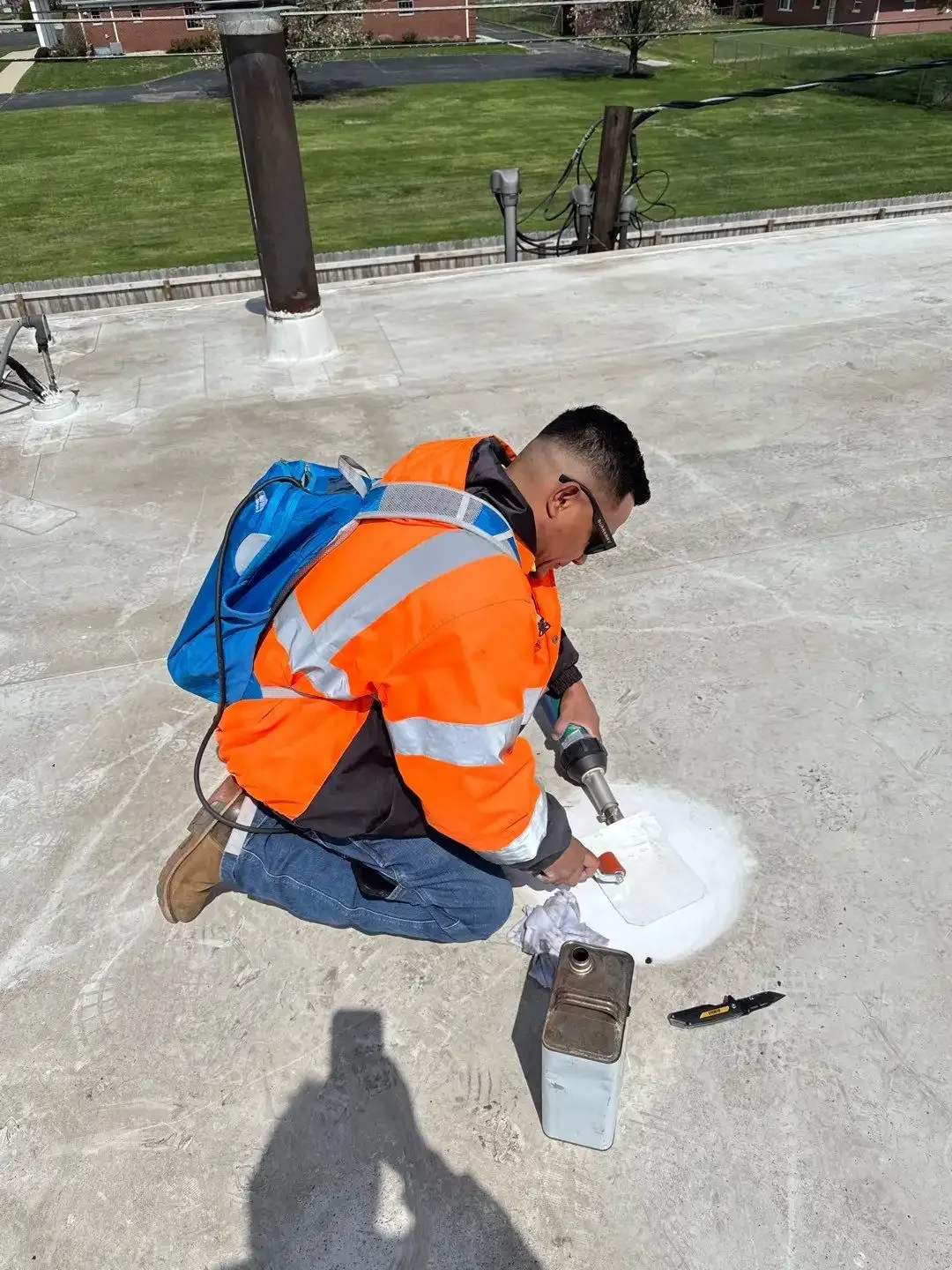
An EPDM seam fails slowly, and the slow failure is why the sequence matters. Tape or adhesive that was applied to a dusty edge lets go a little each winter, and by the time water shows inside, the lap has been open for a season. On a Missoula, MT roof the first step is to clean and prime every lap before it is closed, and the second is to finish that work before the temperature falls out of the adhesive's range. Snow covers the ground about 120 days a year, so the days when seams can be made well are counted in advance.
Understand the rubber
EPDM is a synthetic rubber membrane, black or white, supplied in large sheets that can cover a roof with few seams. It can be fully adhered to the substrate, mechanically attached or ballasted with stone. Seams are joined with liquid adhesive or with factory-applied tape, and flashings are made from the same rubber or from a pre-formed accessory.
The material stays flexible in cold weather, which is its main advantage in a market with 45 days a year that never rise above freezing. It also handles thermal movement without cracking. Where it is weaker is against grease and certain oils, and against sharp objects. Foot traffic and dropped tools cut it more easily than a heavy modified bitumen sheet, so walkways and pads belong on the roof plan.
Thickness is the second choice after attachment. Thicker sheets resist punctures and last longer under service traffic. Reinforced versions add a fabric scrim that improves tear strength. The bid names the thickness, the attachment method and the flashing material, so two proposals line up. A repair of an existing EPDM roof has to match the type already in place, because patches do not bond to every rubber the same way.
Look for the laps first
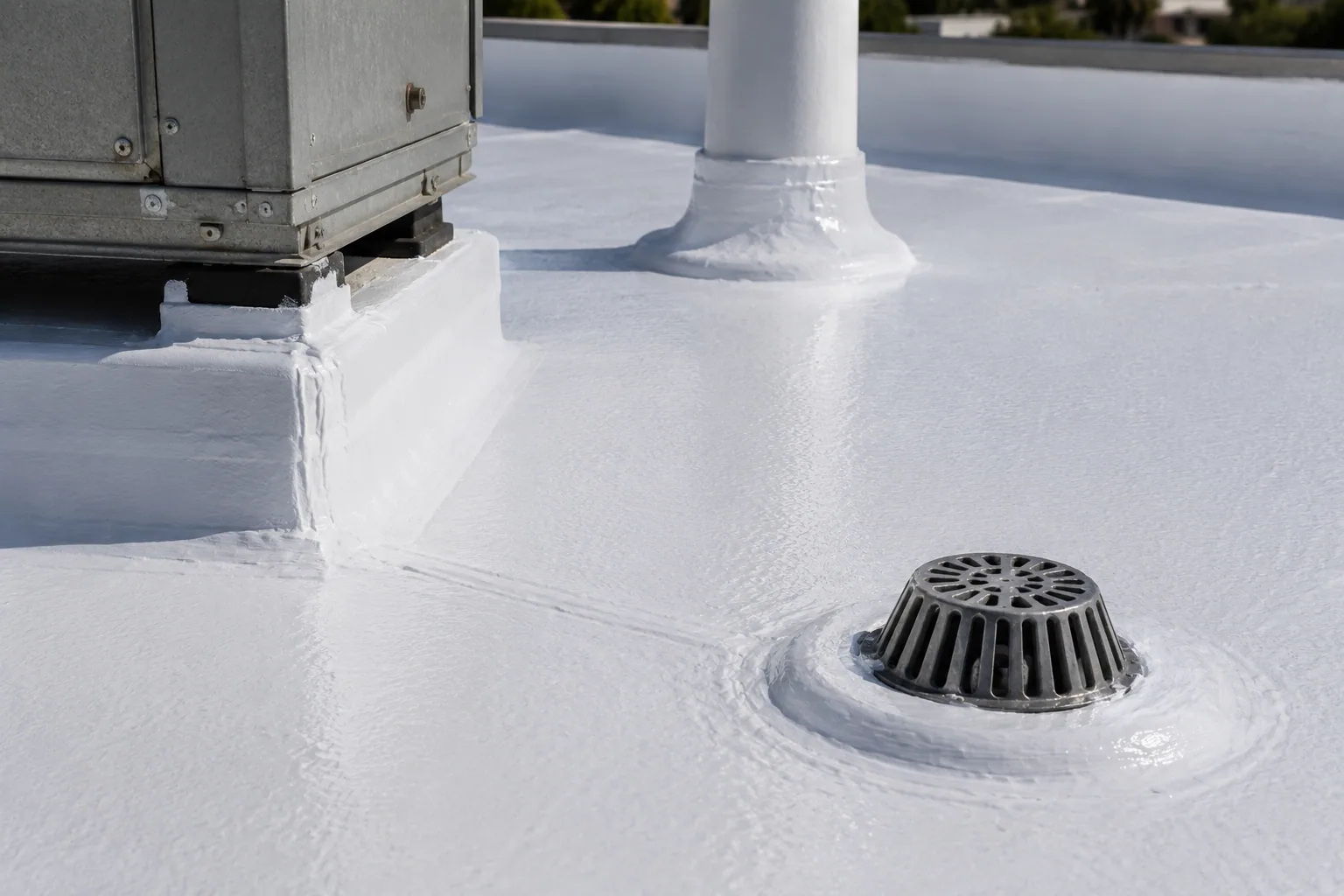
When an EPDM roof fails, the story is usually in the laps and the details. A seam that was spliced in damp conditions. Tape that did not take on a dirty sheet. A flashing that shrank away from a wall. A pipe boot that cracked at its collar.
The field of the sheet tends to last. Shrinkage over time pulls the membrane tight at walls and curbs, and that stress shows at the edge of every detail. Our inspection probes each seam, presses each termination and measures how far the sheet has moved from where it was fastened. The findings go on the roof plan with photos, and a repair is priced only after we know whether the problem is a lap, a detail or the age of the sheet itself.
Punctures are the other common finding. A dropped screw, a ladder foot or a technician's boot cuts rubber more easily than it cuts a reinforced thermoplastic. We count them and note their locations, because a cluster beside a rooftop unit points to a service path that needs a walk pad. Each puncture is patched with a primed, adhered rubber patch that extends several inches past the cut, and the edges are pressed with a roller.
Time the seams to the weather
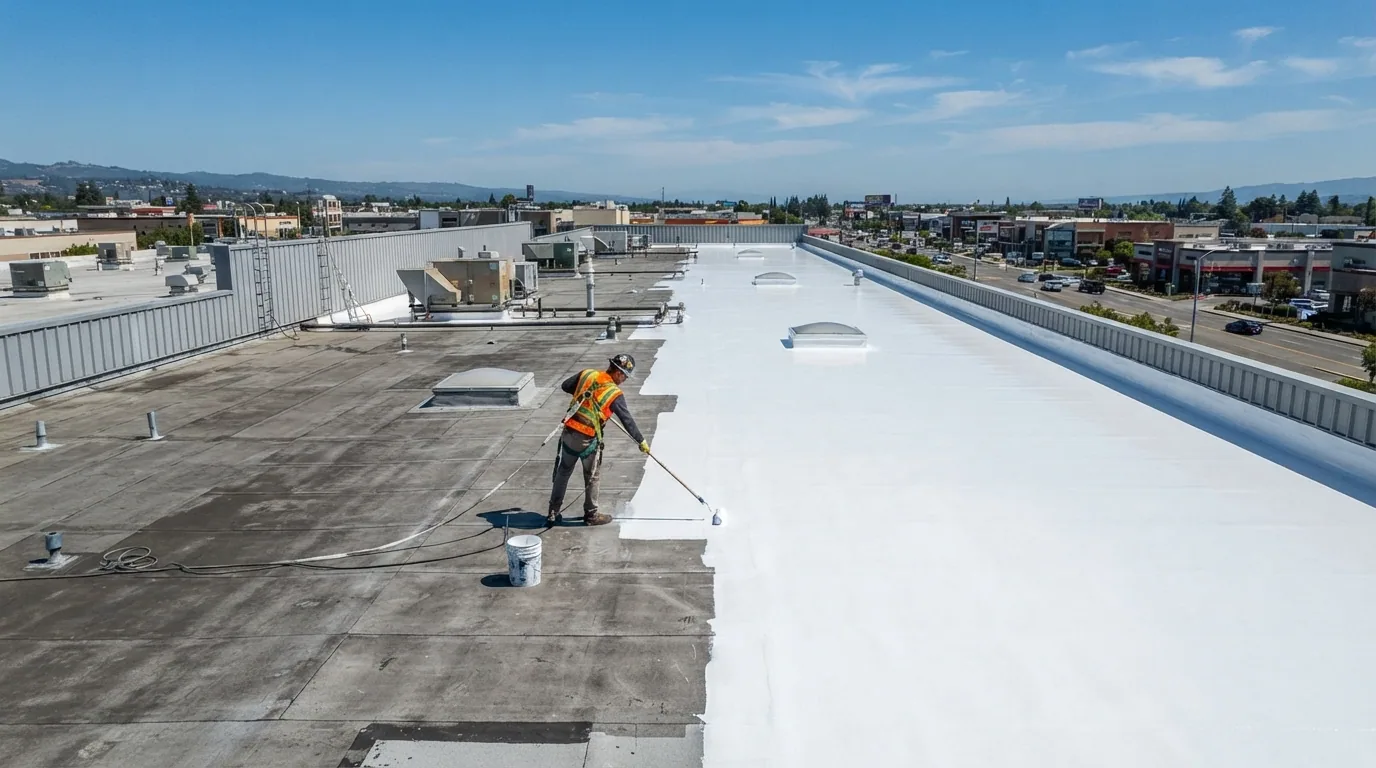
Adhesives have a working range. Too cold and they will not flash off and grab. Too damp and they trap moisture in the lap. Tape needs a clean, dry, primed surface. Late-summer days here swing more than 30 F on average, so morning and afternoon can differ enough to affect the same lap.
We schedule seaming for the part of the day when the substrate is warm and dry, and we keep a crew small enough to finish what it starts. Sheets are unrolled and allowed to relax before they are adhered. A half-glued section is never left overnight. Weather holds are priced as a line item, since a front can close the window for days. The plan names the sections that will be dried in each day.
Priming is a step that gets rushed. Primer dries to a specific tack before tape goes on, and the time depends on temperature. We watch that tack by hand, not by the clock, and we log the temperature at each seam run. The log goes into the warranty file with the photos.
Plan for hail and for heavy snow
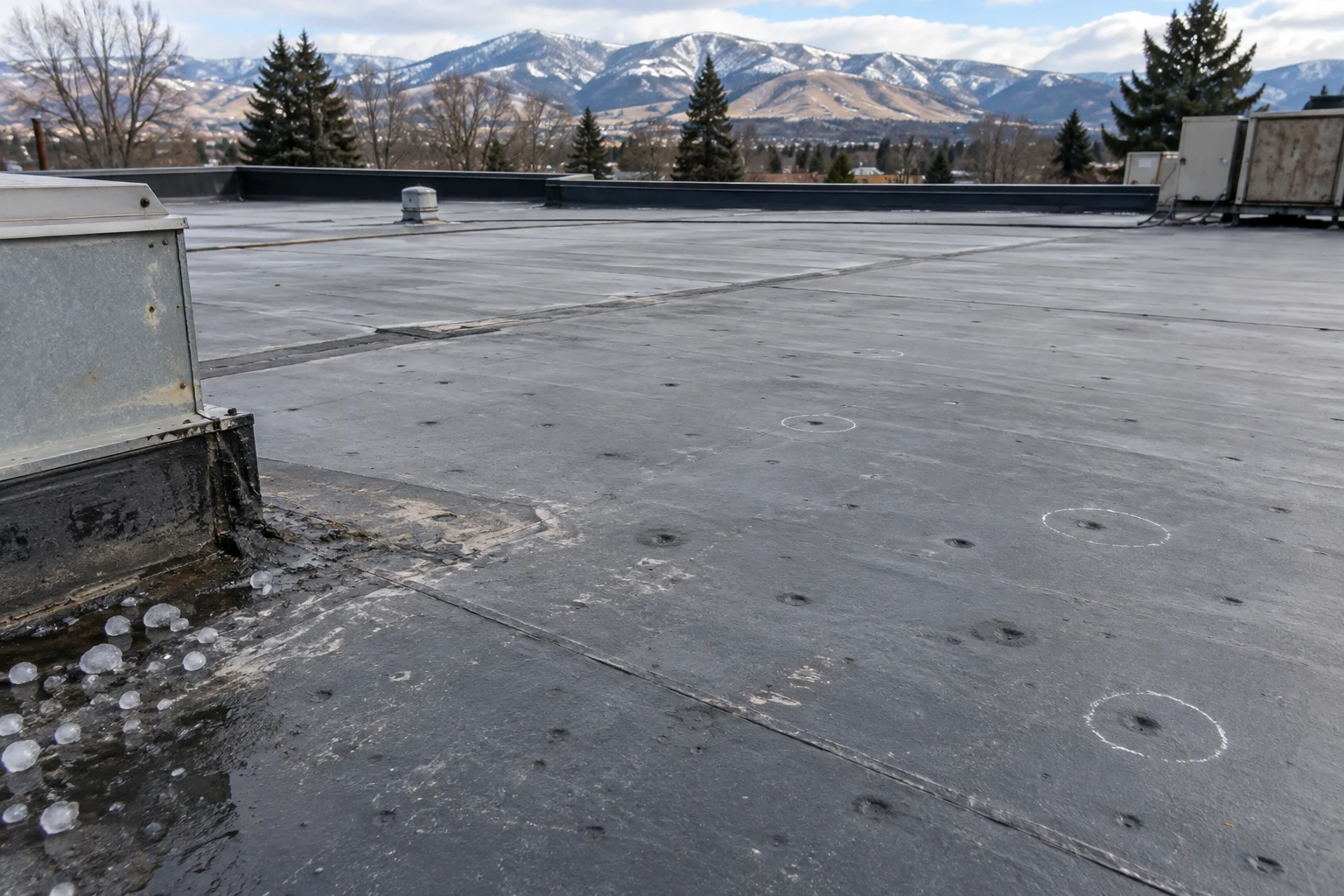
Central and south Missoula took quarter-size hail in 2016, along with half an inch of rain in 20 minutes that overwhelmed storm drains. Rubber takes that impact better than a brittle sheet, but a thin or aged EPDM can bruise or split, and the rain that follows finds every weakness. Our hail damage repair work begins with counting hits in test areas and probing the bruises.
Snow is the heavier load. The design ground snow load is 40 psf, and roof loads are figured from it under ASCE 7-16. A ballasted EPDM roof adds stone weight on top of that, so the structure has to be checked first. On an adhered roof the weight is small, and the focus shifts to drift areas behind parapets and units. Drain sumps stay open and clear, because meltwater that cannot leave the roof loads a lap that is not ready for it.
Keep the building running
Adhesives smell, and fumes travel to air intakes. We locate intakes before the install and screen or shut them for short periods. Noise is limited to hours the tenants choose. Hoist or crane lifts are timed so the entrances stay clear.
Schools and campus buildings add a calendar. Missoula County Public Schools employs about 1,450 people, and the University of Montana campus has 64 buildings on 220 acres. A school roof fits the summer break when classrooms are empty, and the plan reflects it. A multi-tenant building in a district such as Brooks Street and Southgate Midtown needs occupants notified of work hours and routes. The punch list at closeout covers drains, edges, flashings and the seam probe.
Compare EPDM with the other single-plies
Against TPO, EPDM is more flexible in cold but uses adhesive or tape at seams rather than welds. Against modified bitumen, it is lighter and faster but less tough underfoot. A black EPDM sheet absorbs heat, so snow melts faster off it than off a white sheet, which can help at drains and walkways and hurt in summer cooling. The owner decides by budget, expected foot traffic, grease exposure and the insulation floor set by Montana's 2021 IECC amendments. We lay the options out with prices.
Related Roofing Pages
Send the roof plan and the access constraints
Send the roof plan, the occupancy schedule and the access constraints, and we will map the staging area, the hoist location and the daily dry-in sections before any material is ordered.
Call 555-555-5555 or email [email protected].
Questions About EPDM Roofing
Does EPDM work well in Missoula winters?
The rubber stays flexible in cold, which suits the freeze and thaw pattern here. The weak point is the seam, so the install is timed for a window when adhesive and tape can bond. The sheet itself handles the cold well.
Is black or white EPDM better here?
Black absorbs heat, which helps melt snow and costs a little in summer cooling. White reflects sunlight and costs more. With 45 freezing days a year and only about 24 days at or above 90 F, many owners weigh the winter side more heavily.
How should walkways be handled?
Walk pads of compatible material are laid along every service route and around equipment. They spread wear and protect the sheet. We mark the routes on the roof plan and photograph them so changes are visible later.
Can an EPDM roof be coated instead of replaced?
Sometimes, if the sheet is sound, dry and clean. A moisture scan and a laps check decide it. A sheet with open seams or saturated insulation needs repair or replacement first, since a coating over those traps the problem.
What does the closeout package hold?
Photos of every detail, the attachment layout, the seam and adhesive records, product data, warranty papers and the signed punch list. Those documents show later managers exactly how the roof was built.