
Modified Bitumen Roofing in Missoula, MT
Modified Bitumen Roofing
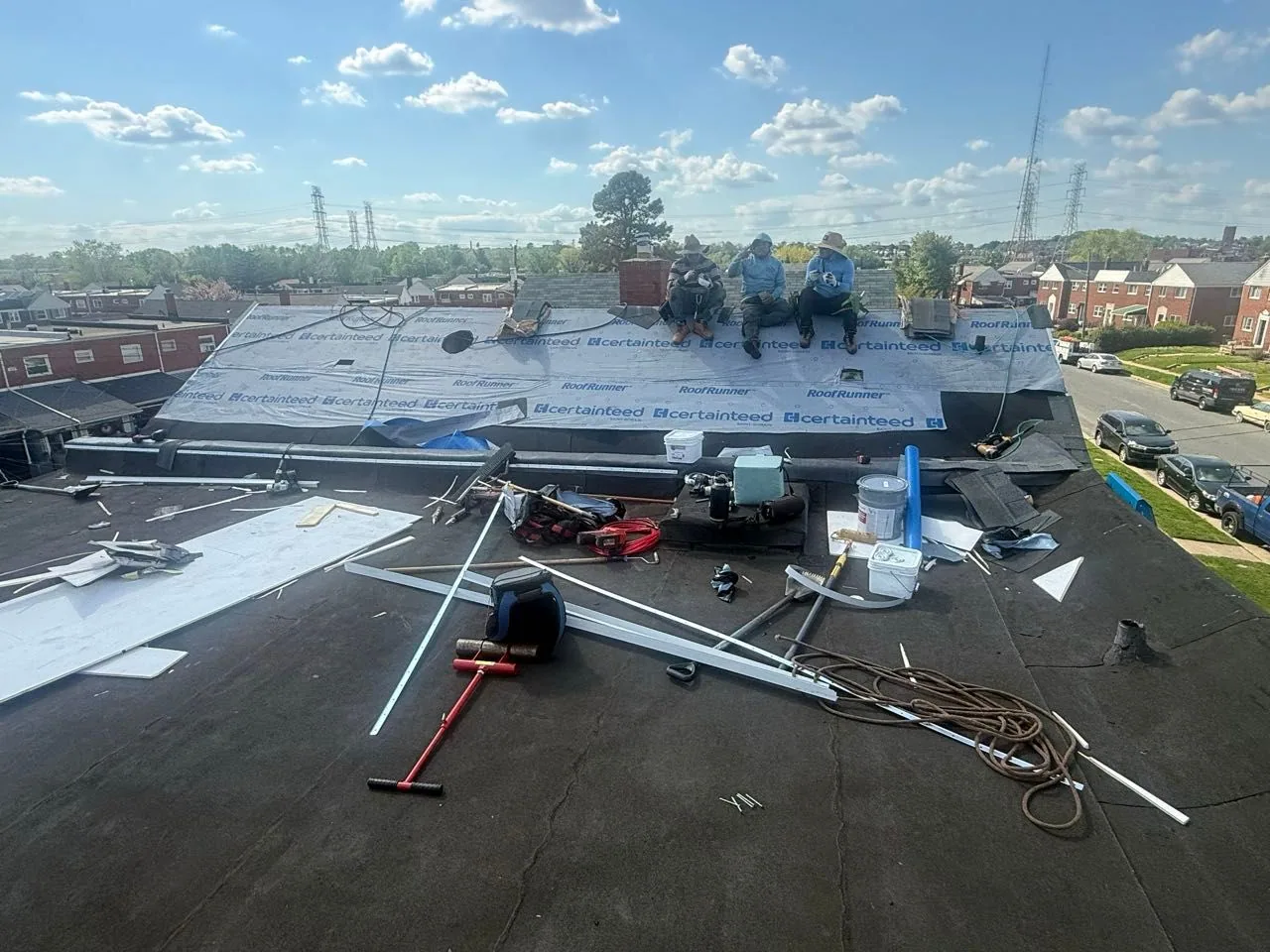
Open flame comes before everything else on a torch-applied roof, and the sequence follows from it. The fire watch is set before the first roll is lit. Combustible edges are covered. Intakes are screened. Only then does the cap sheet go down. The season for that work in Missoula, MT is short, because snow lies on the ground about 120 days a year, and the risk to avoid is a roof only half dried-in when a front arrives. Modified bitumen is a tough, layered system, and its installation has a tighter order than most.
Separate SBS from APP
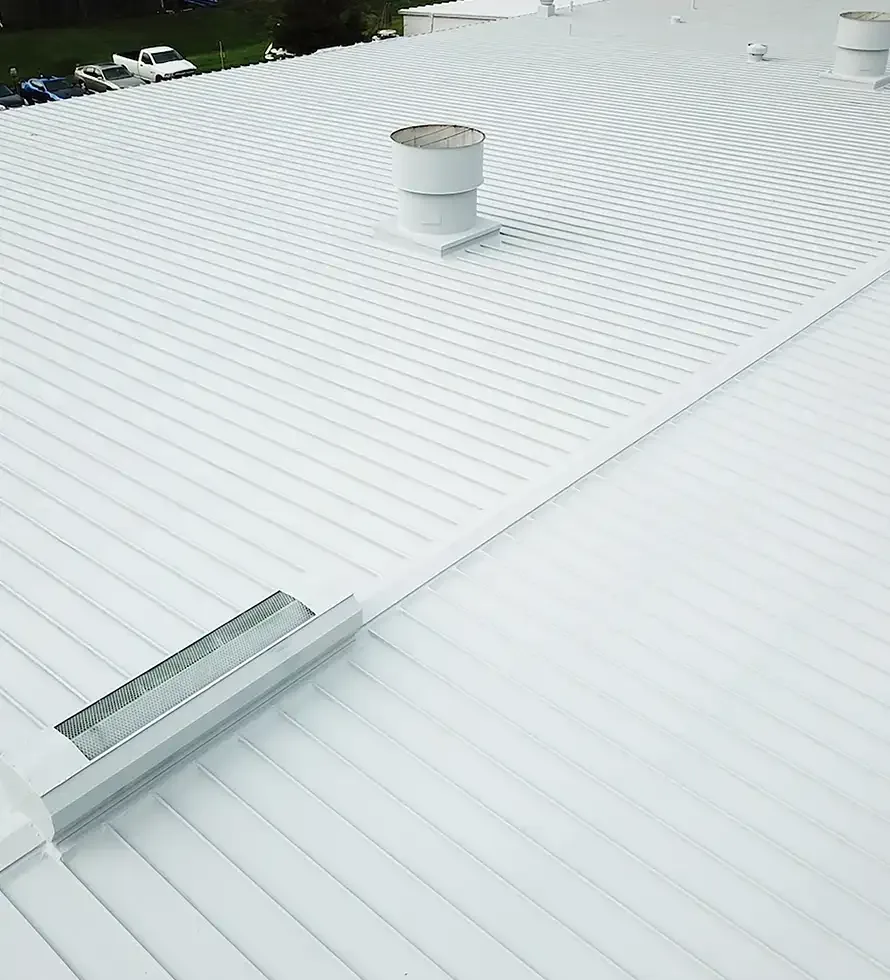
Modified bitumen is asphalt blended with a polymer and reinforced with fabric, supplied in rolls. SBS is blended with a rubber-like polymer and stays flexible in cold. APP is blended with a plastic-like polymer and handles heat well and is usually torch-applied. Both are installed in one, two or more plies with a granule-surfaced cap sheet on top.
Application varies. Torch-applied sheets are heated until the underside melts and bonds. Hot-mopped sheets are set in asphalt. Cold-applied sheets use adhesive. Self-adhered sheets peel and stick. Each changes the fire risk, the fumes and the speed. In an occupied building the choice often comes down to which method the owner's insurer and the tenants will accept.
Granule color and weight matter at the cap. Light granules reflect more sunlight and cut surface heat. Dark granules melt snow faster. The choice affects drains and walkways in winter and the cooling load in summer. We show both options with their effect on the owner's energy line.
Find the laps and the surface loss
Modified bitumen fails at laps, flashings and the granule surface. A lap that was not fully bonded opens in a thaw cycle. Base flashing at a wall can slip or crack. The cap sheet can lose granules and expose the asphalt to ultraviolet light, which hardens and cracks it.
Late-summer swings past 30 F and about 45 winter days that never rise above freezing work all of these. We inspect granule loss in gutters and at drains, probe laps, press flashings and look for blisters. A blister that has not broken is a trapped pocket of moisture or air. Cutting it open without a plan makes it worse, so the repair is written into the findings sheet with a method and a photo.
Edges deserve a second look. The perimeter of a modified bitumen roof carries the wind load, and a lifted edge flaps the cap sheet and tears it. Basic design wind speed for Missoula is 102 mph for Risk Category II, so edge metal and perimeter fastening are checked against that figure. A loose edge detail found early is a small repair. Found after a storm, it is a section replacement.
Control the heat and the fumes
Hot work needs rules. A written fire plan names who watches, for how long after the last flame, and where extinguishers sit. Flashings that touch combustible material get cold-applied or heat-welded methods instead of an open flame. The roof edge and every penetration are checked before the torch comes out.
Fumes travel. Asphalt vapors reach air intakes quickly, and a hospital, clinic or school can feel them inside. We locate every intake on the plan and screen or shut them for short periods. Hospitals such as St. Patrick Hospital and Community Medical Center, two of the city's largest employers, call for low-odor methods and a signed access schedule. Where a flame is not allowed, self-adhered or cold-applied systems cover the same ground.
Hot work also affects insurance. Many insurers ask for a hot-work permit, a fire watch for a stated time after the last flame and proof of crew training. We collect those documents before the job and put them in the closeout file. If an insurer refuses open flame on a building, we say so on the survey and price the cold-applied path instead.
Plan for hail and heavy snow
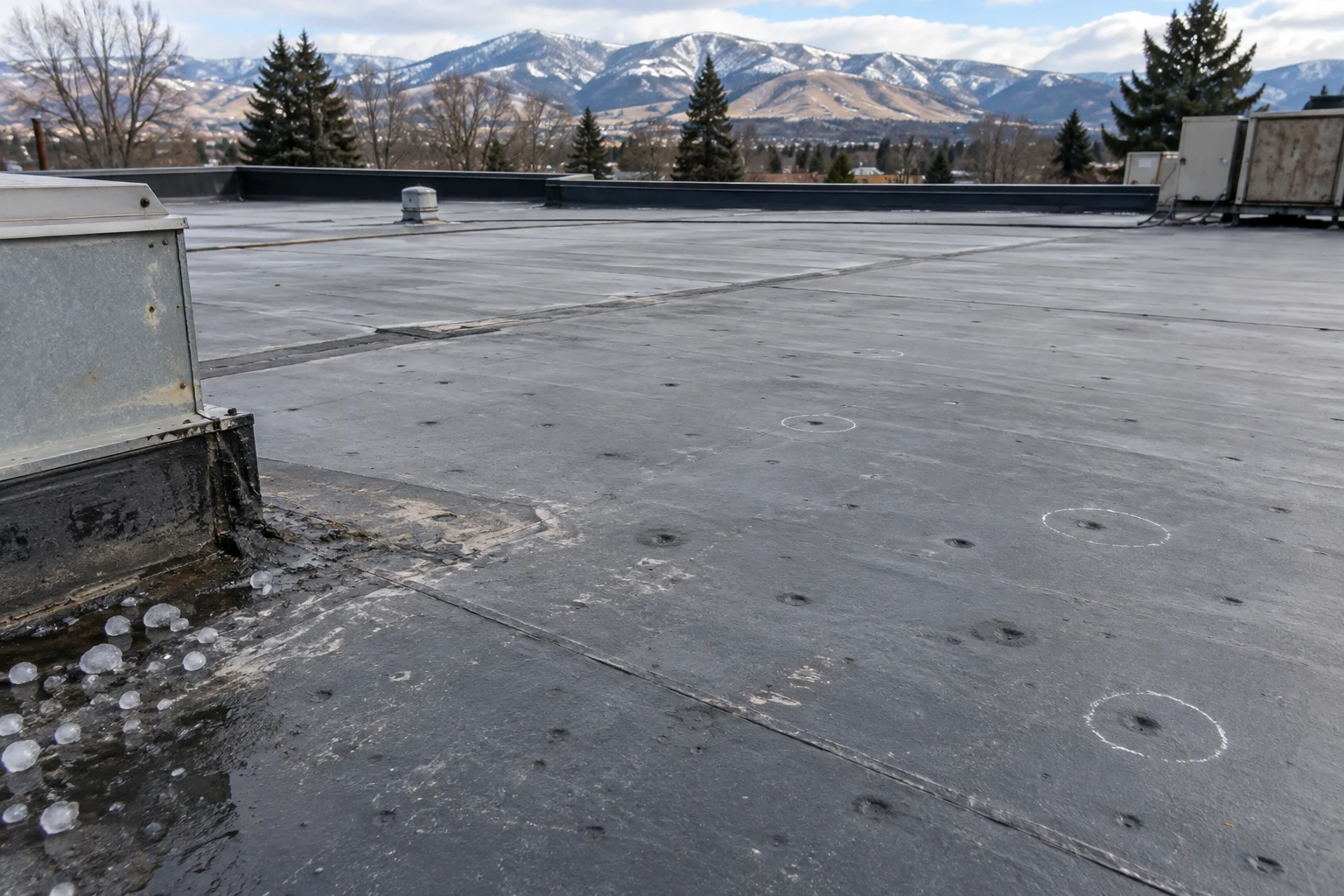
The 2016 storm that overwhelmed storm drains across central and south Missoula also brought quarter-size hail. A granule-surfaced cap sheet over a multi-ply base takes that impact better than thin single-ply, and it is a common choice where hail and foot traffic are expected. After a storm we count hits in test areas and probe for fractured plies. The hail damage repair count is done in marked test squares, with photos of each hit.
Snow is the heavier concern. Roof loads start from a 40 psf ground load, and the 2011 snow collapse at the former Bonner mill shows what an overloaded structure does. A modified bitumen system is heavier than single-ply, so the deck gets checked for capacity before a recover is added, and drift areas behind parapets are marked on the plan.
Stage the rolls, the kettle and the pick
Rolls are heavy, and they go up by crane or hoist. The laydown yard has to stay out of tenant entrances, and flammable material is stored away from the building. If a kettle is used, it sits where fumes will not reach intakes. The plan marks each location.
A historic roofline in downtown Missoula needs a review of what can be changed, since the city lists more than 60 National Register buildings. Delivery windows downtown are tight. For a mid-size office building roof, the staging plan names the lift days and the doors that stay open.
Industrial roofs at the redeveloped Bonner mill site, in the Bonner-West Riverside area, are large and carry heavy equipment. Rolls for a big roof arrive in several truckloads, and the kettle or torch crew works from a set zone. On a campus like the University of Montana's, with 64 buildings on 220 acres, a cold-applied method keeps flame away from occupied classrooms and residence halls. The staging plan changes with each site.
Decide between mod bit, BUR and single-ply
Against built-up roofing, modified bitumen is lighter and faster. Against EPDM or TPO, it is tougher underfoot and slower to install. The owner decides by traffic, fire rules, noise tolerance and budget. A roof with heavy service traffic and nearby fumes sensitivity may favor a cold-applied cap. Insulation thickness follows the state's energy code, and the price of that insulation shapes the comparison.
Reserve Street retail roofs, where Costco, Lowe's and Walmart are among the big tenants, may call for speed and low disruption, which points to cold-applied or self-adhered laps. A mechanical roof with heavy service traffic may call for the thicker cap. The survey decides which fits.
Related Roofing Pages
Send the roof plan and the fire and access rules
Send the roof plan, the occupancy schedule and the access constraints, including any hot-work rules, so the phasing and the staging area can be mapped before any material is ordered.
Call 555-555-5555 or email [email protected].
Questions About Modified Bitumen Roofing
Is torch-applied modified bitumen allowed on every building?
Not always. Insurers, building owners and codes may restrict open flame. When it is restricted, cold-applied or self-adhered systems install the same layers without a torch. We confirm the rule before bidding.
Why do granules collect in the gutter?
The cap sheet sheds granules as it ages, especially after hail or foot traffic. A little is normal. Heavy loss exposes the asphalt, which hardens in sun. We note the amount and compare it year to year.
Can I recover over an existing modified bitumen roof?
Often yes, if it is dry, attached and within the layer count the code allows. A moisture scan and core cuts decide it. Saturated insulation under the old sheet means a tear-off.
How long can a half-finished roof sit?
Not overnight. Each section is sealed to the old roof before the crew leaves. A front can arrive quickly, and an open edge in a storm is a larger problem than the leak that started the job.
What does the closeout list include?
Photos of laps, flashings and drains, the layer schedule, product data, warranty papers and a punch list the owner signs. These show later managers how the roof was built.