
Snow Load and Ice Dam Roof Damage Repair in Missoula, MT
Snow Load and Ice Dam Roof Damage Repair
Snow damage on a Missoula, MT roof is repaired in a fixed order, and the first step is not roofing. It is deciding whether anyone should be on the roof at all. Missoula's design ground snow load is 40 psf, the city averages about 39.5 inches of snow a winter and snow sits on the ground about 120 days a year. In 2011 the former Bonner mill roof gave way under heavy snow. A roof carrying a drift beside a mechanical room can be near its limit, and a crew adds weight. So the sequence is: assess the load path, clear snow safely, open the drains, repair the edges, then repair the membrane when the weather allows.
You see the order on the plan before any crew goes up, with the days the work is possible and the days it is not.
Assess the load path before anyone walks the roof
The first visit is from the ground and from below. We look for sag in the roofline, deflection in the ceiling, cracked finishes below drifts, new gaps at doors and windows and any change in how the building sounds in wind. Roof snow loads are calculated from the ground load under ASCE 7-16, and drifts build against taller walls, rooftop units and steps in the roofline. Weight at those points can run past the open-field load.
Where we see signs of distress, we stop. We recommend that an engineer review the framing before anyone clears snow from the area, and we do not stamp structure. Where the roof is sound, we mark drift lines on the plan and plan the removal from the top of the drift down, working from the edge inward. Snow thrown onto a lower roof or a walk adds a second problem.
Remove snow without cutting the membrane
Snow removal is where many roofs are damaged. A steel shovel on a frozen membrane cuts the sheet, an ice chopper cracks a seam and a boot on a thin cover board punches through. We use plastic or wood tools, leave a layer of snow over the membrane and keep tools away from seams, drains and flashing.
Removal follows the load. Drifts against walls and units come first, since they are the heaviest. The open field comes last, or not at all. We carry a plan that shows where snow goes, because a roof edge above a walk or an entrance is no place to throw it. About 45 days a year never rise above freezing, so a roof can hold ice as well as snow, and ice is heavier. We record what we removed, from where, so the owner and an insurer can see what the roof carried. Our emergency roof repair crews respond at any hour when a leak or a sag is reported.
Open the drains and break the ice dam at its source
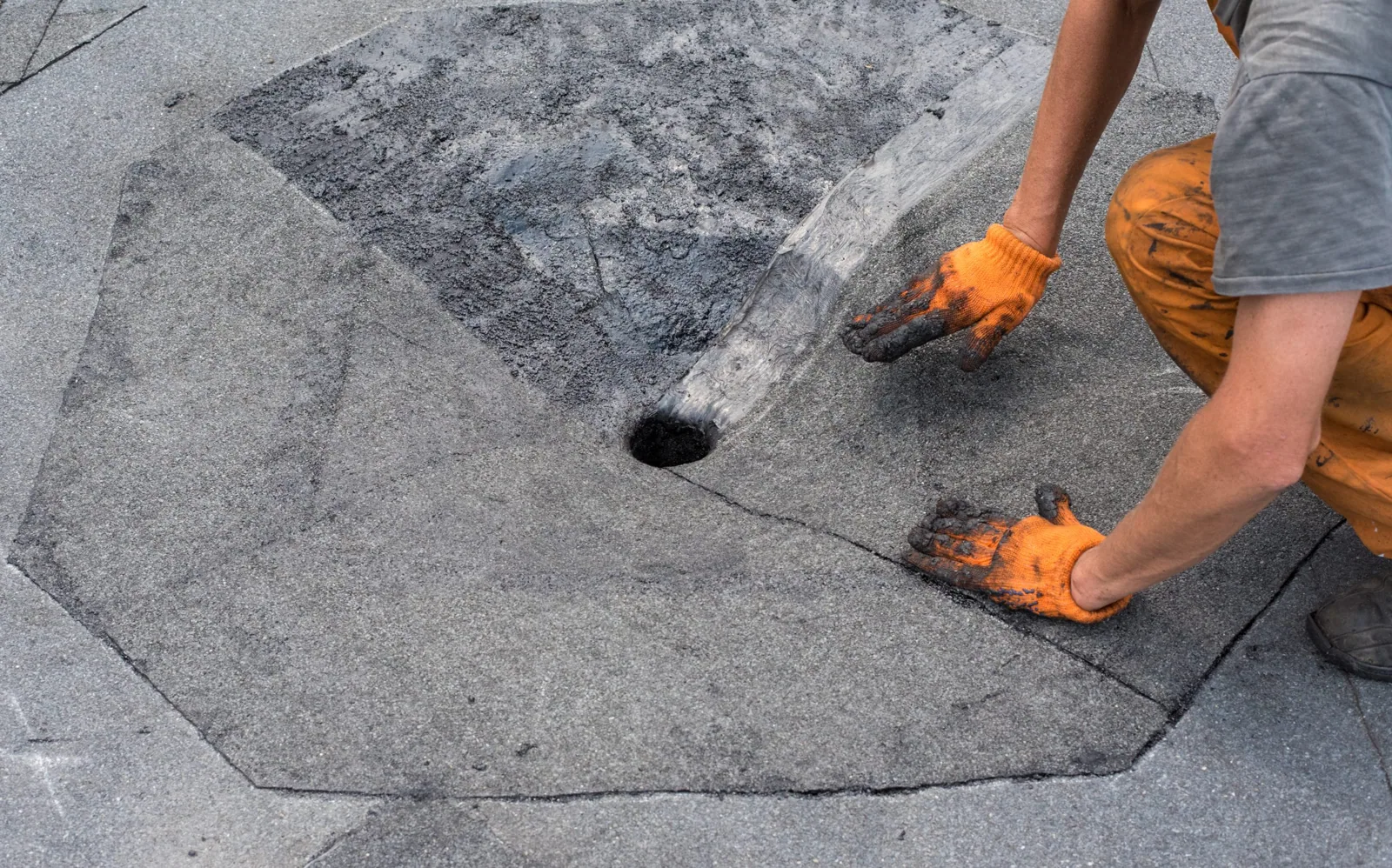
An ice dam forms where meltwater runs from a warmer part of the roof to a colder edge and refreezes. The dam holds water behind it, and the water finds its way under laps and flashing. The fix is not to chop the ice. It is to open a channel for meltwater to leave, usually by steaming a path from the drain or the eave inward, then to find why the roof is warm in one place and cold in another.
The cause is often a drain sump that froze or clogged, a gutter without heat or a section of poor insulation. We clear the sump first, in the fall if we can and in the first thaw if we cannot. Drain and scupper work covers cleaning, resetting and adding overflow. At the edge, edge metal and gutters are checked for ice damage and pulled fasteners. Ponding left behind after the thaw is handled as in ponding water repair.
Repair edges, flashings and snow guards next
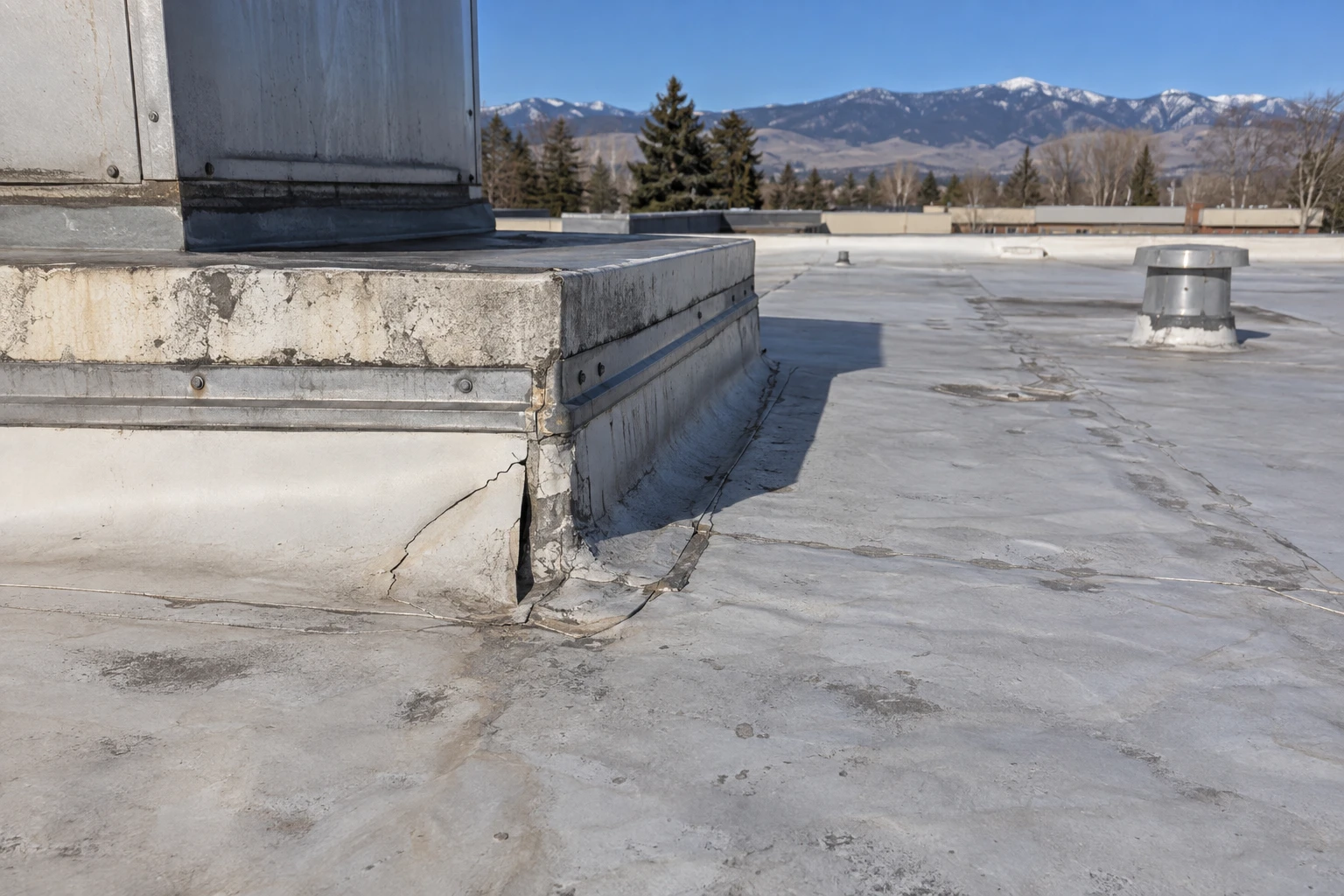
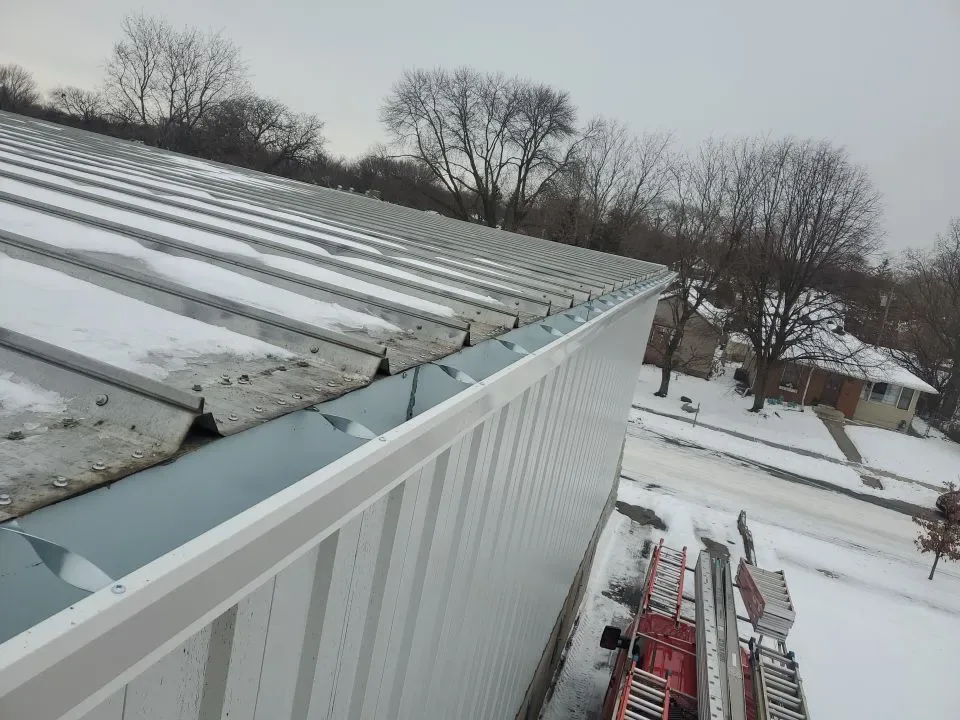
Snow and ice pull on edges. A slide from a sloped section tears off gutters, bends coping and opens flashing. A drift against a parapet pushes meltwater up behind the cap. After the load is safe and the drains are open, we repair the edges: new fasteners, replaced coping, resealed terminations. Where the cap or termination has opened, the work follows the same steps as any flashing failure repair.
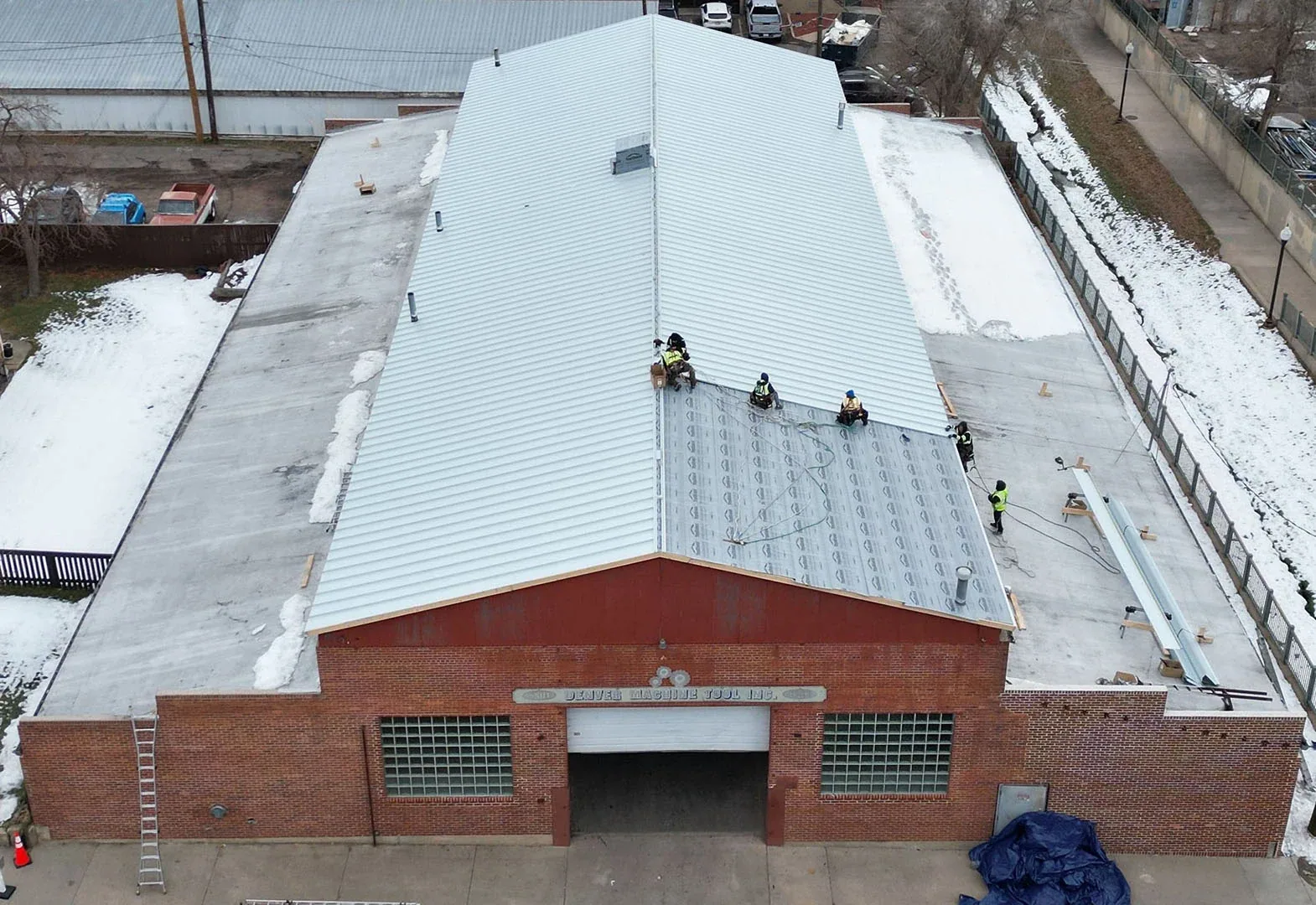
Snow guards belong on any slope that can drop onto a walk, an entrance, a vehicle lane or a lower roof. They hold the snow on the roof and let it melt in place. On a standing seam metal roof, guards clamp to the seams and need no penetrations. We mark every slope that can shed, price the guards and give the owner a choice.
Metal roofs also show another sign. Slides that dragged across panels scratch finishes and sometimes shear a clip. We check clips and seams along the slide path.
Repair the membrane when the weather allows
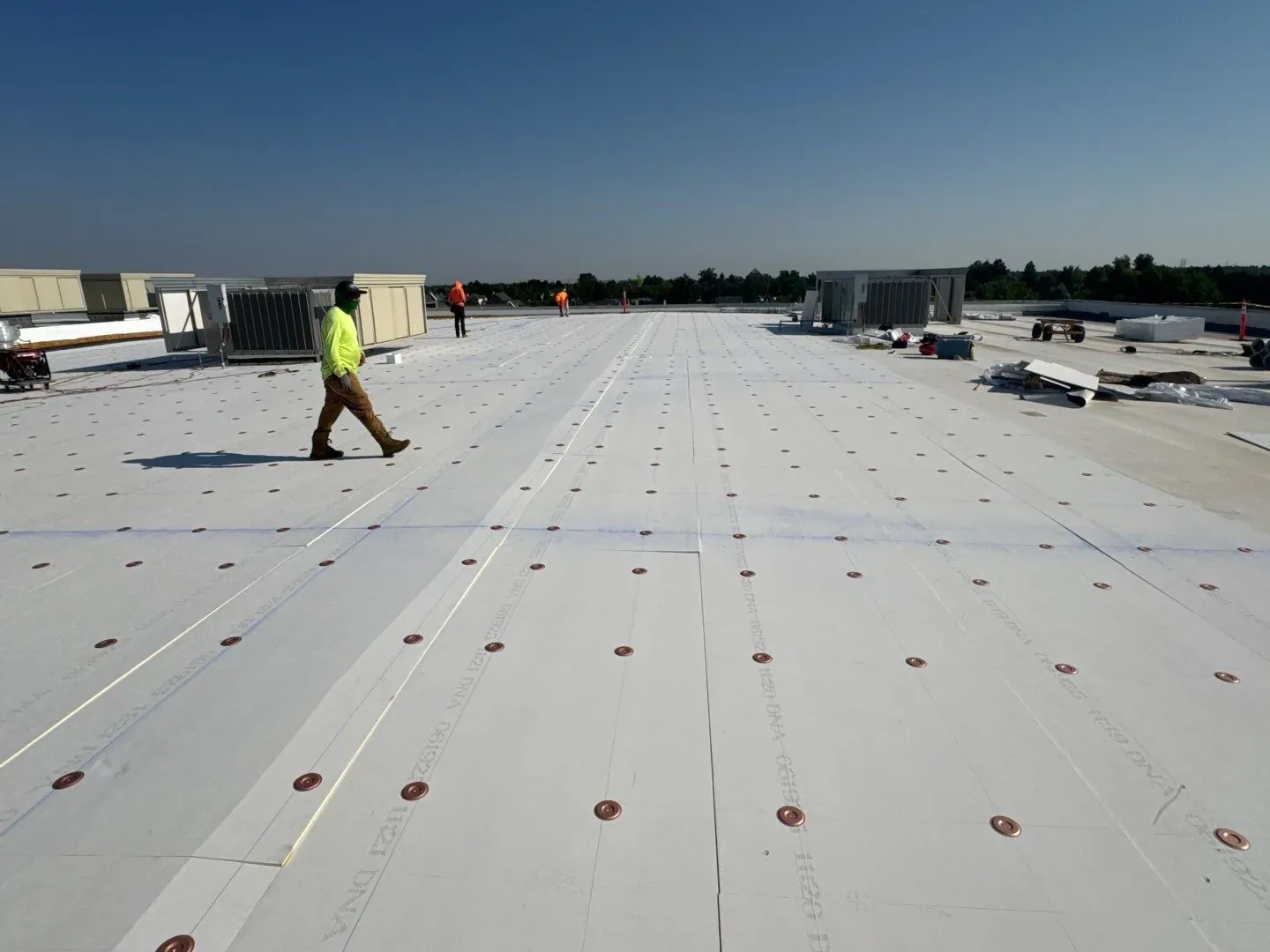
Membrane repair comes last because it needs dry, clean, above-freezing conditions to cure. A weld or adhesive laid on a frozen morning peels. We use cold weeks for the tasks that tolerate them: load assessment, snow removal, drain thawing and edge fastening. The permanent membrane work goes into the first stretch of steady weather, usually late spring.
Until then, the temporary cover is priced as temporary, with an expected life. In a snow market, a tarp carries load too, and we note how it will behave under a drift. We also check the layers below any area where meltwater entered. A core and an infrared scan show whether the insulation is saturated, and if it is, it comes out before the new membrane goes on. The energy code enforced since June 10, 2022 sets the insulation level on a replacement, so the repair scope marks that line.
Plan for the place, not the average
Snow is not the same everywhere in this service area. Potomac, about 23 miles northeast of Missoula on Montana Highway 200, averages 51.8 inches of snow a year, and Seeley Lake, about 52 miles northeast, averages about 118.9 inches on roughly 59 snowy days. A roof in Seeley Lake carries a different load than one in Missoula, and we use the ground load that applies to the place. In Missoula itself, the former mill buildings at Bonner-West Riverside are where heavy snow collapsed a roof, and any large old roof there gets a load review first.
The paperwork follows the work. Dated photographs of the snow load, the removal and the damage form the file for an insurance and restoration claim. Reports from a prior commercial roof inspection are the baseline we compare against.
Related Roofing Pages
Send the roof plan and the signs you have noticed
Send the roof plan, photographs of any sag, stains or ice, and the date you first noticed them, and we will assess the load path, map the removal sequence and plan the repair around the weather.
Call 555-555-5555 or email [email protected].
Questions About Snow Load and Ice Dam Roof Damage Repair
When should snow be removed from a commercial roof?
When drifts approach the design load, when a sag or new interior cracks appear, or when a slide threatens a walk or entrance. We assess the load first and remove from the heaviest drifts inward.
Can a roofer chop ice off a roof?
We avoid it. Chopping cuts membrane and cracks seams. We open a channel for meltwater, clear the sump and find why the roof is warm in one spot and cold in another.
Does snow damage void a warranty?
Some warranties exclude damage from snow load beyond the design value or from snow removal methods. We read the paperwork before removal and note any requirement in the plan.
How do we know if the structure is stressed?
Look for sag, new ceiling cracks, doors that stick and unusual noises. If you see any of them, stay off the roof and call an engineer. We will document what we can see from outside.
Do snow guards need roof penetrations?
On standing seam metal, no. Clamp-on guards attach to the seams. On other roofs, guards are bonded or fastened with sealed fasteners, and we detail each type for the roof.