
Ponding Water Roof Repair in Missoula, MT
Ponding Water Roof Repair
Ponding on a Missoula, MT roof gets fixed from the drain outward, and the order matters. If the membrane is repaired before the sump is cleared, the next thaw backs meltwater up behind the new work before it has cured. With roughly 39.5 inches of snow a winter and ground cover into spring, a flat roof spends months turning snow into water that has to find a drain. A 20-minute cloudburst in 2016 overwhelmed storm drains across central and south Missoula, and a roof that drains slowly in March drains worse in a burst like.
We measure the ponding first, then choose the repair, then price it by cause.
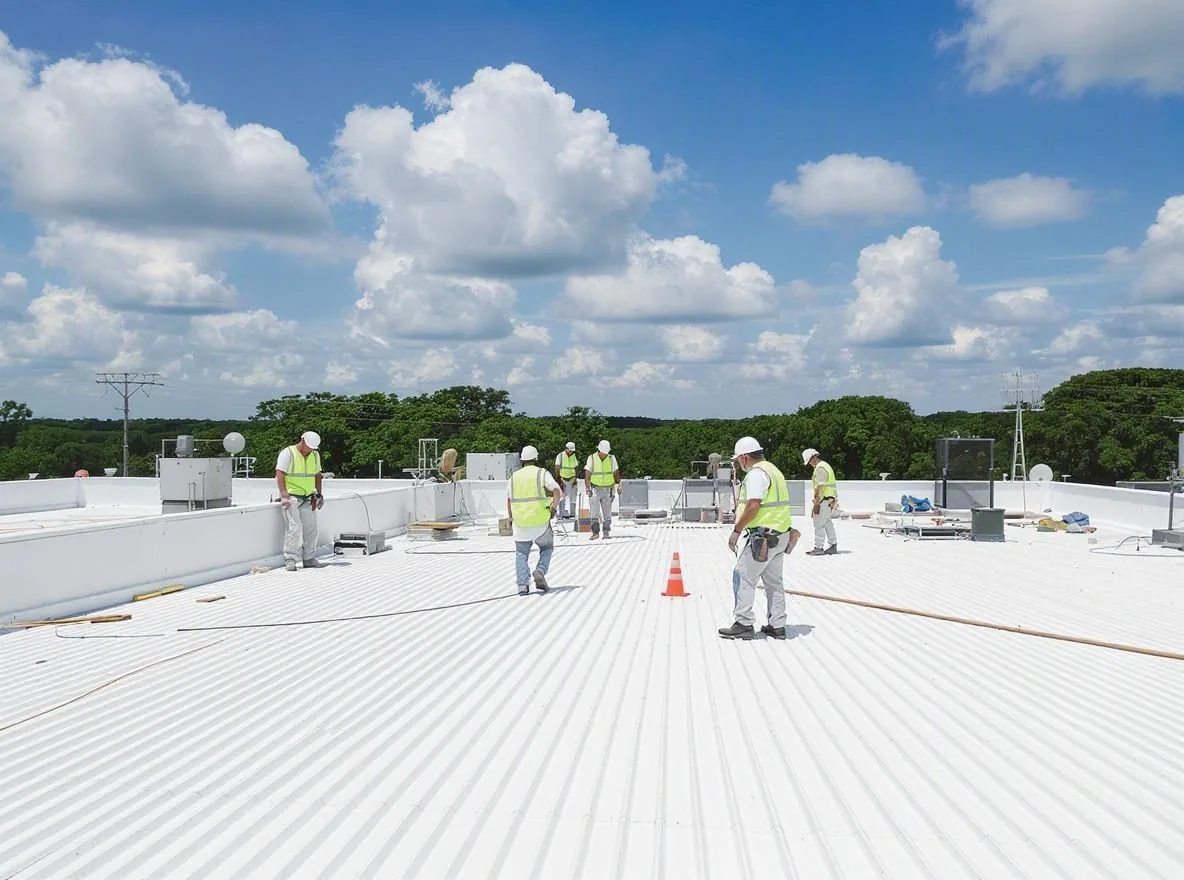
Trace the standing water to its cause
Four causes account for most ponding. Design: a roof built nearly flat, with too few drains or drains set too high, holds water in every melt. Deflection: the deck or framing has sagged between supports and made a basin. Blockage: leaves, grit and frozen meltwater plug drains and sumps. Compression: insulation or membrane under heavy equipment or traffic leaves a depression.
Snow load adds a fifth. The design ground snow load is 40 psf, and a roof that has carried drifts against taller walls for years can sag where the drift sat. We mark likely drift lines on the plan and check them first. We identify which cause or combination applies before choosing a repair, since clearing a drain will not fix a sagging deck and re-sloping will not help a blocked scupper.
Building type points to the likely cause. Big retail roofs along North Reserve Street, where Costco, Lowe's and Walmart sit among hotels and smaller stores, are broad and low-slope, so the question is usually drain count. Campus buildings in the University District, where the main campus has 64 buildings on 220 acres, vary in age, so deflection and compressed insulation show up on the older halls. Older downtown blocks may bring internal gutters that clog.
Measure after a thaw, then measure again
We wait a day or two after a melt or a rain, then walk the roof and mark every area that still holds water. Depth is measured with a straightedge, and each area is photographed with a scale reference. The record shows location, approximate area and depth. We repeat it after a second event to see which areas drain slowly and which never do.
A roof with a few shallow patches that clear within a day is a maintenance item. A roof with deep areas that hold water for days is a design or structure problem. An infrared moisture survey tells us whether the layers below a pond are saturated. If they are, the repair goes beyond the surface, because damp insulation loses value and adds weight to a roof that may already be deflecting.
Both documents go into the roof file, so the next survey can show whether a basin is growing or holding steady.
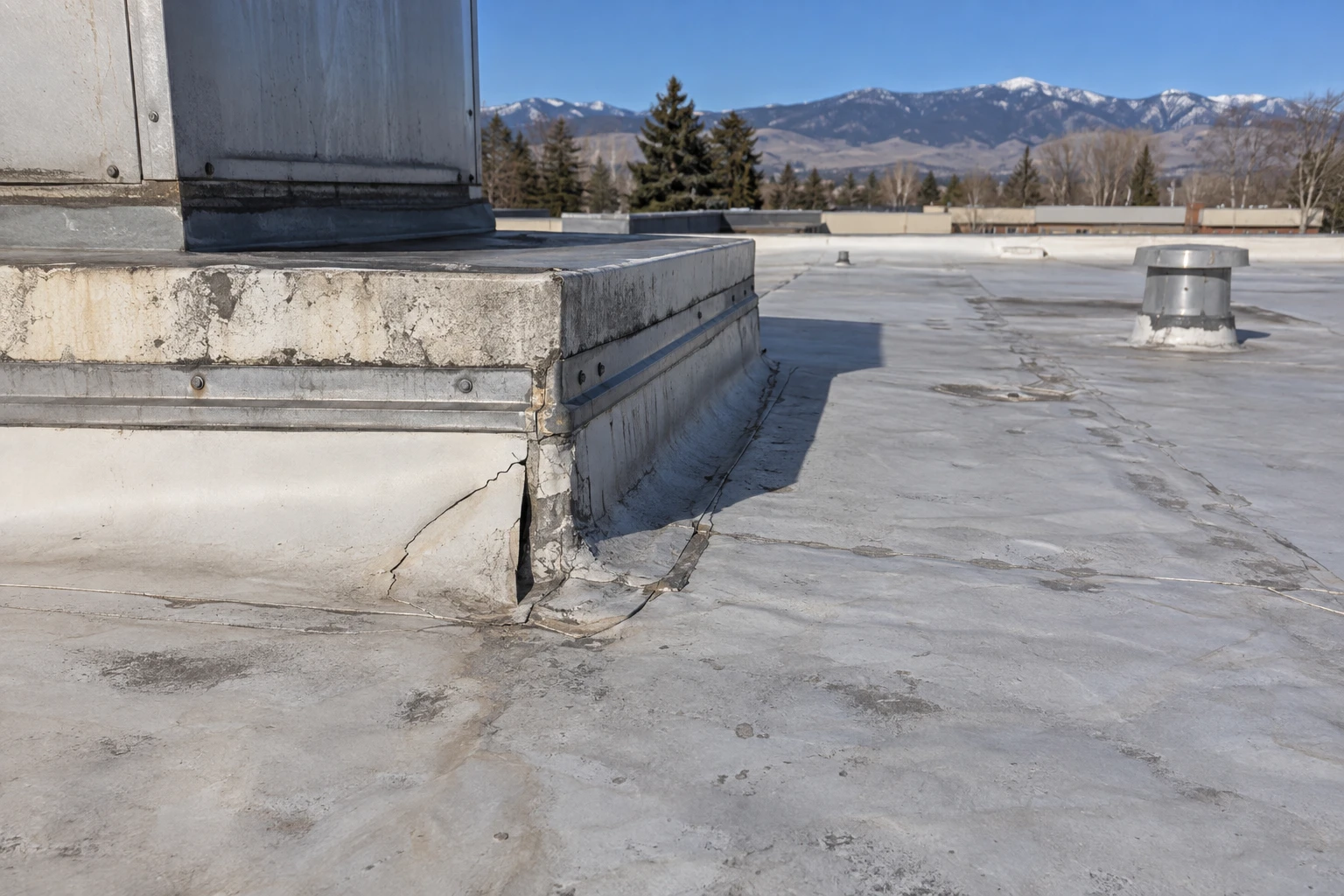
Clear the sump, then count the drains
The cheapest fix is also the first. We count drains and scuppers against the roof area, check each for blockage, damaged strainers and incorrect height, and test the flow. A roof with one drain serving too much area, or a scupper set above the low point, ponds by design. Drain and scupper work covers cleaning, resetting, adding drains, installing overflow scuppers and replacing damaged sumps.
An overflow scupper is inexpensive and protects the structure if a primary drain clogs or freezes. In Missoula, where about 45 days a year never rise above freezing, a frozen drain is a real condition. Heat tracing at a sump or a drain moved to a warmer location may be worth pricing on a roof that ponds every winter.
In Downtown Missoula, in a city that lists more than 60 National Register buildings, adding drains may involve interior piping or exterior scuppers that change a visible edge. We review those changes with the owner first.
Add slope where the deck cannot drain itself
Tapered insulation adds slope to a roof that does not have enough. It is a larger project than a drain fix because the membrane has to come off or be recovered, and it solves a design problem permanently. We lay out a tapered plan with crickets behind equipment and saddles at drains, so every part of the roof sheds toward a drain.
A local re-slope around a single ponding area costs far less than a full tapered system, and it suits a roof that drains well elsewhere. When the roof is due for replacement anyway, building slope into the new insulation and cover board assembly is the cheapest time to do it. The state energy code sets the insulation level, and tapered boards can meet it while they add slope.
Crickets matter behind rooftop units. A unit that blocks flow across a roof creates a dam on its uphill side, and the pond forms there.
Sequence matters when slope is added. Crickets and saddles go in with the insulation, the cover board goes over them, and the membrane follows. If drains are being added, the plumber's work comes before the roofer's so no pipe cuts a finished sheet. The crane pick brings the tapered boards in a single lift, and the staging area stays out of tenant access.
Check what ponding does to the membrane
Water that sits on a membrane through a freeze-thaw cycle does more than get the surface wet. It freezes at night, expands at the seams and thaws by noon. Seams inside a pond see that cycle more often than seams on dry roof. Dirt gathers at the edge of the pond and leaves a ring that holds moisture.
Some membranes tolerate standing water better than others. A PVC roof has welded seams that resist it, and a silicone coating over a sound base can protect a low area. A coating does not fix the low spot, though, and the owner should not treat it as a substitute for drainage. Where ponding has opened a seam, seam failure repair is part of the same scope, and where ice has formed in a basin, snow and ice damage repair addresses the load and the edges.
Close with a ponding record
The phase ends with a walk, a punch list and photographs. Drains are tested with water, the repaired area is checked after the next melt and the record goes into the building file. The next review date is set for the first thaw of the following year. A roof whose ponding record shows a basin shrinking or holding steady is a roof the owner can budget around.
Related Roofing Pages

Send the roof plan and a photo after the next thaw
Send the roof plan and photographs of any standing water after a melt or rain, and we will measure the ponding, count the drains and map the repair sequence before any material is ordered.
Call 555-555-5555 or email [email protected].
Questions About Ponding Water Roof Repair
How long can water stand before it is a problem?
Many manufacturers treat water still standing a day or two after rain as ponding. The longer it stays, the more it stresses seams and the structure. We record how many days each area holds water and rank the repairs by that duration.
Does ponding void a manufacturer warranty?
Some warranties exclude damage from ponding, and the terms differ. We read the warranty paperwork before recommending a repair and note any exclusion in the report.
Can a coating alone solve ponding?
A coating can protect the membrane inside a ponded area, but it does not remove the water. If the deck is deflecting or the drains are missing, the coating only delays the next repair.
What does standing water do to the structure?
Water is heavy, and standing water adds load to a deck that may already carry drifted snow. We report areas of concern so a structural engineer can review before heavy work begins.
How much does a ponding fix cost?
The price follows the cause. Clearing a sump is a small item, adding drains is a moderate one and a tapered re-slope is a larger one. We price each option on its own line.