
Standing Seam Metal Roofing in Missoula, MT
Standing Seam Metal Roofing
A metal roof sheds snow, and the question is where the snow goes. A sloped standing seam roof with no snow guards releases a winter's load in one slide, onto a walkway, a parking lane or a lower roof. So the order on a Missoula, MT job starts with the snow, not the panels: where it will fall, what is below, and which guards go in before the first panel is closed. The ground is snow-covered about 120 days a year and the design ground snow load is 40 psf, so the plan gets the load path right before it gets the color right.
Know the system
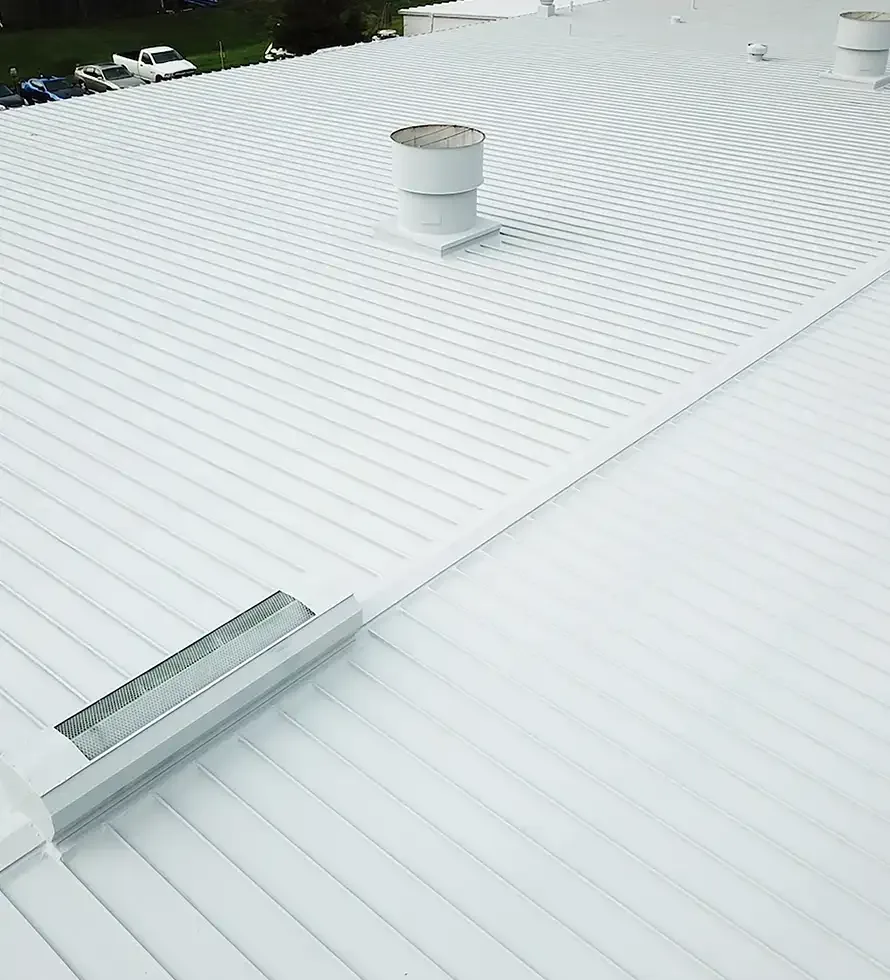
A standing seam roof is made of long metal panels with raised seams that interlock or are mechanically seamed. The fasteners are hidden under the seams, held by clips that let the panel move. Panels may be steel or aluminum, and they are usually roll-formed to length, sometimes on site.
The clips are the quiet part of the system. They fix the panel to the deck while allowing it to expand and contract. A panel that cannot move buckles, tears at its fasteners or wears its coating. Late summer here swings more than 30 F in a day on average, so the clip choice, the panel length and the placement of expansion details are part of the design, not the afterthought.
Gauge and finish are decisions with a long tail. A heavier gauge resists oil-canning and denting. A baked fluoropolymer finish holds color and resists chalking. A cheaper coating fades and wears at the edges first. The bid lists both, so two proposals can be compared line by line, and the warranty on the finish is read with the same care as the one on the panel.
Check where metal fails first
Metal fails at penetrations, at terminations and at the trim. Seams are tight if the panel moves as designed. Failures come where the roof is cut: pipe flashings, curbs, skylights, snow guards fastened through the panel instead of clamped to the seam. A sealant bead cracks. A fastener through a panel backs out.
Other findings are less obvious. A coating scratched during install begins to rust at the cut edge. A panel with no room to move leaves slots torn at the clip. We walk the roof, check each seam crimp, look at each penetration and note rust at cut edges and fastener heads. The findings sheet separates cosmetic wear from items that let water in.
Coatings extend life. A sound, clean metal roof can take a silicone coating that seals fasteners, laps and small defects and adds reflectance. The seam and clip system has to be sound first. A coating over a seam that has already opened is a delay, and the findings sheet says which condition applies.
Place snow guards before winter
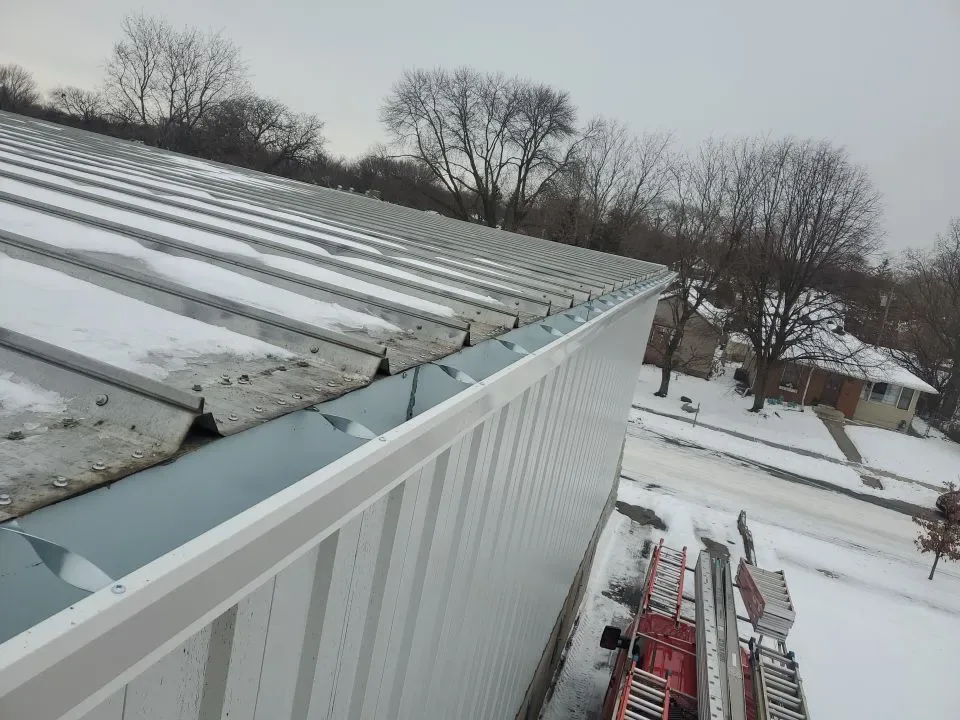
Snow guards hold snow on the roof so it melts or slides in small amounts. Their placement follows the slope, the panel profile, the snow load and what is below. Over doors, walkways and parking they are denser. Over a lower roof they work with the lower roof's design load.
Guards that clamp to the seam keep the panel unpierced. Guards that fasten through the panel create holes the sealant has to cover forever. We choose clamp-on guards for most standing seam work. The layout is drawn on the roof plan and installed before the first snow, not after the first slide has taken out a gutter. The 2011 snow collapse at the former Bonner mill is a reminder of what snow load means for the structure underneath.
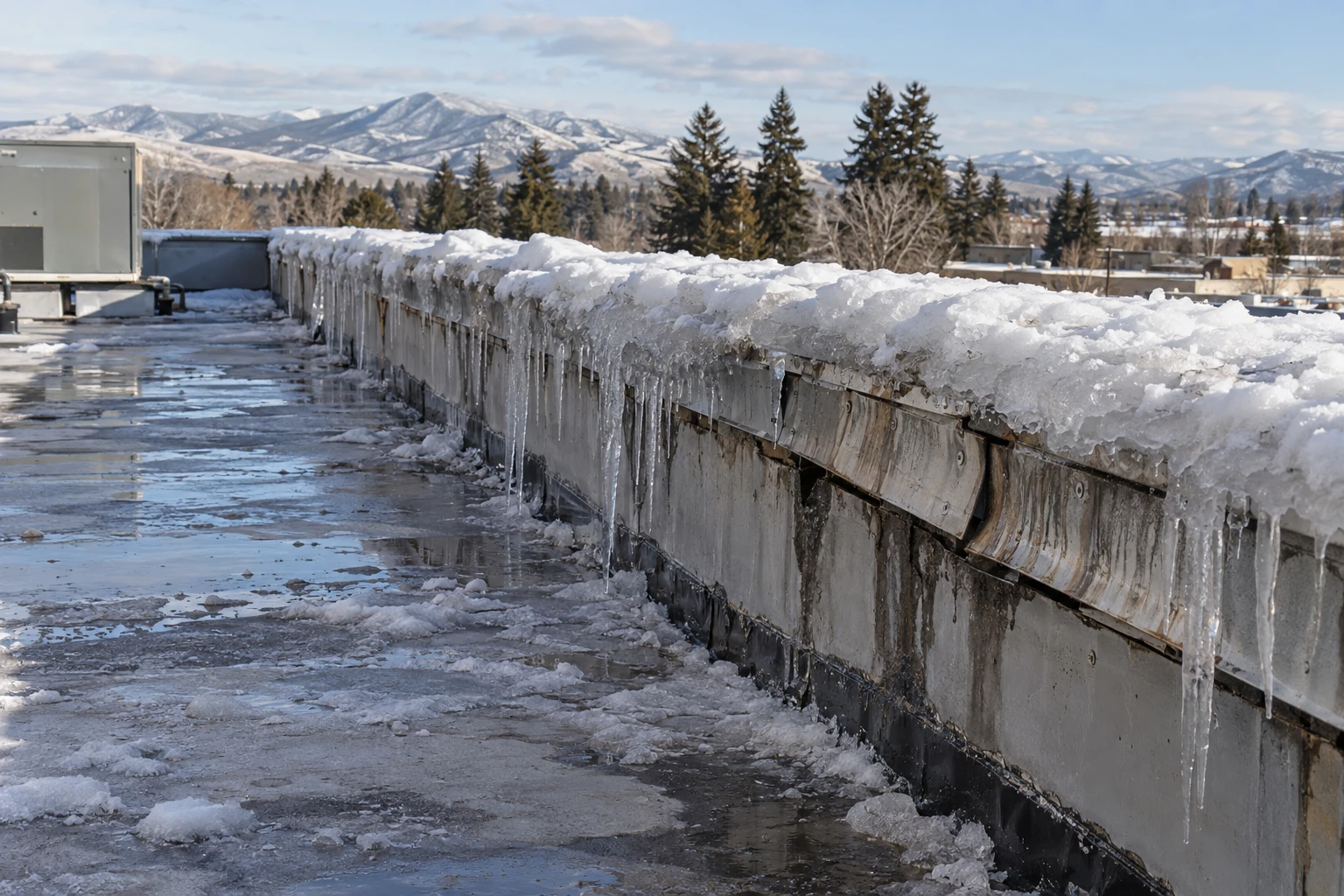
The other winter hazard is ice at the eave. Meltwater from a warm roof refreezes at a cold edge and builds a ridge. Gutters and edge metal need to be sized and supported for that load. The snow and ice damage that shows in a spring survey starts at eaves, valleys and unsupported gutter runs.
Stage the panels and the crane pick
Long panels are hard to move. They arrive on a truck, or they are rolled on site, and a crane or lift sets them on the roof. The laydown yard has to be long enough for the panel length and out of the tenant path. The pick is scheduled when wind is calm, since a long panel catches wind like a sail.
The 102 mph design wind speed for a Risk Category II building applies to a finished roof, and a panel in the air is not designed for it. We stop lifts above a set wind threshold and store panels flat and tied. Install proceeds from eave to ridge in sections that can be closed the same day. On a recover, a sub-framing or a layer of insulation sets the new plane. The plan marks each day's coverage and the doors that stay open.
Wherever a roof run is long, from the Missoula airport area to the redeveloped Bonner mill site, panel length drives the staging plan. Retail frontage along Reserve Street, with Costco, Lowe's and Walmart among its big names, has public frontage where lifts must be timed around customers.
Expect dents and plan for them
Hail dents metal. Metal panels take marks from stones the size of quarters, which is what central and south Missoula saw in the 2016 hailstorm. Whether a dent matters depends on the coating and the seam. A dent with an intact coating is cosmetic. A dent that cracks the finish invites rust, and a dent at a seam can open it.
After a storm we inspect for cracked paint and seam damage, and we photograph the pattern for the owner's insurer. Our hail damage repair work records hits by test area. Some owners choose heavier gauge or textured panels to hide marks.
Decide between standing seam and the rest
Against an exposed-fastener metal retrofit, standing seam costs more and has fewer penetrations. Against single-ply roofs, it suits sloped roofs and is less suited to near-flat ones. The owner weighs cost, slope, snow behavior and expected life. For campus buildings, such as those at the University of Montana in the University District, appearance enters the decision. Montana's 2021 IECC with Montana amendments sets the thermal assembly, which affects the roof's build-up. We show the options with prices and with the snow plan beside each.
Related Roofing Pages
Send the roof plan and show us what is below the eaves
Send the roof plan, the occupancy schedule and the access constraints, including doors, walkways and lower roofs under the eaves, so the snow plan, the phasing and the staging area can be mapped before any material is ordered.
Call 555-555-5555 or email [email protected].
Questions About Standing Seam Metal Roofing
Do I need snow guards on a metal roof?
On a sloped metal roof over doors, walkways, parking or a lower roof, yes. Smooth panels release snow in large slides. Guards hold it in place so it melts or falls in small amounts. They also protect gutters and trim.
Why do standing seam roofs use clips?
Clips hold the panel to the deck while letting it expand and contract. A panel fixed rigidly will buckle or tear at its fasteners over many temperature cycles. The clip type and spacing are set by the wind and snow loads.
Can a metal roof be installed over an old roof?
Often yes, with sub-framing or added insulation to set the new plane. The existing roof must be dry and sound, and the structure must carry the added weight. A survey answers both before a bid.
Does a dent void the warranty?
Many metal warranties exclude hail denting but cover finish defects. Read the terms. We photograph any cracked coating, since finish cracks matter more than dents.
How long can panels wait on site?
Not long. They are stored flat, off the ground and covered. Wind is the risk. We schedule deliveries close to the install and tie down what stays on the roof overnight.