
Flashing Failure Repair on Commercial Roofs in Missoula, MT
Flashing Failure Repair
Flashing on a Missoula, MT roof gets repaired in the fall for a reason of order: the details have to be sealed before the first hard freeze, or the thaw cycles of winter pry them open and the repair waits until spring. Roughly 45 days a year stay under freezing, and late-summer days swing by more than 30 degrees. Every one of those swings moves a base flashing against a wall, a curb against a membrane, a cap against a parapet. A hairline that was sealed in October stays sealed. A hairline left open in October is a leak by February.
We repair flashing in the order of consequence and record each detail with a dated photograph and a price.
Know what moves a flashing apart
Four forces work together. Thermal movement is the constant: sheets, metal and masonry expand and contract at different rates, and the flashing sits at the joint. Freeze and thaw is the second: meltwater enters a gap, freezes and widens it. Aging is the third, as sealants dry, shrink and lose adhesion. Mechanical stress is the fourth, from foot traffic, equipment service and snow sliding across the detail.
Missoula's frost depth is 36 inches and its snow load design is 40 psf, so buildings here are built for winter. Details still fail where metal meets membrane. We look for sealant with a glazed or crazed surface, base flashing standing off the wall by a fraction of an inch, termination bars with open gaps and caulk joints that have lost adhesion on one side.
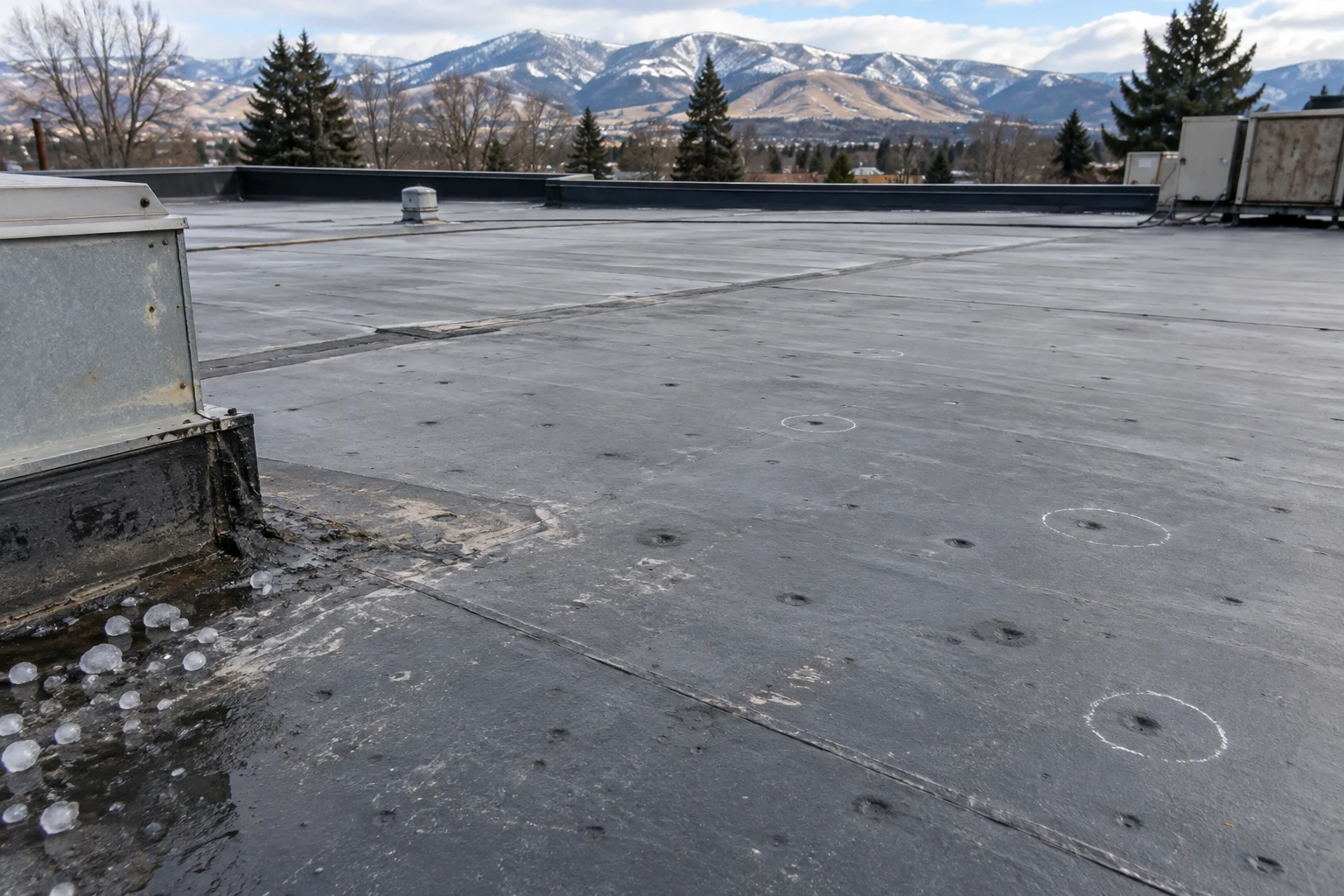
Hail and wind add their own marks. Central and south Missoula took quarter-size hail in 2016, and hail of that kind can dent counterflashing and crack sealants that looked sound the week before. Wind can lift a cap or pull a termination bar. We separate those marks from slow wear in the report, since an insurer will rule on them differently.
Rebuild equipment curbs before they leak
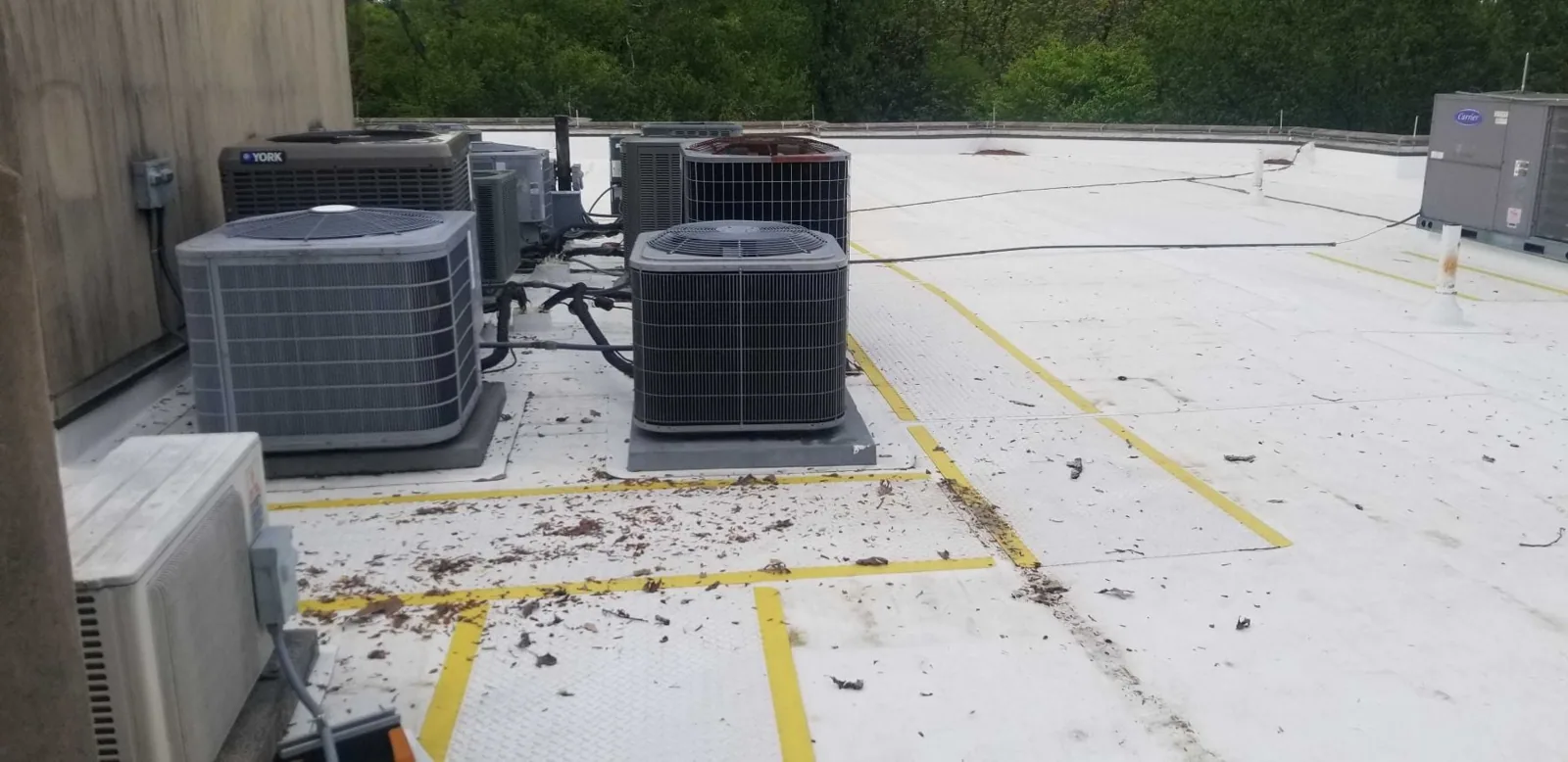
Every curb is four corners, four walls and a seam where flashing wraps a box that vibrates, heats and sometimes moves when the unit is serviced. After a few service cycles, the seal around a curb has been tested more than any other detail on the roof.
We inventory every curb and support, noting flashing height, termination condition and signs of movement, and we keep the list in the roof binder. Where curbs need rebuilding, the work ties into equipment curb and support repair, which adds proper height, new flashing and walk pads for technicians. The sequence on a busy roof is curb first, then flashing, then the unit reset, then the final seal with a roofer on site.
Snow adds a load that most curb flashing is not detailed for. A drift against a tall curb pushes meltwater up behind the flashing, so height above the expected drift line matters more here than in a dry climate.
Fix parapets, walls and edge metal as one run
A parapet or wall flashing carries a long continuous run, and a failure at one point lets meltwater travel behind the flashing and into the wall. It shows up as a stain on an interior wall far from the roof edge, which makes the source hard to trace without a careful look from above.
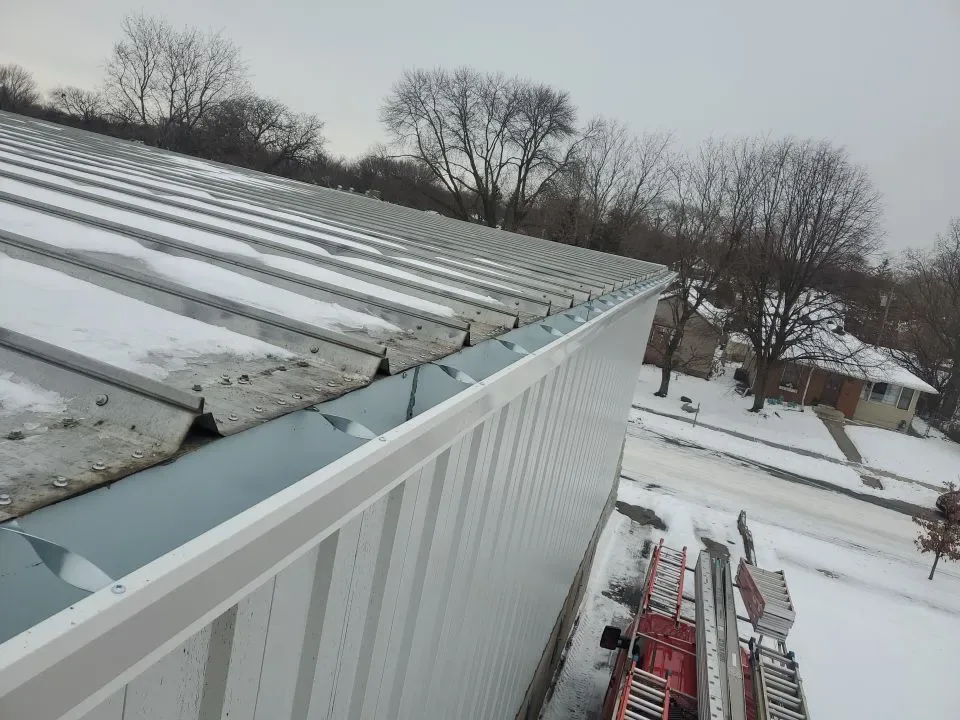
Edge metal and coping provide the top seal on the wall and the drip line at the perimeter. Loose coping joints let water in. We check each joint, each fastener and each end cap, and we note where flashing has been pulled by wind, which is the starting point for wind damage repair. Older brick buildings in Downtown Missoula have tall parapets with their own coping, and the city lists more than 60 National Register buildings. Changes to the visible edge are reviewed with the owner before material is ordered.
Some downtown walls date to the era of the Wilma Building, finished in 1921, and are old enough to need hand-fitted metal. On a historic building, we measure each wall condition in person and detail the flashing to fit it, rather than ordering stock pieces.
Seal pipes, skylights and small penetrations in one pass
Small penetrations cause a large share of leaks because there are so many of them. Pipe boots crack in the cold, pitch pockets shrink and open, skylight curbs lose their seals and conduit added after the roof was installed is often sealed with whatever was in a technician's truck.
Our skylight and penetration flashing work replaces failed boots, rebuilds pitch pockets with proper details and reseals skylight curbs. We number each penetration on the roof plan with a photograph, so the owner can see which were repaired and which remain in service. Where the repair is part of a broader leak repair, the flashing count goes into the scope with a price per item.
A campus with 64 buildings, like the University of Montana, needs an inventory that covers every vent and boot on every hall, and a college roof program builds one building at a time.
Choose between patch, rebuild and liquid-applied repair
A bead of sealant over a cracked joint buys a short window and often fails again in the next freeze. A rebuilt flashing, with new membrane, proper height and mechanical termination, lasts as long as the roof if the surrounding membrane is sound. A liquid-applied flashing resin suits complex shapes where a membrane cannot be formed easily, such as clusters of pipes and brackets.
Coatings can extend the life of sound flashings but do not rescue one that has detached from its substrate. We tell the owner which method fits each detail and what it costs, so the budget is built from the right mix. The Brooks Street corridor vision calls for greater density and more housing, and where new construction meets an old wall, each new junction is a new flashing. The Brooks Street and Southgate Midtown area is one place where those joints will appear.
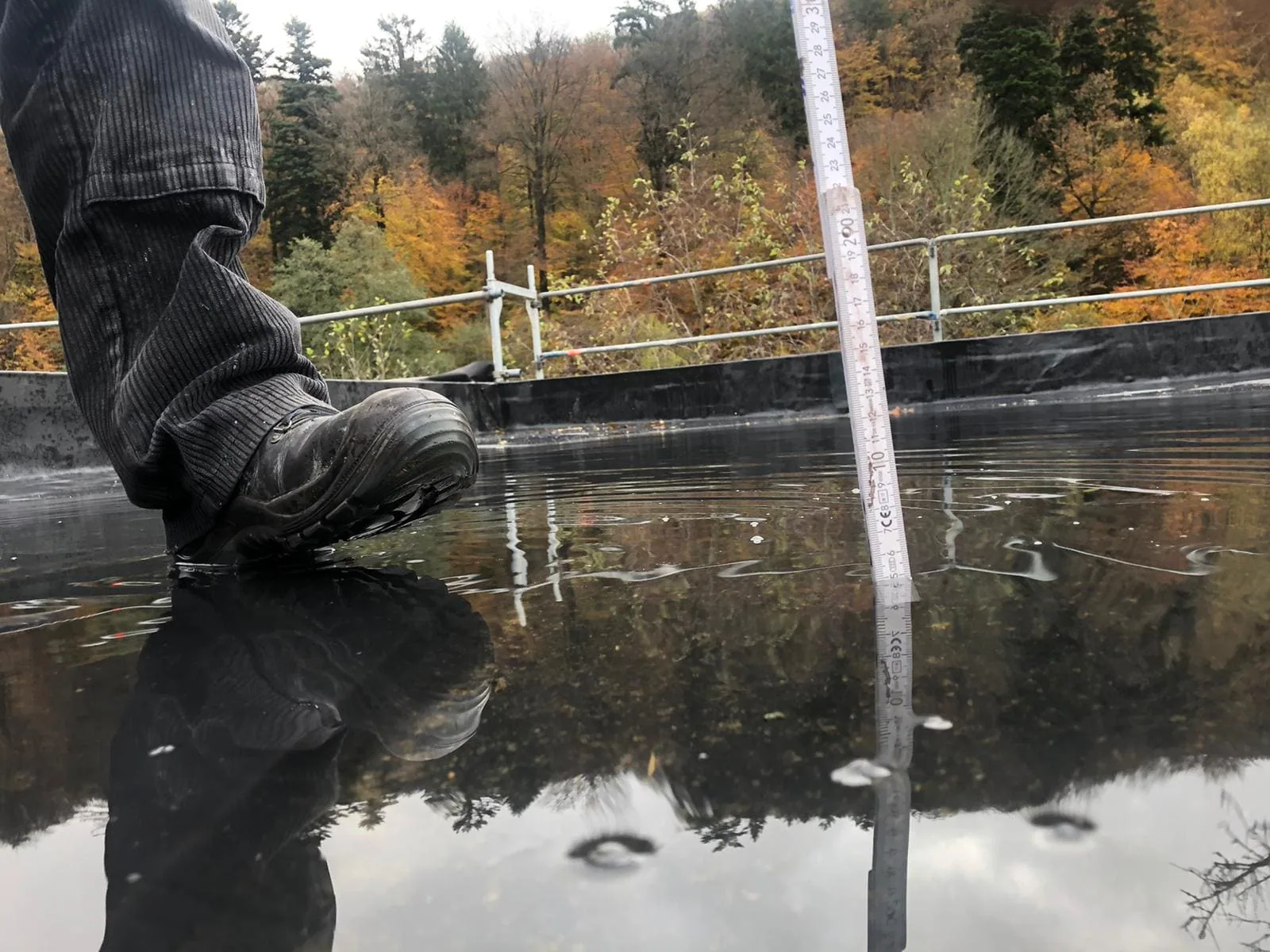
Low spots complicate every choice. Where water ponds against a wall, the flashing fails faster, and the fix is partly a drainage question. We pair the flashing repair with ponding water repair on the same visit when a basin sits against the detail.
The last step is a punch list. Every repaired detail is photographed before and after, matched to its number on the plan, and probed. After the owner signs, the building file takes the record, with the next review set for the first thaw.
Related Roofing Pages
Send the roof plan and a list of past leak locations
Send the roof plan and any records of past leaks, and we will inspect every curb, wall and penetration, number each detail and map the repair sequence before the freeze.
Call 555-555-5555 or email [email protected].
Questions About Flashing Failure Repair
How can I tell if flashing is failing before a leak shows?
Look for gaps at the top edge of base flashing, cracked or peeling sealant, rust or staining at a curb and metal lifted from a wall. A dated photo of each detail from visit to visit shows movement before water does.
Is caulk ever the right repair?
Caulk works as maintenance on a sound termination, and it needs redoing on a schedule that the maintenance record tracks, usually each fall before the freeze. As a fix for open or detached flashing it fails quickly.
Do flashing repairs affect the manufacturer warranty?
They can. Warranty terms often require that repairs follow the manufacturer's details and use approved materials. We read the paperwork first and note any requirements in the scope.
Why does a flashing leak sometimes appear far from the source?
Meltwater travels along decks, insulation joints and wall cavities before it drops into a room. We use moisture readings and infrared scans to trace a stain to its entry point.
Can flashing be repaired while the building is occupied?
Yes. Flashing work is localized and takes little roof area. We plan around tenant schedules and dry in each detail before leaving.