
Roof Drains, Scuppers and Ponding Correction in Missoula, MT
Roof Drains, Scuppers and Ponding Correction
A flat roof drains from the far edge toward the sump, and if the sump is the last thing cleared, everything upstream has already backed up. In Missoula, MT that order matters more than most places, because meltwater from one thaw cycle meets a drain that may still be frozen from the last freeze. About 45 days a year never rise above freezing, and the ground is snow-covered for about 120 days, so a drain that fails in January cannot be fixed until the weather allows. We work from the outlet backward: check the line, clear the sump, then correct the slope that leads to it.
Find the Low Points Before Touching a Drain
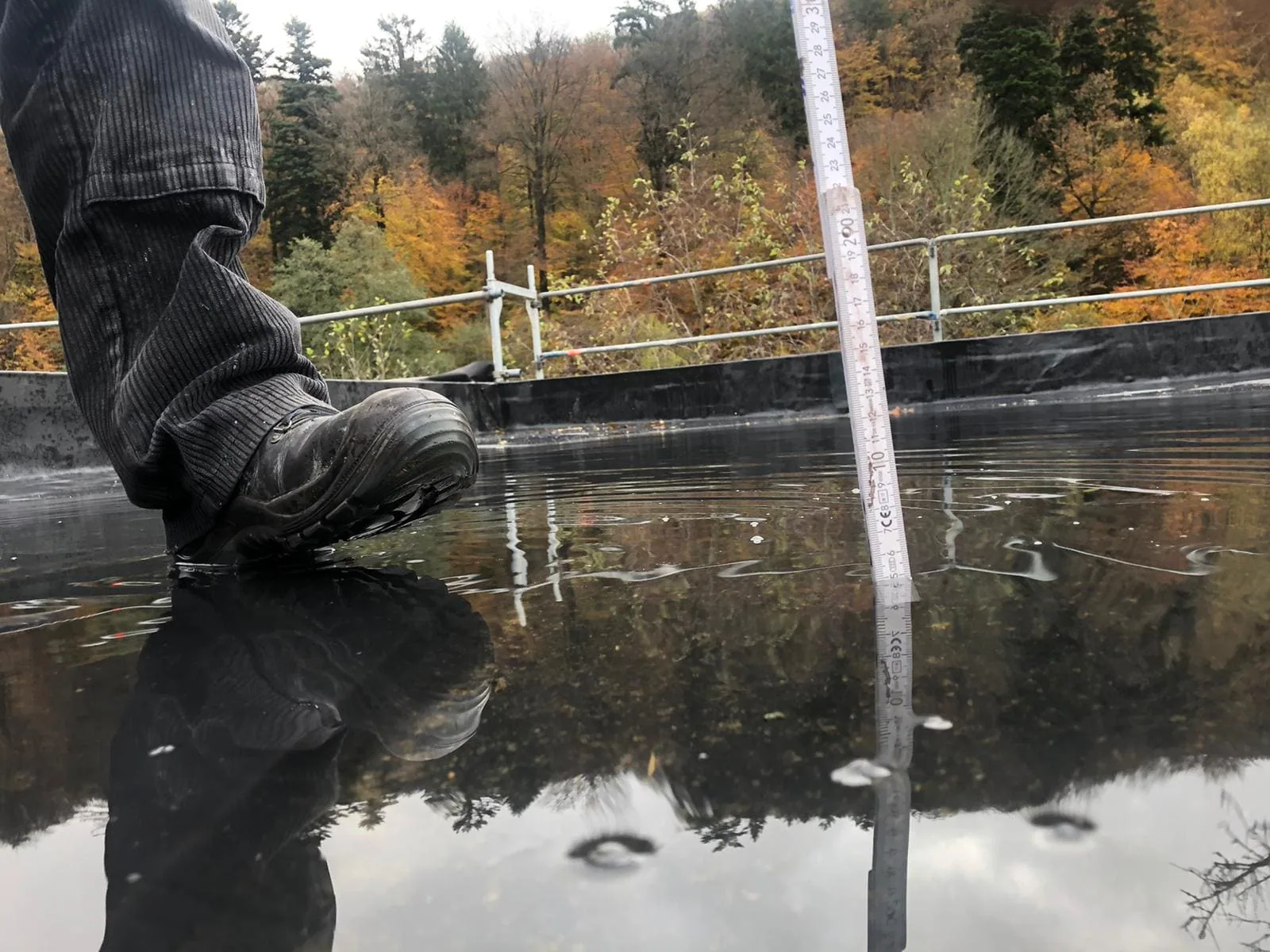
Ponding is the visible sign, but the cause may be a deflected deck, a poorly placed drain or a missing cricket. A roof survey with a water level or a laser shows where the low points are, and the findings feed a ponding water repair scope. Flood tests confirm which areas hold water for more than two days. The test is run with the drains plugged for a short period and the depth measured at set points.
The ponding line on the membrane, a dark band where water sat, is a record of where the water has been. Photographing it after a thaw gives the owner a baseline. If the low points are not near a drain, the roof needs slope correction, not just a clean outlet.
Clear the Sump and the Line Below It
Debris collects in the drain sump first, and a partial blockage in the line below is harder to see. We clear the strainer, flush the line with water and time how fast it clears. A slow line that looks clean from above usually has a restriction below, and a camera or a snake finds it.
Leaves, gravel and shingle grit come from the roof itself and from neighbors. Trees near the building, parking-lot grit and roof-mounted equipment all add to it. A strainer dome that is too fine clogs; one that is too coarse lets debris into the line. We swap domes when the debris changes, such as after nearby construction or tree work. We choose the strainer for the debris the roof actually sees.
After clearing, we photograph each sump empty and each strainer in place, with the date. The photos go in the maintenance file and show a future crew what the outlet looked like when it worked.

Size the Outlet to the Burst, Not the Average
Quarter-size hail and half an inch of rain in 20 minutes overwhelmed storm drains across central and south Missoula in 2016. A roof outlet faces the same short, heavy burst, and an outlet sized for average rain backs up in one like it. The volume per minute is what matters.
If a roof has too few drains, we add outlets or enlarge the existing ones. Where the building cannot take a new drain line, scuppers through the parapet carry the overflow. We calculate the drainage area for each outlet and compare it with the building code and the manufacturer's data. The result is a written list of what to add.
Large industrial roofs, such as those in the Missoula Development Park and along Mullan Road, have large drainage areas per outlet. The county plans the land south of the airfield for light manufacturing and industry, and a large roof with a few drains needs the closest check.
Add Overflow Paths for the Day a Drain Fails
Every roof with a parapet needs a second way out for water. If a drain clogs, an overflow scuppers lets the water leave before it rises to the height of the flashing. Without one, the water finds the weakest point in the wall flashing and enters the building.
Overflow scuppers are set above the primary drain level, with the height set by the roof's structure and the parapet. They discharge where water will not freeze across an entry, since Missoula's long freeze can turn a discharge point into an ice sheet. We check the discharge location and the downspout path.
Gutters and downspouts at the roof edge follow the same rule. A downspout that empties onto a walk becomes an ice hazard, and a gutter packed with snow pulls away from the fascia. We set the gutter slope, the fastener spacing and the discharge point before winter.
Correct Ponding With Tapered Insulation and Crickets
Slope fixes ponding that a clean drain cannot. A cricket, a small tapered ridge behind a unit or a curb, diverts water around the obstruction. Tapered insulation adds slope across a section, so water moves toward the drain, and the layers of tapered insulation and cover board are drawn to match the plan.
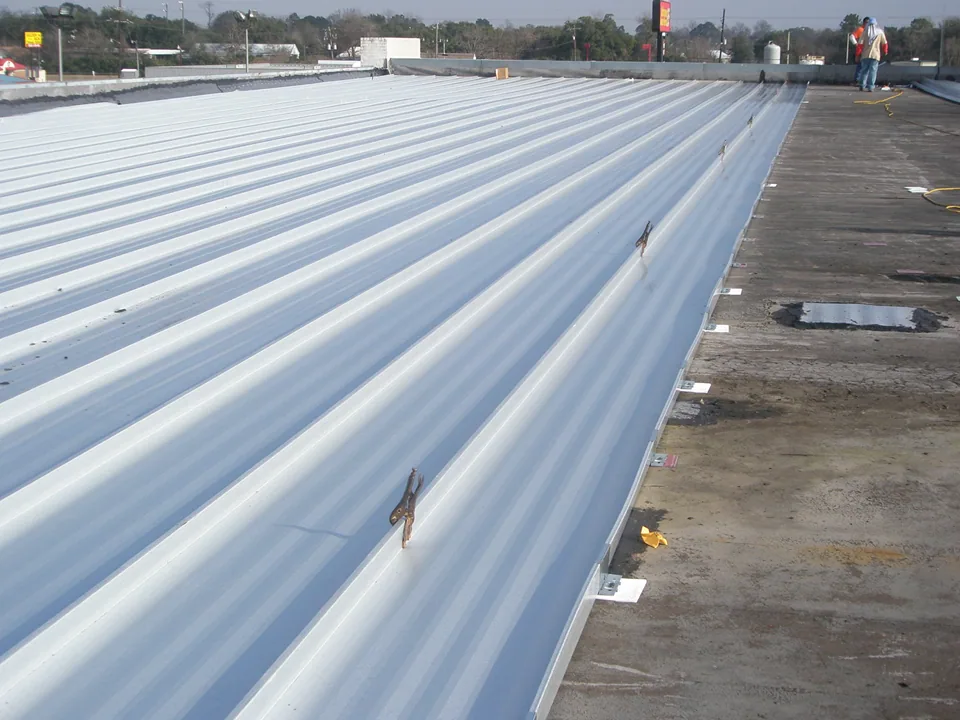
The correction is built during a reroof or a recover, not as a stand-alone patch. Pressing a membrane into a low spot does not change the slope, and the next thaw refills the same dish. The correction is drawn on the roof plan before material is ordered, so the drain and the slope match. On a recover, the new layers can carry the slope, as in a recover overlay that adds tapered board over the old membrane.
Protect the System From Freezing
Frost depth in Missoula is reported at 36 inches, and a drain line that runs through an unheated space can freeze solid. Heat tape, insulated pipe or a drain relocated to a heated wall keeps the line open. Open strainers should be checked after each thaw. A frozen sump under snow looks like a normal roof until the next warm day, when meltwater has nowhere to go.
Retail and hotel buildings on North Reserve Street can fit drain checks into the autumn and spring visits of a maintenance program. A campus of 64 buildings like the University of Montana's can keep a drain log so a restricted outlet is flagged before it freezes.
Related Roofing Pages
Send the Roof Plan and the Drain Locations
Send the roof plan, the drain and scupper locations and any history of ponding or overflow, and we will schedule a flood test and a flow check. The first report lists each outlet and what it needs before the freeze.
Call 555-555-5555 or email [email protected].
Questions About Roof Drains, Scuppers and Ponding Correction
How long can water sit on a roof before it matters?
Water that remains more than about two days after rain is ponding, and it ages the membrane, grows algae and adds weight to the deck. In Missoula, ponded water also freezes and thaws, which splits seams. A flood test and a photo set document it.
Can scuppers replace drains?
On a roof with a parapet and a safe discharge point, scuppers can serve as the primary outlet or as overflow. Interior drains are still common because they keep discharge away from walls and entries.
Do I need a permit to add a drain?
Adding a drain line usually involves plumbing or building review, and the review can add weeks. Scuppers and overflows often fall under the roofing permit, so the two paths run on different calendars. We check with the local building department before work starts and list the permit step on the schedule, so the crew is not waiting on paperwork when the weather window opens.
What does a drain survey cost compared with repairs?
A survey costs little compared with a split seam or a flooded ceiling. Price rises with roof size and the number of outlets. We list each outlet with a photograph and a price for any fix, so the owner can see which outlets are cheap to repair and which need new piping.
Is ponding covered by the manufacturer warranty?
Many warranties exclude ponding beyond a stated depth or duration, and some void coverage in the ponded area entirely. Check the warranty text, and correct the slope before an inspection if the roof is on the edge. We record the findings in the file.