
Hail Damage Roof Repair in Missoula, MT
Hail Damage Roof Repair
Hail damage on a Missoula, MT roof has to be mapped before it is repaired, and mapped before the next storm, because the first thaw-and-freeze cycle changes a bruise into a crack. Central and south Missoula saw quarter-size hail in 2016 and a 20-minute downpour that overwhelmed storm drains. A roof that takes hail like that may not leak that day. It can leak in the following months, as meltwater enters bruised membrane and freezes. The sequence that protects the claim and the roof is the same: photograph, map, protect, then repair.
You see the order on the plan before any material is ordered, with the days the crane pick and the dry-in happen.
Map every hit before touching the roof
We walk the roof after the storm, press on the surface, probe suspect spots and photograph each hit with a scale reference. A test square, marked in paint on the membrane, counts hits per area, so the damage can be expressed as a number and not an impression. Each hit is located on the plan.
The map matters because hail damage is patchy. One slope facing the storm may be bruised throughout while the opposite slope is clean, and the repair scope should reflect that. A drone roof inspection shows the pattern across a large roof quickly and keeps people off a surface that may be wet or icy. We follow it with a ground-level walk to confirm what the camera suggests.
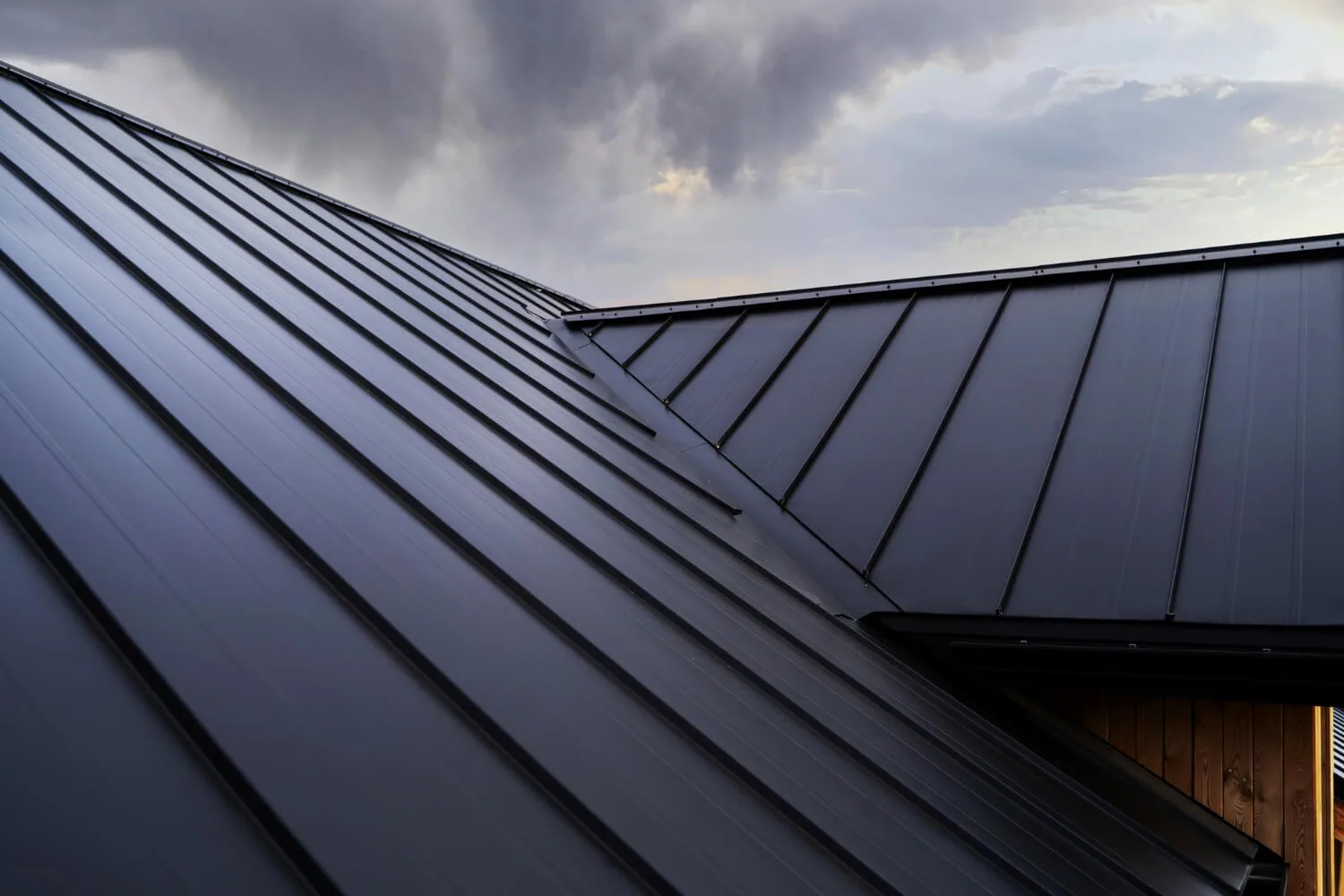
On metal, a straight edge and a scale go beside each dent so its depth shows in the photo. We check laps and fasteners as well, since hail can loosen them without leaving a mark.
The map has a second use. After the repair, the same squares are rechecked, and the owner has a before and after count that shows what the repair covered. A roof with 40 hits in a test square before and none after is a roof with a clean record, and the owner can say so to a lender.
Look for what the surface hides
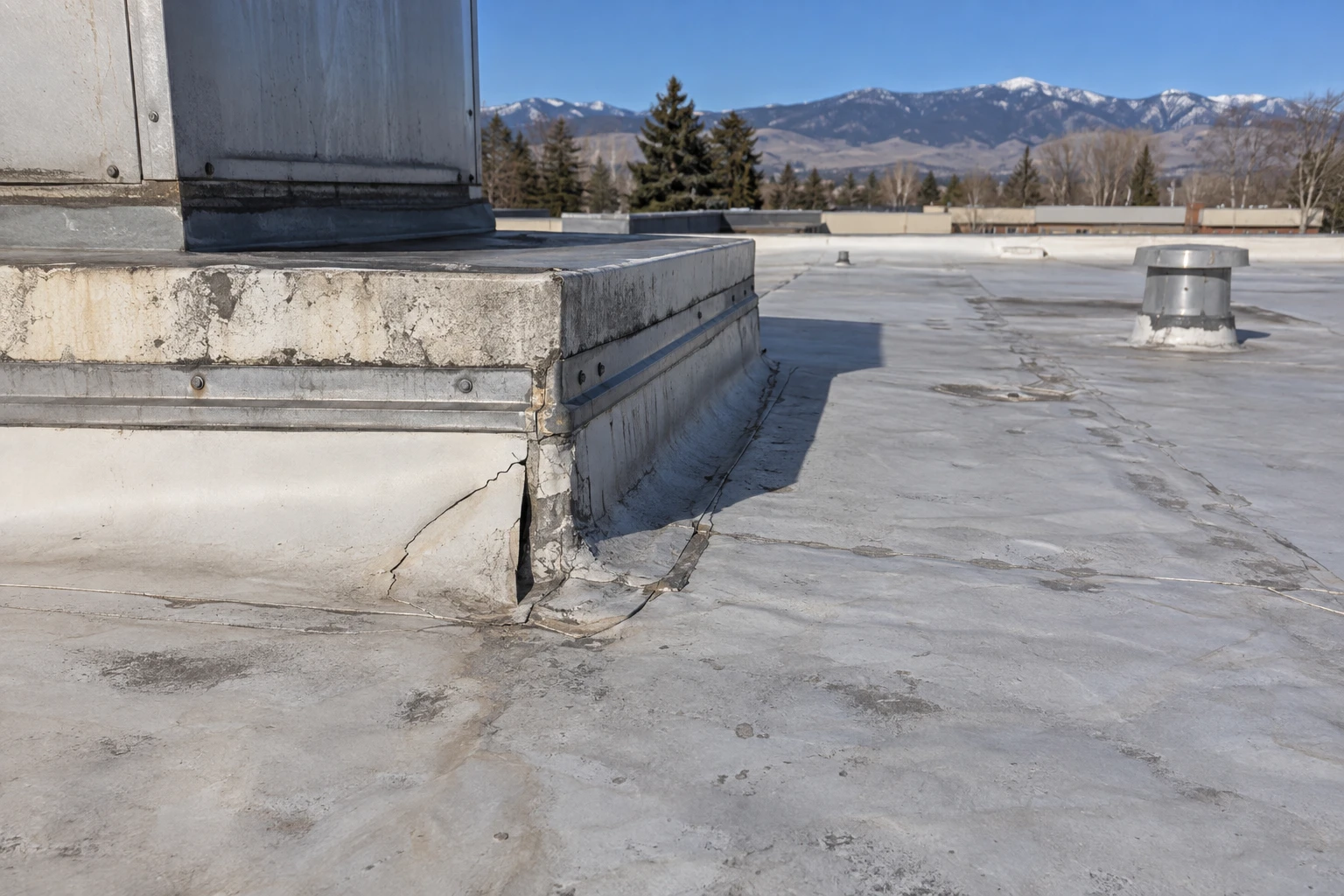
Hail leaves marks that are easy to miss. A bruise on a single-ply sheet is a shallow dimple that springs back slowly under a thumb, and cracked insulation can sit beneath it. A dent in thin metal may not leak yet still points to a seal that will give out first. Granules on a cap sheet crack and expose asphalt to sun and freeze.
We take cores at the spots the scan flags. A core shows whether the insulation below a bruise is cracked, wet or sound, and an infrared moisture survey maps the damp areas. Together they tell us whether the repair is a patch, a section replacement or a full re-roof.
Timing matters. About 45 days a year hold below freezing, and late-summer days swing by more than 30 degrees. A bruise that takes in meltwater at noon is ice by dawn, and the expansion cracks the membrane further. The earlier the map, the smaller the repair.

Repair in order: drains, bruises, then the field
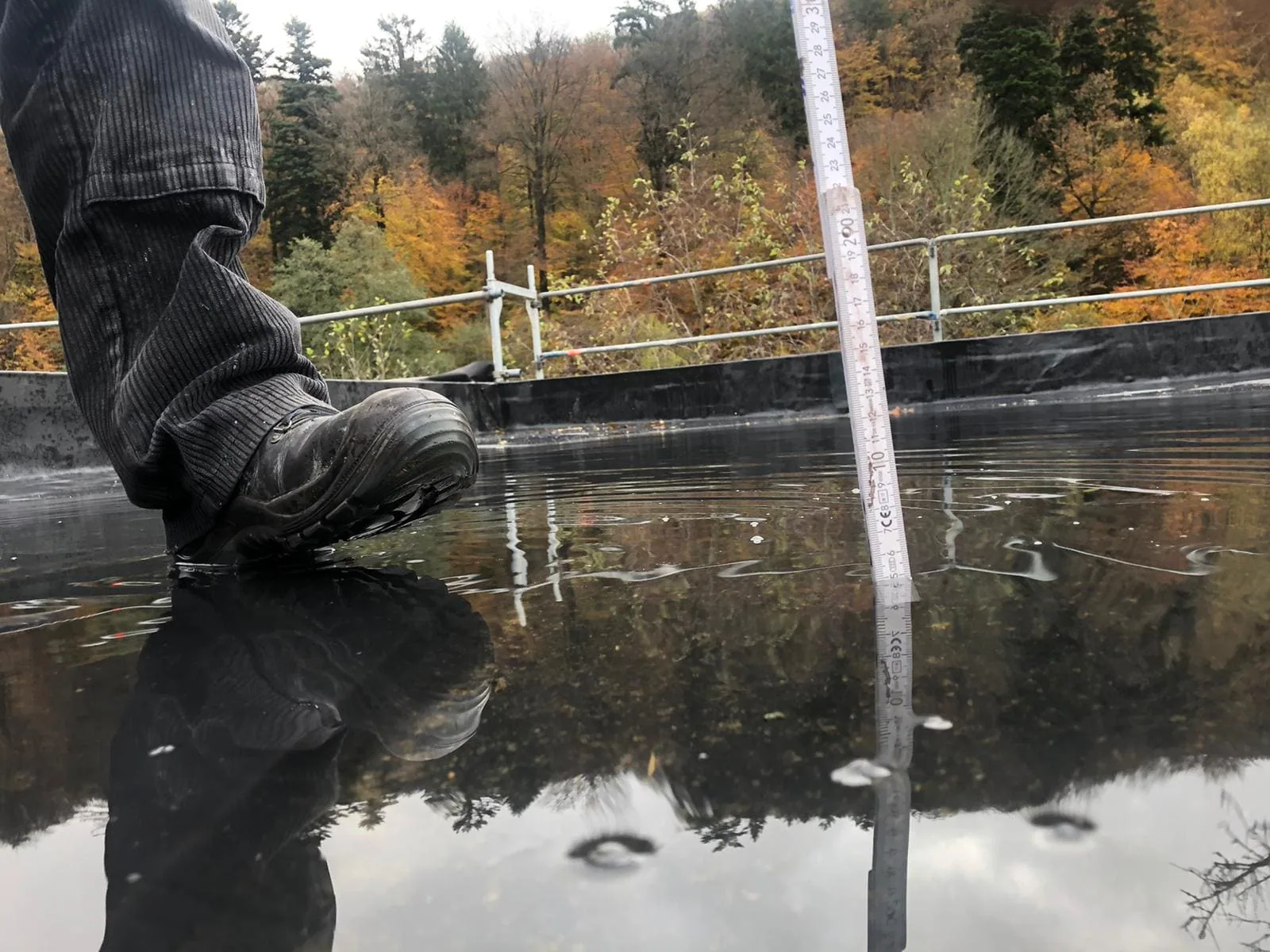
The first step is the drains. Hail packs sumps and scuppers with ice and grit, and a storm that overwhelmed drains in 2016 is a reminder that blocked drainage turns a rainstorm into ponding. We clear every sump before any membrane repair. If ponding follows, the fix draws on ponding water repair.
The second step is the hits. Bruised membrane is cut out and patched with compatible material, welded or bonded to a clean, dry surface. Cracked insulation is replaced. Punctured areas are handled as membrane puncture repair, with the count in the scope. On metal roofs, dented panels with intact seals may stay; panels with cracked coatings or opened laps are resealed or replaced.
The third step is the field. If hits are widespread, a coating or section replacement may cost less than hundreds of patches. A standing seam metal roof with cosmetic dents and sound seams usually stays in service, while a thin single-ply sheet with scattered bruises may be recovered. We price each path and let the owner choose.
Weather sets the pace. Adhesives and welds need steady temperatures, so permanent membrane repair belongs to the stretch between the thaw and the first hard freeze. Outside it, we place temporary covers over the worst hits and keep drains clear. Each cover is priced as temporary, with an expected life, and a check follows any major storm or deep freeze.
Plan for retail, campus and industrial roofs separately
A retail roof along North Reserve Street or in the Brooks Street and Southgate Midtown area has rooftop units, shared drains and tenants who call about every drip. Hail repair there is sequenced by tenant space, with the hoist and staging area placed away from customer entries. The approach follows that of any shopping center roof.
A campus has many roofs of different ages, so the hit count differs from hall to hall. Industrial roofs are large, and the cost of a section replacement is a function of area. In all three, the sequence is the same: map, protect, repair, close out with a punch list and photographs.
Hotels and offices along the Reserve Street corridor, and older masonry buildings downtown, add access and appearance rules. Edge metal and coping dented by hail may need to match the walls. We note each such detail on the plan, price it separately and clear any visible change with the owner before material is ordered.
Document the storm for the carrier
Insurance claims for hail turn on dates and on separating storm damage from age. The file needs the storm date, a dated photo set taken before cleanup, a roof plan with each hit located, the test square counts and a repair scope with quantities. Our claim documentation keeps temporary and permanent work on separate lines.
A roof that has carried years of freeze-thaw shows old wear next to new hits. We record both and label them. Fresh hits show bright metal, clean breaks and crisp edges. Old wear shows dirt in the crack and oxidation. The insurance and restoration process runs from that file. We do not promise how a carrier will rule. We give the owner a record the carrier can evaluate and a scope the owner can act on whichever way the claim goes. The same record structure carries into a broader storm loss when wind or rain adds to the damage.
Related Roofing Pages


Send the storm date and the roof plan
Send the storm date, the roof plan and any photographs you have, and we will map the hits, protect the roof and return a dated scope that separates storm damage from old wear.
Call 555-555-5555 or email [email protected].
Questions About Hail Damage Roof Repair
When should the roof be walked after hail?
Once it is safe to step on. Snow, rain and foot traffic erase marks, and a second storm can muddy the record; a drone flight gives a first look while the surface is wet or icy.
Does every hail hit need a repair?
No. Cosmetic dents on sound metal and shallow marks on a sound membrane may be left and watched. Hits that cracked the surface, the insulation or a seal need repair. The map separates them.
Can hail damage show up months later?
Yes. A bruise can take in meltwater through a freeze-thaw cycle and leak well after the storm. That is why we map hits right away and revisit the roof in the next thaw.
How big a hit count justifies a replacement?
There is no fixed number. We compare the cost of patching every hit with the cost of a section replacement or coating, and we show both so the owner can choose.
What does an insurer need from the roofer?
Dated photographs, a roof plan with hits located, test square counts and a priced scope. We also keep temporary work on its own line so the carrier can rule on each part.