
Shopping Center Roofing in Missoula, MT
Shopping Center Roofing
A strip center roof fails at the seams between tenants, and the repair order depends on which storefront can lose access first. If the crew opens the roof over the largest store before the smaller suites are protected, a single storm turns one leak into several lease disputes. More than 30,000 vehicles a day travel North Reserve Street, so the retail along it needs entrances clear every business day of the year. Big-box stores and hotels cluster there, with Costco, Lowe's and Walmart as the large names, and the strip centers around them share the same traffic. We lay out shopping center work by tenant access and weather window, then price it.
In Missoula, MT, about 120 days a year of snow on the ground make the dry season short, so the sequence has to be right the first time. What breaks if it happens out of order is usually the dry-in, and that is where the plan starts.
Trace what fails first
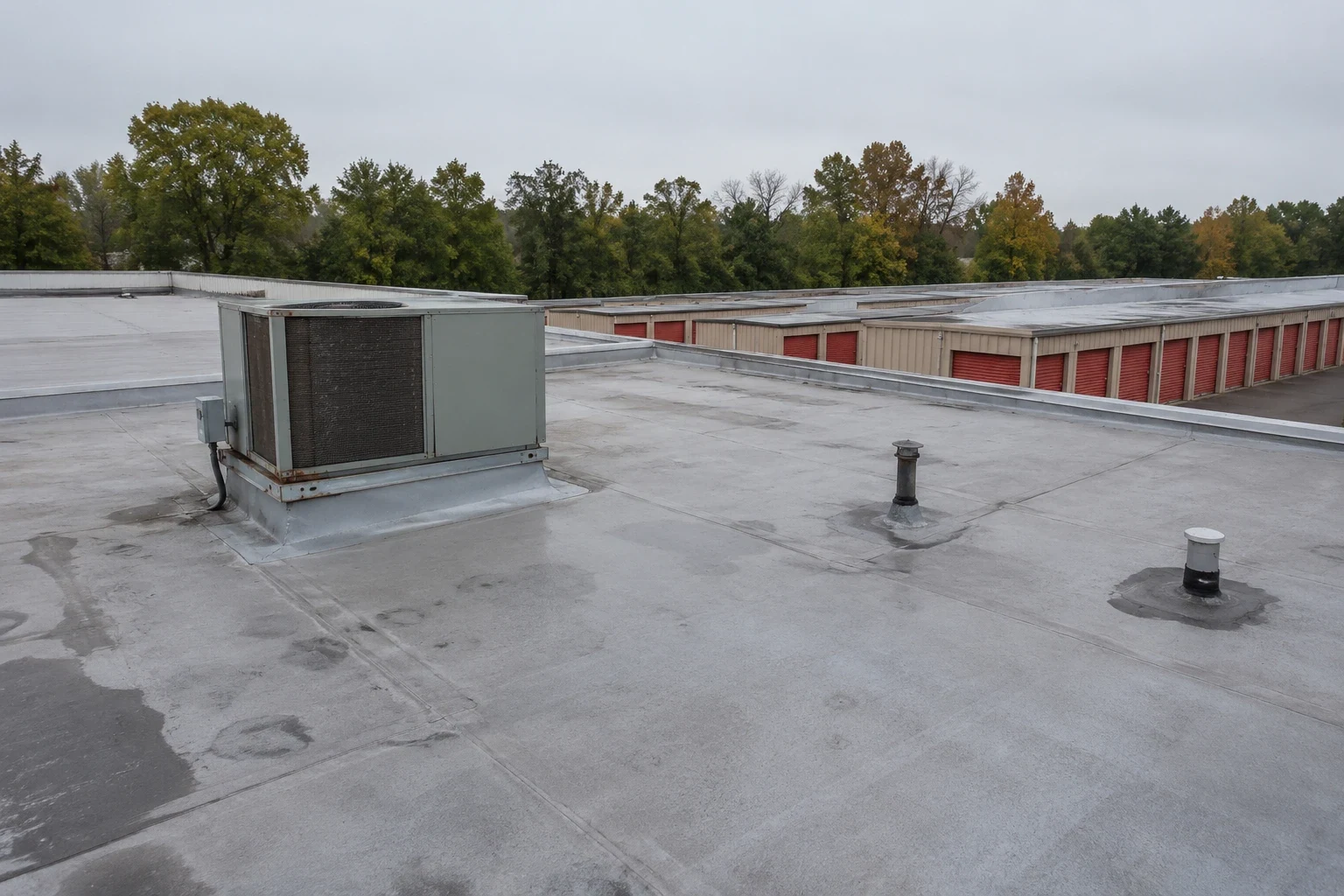
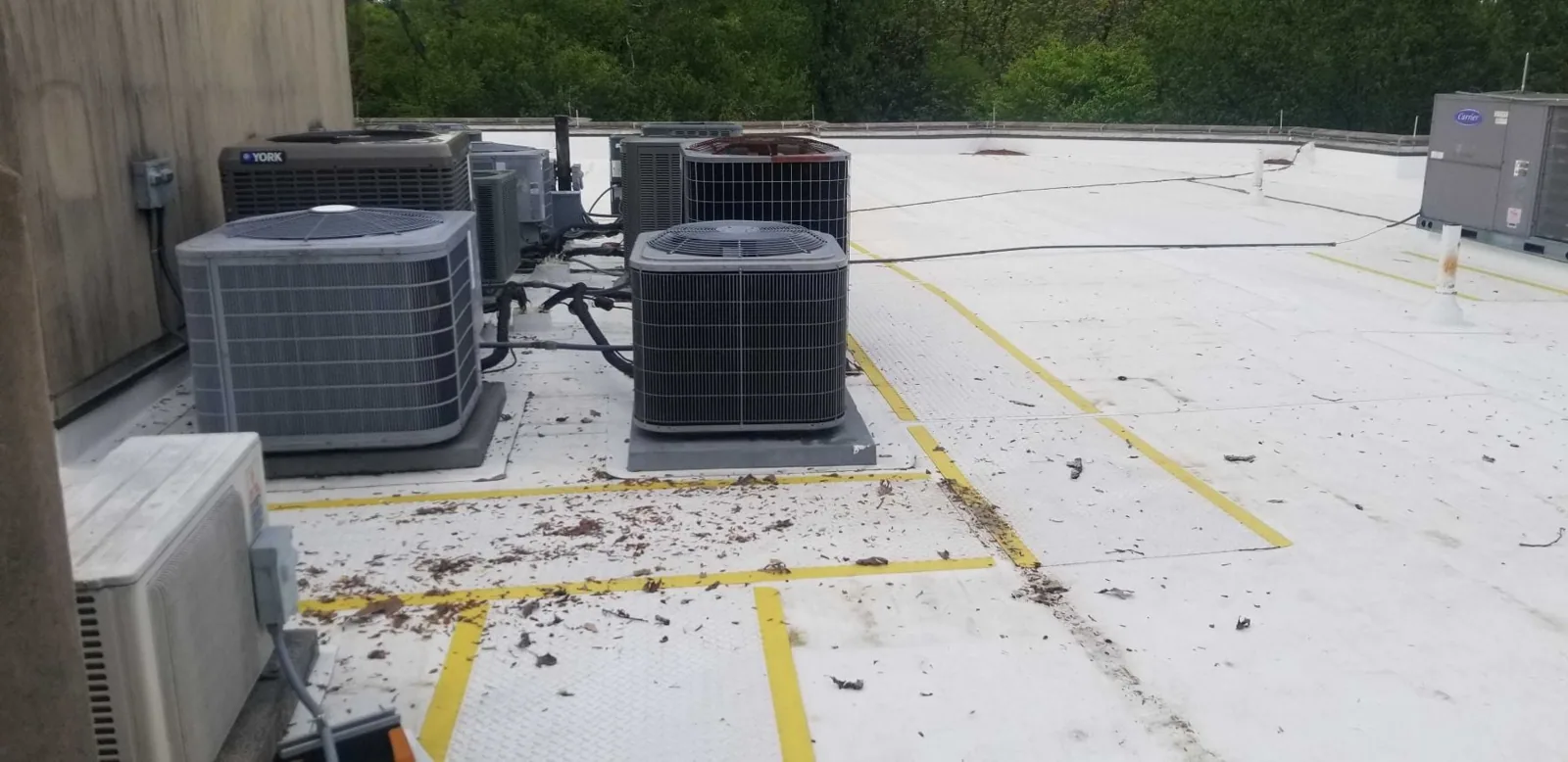
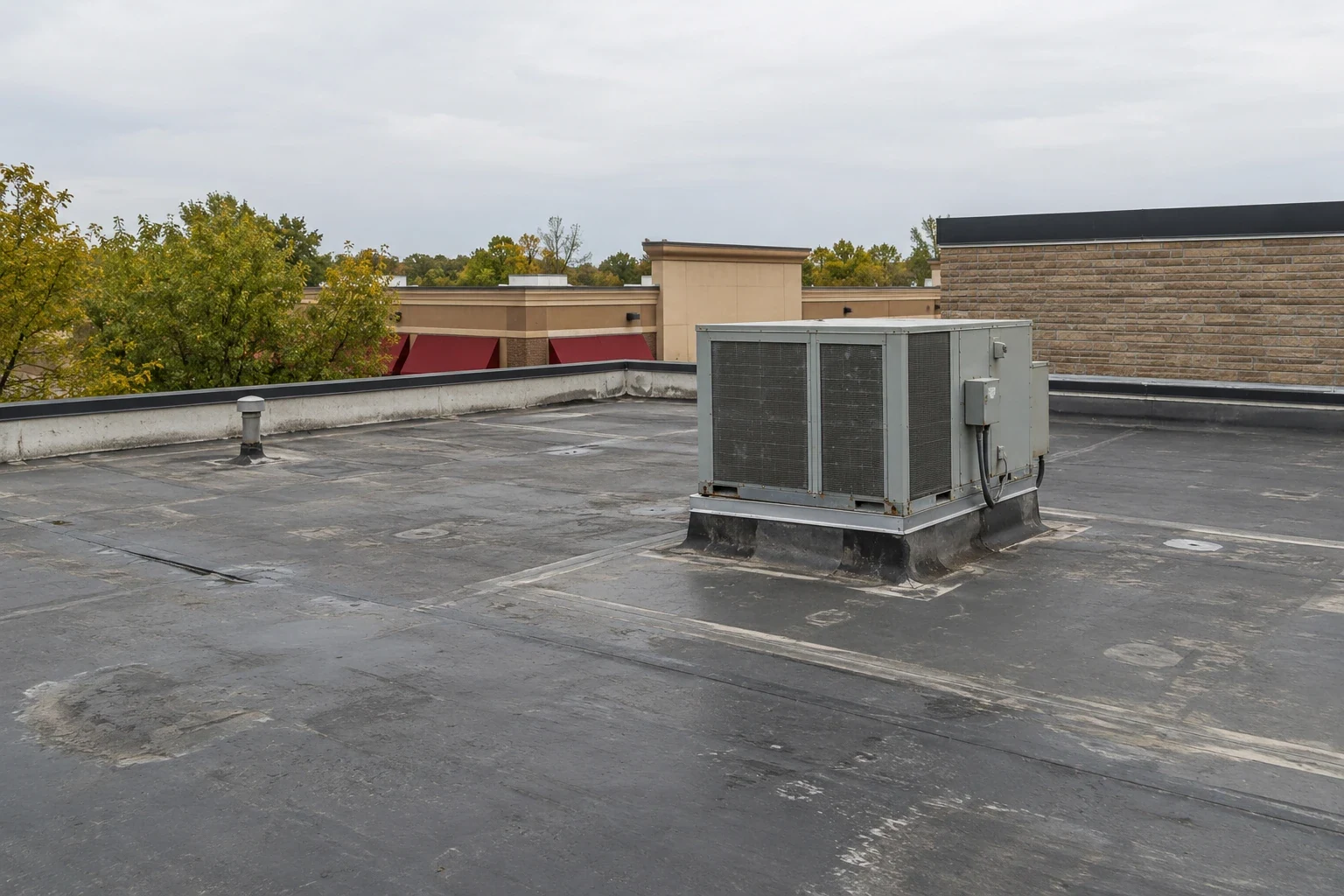
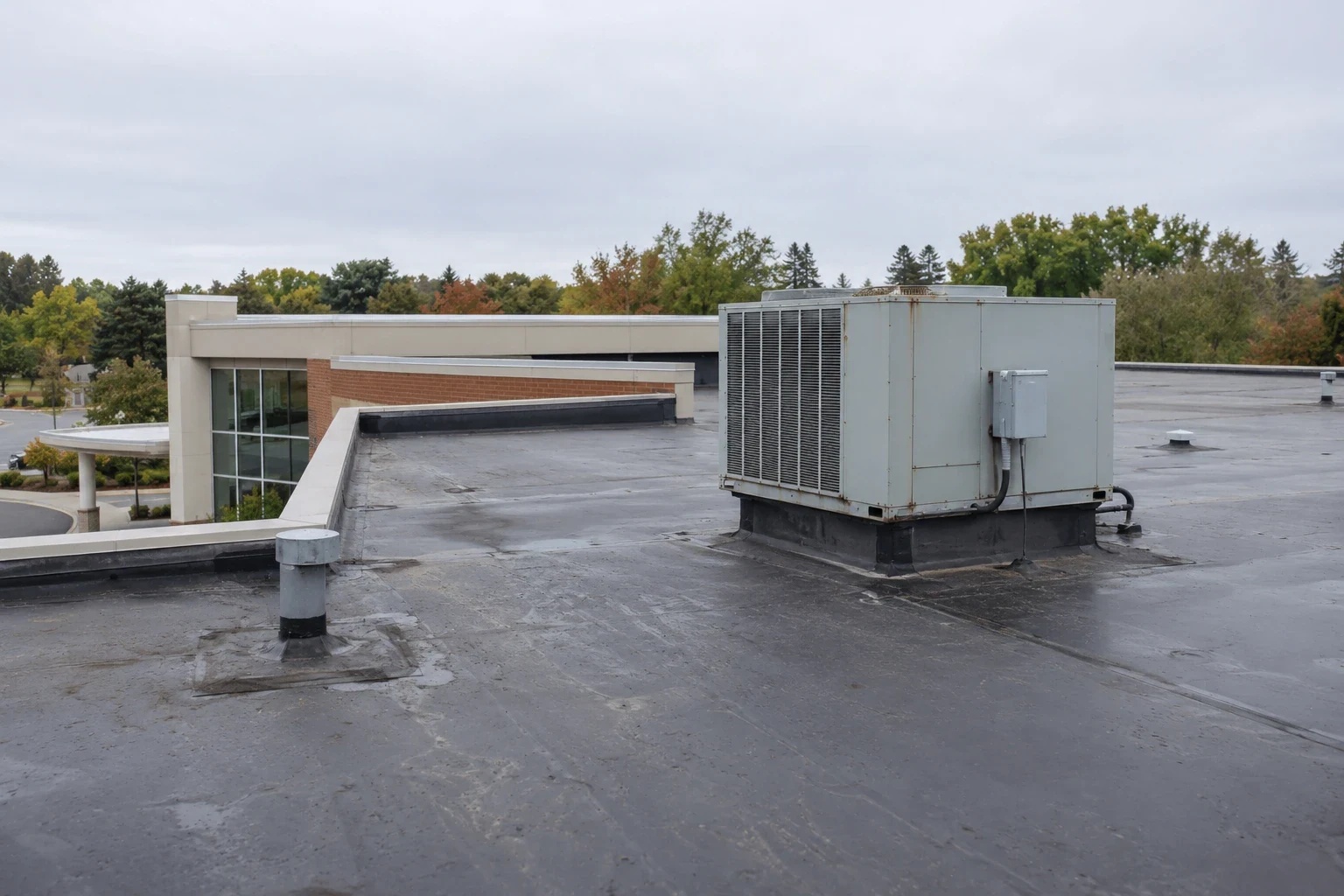
Retail roofs fail at the penetrations and the transitions, and the cost of ignoring them shows up as a lease conversation. Every rooftop unit, vent and exhaust fan is a cut in the membrane, and tenants change over the life of a center. A suite that turns from a clothing store into a restaurant adds exhaust, grease and new equipment. Each change leaves a flashing that someone must have made well.
We walk the roof and count penetrations by tenant space. We probe each flashing, check the curb condition and look at the seams near walls. A map by suite lets the property manager send the right notice to the right tenant. It also shows where several small repairs cluster, which often points to a slope or drain problem that patching will not cure. Each rooftop unit is also checked for its curb, its support and its disconnect, because a unit that has settled opens a gap at its base. A curb and support repair is small if made early and large if made after a winter of leaks.
Phase the work by tenant access
A strip center has storefronts, back-of-house doors and a loading area, and each has its own schedule. We map the roof into phases that follow the building, not the roof plan alone. The largest tenant gets its access protected first, then the line shops. The material hoist sits where trucks can reach it without blocking the customer lot.
We keep the laydown yard small and the dry-in sequence tight. A half-open roof over a line of open stores is a bigger problem than the leak that prompted the work, and the plan treats the dry-in as the controlling step of every phase. Where a tenant has an interior that cannot take water, we protect it before the section opens. The schedule shows which days the crane pick happens and which entrances stay open. For larger formats, the same method applies to a big-box retail roof, and for food service tenants it overlaps with a restaurant roof plan. Tenants get a notice before each phase with the hours, the noise and the entrances in use, and the property manager gets a daily line on what moved and what is next.
Respect snow load and thaw
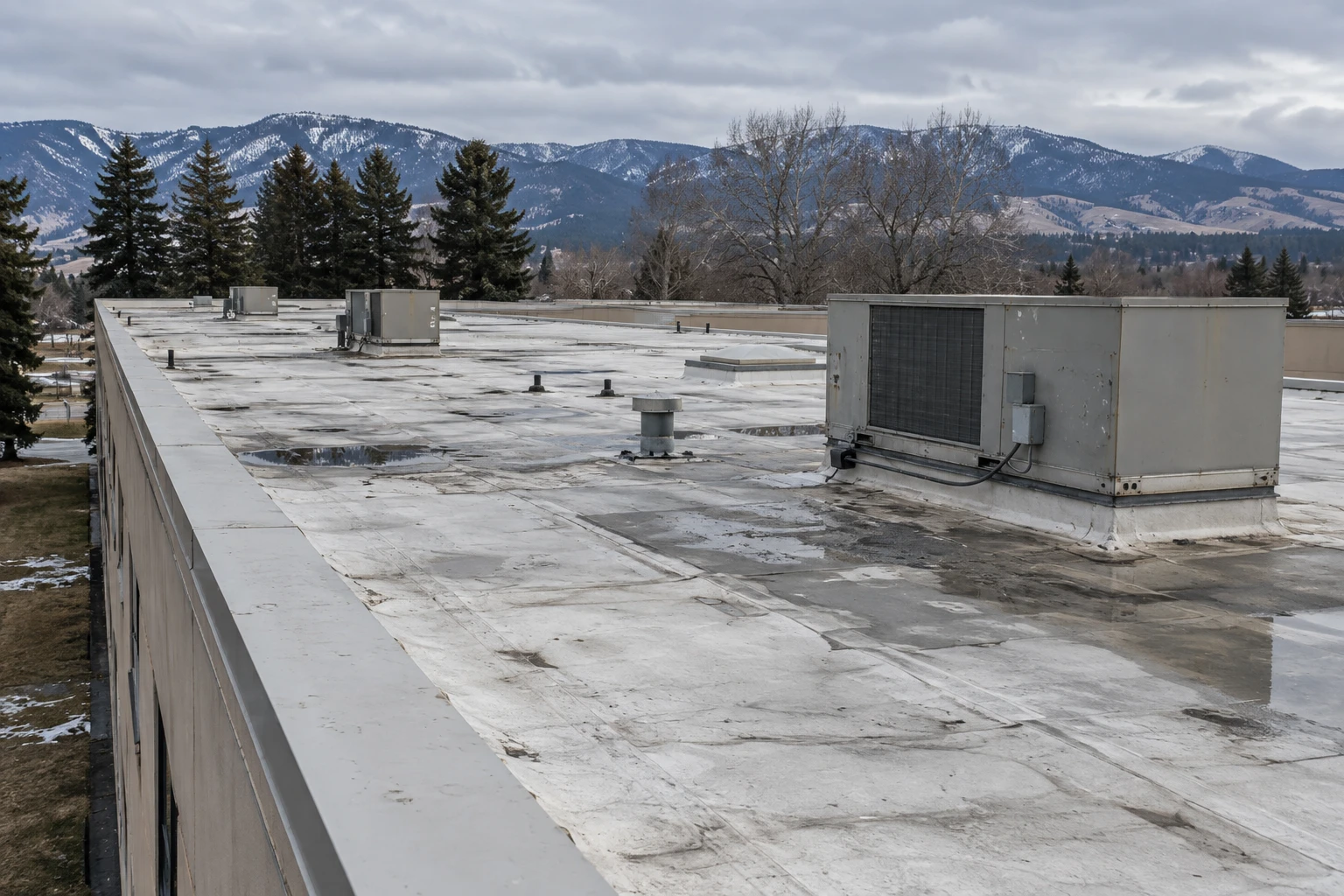
Forty psf is the design ground snow load, set against about 39.5 inches of snow in a typical winter. Close to 45 days a year hold below freezing from dawn to dusk. On a long retail roof, snow drifts against parapets and taller walls, and the load there can exceed the open field.
Meltwater must leave the roof through the drains. A drain sump packed with grit and ice turns a thaw into a pond. We clear each sump in fall, record its condition and check the scuppers and gutters at the edge. Snow sliding off a high roof onto a lower one can break equipment and metal, so we look at snow guards and edge details too. A snow and ice damage repair is far easier to schedule in October than February. Gutters and downspouts at the building edge carry meltwater across sidewalks, and ice there is a slip hazard in front of the stores. We check outlets and heat-trace, where it exists, before the first hard freeze.
Check for hail and wind marks
A 20-minute burst in 2016 put quarter-size hail and half an inch of rain on central and south Missoula and swamped the storm drains. Design wind speed is 102 mph for Risk Category II. Retail roofs are wide and open, and wind lifts at perimeters first.
After a storm we inspect the field for bruises, the edge metal for movement and the drains for debris. Photographs go in a dated set, and a core cut tells us whether a mark reaches the insulation. If a claim is warranted, our insurance claim documentation work starts from the same record. A storm somewhere in the city is background only; whether a given roof was hit takes a walk.
Choose repair, recover or replacement
The walk sorts a center into three groups. A roof with a few failed details takes repair. A sound sheet over dry layers may take a recover. Saturated insulation or a failing deck means a new roof. A price and a service-life estimate go beside each choice.
Owners with several centers can rank them on one list. A center on North Reserve Street and a smaller strip in Brooks Street and Southgate may need different answers for the same year. The file records each, along with the next review date, so the budget follows the roofs that need it most. For centers with long runs of metal, a metal retrofit may be worth pricing alongside the single-ply options.
Close out with tenants informed
The closeout walk with the property manager includes a water test of the drains and the punch list, and tenants then get a short notice of what changed. The file records the system, the attachment, the repair history and the next walk date. It also lists each rooftop unit by tenant, so the next lease change starts with a known condition. With several centers, a manager can line them up side by side and tell which roof is nearest the end of its life.
Related Roofing Pages
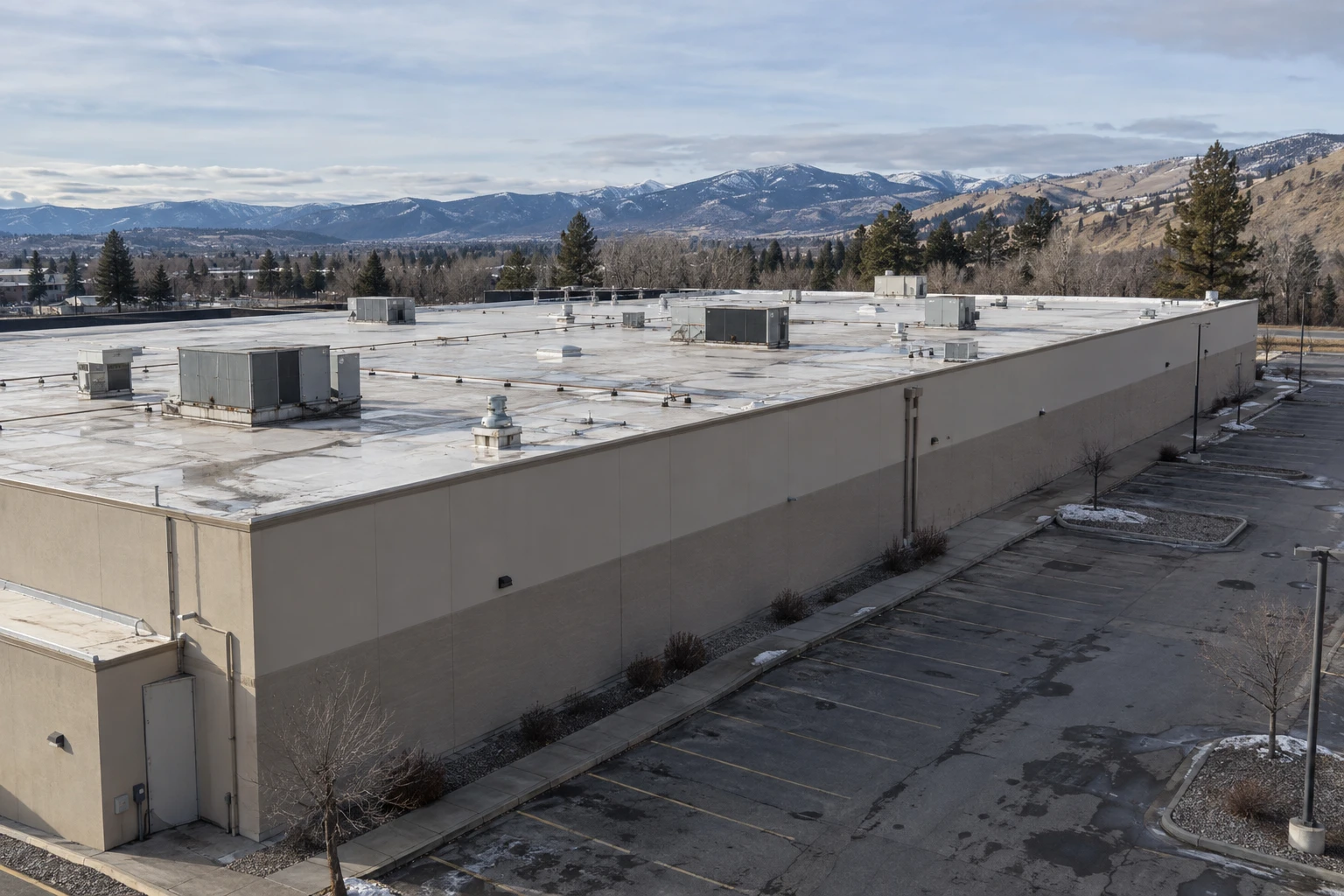
Send the tenant list and the roof plan
Send the roof plan, the tenant list and the access constraints, and we will map the phasing and the staging area before any material is ordered.
Call 555-555-5555 or email [email protected].
Questions About Shopping Center Roofing
How do you keep storefronts open during a roof replacement?
We phase the roof by tenant access, protect entrances before a section opens and dry in each phase daily. The staging area and the hoist stay clear of customer paths.
Who pays when a tenant's contractor damages the roof?
The lease decides. A rooftop log and dated photographs show what condition the roof was in before the work and who was on it. We keep both in the file.
Why do retail roofs leak after tenant changes?
New equipment means new cuts, and a poorly flashed curb lets water in at the next thaw. We map penetrations by suite so a leak can be traced to a dated condition.
Can a recover save money on a strip center?
Often, if core cuts show the existing layers are dry and fastened. A recover avoids tear-off cost, but it only works over sound layers.
What should a property manager send to start?
The roof plan, the tenant list with rooftop equipment, the occupancy schedule and the access constraints. We then map the phasing and staging before material is ordered.