
Membrane Puncture and Foot-Traffic Repair in Missoula, MT
Membrane Puncture and Foot-Traffic Repair
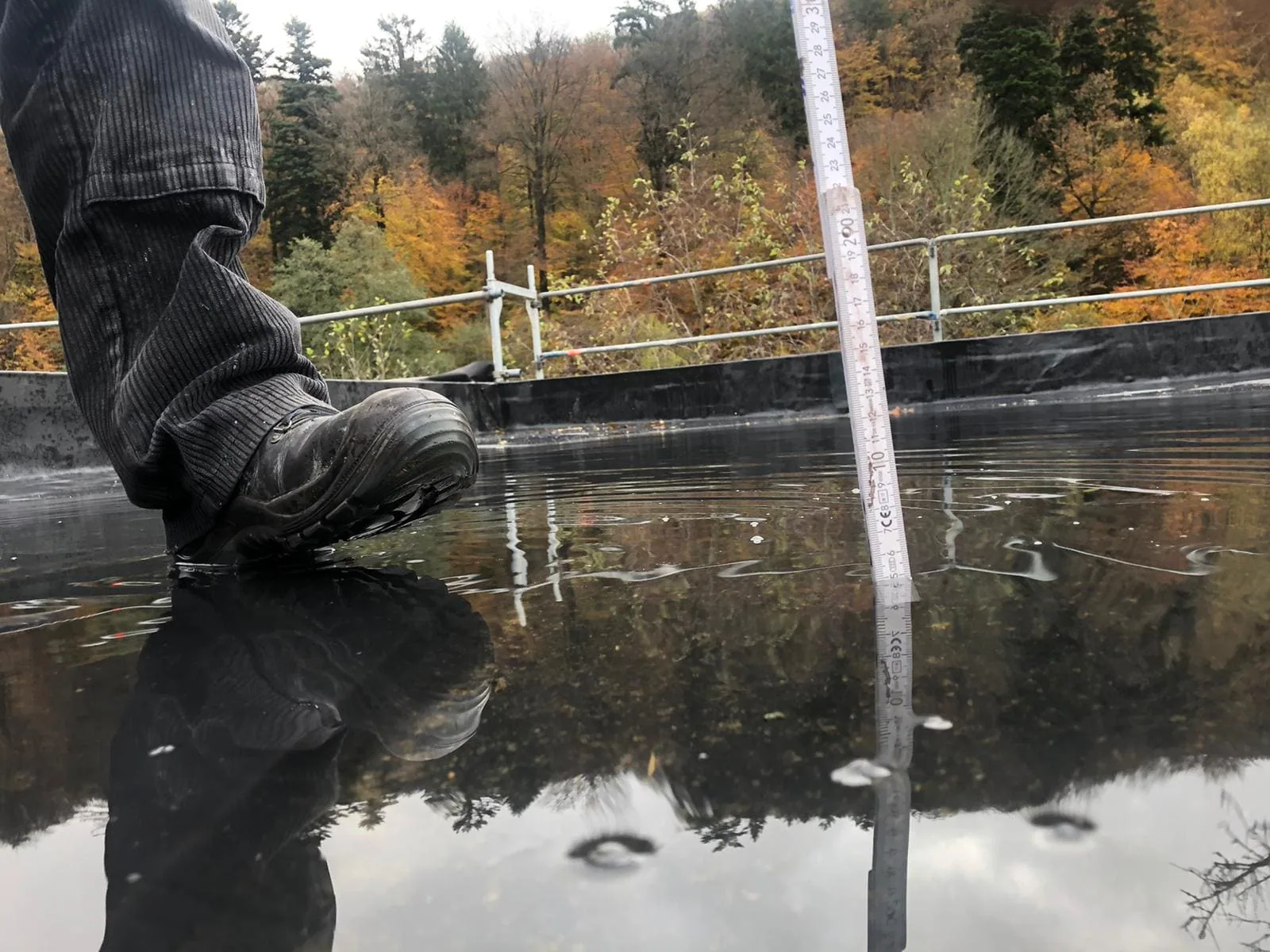
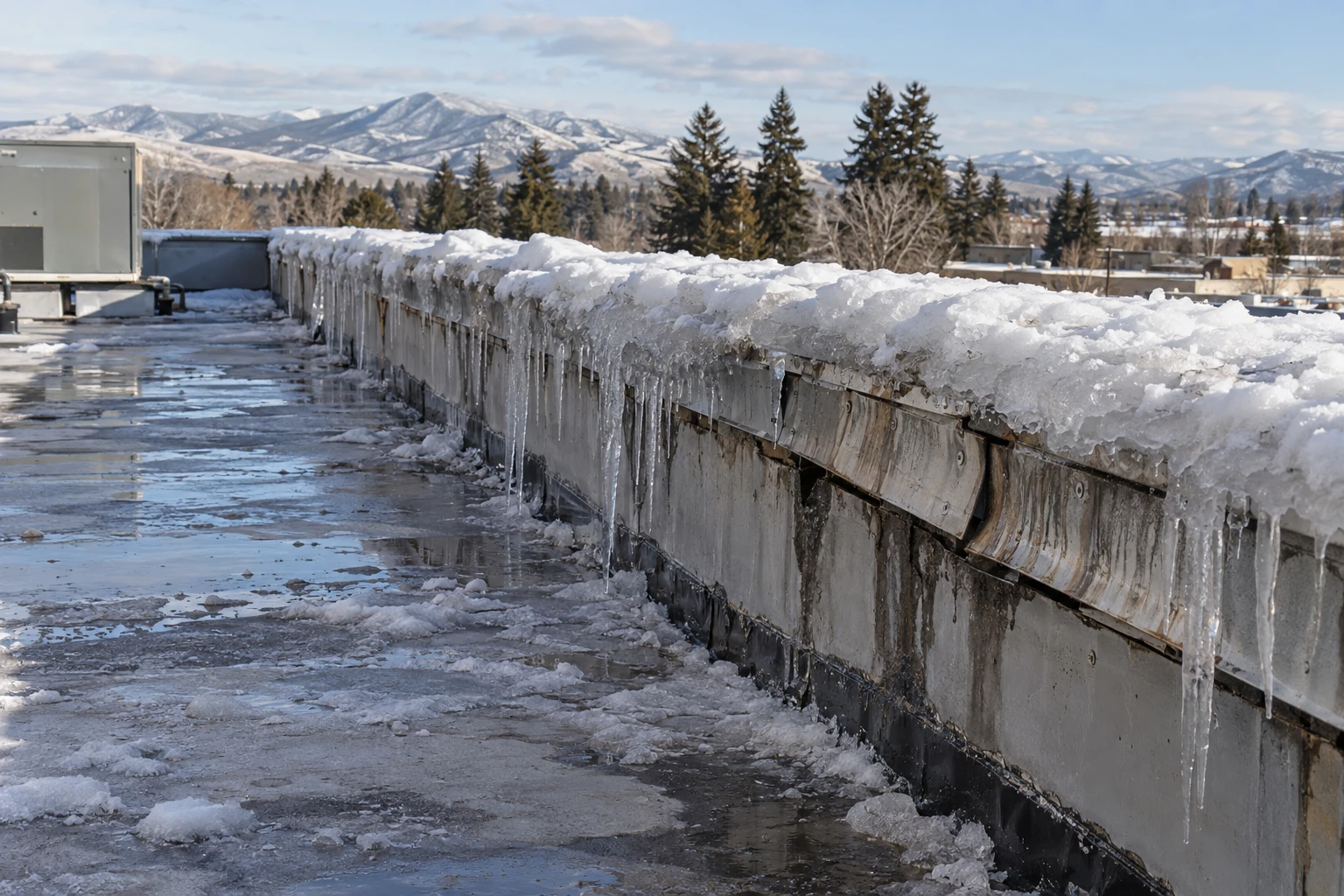
A puncture on a Missoula, MT roof is patched after the surface is dry and clean, and in winter that is the problem. Snow stays on the ground about 120 days a year, and the roof is walked in winter by crews shoveling drifts, clearing drains and servicing rooftop units. A steel shovel on a frozen membrane cuts a sheet that would have shrugged off the same load in July. The cut sits under a skin of snow until the thaw, and then it shows up as a ceiling stain. We sequence the repair so the water is stopped first, the surface is prepared second and the permanent patch goes on when the temperature allows it to cure.
The same visit marks the routes where the damage happens, so the cost is not paid twice.
Trace the damage to the work that caused it
On most commercial roofs the biggest source of damage is the people who service the building. HVAC technicians, refrigeration crews, telecom installers, window cleaners and electricians all use the roof, and each carries tools, ladders and sometimes a cart. In winter, snow crews add shovels and ice tools. Each visit wears the same route between the access hatch and the equipment.
In multi-tenant retail along the North Reserve Street Corridor, where Costco, Lowe's and Walmart sit among smaller stores and hotels, each tenant may have its own rooftop unit and its own service vendor, and no one vendor is responsible for the roof. We trace damage patterns to the equipment they serve, which tells the owner where traffic is heaviest. An owner who can show a pattern can ask for a roof access policy, a sign-in log or a walkway installed along the route.
Campuses add a different crowd. The University of Montana has 64 buildings on 220 acres, with residence halls and a stadium among them, so a roof may be visited by surveyors, installers and facilities staff in the same week. A sign-in log on each hatch costs nothing, and it lets us match each puncture to a visit. The same hatch log works on any roof in the University District.
Sort punctures by how deep they go
A puncture can be a pinhole from a fastener, a cut from a tool, a crush from a dropped object or a tear from a heavy load dragged across the surface. The urgent ones go through the membrane to the insulation, where meltwater travels and spreads. The less urgent ones scuff the surface or cut only the top layer of a reinforced sheet, and they need repair before the scrim is exposed to sun and freeze.
We probe each suspected puncture and mark whether the damage reaches the reinforcement or the substrate. Where damage through the membrane is suspected, an infrared moisture survey shows whether water has already entered the layers below. If it has, the repair includes removing and replacing the saturated material, because a patch on top of a soaked board invites trouble. A small puncture with no moisture is a simple patch and is priced that way.
Hail is its own source. After the 2016 storm that dropped quarter-size hail on central and south Missoula, roofs in that area needed a walk to separate hail bruises from tool cuts, since the repair and the claim are different for each. We photograph both and label them.
Patch each membrane the way the manufacturer builds it
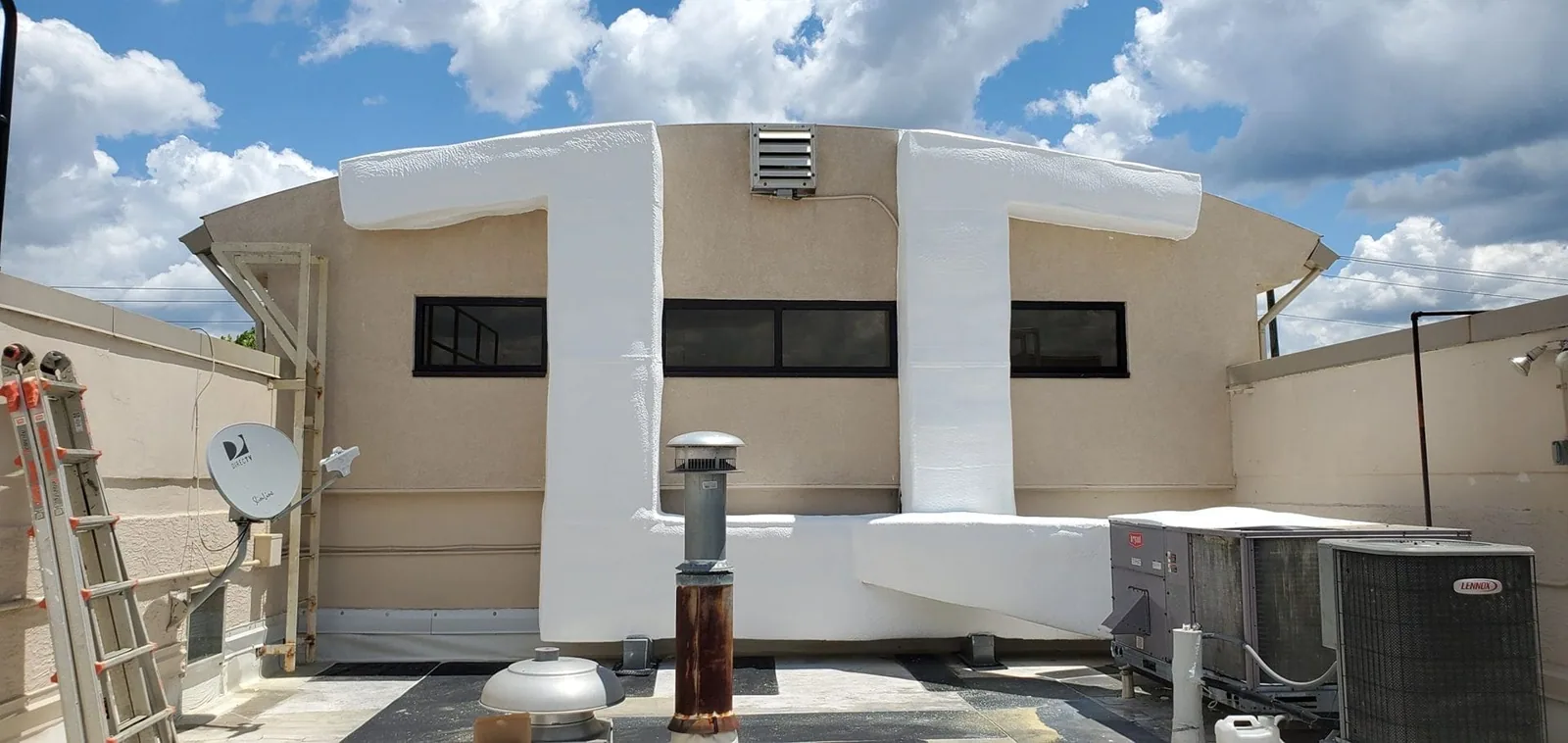
On TPO and PVC, we clean the area, round the corners of a patch cut from compatible membrane and hot-air weld it with overlap beyond the damage in every direction, then probe the edges. An EPDM roof is typically repaired with primer and a cured or self-adhering patch, and the surface must be dry and clean for the bond. On modified bitumen, the repair is a heat-applied or cold-applied patch with granule surfacing matched where it is visible. Built-up roofs call for felt layers or a flood coat, depending on the damage.
Cold is the enemy of every repair here. Adhesives need steady temperatures, and a patch applied on a frozen morning peels. In the cold months, we place a temporary cover on the cut and schedule the permanent patch for the first stable stretch. The temporary work is priced as temporary, so the owner sees both numbers.
Punctures made by flying debris during a storm are handled the same way and are counted in the scope of hail damage repair when hail is the cause.
Protect the route so the same cut does not recur
Walk pads along the service route are the first answer. A pad of heavy membrane or rubber, welded or adhered in place, spreads load and gives technicians a visible path. Pads at equipment, at access points and where ladders land cost far less than repeated patching.
A cover board is the second. Adding a cover board over insulation during a re-roof increases resistance to puncture, since the membrane has a firmer base to push against. Curbs with proper height and flashing reduce the temptation to step on the flashing, and a rebuilt curb under equipment curb and support work gives technicians a place to stand that is not the sealant.
A written access rule completes the picture. Who may go up, which route they take, what they carry and who they call if they damage something. For winter, the rule names the tools allowed for snow removal: plastic or wood shovels, no steel, and no ice chopping near seams or drains.
Keep the file the owner will need
The file holds the dated photograph of the damage, the location on the roof plan, the cause if known, the repair method and material, and a closing photograph. Where a vendor caused the damage, the file gives the owner what is needed to ask that vendor to cover the cost.
Warranties often exclude damage from foot traffic or tools, and a clear record shows where coverage stops. The record also helps at budget time: a roof with one puncture a year is a maintenance line, and a roof with twenty is a conversation about walkways. Punctures that let water in feed into leak repair, giving the crew a starting point for tracing the entry. At seam failure locations, the file also marks any lap opened by the same traffic. The repair visit is planned like any other job: the staging area for patch material, the route to the hatch and the dry-in sequence for the cut are written down before the crew goes up.
Related Roofing Pages



Send the access hatch location and the vendor list
Send the roof plan, the access point and the list of vendors who service rooftop equipment, and we will map the damage, sequence the patches and mark the routes that need walk pads.
Call 555-555-5555 or email [email protected].
Questions About Membrane Puncture and Foot-Traffic Repair
Can a small puncture wait until spring?
If it goes through to the insulation, the wait risks every thaw. A puncture that only scuffs the top layer can wait. We mark which is which and place a temporary cover over the first kind.
Who pays when a vendor damages the roof?
The owner and the vendor settle that under their contract. We provide dated photographs and the repair price so the claim to the vendor can be made with facts.
Do patches show on the roof?
On a light membrane a patch is visible from above. It is meant to be a clean, welded shape with rounded corners. Adhesion matters more than appearance, and we choose compatible material first.
How many punctures before a roof is replaced?
There is no fixed number. A roof with many punctures in one service route may need only pads and patches, while one with scattered damage across a brittle sheet may need replacement.
Are walk pads required by the warranty?
Some manufacturers require them at heavily used routes, and some warranties exclude traffic damage without them. We read the terms and recommend pads where they protect coverage.