
Commercial Roofing in Orchard Homes and Target Range, Missoula, MT
Orchard Homes and Target Range
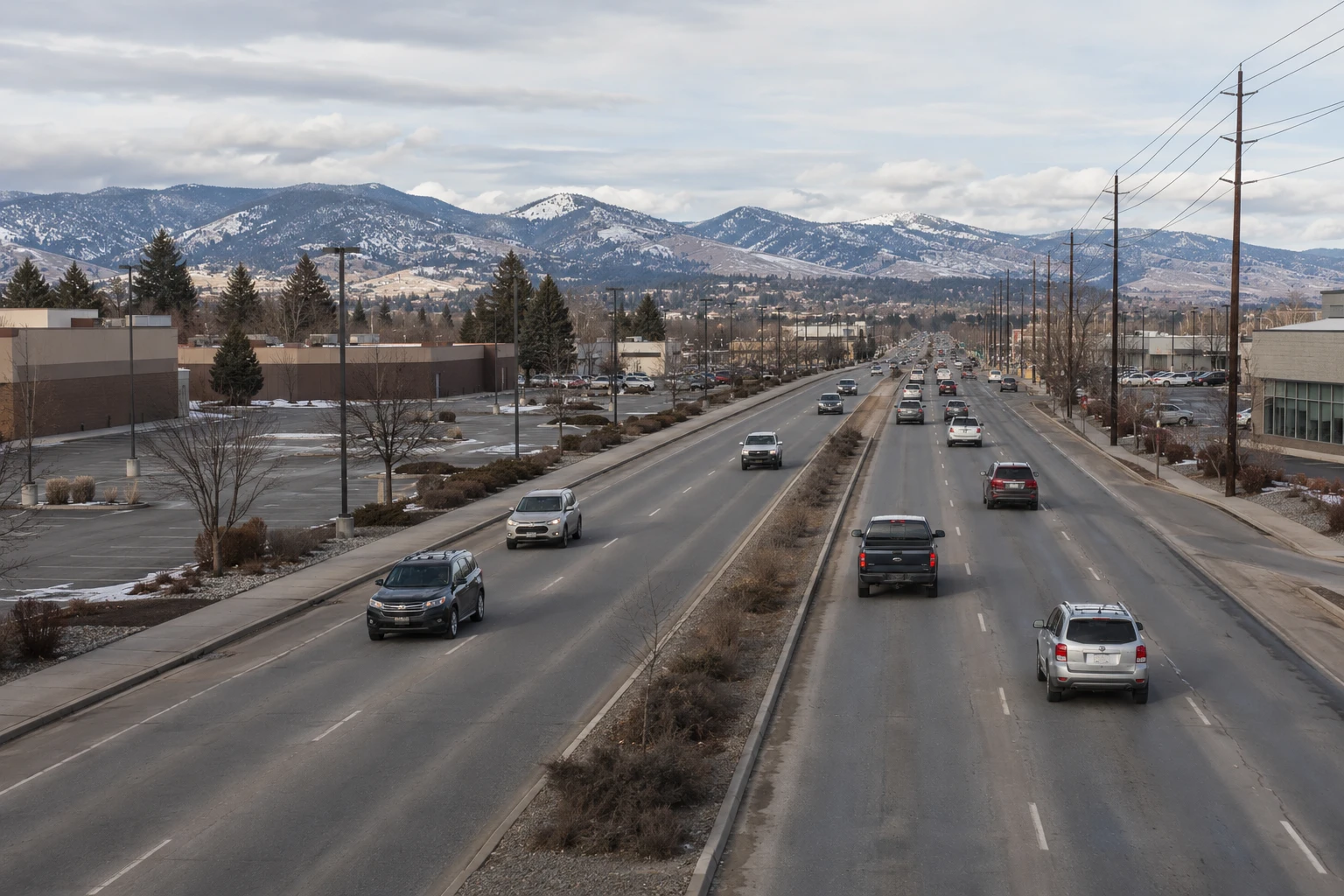
A neighborhood with 5,377 residents at the 2020 census and shopping, services and hospitals close by has a steady stock of small commercial roofs, and these roofs are best served by a routine, not a rescue. Orchard Homes and Target Range lie on the west side of Missoula, MT, about 3 miles from downtown, between the Bitterroot and Clark Fork rivers, with US 93 running just east of the community. We treat each roof there the same way: a survey, a short list, a dated record and a maintenance calendar that keeps the next leak from becoming a bigger repair.
Begin With a Walk and a Short List
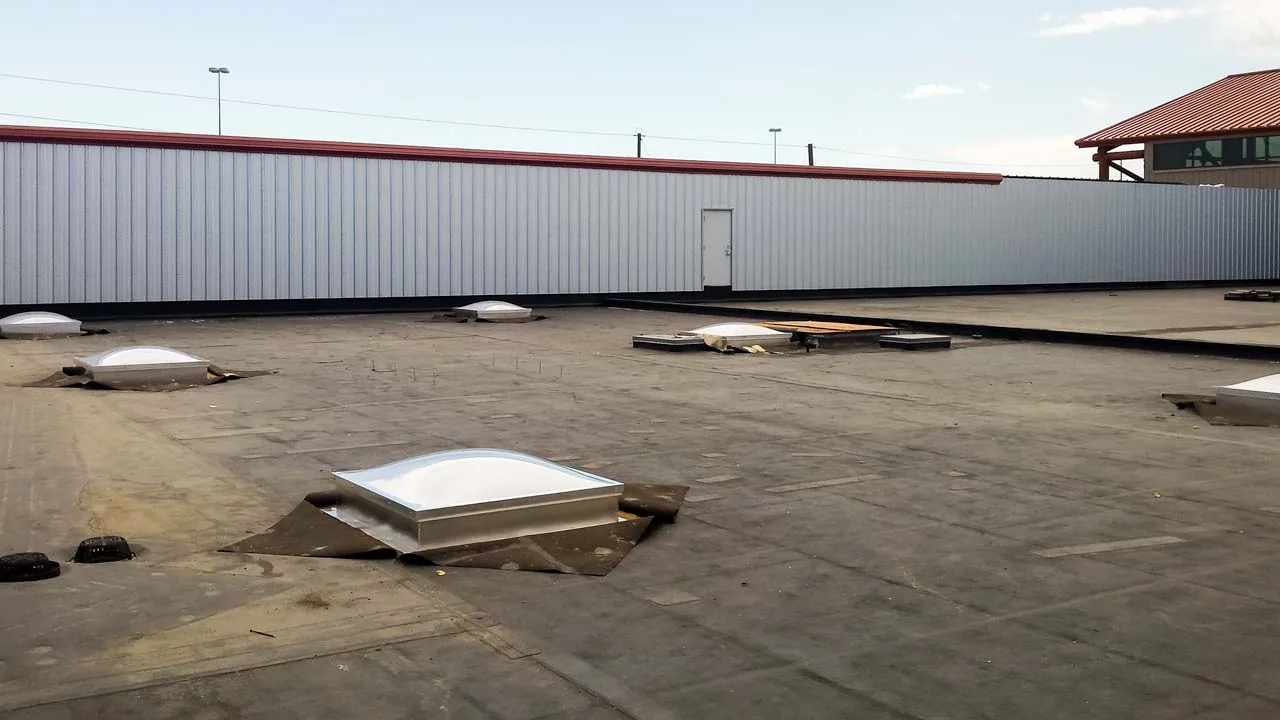
A small commercial building tends to have one or two roof areas, a few units and a handful of penetrations. A first walk takes a morning. We check the drains, the edge metal, the flashings at walls and curbs, the seams and the surface for ponding, and we photograph each finding.
The result is a short list with a price for each item. Open seams and failed flashings go first, since water finds them first. Surface staining and minor chalking can wait a season. The owner decides what to fund now and what to carry into the next budget, with the list as the reference.
Penetrations get a count of their own. A vent stack, a pipe boot or a skylight curb is a place where water can enter, and tenant work over the years leaves capped pipes and unused boots. We number each one, photograph it and grade it, and the penetration flashing work follows the numbers. A boot that is cracked but not yet leaking goes on a watch list with a date.
Handle Snow on Small Roofs the Right Way
Missoula averages about 39.5 inches of snow a winter, keeps snow on the ground about 120 days a year and designs roofs for a ground snow load of 40 psf. A small roof may not seem at risk, but drifts pile against parapets, units and neighboring walls, and a roof beside a taller building collects more than it was drawn for.
We mark the drift zones on the plan and watch the structure after heavy storms. Removal, when needed, starts at the heaviest areas and moves toward the supports. Plastic shovels and a light touch keep the membrane intact. Ice at the eaves gets attention too, since a gutter packed with ice pulls away from the fascia.
Hail is the other risk to price. Quarter-size stones fell on central and south Missoula in 2016 while storm drains were overwhelmed, and after a storm each roof is walked, the surface pressed for bruises and dents on vents and units photographed with a date and a scale for a later claim.
Prepare Drains for the Thaw
Drains on small roofs are few, and each one matters. A single clogged outlet can hold water over most of a roof, and the water freezes at night and thaws by day. Freezing holds all day on about 45 days a year, so a blocked drain in January may stay blocked for weeks.
We clear the strainers and flush the lines before the first freeze, and we flow-test each sump. If the roof has no overflow, we recommend one. The drain and scupper list becomes part of the maintenance file, so the next crew knows what was found.
Gutters and downspouts get the same treatment. A downspout that empties onto a walk turns into an ice patch, and a gutter that sags holds meltwater against the wall. Slope gets set, brackets tightened and the discharge moved to where it will not freeze across a path.
Decide Between Repair, Coating and Replacement
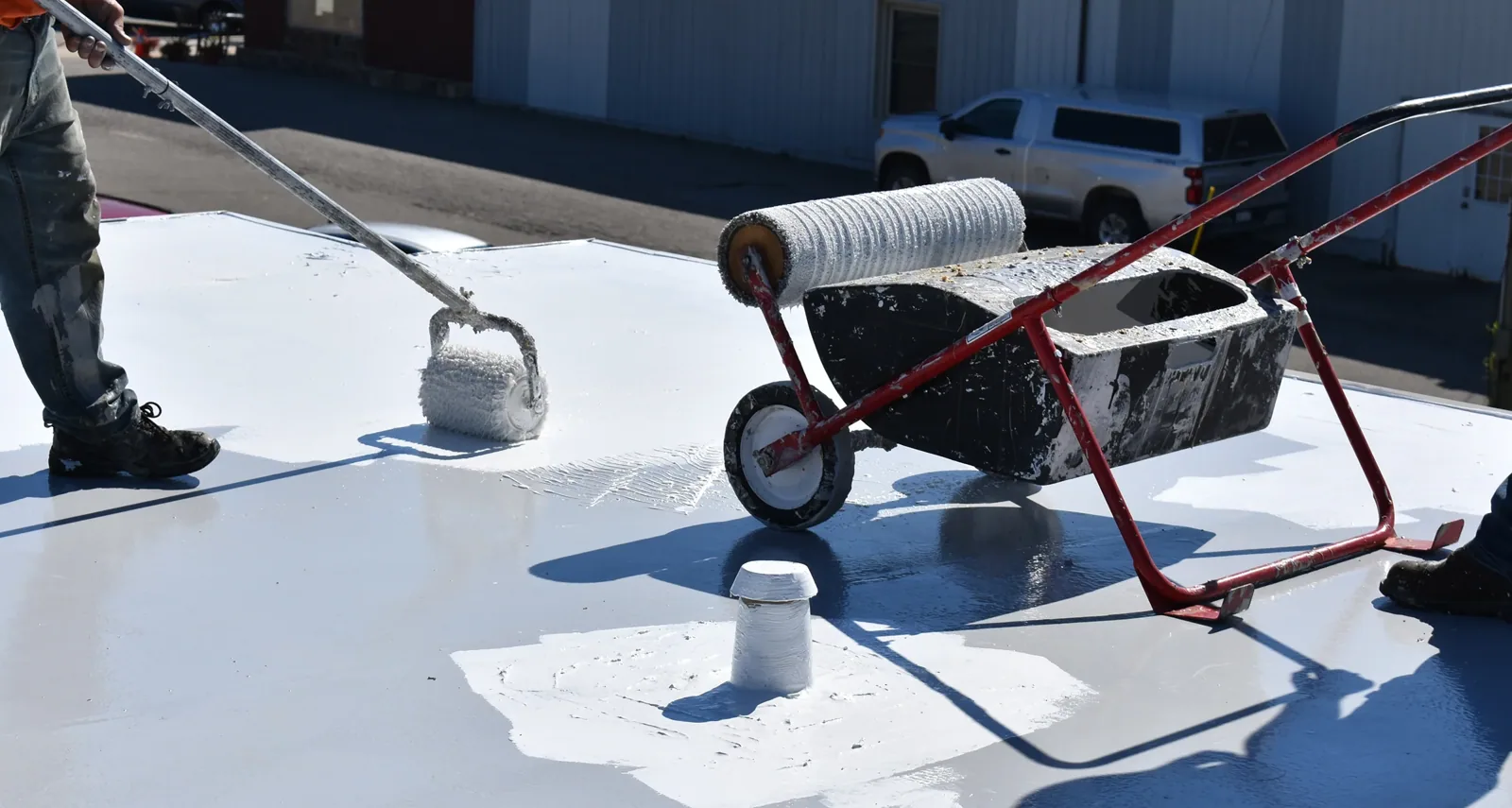
Three options cover most small roofs. A repair fixes the defects found. A coating restoration adds years to a sound roof with dry insulation. A replacement starts a new service life when insulation is saturated or the membrane has failed widely.
Cores and a moisture scan tell which one fits. The three prices go on a single sheet with the photographs, so the owner can compare the cost of keeping the roof alive with the cost of retiring it, which is the comparison a bank or a partner will ask for. Montana's statewide energy code, the 2021 IECC with Montana amendments, applies when a roof is replaced.
Work Around Neighbors and Tenants
Neighborhood commercial buildings sit close to homes, parking and walkways. We stage inside the lot, deliver outside peak hours and keep the walk clear. Noisy work happens at the hours the tenant names, and the roof is dried in every day.
Tenants get a written notice of the days and what to expect. Entrances stay open, and ladders are placed away from doors. The plan is the one used for any occupied building reroofing, sized down for a small site. Neighbors who live next door are told when the loud days are.
The area is close to shopping, services and hospitals, so traffic on nearby roads is steady. We plan deliveries outside the busiest hours and stage the crane where it will not block a driveway. A tenant that serves patients or visitors gets a quieter schedule and an earlier notice. A clinic or an office near a medical building may also ask for dust and odor limits, and the plan states them.
Keep One File for the Whole Building
The closeout folder gathers the photos, the core log, the repair list and the warranty papers. It travels with the building when it is sold or leased, and a later contractor can read it in an hour. We update it after each maintenance visit, and we keep a second copy off the roof and out of the building, so the file survives a loss.
Owners with buildings in nearby areas such as Lolo and the University District can keep the files in one format and one calendar. A maintenance program books one visit ahead of the freeze and one after the thaw. A short sheet names the staging area, the tenant access and the weather window for each visit.
Related Roofing Pages

Send the Roof Plan and the Leak History
Send the roof plan, the building age and any leak history, and we will schedule a first walk. The first sheet lists each finding with a photograph and a price. You will know the order of work before the freeze.
Call 555-555-5555 or email [email protected].
Questions About Orchard Homes and Target Range
How often should a small commercial roof be inspected?
Twice a year works for most: once before the first freeze and once after the last thaw. A visit after any hail or high-wind event is worth adding, because both leave damage that is hard to see from the ground. Each visit adds a dated photo set to the file.
Is a coating a good idea for a small roof?
When the insulation is dry and the membrane is sound, yes. A reflective coating also helps on the roughly 24 days a year that reach 90 F or higher. A moisture scan and a bond test decide it before the contract.
What does a roof replacement cost for a small building?
Cost follows area, system, insulation and access. A priced scope with options comes after the survey, and we list each line separately, so the owner can see what the membrane costs, what the insulation costs and what the code adds.
Does the business have to close during roof work?
No. The roof opens in small sections that are dried in daily, the entrance stays clear and customers use the usual door while the crew works from a side ladder or a hoist.
Who handles the building permit?
We prepare the documents and confirm the permit path with the building department. The code path for insulation is part of that check, and the permit number goes in the closeout folder with the other paperwork.