
Hotel Roofing in Missoula, MT
Hotel Roofing
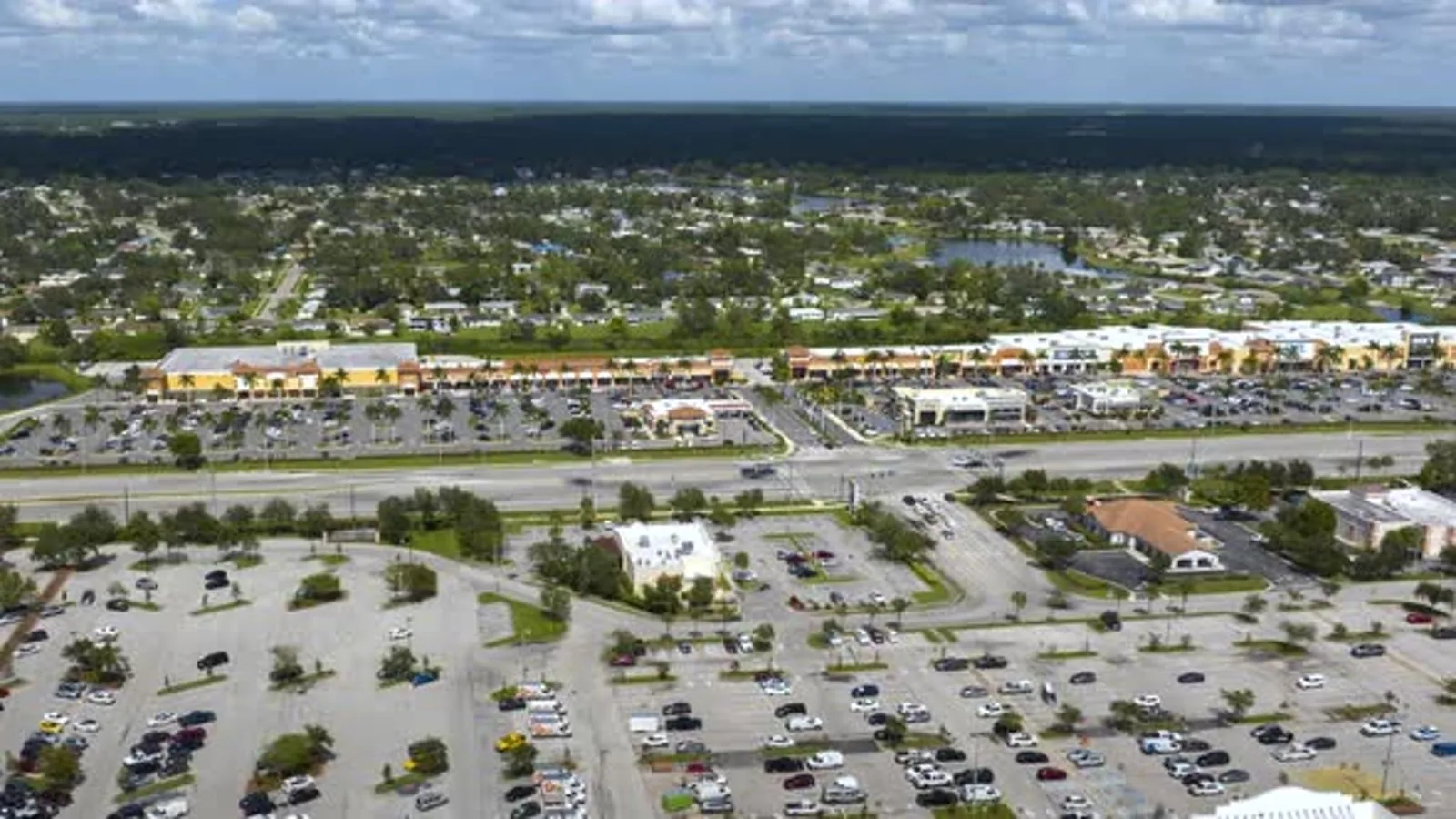
A hotel roof cannot be opened above occupied rooms until the guest schedule says which wing is empty, so the first step is a map of the room blocks, not a map of the membrane. If the crew tears off the section over a full wing, the first thaw or the first summer storm puts water into rooms that cannot be moved. Hotels cluster on North Reserve Street in Missoula, MT, alongside the big-box stores, and the roofs over them have to stay tight through peak travel weeks and winter alike.
We sequence hotel work by wing, floor and checkout time. The owner sees which sections open on which days, which rooms are held out of inventory and when the dry-in is complete.
Find what fails first
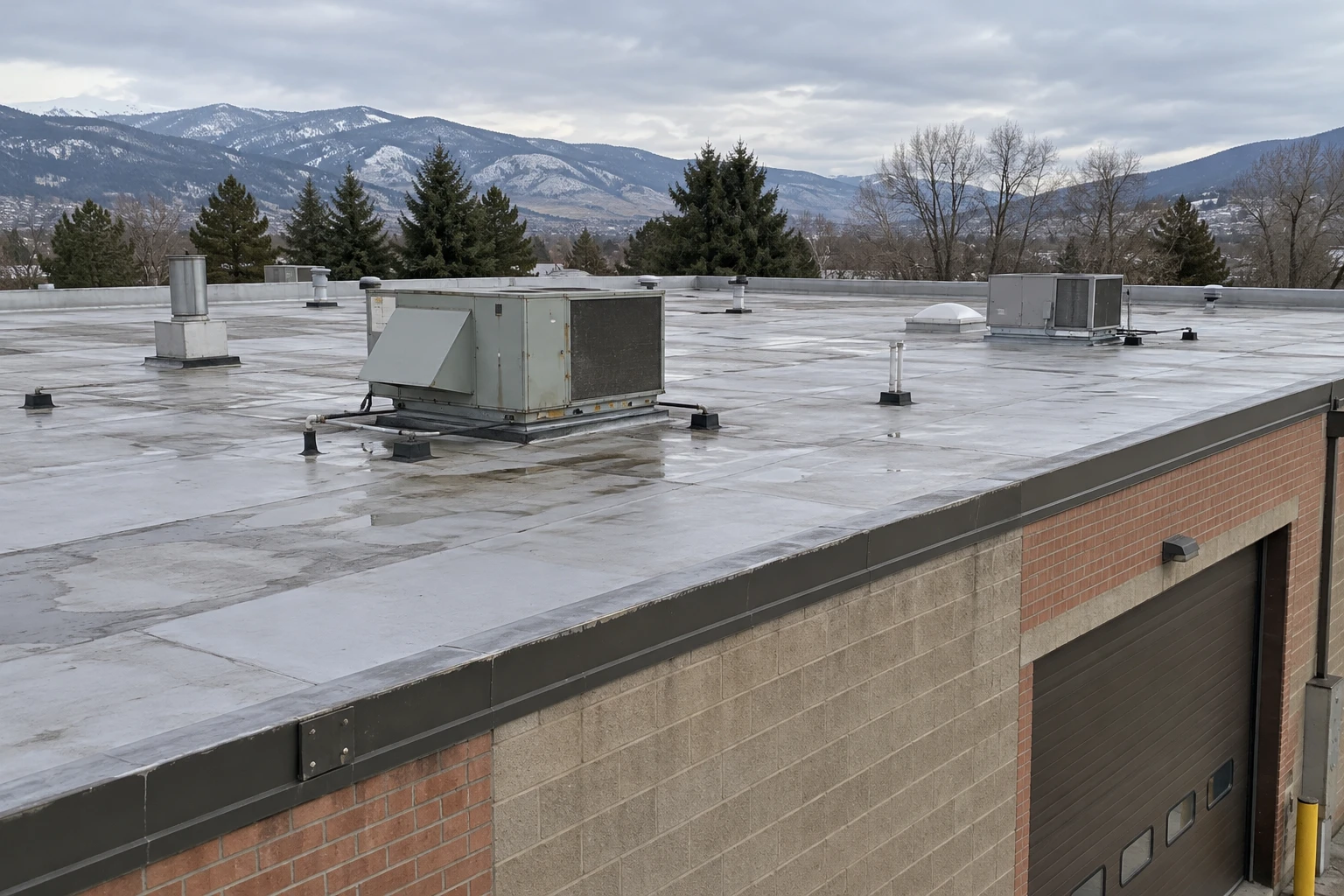
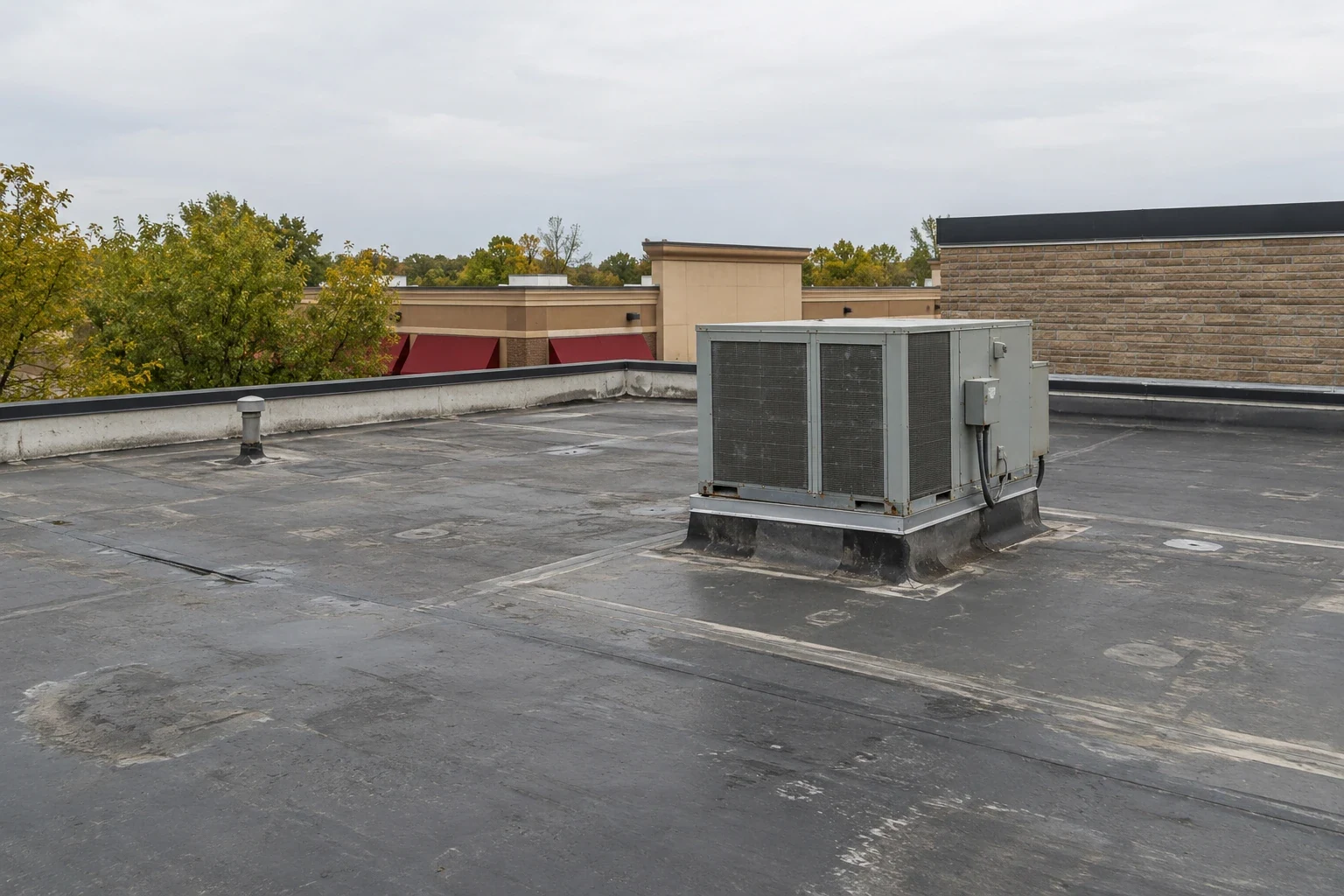
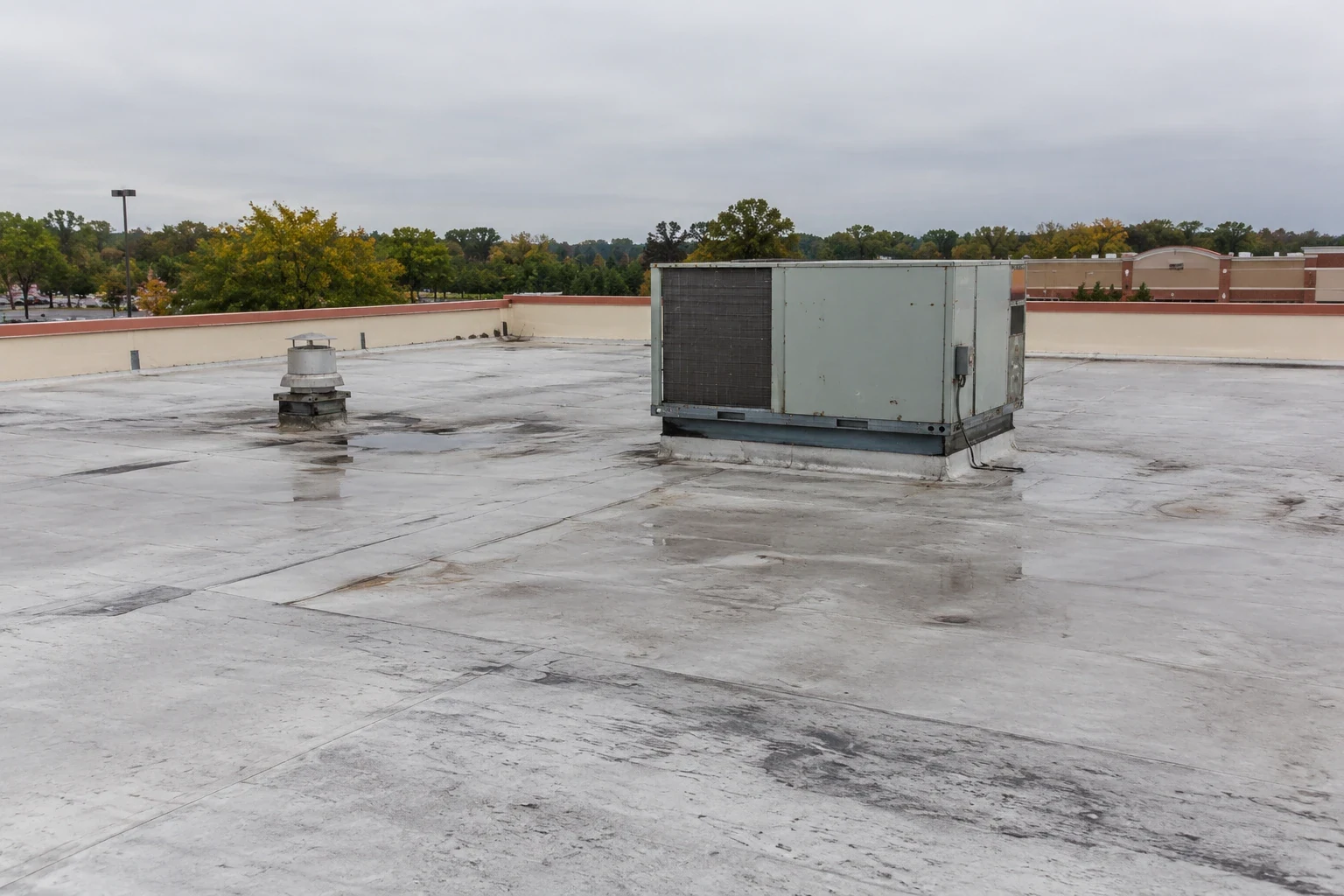
On a hotel roof, the common failures sit at the edges of the building and around the equipment. Parapet flashings, roof drains at the low corners, kitchen and laundry exhaust, and HVAC units on curbs each take their share of the weather. Corridors and stairwell roofs, which are often a different system from the main roof, are easy to overlook.
We walk the whole roof and record each area separately. We probe flashings, check drain sumps, examine curbs for settlement and follow ceiling stains back to their source. A hotel with an older wing and a newer one will often show different failures on each. The report keeps them apart so the owner can fund the worst first. Hotels with indoor pools, laundries or a restaurant add moisture, grease and exhaust to the picture. Warm, humid air rising through a vent can condense inside the roof assembly, and the damage shows up as stained ceilings long after the cause began. We follow each exhaust duct to the roof and check the seal where it passes through the deck.
Phase the work by wing
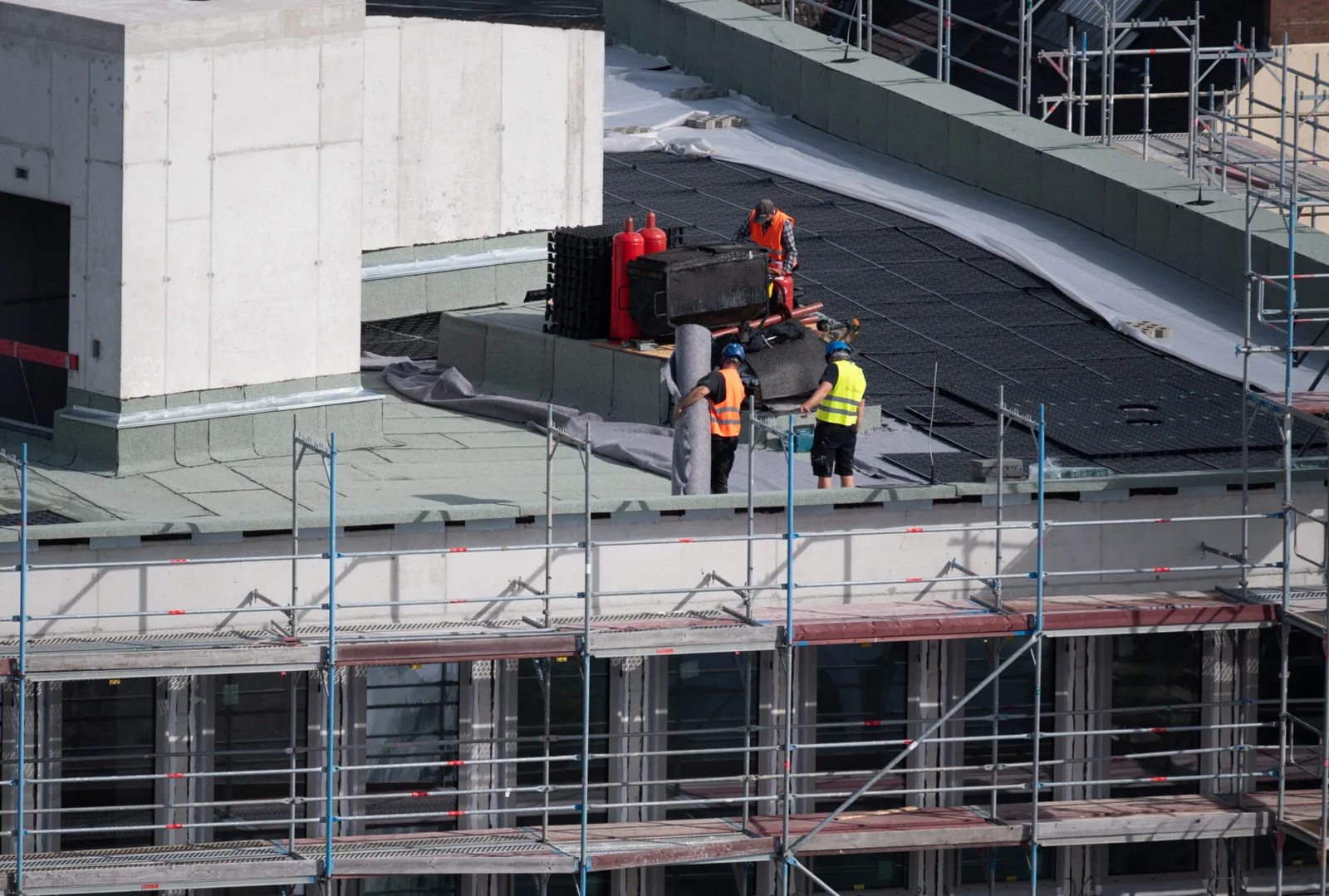
A hotel has a built-in phasing logic: each wing, each floor, each roof level. We plan the tear-off to match. The wing with the fewest booked nights goes first, and rooms directly below the work area come out of inventory before the crew mobilizes.
Interior protection goes in at the start of each phase. Noise is the hardest constraint, since guests sleep late and check out at midday. Loud tear-off is scheduled for midday, when most rooms are empty, and quiet work moves to early and late hours. Staging stays clear of the entrance and the guest lot. The material hoist and crane pick are scheduled for mornings, before arrivals, and the front desk gets the schedule a week ahead so it can tell guests what to expect. Rooms directly below the work are pulled from sale, and the manager can see the count of rooms and nights affected before approving the plan. A occupied-building reroofing plan like this takes more coordination than an empty-building job, and the schedule shows it.
Plan for snow, thaw and wind
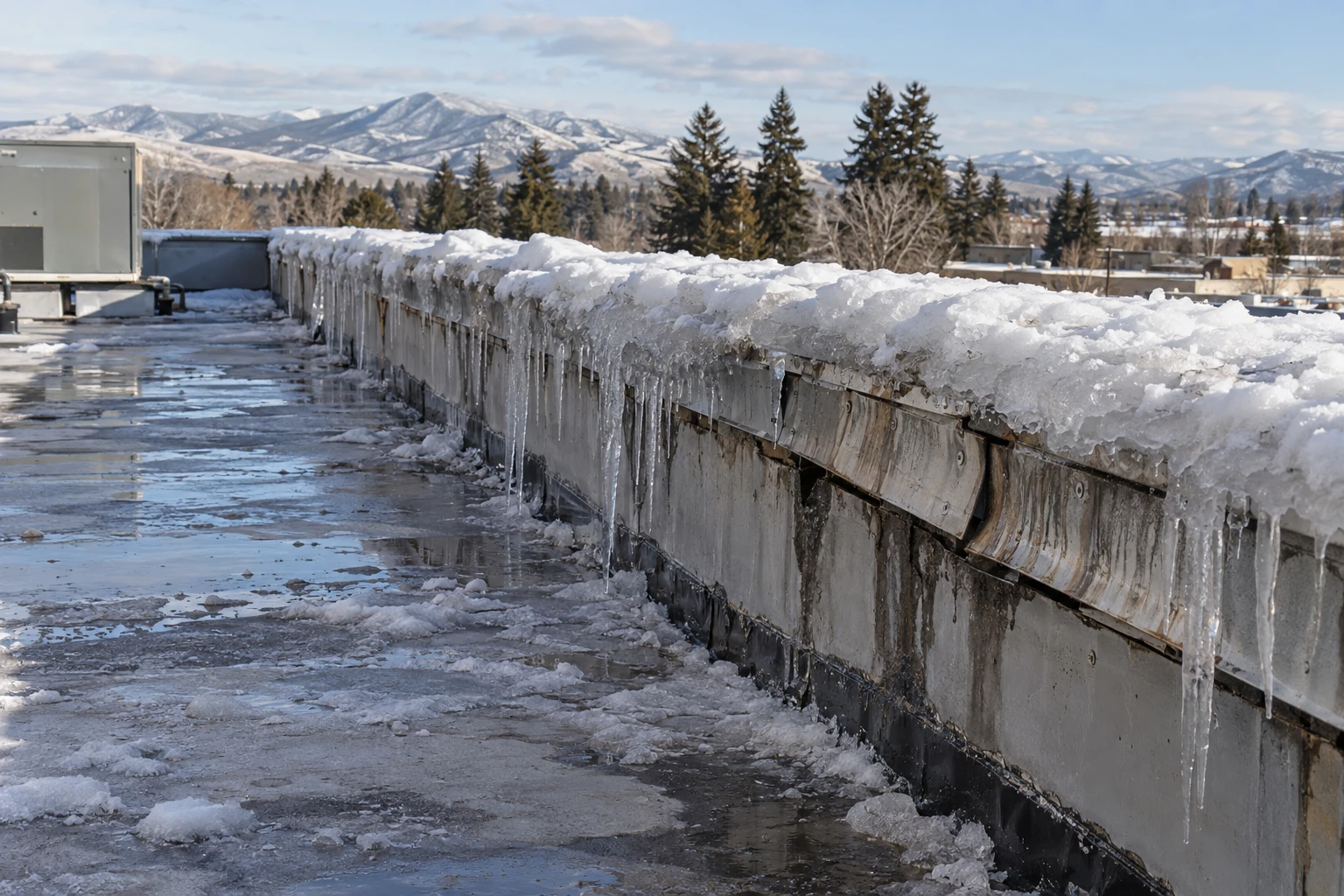
With 39.5 inches of snow in an average winter and about 120 days of snow cover, Missoula roofs work to a 40 psf design load. The basic design wind is 102 mph for Risk Category II. A hotel roof with several levels collects drifts against upper walls and mechanical rooms, and sliding snow can damage the lower roofs and the entrance canopy.
We map likely drift lines and check the drains beside them. We look at snow guards over entrances and at the gutters on porte-cocheres. Ice falling onto a walkway is a liability for the hotel as well as a hazard for guests. Meltwater from one thaw cycle can back up behind a clogged scupper and enter a room below, so the fall walk includes every outlet, every downspout and every roof drain on the lower levels, where debris from higher roofs collects. A snow and ice damage repair done in October prevents a bad night in January.
Handle heat and summer travel
Summer is both the best roofing season and the busiest hotel season. Summer brings about 24 days at 90 F or higher, and the high mark was 107 F on June 30, 2021. From late June through late September, daily swings average over 30 F. Heat softens sealant and expands the membrane, and the seams work harder.
The owner must weigh the work window against occupancy. We offer options: a short, intense replacement in a shoulder week, a phased replacement across a quieter season or a repair-only plan that carries the roof through another year. Each has a cost and a risk, and we show them. The shoulder-week option costs more in crew and crane time but keeps rooms open for the busiest weeks. The phased option spreads cost and disruption but extends the exposure. The repair-only option is cheapest this year and carries the risk that the next storm finds the weak spot first. A TPO sheet with a reflective surface suits a hotel that wants to reduce rooftop heat, and the walk tells us whether the existing layers can take a recover.
Protect guests and records
Guest complaints cost more than repairs. A stain on a ceiling tile in a booked room can cost a review and a refund. We keep a leak log for the property manager, with room numbers, dates and photographs, and trace each to a roof cause. Over a season, the log shows patterns that point to a specific drain or flashing. Big-box neighbors on Reserve Street share the same weather and the same wind exposure, and a hotel roof sees the same 102 mph design wind that a big-box roof does.
For hotels on North Reserve Street, the log also helps with warranty claims and lender reports. The same method works for a multifamily building with residents in place. A hotel near the airport business area gets its own access review. Hotels in Downtown Missoula or near the University District may also face limits on staging and street access that a Reserve Street property does not.
Close out with a punch list and a walk
At closeout we walk the roof with the chief engineer, test the drains and check every flashing. The crew clears the punch list before it leaves the site. The file holds the system, the attachment, the photographs and the next review date. Room counts affected by each phase are added up on the schedule before approval, so the general manager sees the sales impact in numbers.
Related Roofing Pages
Send the room map and the occupancy forecast
Send the roof plan, the room block map and the occupancy forecast, and we will map the phasing and the staging area before any material is ordered.
Call 555-555-5555 or email [email protected].
Questions About Hotel Roofing
Can a hotel stay open during a roof replacement?
Usually, with wing-by-wing phasing, interior protection and rooms held out of inventory below the work. Noisy tear-off is scheduled for midday, when most rooms are empty.
When should a hotel schedule roof work in Missoula?
Summer has the best weather and the heaviest travel, so many hotels choose a shoulder week or phase the work across a quieter season. We lay out the options with costs.
How do you keep leaks from reaching rooms?
Every section is sealed before the crew goes home, and drains are cleared before the first tear-off. A leak log traces any stain back to a roof cause.
What about ice falling at entrances?
We check snow guards and gutters over entrances and canopies before the first storm. Meltwater and ice shedding at those points is a liability, so it is part of the fall walk.
What should the property manager send to start?
The roof plan, the room block map, the occupancy forecast and the access constraints. We use them to chart the phases and the laydown yard.