
Commercial Roofing in Arlee, MT
Arlee
After a hailstorm, the order of operations on an Arlee roof is photograph, measure, then repair, and any step skipped costs the owner later. Arlee sits in the Jocko Valley on the Flathead Reservation, where US 93 and Montana Highway 200 pass through together, and it lies about 17 miles up US 93 from the I-90 junction at Wye. We inspect, repair, recover and replace low-slope and metal commercial roofs there, and we start from a written scope that sets out the damage, the proposed fix and the weather window before material is ordered.
Document Storm Damage Before Anything Moves
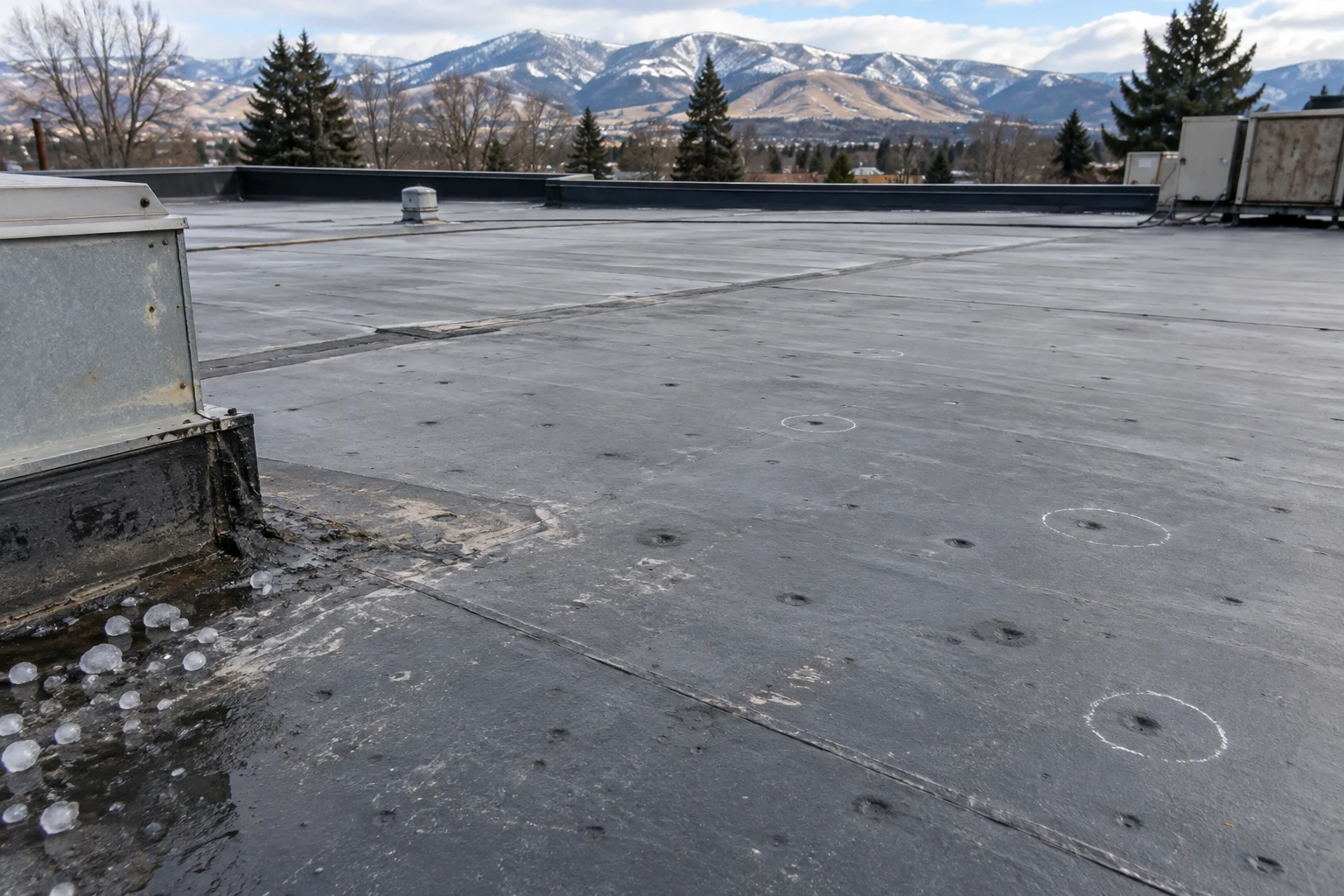
In Missoula in 2016, a storm dropped quarter-size hail on the central and south parts of the city with half an inch of rain in 20 minutes, and storm drains were overwhelmed. It is a reminder of how fast a cell can drop ice and water on a roof. Whatever the storm, the first step is to record the roof as it stands: bruised membrane, dented metal, torn flashing, granule loss on a cap sheet.
We photograph each area with a scale reference and note its location on a roof diagram. That record supports an insurance claim, and it keeps the repair scope honest, since cosmetic marks are separated from damage that lets water in. Our storm damage roof repair follows that sequence, and the methods for hail damage roof repair differ by membrane: a bruised TPO sheet is patched with a welded cover, a cracked built-up surface is cut out and replaced, and a dented panel is judged at the seam and the coating.
Rain falling during the storm adds a second task. Water that entered through fresh punctures can soak insulation within hours, so the moisture check happens as soon as the surface is dry enough to read. If the readings are high, we cut a small test opening, confirm the wet extent and plan the removal of wet material before the next cold spell turns it to ice inside the assembly.
Separate Cosmetic Marks From Water Entry
Hail leaves marks that look alarming and mean different things on different roofs. On a metal panel, a shallow dent may have no effect on performance, while a split at a seam or a cracked sealant bead is a path for water. On a single-ply membrane, a bruise matters when it reaches the reinforcement scrim or the insulation below.
We use a moisture meter and, where warranted, an infrared scan to check for water behind the surface. The written findings put each mark into one of three groups: no action, monitor, or repair now. Owners get a clear basis for deciding, and an adjuster gets a record that distinguishes functional damage from appearance alone.
Rooftop equipment deserves its own look. Hail can crush condenser fins, dent ductwork and crack the sealant at a curb, and a damaged curb can leak even when the field membrane is fine. We inspect each unit's curb flashing and note which items belong to the roofing scope and which belong to the mechanical trade, so the right contractor is called for each.
Support the Insurance Claim With Facts
A claim rests on documentation. We assemble the photo set, the roof diagram, the moisture readings and a written description of the damage and the proposed repair. We state what we measured and what we saw, and we leave coverage decisions to the carrier.
Timing matters, since a roof left exposed after a storm can suffer further loss that the carrier may question. We make temporary repairs promptly, keep the receipts and photograph the roof before and after. Our roof insurance claim assistance is designed to make the owner's file complete from the first day, so the permanent repair moves ahead without gaps in the record.
Plan the Haul Along US 93 and Highway 200
US 93 and Highway 200 share the road through Arlee, so a delivery truck is on the same corridor as local and through traffic. We choose the staging area on the first walk and mark where the truck stops, where the crane stands and where the hoist runs. In a tight lot, we deliver in two drops to keep pallets small.
The distance from Wye is about 17 miles, and from there the trip to Missoula is short. We schedule material and crew in one run where we can, which reduces mobilization cost. The staging plan keeps the work zone inside the owner's property, away from the road edge and from customer parking.
Because two highways meet in the same stretch, we avoid delivery windows that coincide with the busiest traffic and tell the driver in advance where to turn in. The crane pick is booked for a calm morning, and the material goes up in the order it is used: insulation first, cover board next, membrane last. That keeps the pallets from sitting open on the roof and gives the crew a clear path from the hoist to the work face.
Check Wind Resistance Along the Perimeter
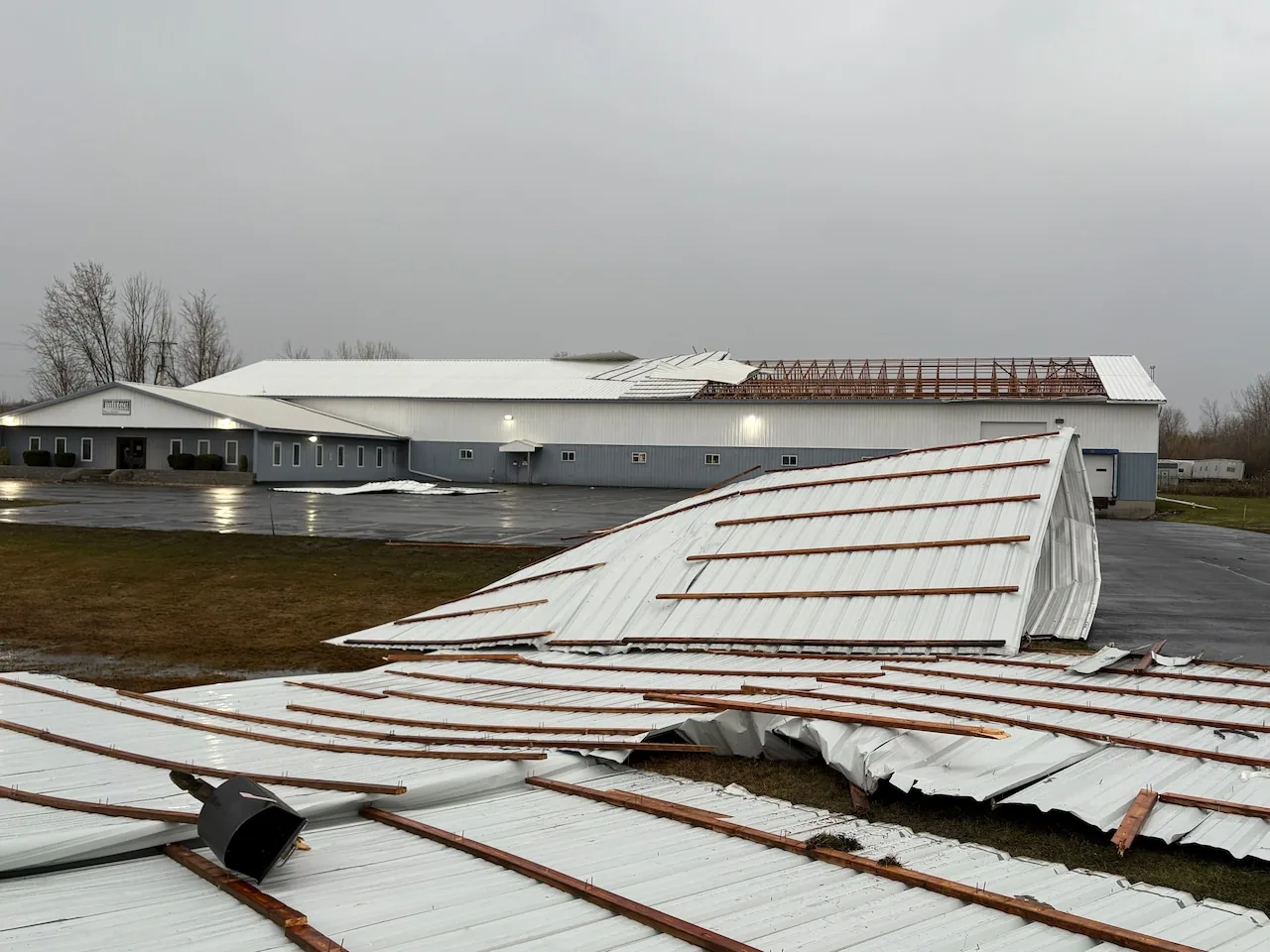
We use Missoula's 102 mph design wind speed for a Risk Category II building as the reference, and edges and corners see the highest uplift. After any storm, we check coping, drip edge and the first feet of membrane for fastener back-out and lifted laps. A loose edge that goes unnoticed is the start of a larger peel in the next windstorm.
If edge metal is damaged, we replace it with continuous cleats and sealed laps. If the membrane has lifted, we re-adhere or re-weld it and add fasteners where the pattern was thin. A repair of this kind is finished the same day it starts, since an edge left half-fixed is more vulnerable than one left alone. The related wind damage roof repair work follows the same perimeter-first order.
Close Out and Keep the Record Current
At completion we walk the roof with the owner and photograph every repair, flashing and drain. A punch list names anything still open and gives it a date. The report is the owner's record for any later claim or sale.
We then set a calendar of checks, with a pass in autumn before snow and a pass after any hail or wind event. Evaro, to the south on US 93, and Wye share the same highway and the same exposure. A preventive maintenance program puts those checks on a schedule, so the next storm finds a documented roof.
Related Roofing Pages
Send the Photos and the Roof Plan
Send storm photographs, the roof plan and the occupancy schedule so the damage record, the phasing and the staging area can be mapped before any material is ordered.
Call 555-555-5555 or email [email protected].
Questions About Arlee
How do I know if hail damage is cosmetic or functional?
Look for water entry. A dent in metal that leaves the seam and coating intact is cosmetic, while a split seam, cracked sealant or bruise that reaches reinforcement is functional. A moisture reading under the damaged area settles it.
What records does an insurance adjuster usually want?
Dated photographs, a roof diagram showing damage locations, moisture readings and a written scope with a price. We assemble all four, and we keep the documentation of any temporary repair so the carrier sees what was done and when.
Can you reach Arlee quickly after a storm?
Arlee is about 17 miles up US 93 from Wye, and we dispatch around the clock. The first visit aims to stop water entry and document the damage, and the permanent repair is scheduled for the next suitable weather window.
Should I repair a hail-damaged roof right away or wait for the claim?
Stop active leaks at once with a temporary repair and keep the receipts. Permanent work can follow the claim review, provided the temporary repair holds and the roof is checked after each weather event.
What makes edge metal fail in a windstorm?
Edges take the highest uplift. A short cleat, loose fasteners or an unsealed lap lets wind get under the metal and pull it free, and then the membrane behind it starts to peel. Continuous cleats and sealed laps reduce that risk, and a heavier gauge of edge metal resists flexing in a gust.