
National Guard Armory Roofing in Missoula, MT
National Guard Armory Roofing
An armory roof is repaired around the drill calendar, and the drill calendar decides which weeks the building can lose a bay. A readiness center is busiest on training weekends and quiet in between, so a roof job that starts on the wrong Friday collides with a formation, a vehicle movement or an inspection. In Missoula, MT, Montana Army National Guard units share the Fort Missoula enclave with the Army Reserve, and readiness buildings follow site rules that differ from ordinary commercial work.
We sequence armory work by drill period, bay and door line. The commander or facility manager sees which sections open on which days, where vehicles are staged and when each section is dried in. Where the unit has equipment parked outside, the staging plan shows the route it takes during the work, so no vehicle sits under a crane pick or behind a closed gate.
Find what fails first
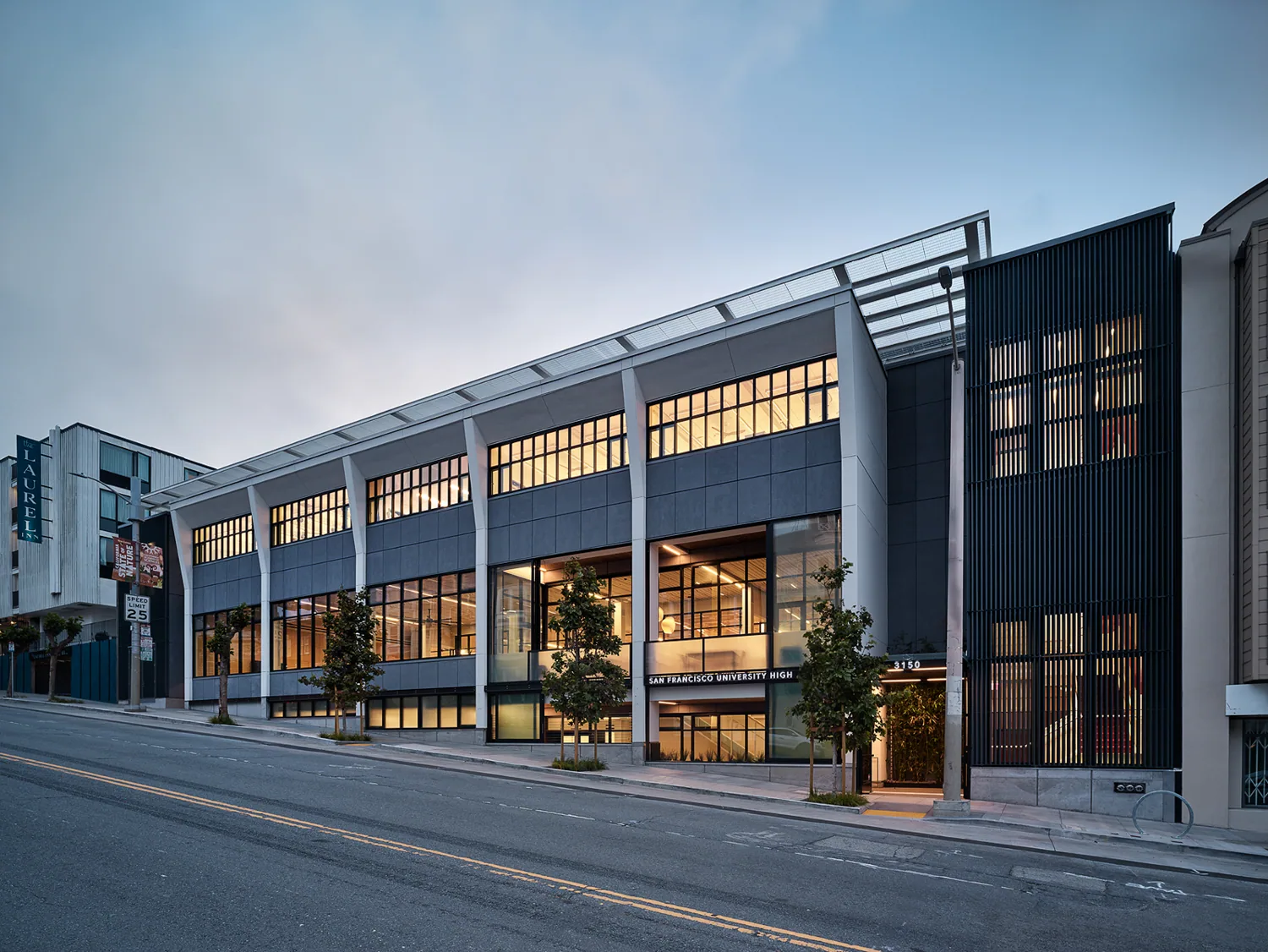
Armories and readiness centers often have a large drill hall, a vehicle maintenance area with overhead doors, classrooms and an office wing. The drill hall has a long span with few interior supports. The vehicle bay has tall doors and exhaust. The office wing has rooftop units and small penetrations.
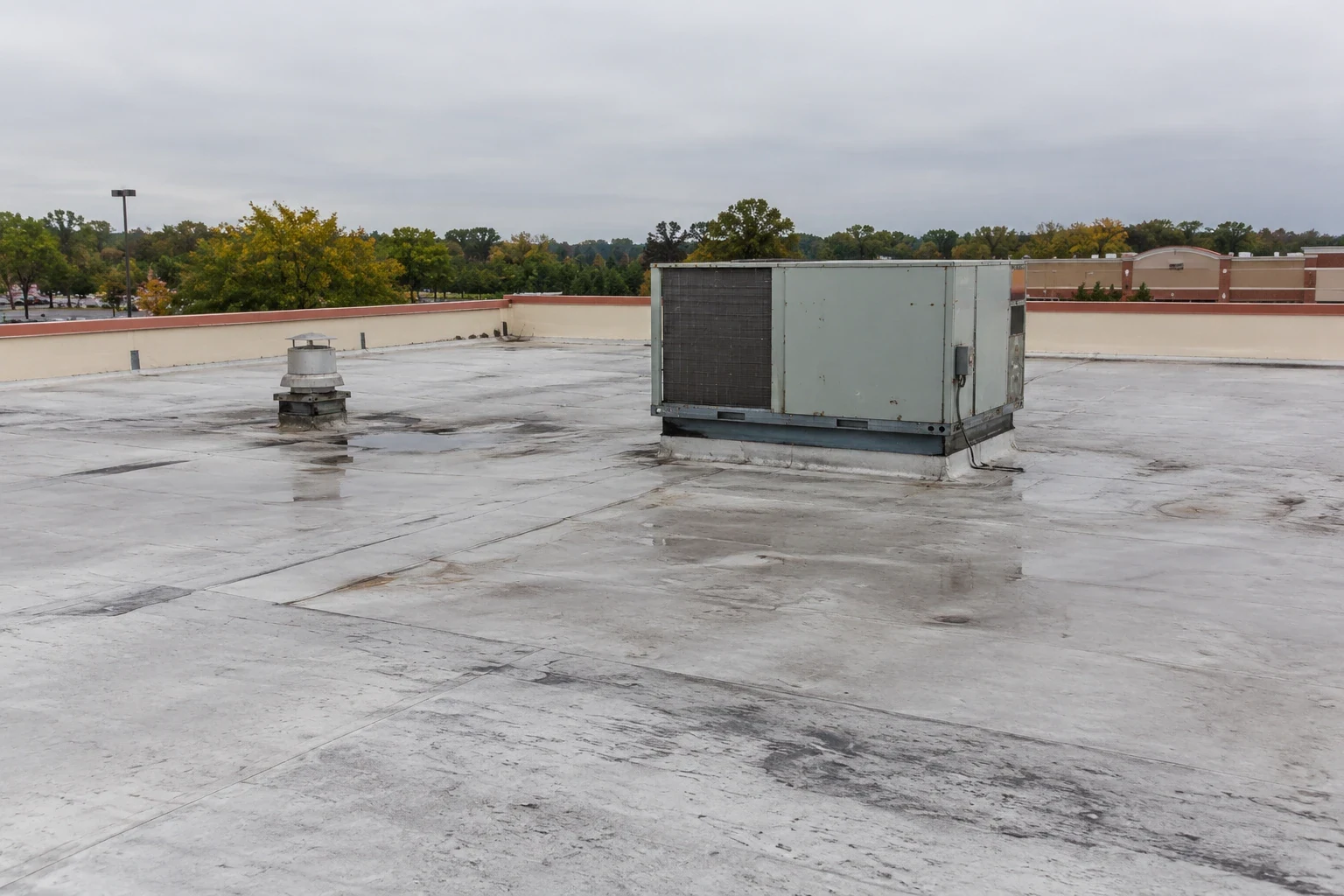
We walk each roof and record the system, the slope, the drains and the penetrations. The common failures sit at the door headers, along the wall-to-roof joint, at the drains and at the equipment curbs. Under snow a long span sags, which opens laps and loosens fasteners. Each wing is reported on its own, so the worst can be funded first. Vehicle bays deserve a special look. Exhaust from running engines and heaters leaves deposits on the roof around vents, and condensation forms on cold deck in winter. We follow each exhaust to the roof, check the boot and look for staining on the underside of the deck, where rust shows early.
Plan around drill weekends and annual training
Training dates are fixed by the unit and the state. We ask for the calendar before we set a start date, and we place work in the quiet periods. The commander tells us which dates are off limits, and we write them at the top of the schedule.
The staging area sits away from formations, parking for drill weekends and the vehicle yard. Materials arrive when the gate can receive them. The crane pick happens when the area is empty. If a section must stay open overnight, interior protection goes in below. On a drill weekend, the crew stops work and secures the roof, so no hazard sits above the soldiers. A short end-of-day note goes to the facility manager. Annual training brings units from across the state, and the building can fill with people for two weeks. We plan the work for the weeks before or after, and we keep the roof dry and tied down in between. If the unit changes its dates, the schedule changes with it, and the bid shows the standby cost of waiting.
Clear access and follow site rules
Armories have access controls, and the controls differ from one site to the next, so we treat the facility's own rules as the first document in the file. Personnel may need badges or escorts, and vehicles and materials may be checked. Restricted areas, such as arms rooms, stay off limits. The facility's access rules are requested first and written into the scope. The crew roster goes in early, and delivery times are agreed with the facility.
Hot work needs approval and a fire watch, and many facilities restrict it. Fuel, ammunition and vehicle maintenance on or near the site raise the bar further, so the scope names every method that is allowed and every one that is not. We offer heat-welded, adhesive or mechanical systems where open flame is not allowed. Each crew member's clearance date is on the schedule, so no one waits at the gate for a pass.
Plan for snow, wind and thaw
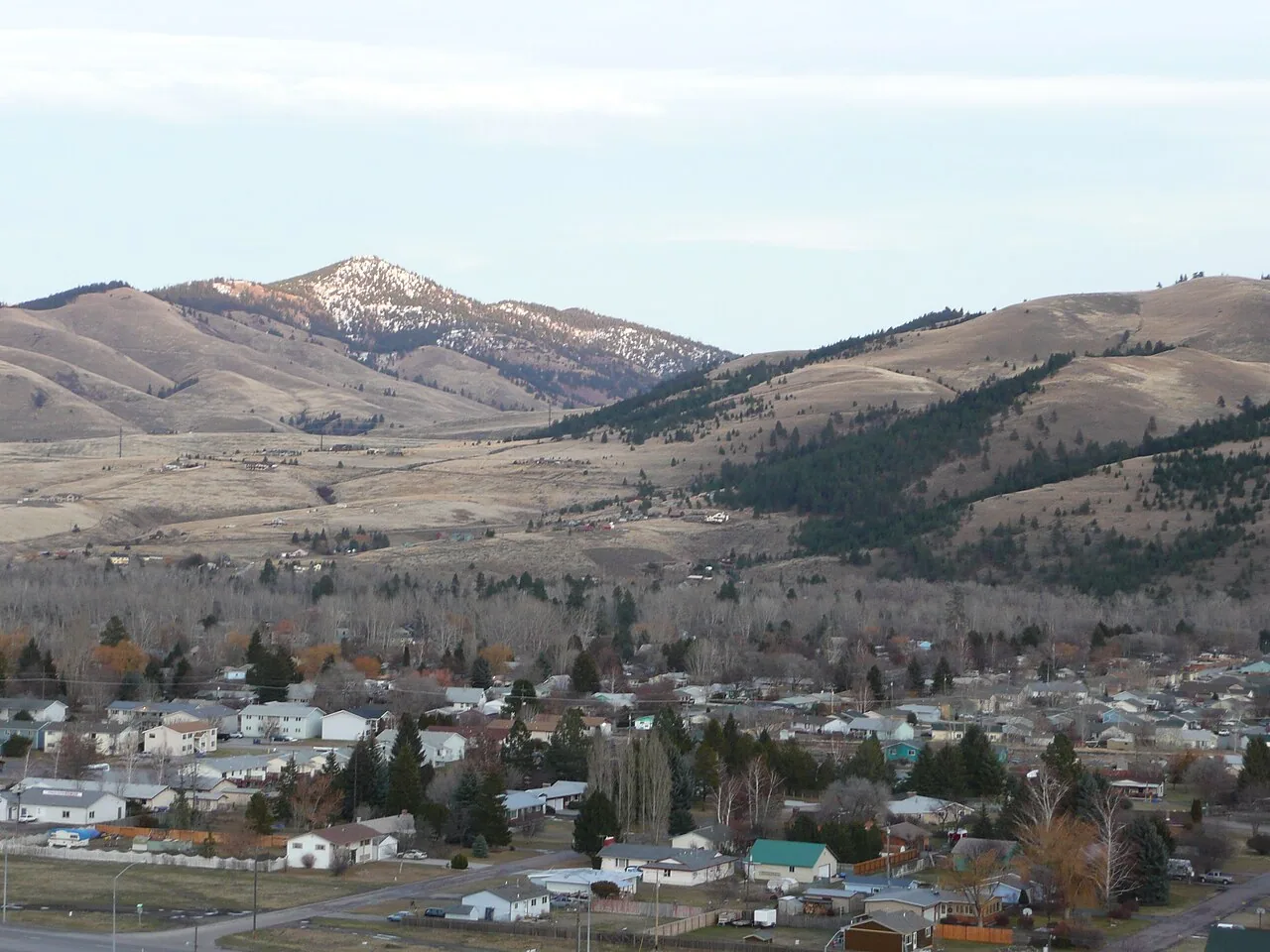
Missoula winters average about 39.5 inches of snow, and the ground stays white about 120 days. The design ground snow load is 40 psf, with a 102 mph basic design wind speed for Risk Category II. About 45 days each year stay at or below freezing from dawn to dusk.
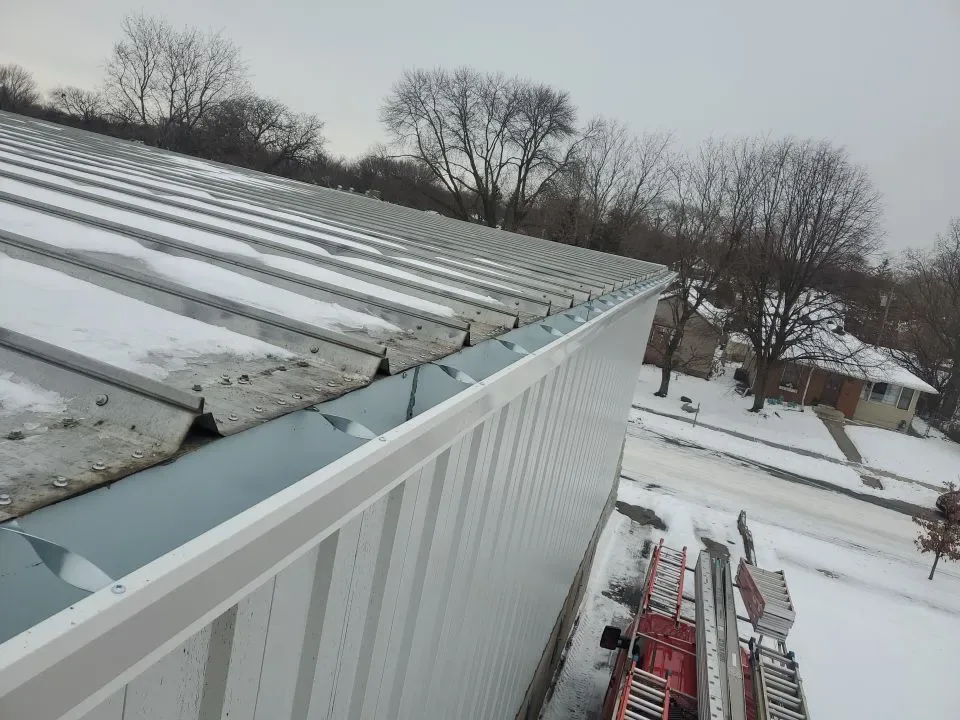
A drill hall roof holds snow in an even blanket and then lets go in slabs, and a slab that slides toward a door can jam it or strike the header. We check snow guards, door headers and eave gutters before the first storm. Loose edge metal is the first thing wind lifts, so we check it. Drains and scuppers carry meltwater off a large area, so we clear every sump and record its condition. A edge metal and gutter repair in October keeps the doors working through winter. Missoula's design numbers apply to a building in Lolo or Frenchtown as they do in the city.
Build to the criteria
Government buildings often follow the Unified Facilities Criteria for roofing. They cover design, materials, installation and testing. Submittals, product data and shop drawings may be required before work starts. Core cuts and moisture surveys are documented as tests.
Warranty terms are read before work starts, and the submittal steps are laid out so the owner knows what each one involves. The closeout package holds the as-built details, the test results and the photographs. The Army installation plan handles base access, badging and escorts, and the same steps apply here.
Choose repair, recover or replacement
The walk sorts each roof into one of three groups. A roof with failed details and dry layers takes repair. A sound sheet over dry insulation may take a recover. A roof with saturated insulation or a failing deck needs replacement. We price each and show the years each is expected to hold.
A standing seam metal roof suits a long span and sheds snow well. A TPO sheet suits a low-slope section. The file for each building records the system and the next review date, so the facility manager sees the whole portfolio at once. A readiness center, a vehicle shop and a storage building each get their own entry, and each can be ranked against a hangar or a public office by remaining service, which is the order the budget follows. Vehicle bays at readiness buildings tend to have the tallest doors and the largest openings, so the door header is the first detail checked and the last one closed. Interior protection goes up over the vehicles before a bay opens, and the schedule keeps the apron clear so equipment can move when the unit needs it.
Related Roofing Pages
Send the drill calendar and the access rules
Send the building list, the drill calendar and the access rules, and we will map the phasing and the staging area before any material is ordered.
Call 555-555-5555 or email [email protected].
Questions About National Guard Armory Roofing
How do you plan around drill weekends?
We ask for the training calendar first and schedule work in the quiet periods. On a drill weekend the crew stops work and secures the roof.
What happens if the crew needs access to a restricted area?
Restricted areas stay off limits unless the facility arranges an escort, and the schedule names those dates. The rules come from the facility at the start.
Is open-flame work allowed?
Often not. We use heat-welded, adhesive or mechanical systems where flame is restricted and price the difference.
Why start at the door headers?
Snow and wind concentrate at the openings, and a leak there can reach vehicles and the door mechanism.
What does the facility manager need to provide?
A building list, the drill calendar, the site's access rules and earlier roof reports; the phasing and staging follow from those.