
Aircraft Hangar Roofing in Missoula, MT
Aircraft Hangar Roofing
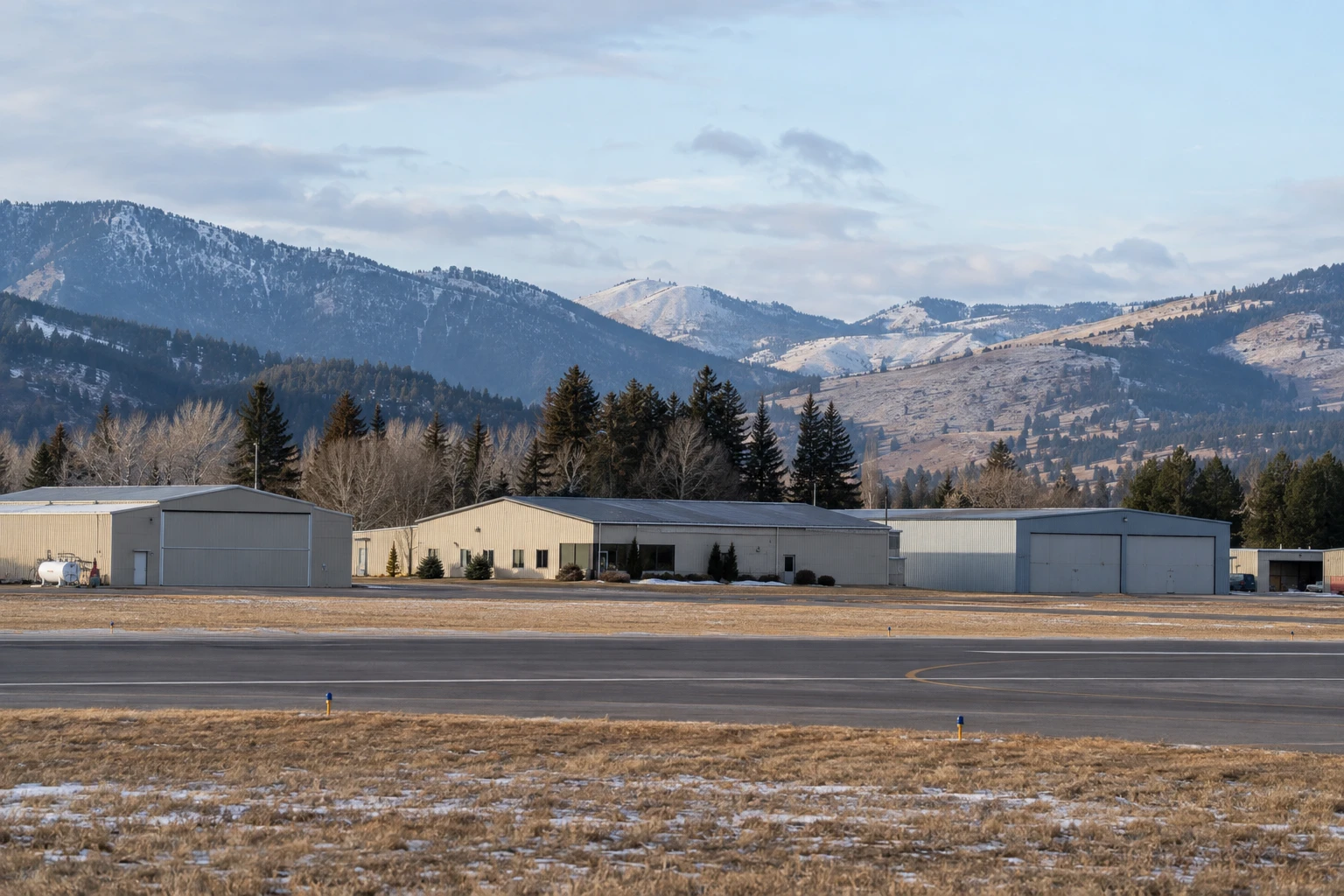
A hangar roof is a long span with a very large door at one end, and the repair order starts with the door header, because the header carries the load and takes the water. Snow that slides toward the door, wind that pushes against the opening and thermal movement across a wide metal roof all concentrate at that end. Missoula Montana Airport added a new terminal concourse in 2022 and hosts the largest U.S. Forest Service smokejumper base, and aviation buildings in and around Missoula, MT carry real consequences when a roof fails over aircraft or equipment. Every building on the field, from a private hangar to the Forest Service base, shares the same snow, wind and thaw, and the roof plan is written with that weather in mind.
We sequence hangar work by span, door end and apron access. The owner sees which sections open on which days, where aircraft are moved and when the building is dried in.
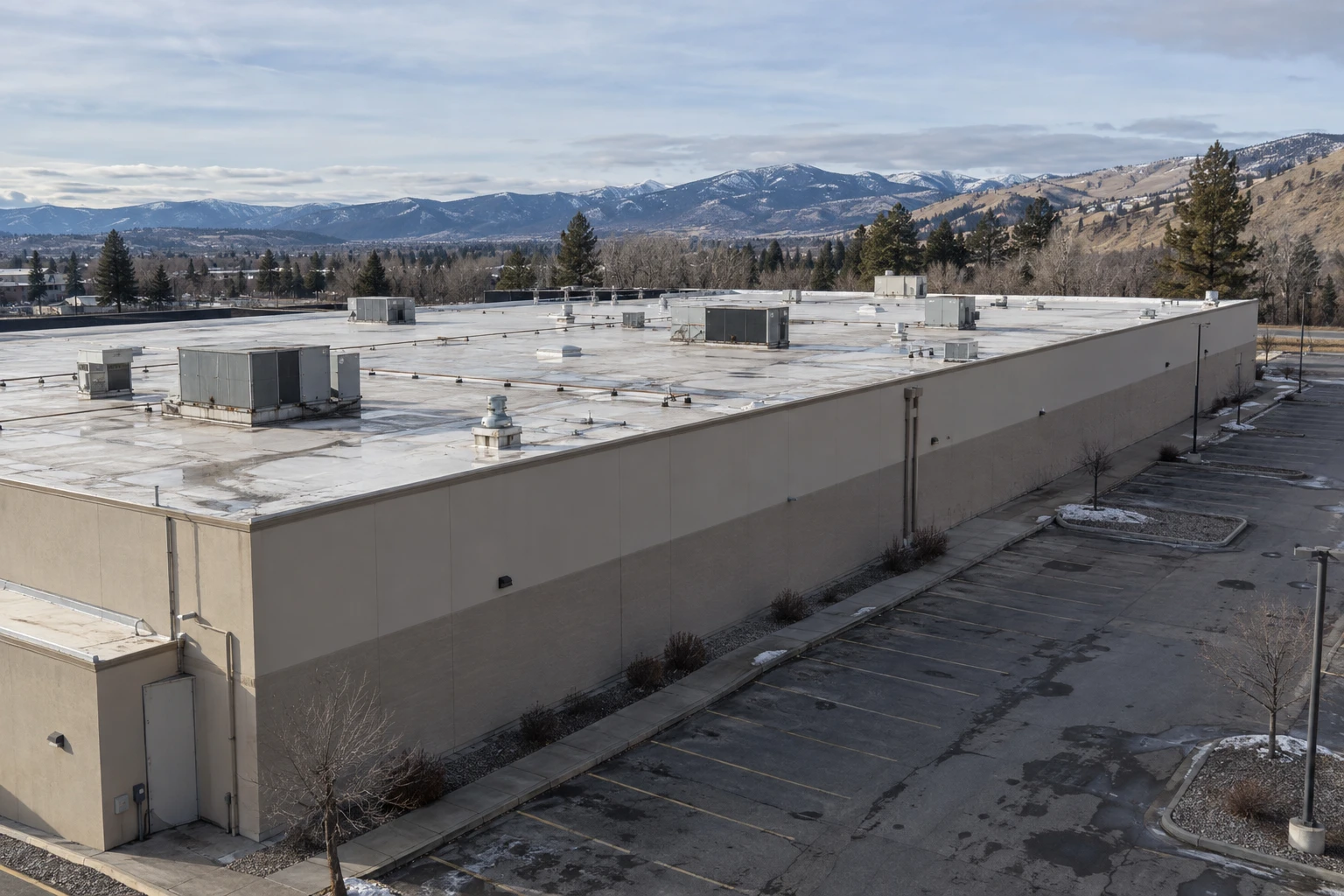
Find what fails first
Hangar roofs fail at the door header, at the long panel laps, at skylights and monitors and at the eaves. A wide span deflects under snow, and the deflection opens laps and loosens fasteners. The wall-to-roof joint along the length of the building moves with temperature, and sealant there ages.
We walk the roof, probe the laps and count the fasteners that have backed out. We check the header flashing and the gutters at the door end, where ice and meltwater collect. Inside, we look for stains on the liner, rust on the purlins and signs of deflection. A hangar with a past leak over an aircraft gets a closer look at the same bay. The report separates each bay so the owner can fund the worst first. Skylights, roof monitors and vents in a hangar roof are extra penetrations, and each has a curb, a gasket or a flashing that can fail. We probe each one and record the glazing seal. Hangars used for maintenance also have exhaust and ventilation equipment that adds to the list, and we map it all on the plan.
Work within airfield rules
Airfields have rules for height, equipment, escorts and operations. A crane or lift near a runway or taxiway may need approval, and work on a building near the flight line needs coordination with the airport operator. The staging area has to avoid aircraft movement areas and fire lanes. Materials arrive by truck, and the delivery route is drawn on the site plan with the gate, the escort and the unloading point.
We ask about the rules at the start and put them in the scope. We do not assume any approval. Hangars on or near an airport campus, such as those in the Missoula Airport Area, need an access plan for crews, materials and equipment. Tools and loose materials are secured at the end of every day, because debris on an apron is a hazard to aircraft. Hot work gets a fire watch, and many hangars restrict it entirely. Fuel storage, paint and solvent areas nearby raise the stakes, so the scope names the methods that are allowed. Heat-welded, mechanical and adhesive systems avoid open flame. Worker access to the roof follows the airfield rules, including fall protection at the edge, which on a high hangar adds equipment and time that the bid shows.
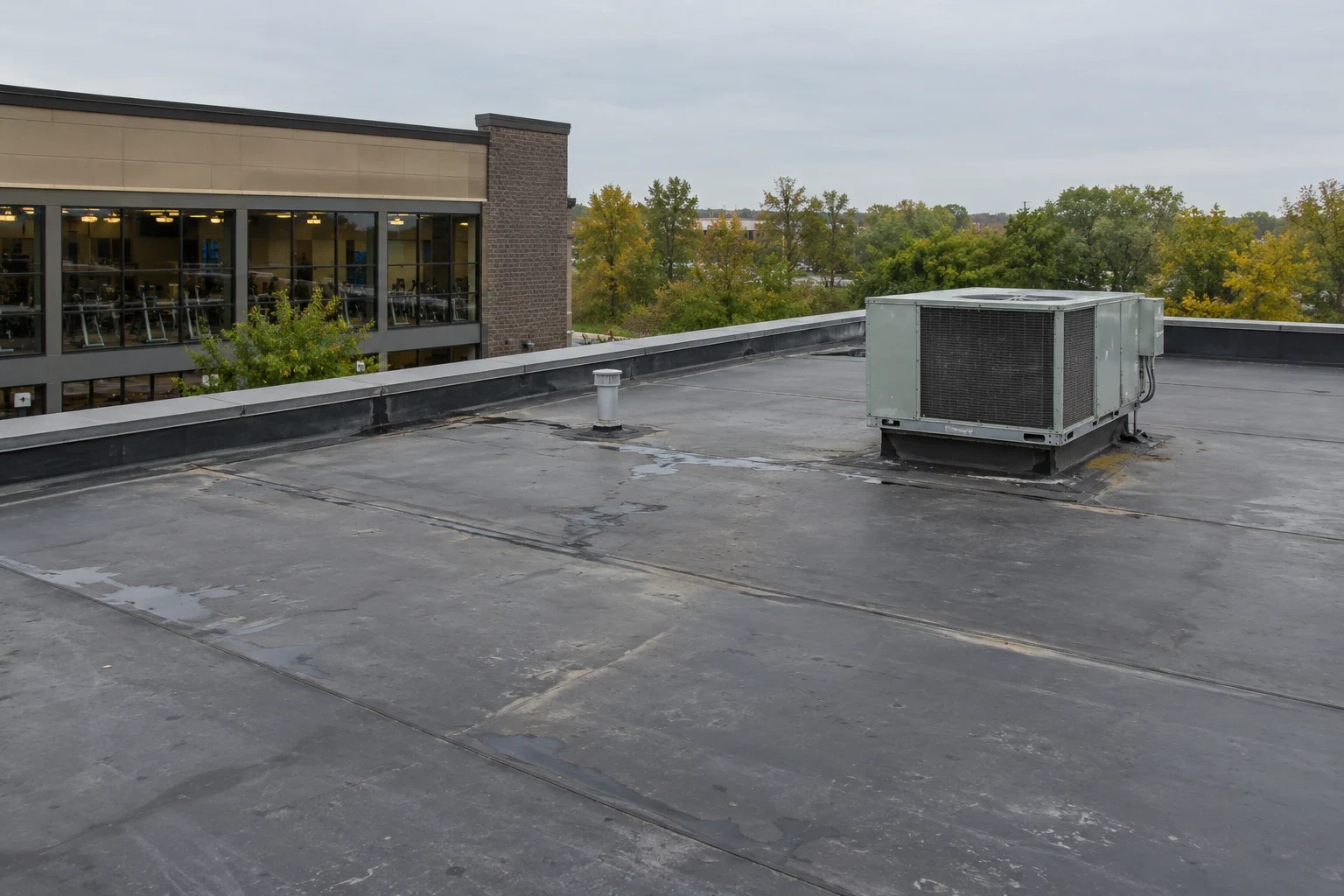
Protect aircraft and equipment
Aircraft and ground equipment are the most valuable things under a hangar roof. We plan the dry-in sequence so no section is open when rain or snow is forecast. Aircraft are moved away from the work bay, or covered, before the roof is opened. Interior protection goes in below the work area.
Dust, fasteners and debris can drop during tear-off, so we install nets or decks below the work zone where the structure allows. A hangar with fuel or hazardous materials has its own rules, and we follow them. The crew keeps a log of which bays were opened and closed, and the owner gets a note at the end of each day. A leak found late is more costly than a roof job done carefully. The new terminal concourse at Missoula Montana Airport and the smokejumper base show how active the airfield is, and an active airfield leaves few quiet days. We ask the operator which days are slow, and we plan the dry-in around the forecast and the flight schedule. If a fire season brings extra aircraft to the field, the schedule gives way, and the roof is left dry and tied down until the bay is free again.
Plan for snow, wind and thaw
A 40 psf ground snow load is the design basis, and a normal Missoula winter delivers about 39.5 inches. Basic design wind speed is 102 mph for Risk Category II. A wide, low-slope hangar roof collects snow evenly until a thaw, then releases it in slabs. Snow sliding toward a door can block it or damage it.
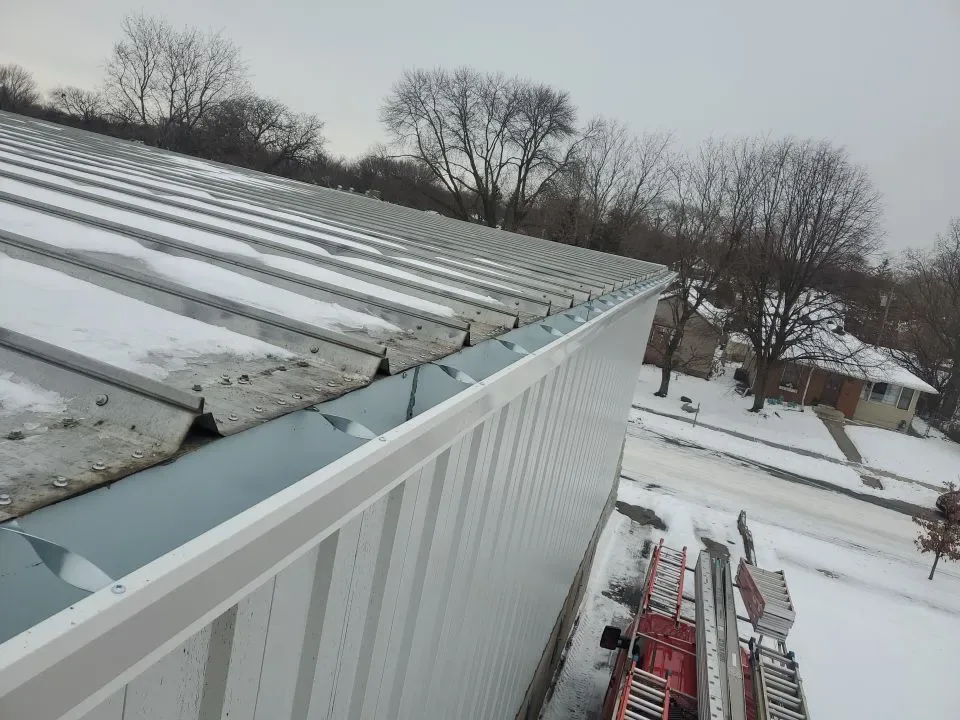
We check snow guards, door headers and the eave gutters. We look at the roof edge for loose metal, since wind lifts it first. About 45 days a year never rise above freezing, and thaw cycles drive water into every lap and fastener hole. An edge metal and gutter repair made in October protects the doors through winter. Door tracks and seals take the brunt of drifted snow. Ice in a track can jam a door open on a cold morning with an aircraft inside, and the cure is to keep meltwater away from the track. We check the roof drainage that serves the door end and recommend changes where water lands on the apron.
Choose the system for a long span
Many hangars use metal panels, and a standing seam system moves with temperature and hides its fasteners. A metal retrofit over an aging roof may work if the structure can carry it. Some hangars have low-slope sections that suit single-ply.
We compare installed cost, expected service and repair path. The span, the door type and the deflection matter to the choice. A hangar near the development park off Mullan Road may share a roof profile with a flex industrial building, while a hangar on the airport campus follows its own rules. Owners with several hangars can rank them on one list, with a cost range for each and the year it falls due. A public building owner will recognize the format: dated photographs, test results and a stated basis for each recommendation.
Close out with the operator
At closeout we walk the roof with the operator, test the gutters and clear the punch list. The file records the system, the photographs and the next review date.
Related Roofing Pages
Send the aircraft schedule and the airfield rules
Send the roof plan, the aircraft schedule and the airfield rules, and we will map the phasing and the staging area before any material is ordered.
Call 555-555-5555 or email [email protected].
Questions About Aircraft Hangar Roofing
Why start at the door header?
The header carries load and takes water, and snow and wind concentrate at the opening. A leak there can reach aircraft and the door mechanism.
Do I need airport approval for a roof project?
It depends on the location and the equipment. Cranes and lifts near the flight line may need approval, and we ask about the rules at the start.
How do you protect aircraft during tear-off?
We move or cover aircraft before opening a bay, install interior protection and dry in each section daily. A log records which bays were opened and closed.
Can a hangar roof be retrofitted instead of replaced?
Sometimes, if the structure can carry the load and the old panels are sound enough to stay. A structural check and a core decide.
What should the operator send to start?
The roof plan, the aircraft schedule, the airfield rules and the access constraints. Our phase plan and staging map start from that list.