
Commercial Roofing in Potomac, MT
Potomac
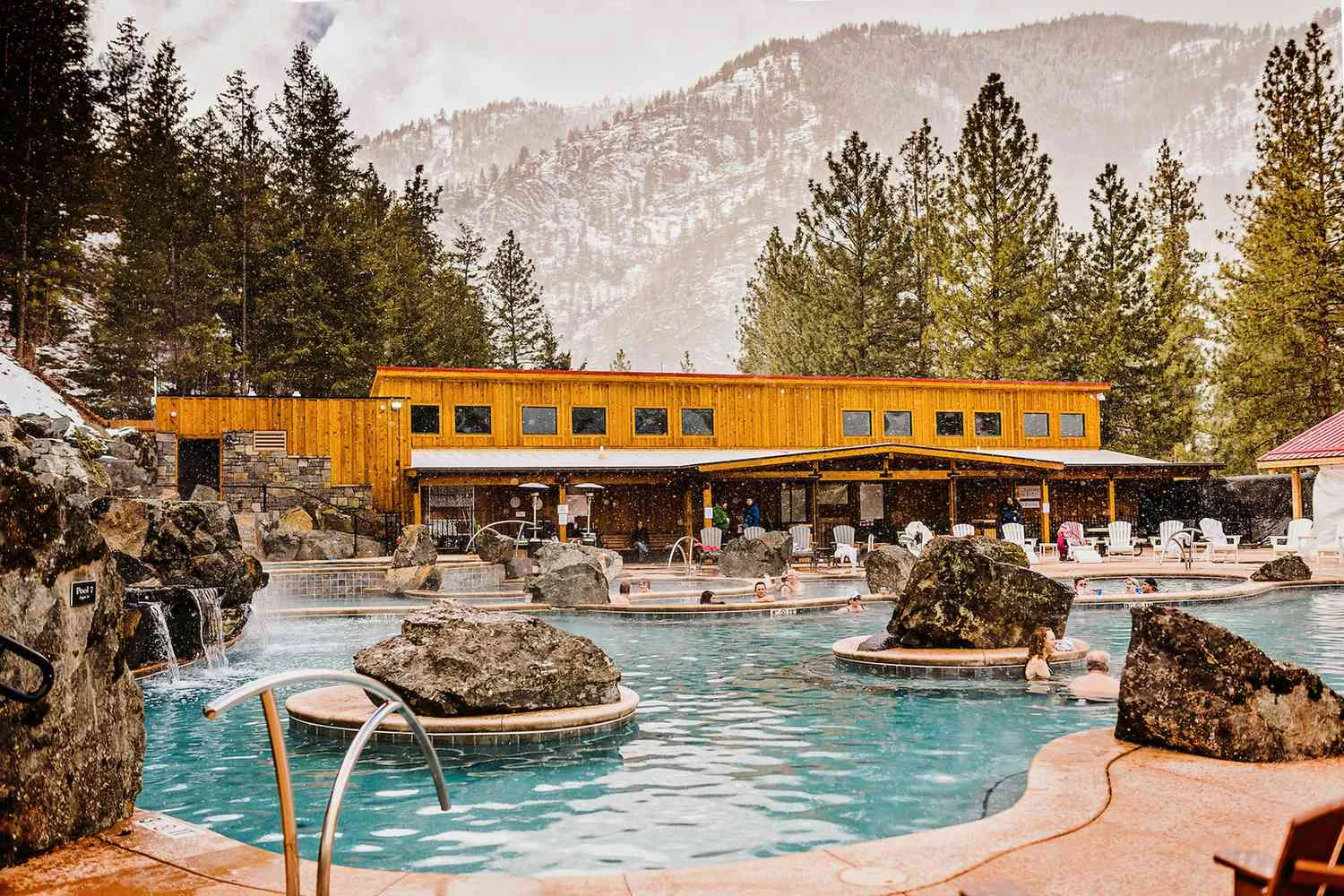
Snow load sets the order of work in Potomac, MT, because the town averages 51.8 inches of snow a year, noticeably more than the 39.5 inches Missoula gets, and the roof has to carry it. The community sits on Montana Highway 200 about 23 miles northeast of Missoula, so the repair or replacement is planned for the dry months and the structure is checked before any new layer goes on. Low-slope and metal commercial roofs are our work here, and every job begins by confirming what the deck and framing can hold through a long winter.
Confirm the Load Path Before Adding Anything
A roof that sheds snow slowly holds it for months, and the weight sits on the deck, the purlins and the walls below. The ground snow load starts at 40 psf, the Missoula table value, and ASCE 7-16 adjusts it for exposure, drifting and the roof's shape. A building at Potomac sees more annual snowfall than the city, so the margin matters. We also look at where the snow ends up: valleys, parapet corners and the lee side of rooftop units collect drifts that load one bay far more than the next, and those are the spots we examine first for deflection.
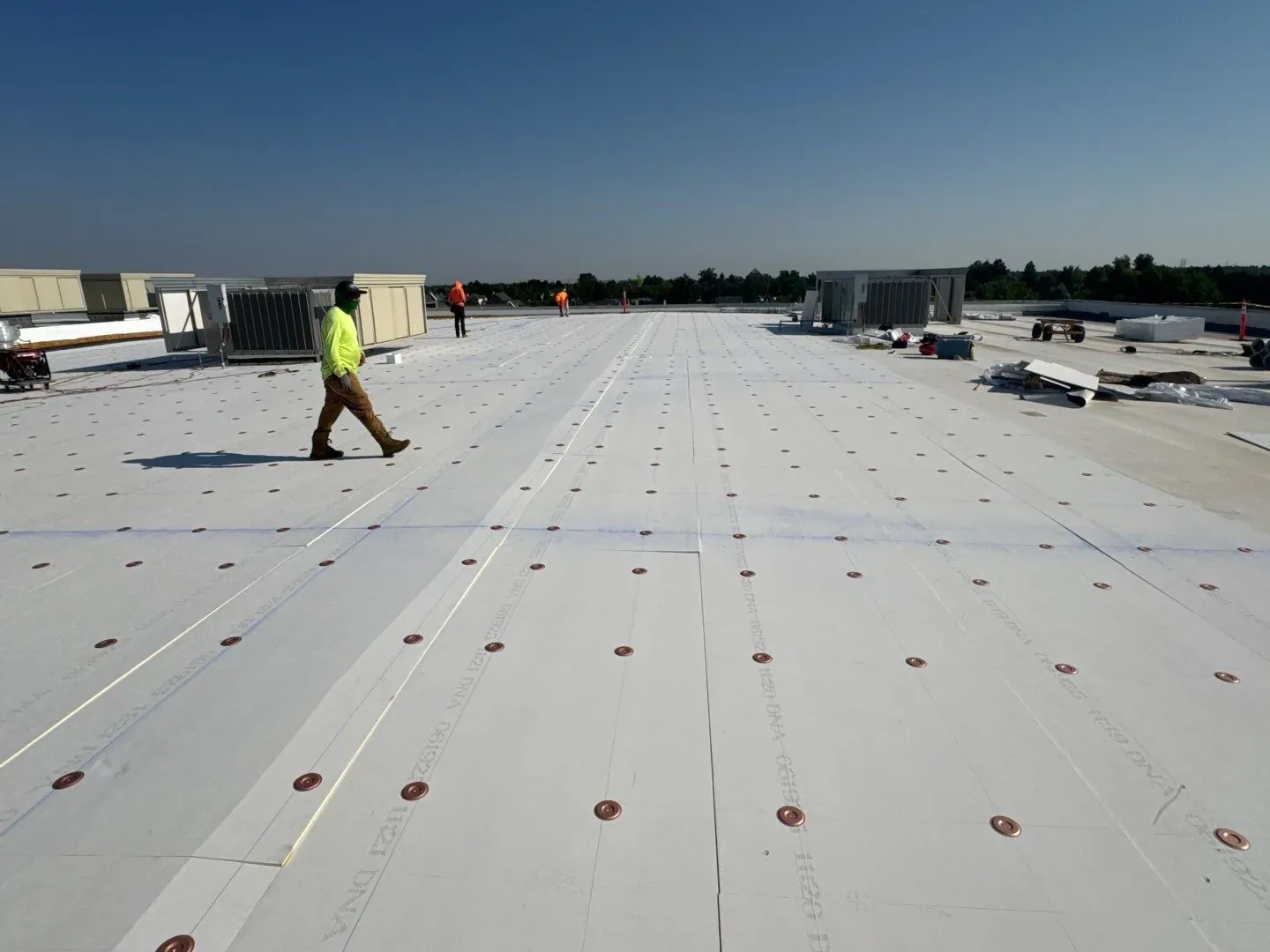
Before we recommend a recover or a heavier system, we look at the framing for sag, cracked connections and water stains on the underside of the deck. If anything looks stressed, an engineer reviews it before we proceed. Adding insulation or a second membrane to a structure that is already working near its limit is the quickest way to turn a repair into a collapse, so the structural check comes first and drives the choice of system. The written result tells the owner which bays are sound, which need reinforcement and what a lighter system, such as a single-ply membrane over thin insulation, would save in dead weight.
Place Snow Guards Over Doors and Walkways
On a metal roof, snow can release in one sheet and slide to the eave with real force. Anything beneath it, such as a door, a vehicle or a gas meter, is at risk. Snow guards break the sheet into small pieces that melt and drain gradually, and they are placed in rows above the places that must stay protected.
We lay them out from the roof plan, with spacing set by pitch, panel type and the expected snow depth. Where an entrance sits directly below an eave, we add a second row and sometimes a gutter or a catch rail. The guards are fastened to the seams without penetrating the panel, so the roof stays watertight. The related work on standing seam metal roofing includes these details from the start.
Stop Ice Dams at the Source
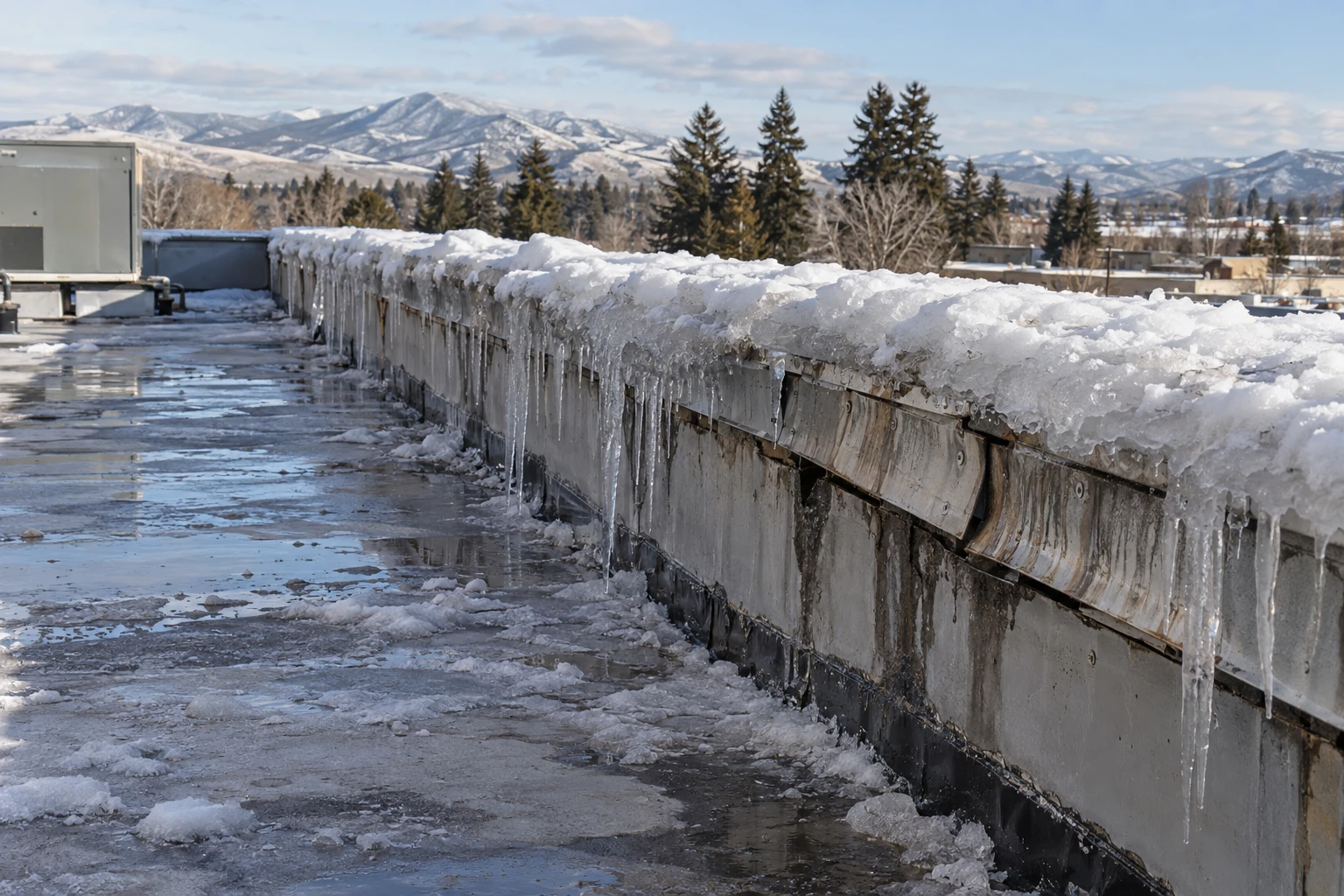
Ice dams form when heat escaping from the building melts snow on the upper roof, and the meltwater refreezes at the cold eave. The ice then blocks the drainage path, and water backs up under the roofing. With long, cold winters, Potomac buildings face this repeatedly.
The cure sits partly inside the building. We check insulation depth, air leakage at the ceiling and ventilation at the eave, because reducing the heat that reaches the roof deck cuts the melt that feeds the dam. On the roof, we make sure the edge metal is continuous and the first course of membrane or underlayment is detailed for ice. Without those steps, a new roof can leak at the eave in its first winter. When an ice dam has already done its work, the repair follows the pattern in snow and ice roof damage repair: dry out the saturated insulation, replace the damaged eave course and correct the heat loss that caused it.
Time the Work for the Dry Months
A short work window makes timing the real constraint. Materials such as adhesives, sealants and coatings need dry surfaces and moderate temperatures, and they stop performing when the nights freeze. We book Potomac projects for summer and early autumn and finish before the first lasting snow.
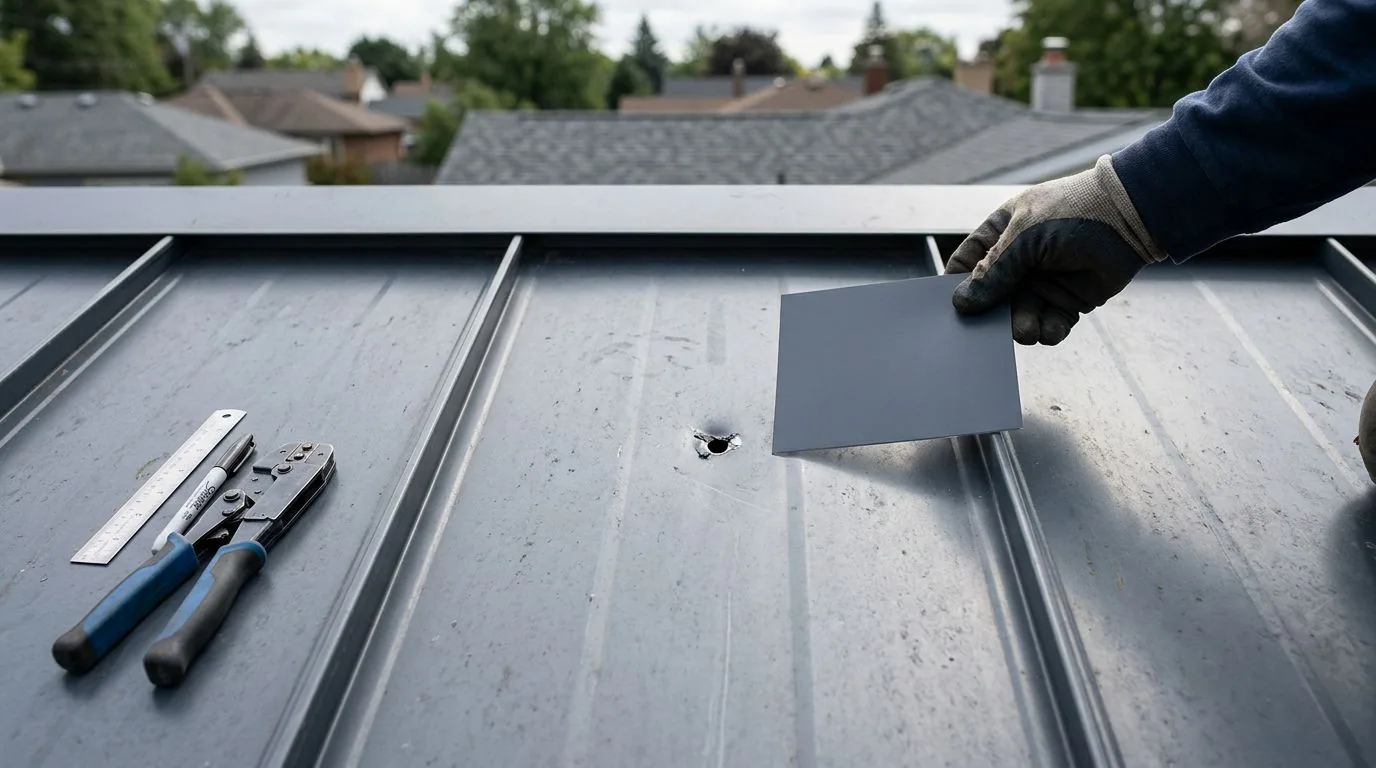
If a leak appears in winter, we dry in the area with a temporary membrane and a patch, then schedule the permanent repair for the next workable window. That approach avoids forcing a poor-quality repair into freezing weather. The owner can also use our emergency roof repair line at any hour, and a winter patch is documented so the permanent work can be scoped with the actual damage in view. Photographs show where the patch sits, how it was tied in and what moisture reading the area gave.
Plan Highway 200 Deliveries and Crew Travel
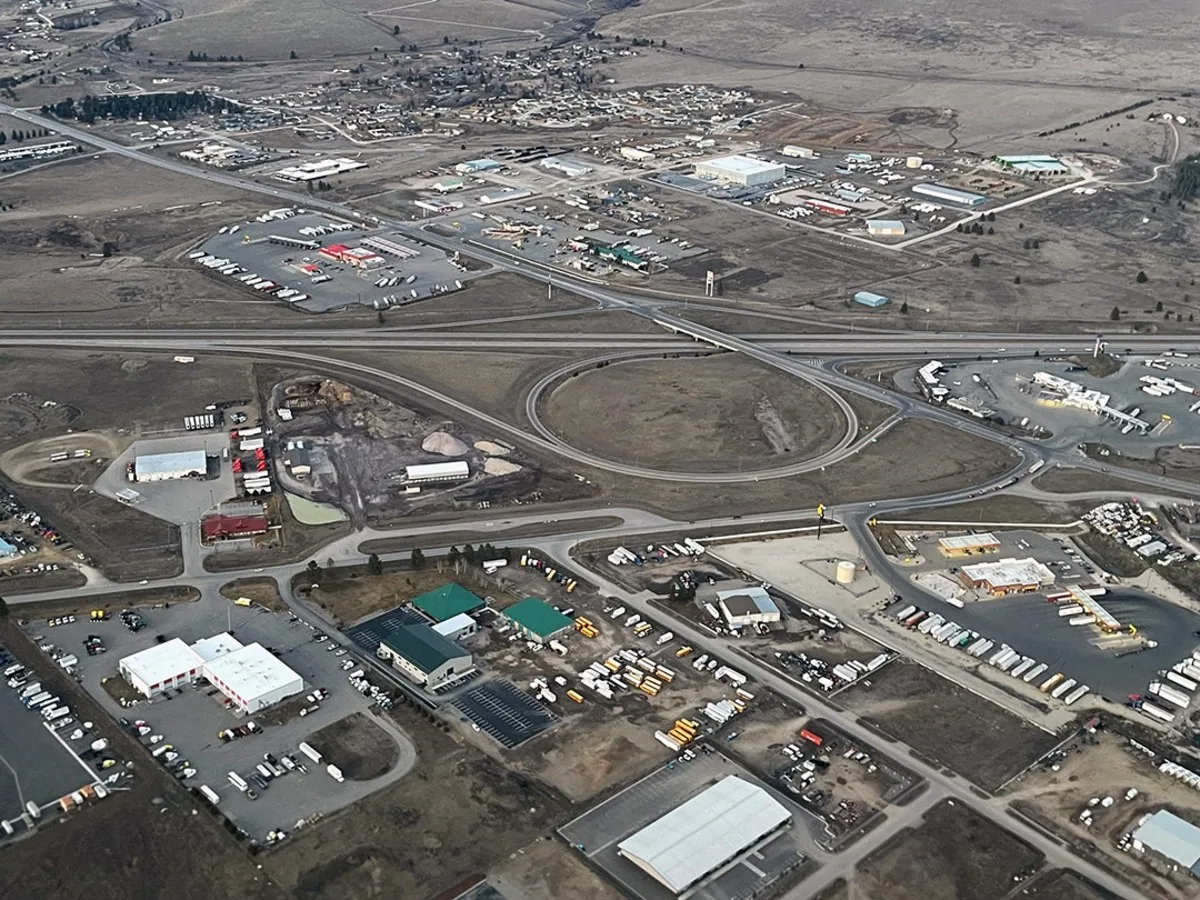
Highway 200 leads about 28 miles northeast from Potomac to Ovando and about 23 miles back to Missoula, so every delivery arrives by that road. We schedule trucks to arrive after the crew is on site and ready to unload, which avoids a loaded truck waiting on the shoulder.
The staging area is marked on the site plan, and the material hoist is located away from doors, parking and the highway edge. For a larger job, we split the deliveries by phase so insulation, membrane and metal trim arrive in the order they are used. Waste goes into a single container placed for easy pickup. Smaller buildings along the route, such as those near Twin Creeks, follow the same pattern.
Close Out With Photos and a Winter Checklist
At completion the owner and the crew walk the roof together, with every drain, seam and flashing photographed. A punch list records anything still open, and each item is dated.
The owner then receives a short winter checklist: keep drains and gutters clear, watch for icicles at the eave, and note any ceiling stain. At Bonner-West Riverside, heavy snow collapsed much of the former mill roof in 2011, a reminder of what an unwatched load can do. A preventive maintenance program puts a trained eye on the roof before and after each winter, and a written roof condition report keeps the record.
Related Roofing Pages
Send the Framing Details and the Roof Plan
Send the roof plan, any framing information and the occupancy schedule so the structural check, the phasing and the staging area can be mapped before any material is ordered.
Call 555-555-5555 or email [email protected].
Questions About Potomac
How much extra snow should a Potomac roof be ready for compared with Missoula?
Potomac averages 51.8 inches a year against about 39.5 in Missoula, roughly a third more. The 40 psf design load from the state table still governs calculations, but the longer accumulation makes drainage, snow guards and structural condition more important.
Do snow guards go on every metal roof?
Not every one. They go where sliding snow could reach a door, a walkway, a vehicle or equipment. A roof that sheds onto open ground may not need them. We review the pitch and the building layout and place guards only where they protect something.
What causes a leak at the eave in a new roof?
Usually an ice dam forced water under the first course. Insulation, air sealing and ventilation decide whether a dam forms, and the edge detail decides whether water gets in when one does. We address both, starting with a look at the attic or ceiling space for bare insulation, bath or process exhaust that vents into the cavity and gaps around penetrations that leak warm air.
Can a leak be repaired in January?
A temporary repair can, and we make one to stop the water. Permanent work waits for a stretch of dry, moderate weather because adhesives and sealants do not cure properly in hard freezes.
Why does a structural review come before a recover?
A recover adds dead weight, and snow adds live weight on top of it. If framing or deck is already near its limit, extra layers can push it over. The review confirms the structure can carry both before we commit to the system.