
Commercial Roofing in Twin Creeks, MT
Twin Creeks
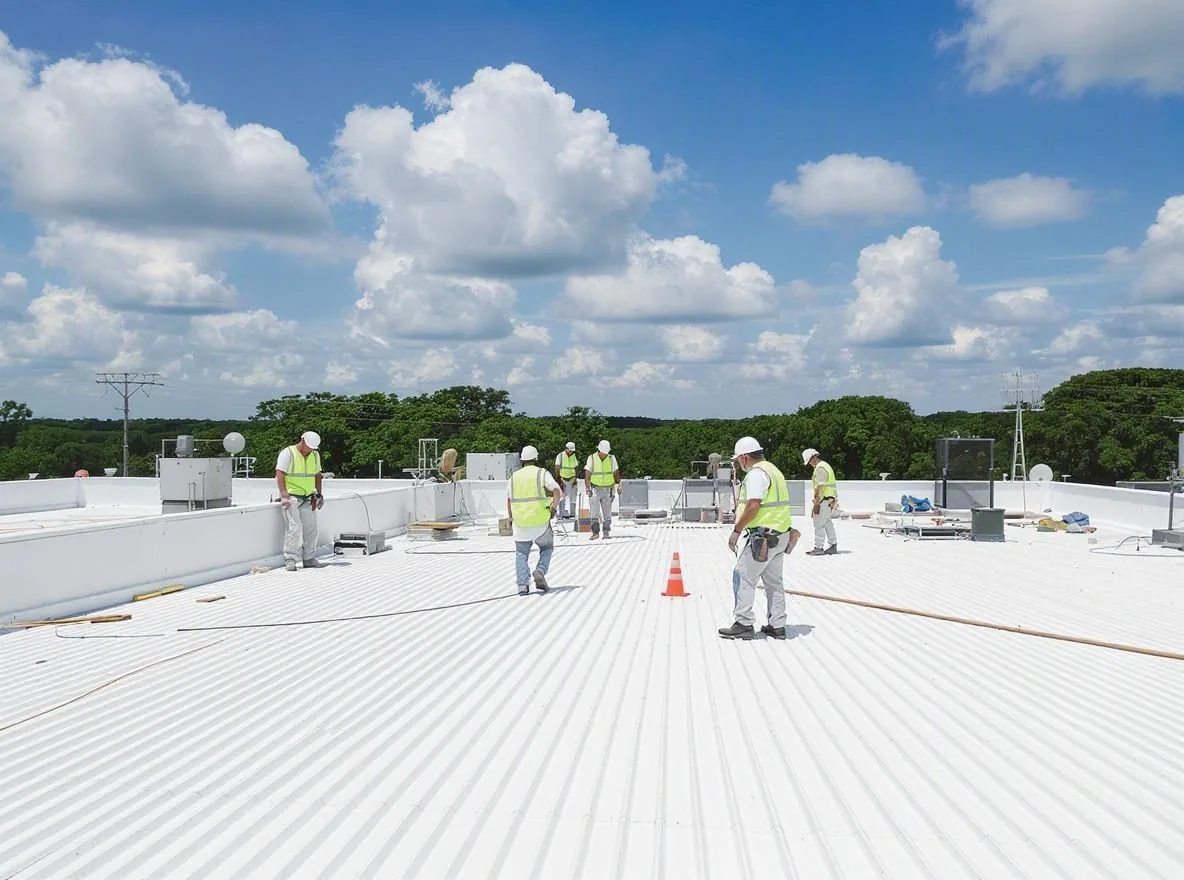
Meltwater has to leave a roof before the membrane can be trusted, and the first job at Twin Creeks, MT is finding where it goes. The community sits on the north side of the Blackfoot River, about 15 miles from Missoula on Montana Highway 200, and the highway is the only practical haul route for material and crew. We plan the delivery, the crane pick and the dry-in sequence around that single road. Low-slope and metal commercial roofs are the work, and the written order of work has the drains cleared and tested before any new roofing goes on.
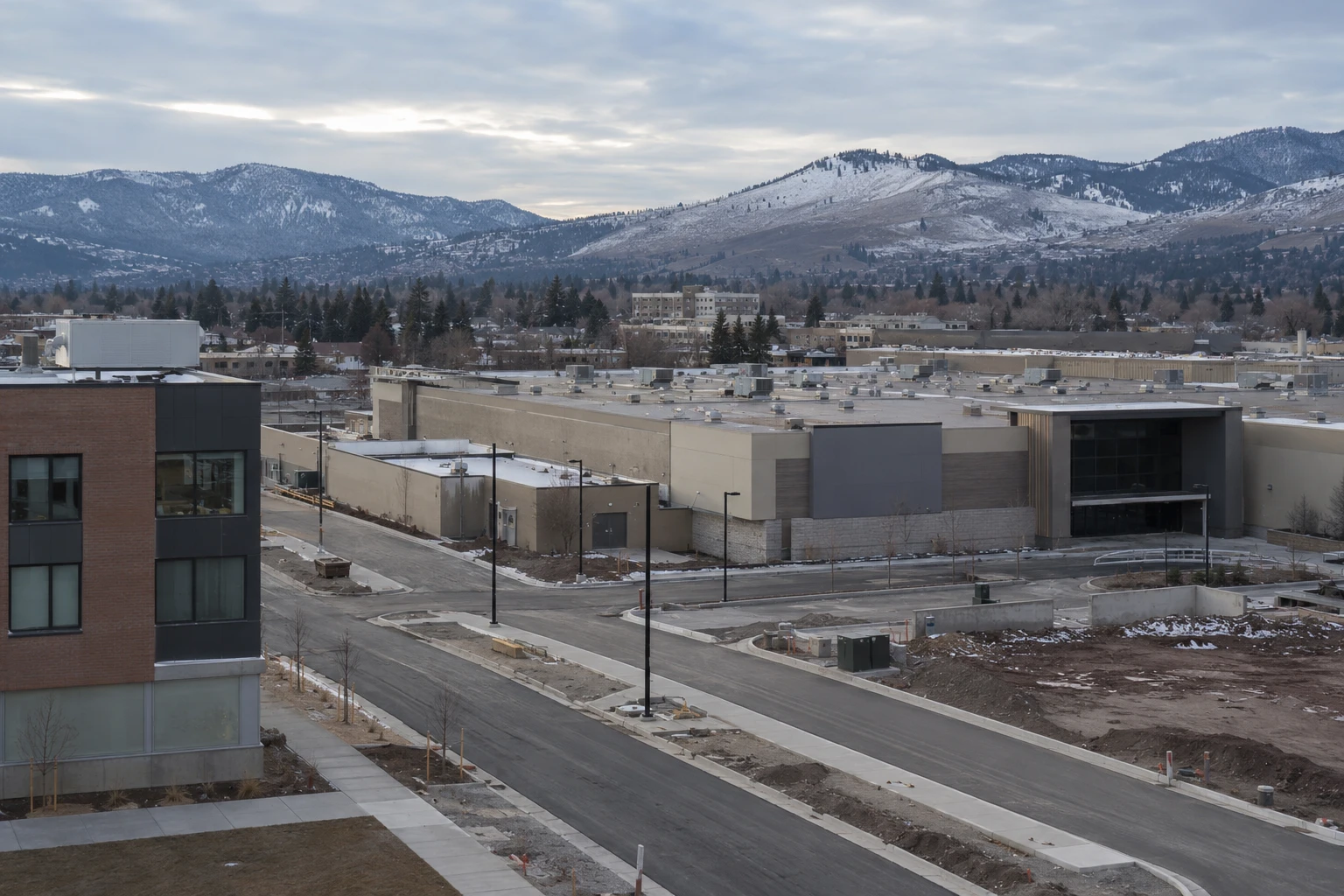
Trace the Drainage Path First
On a small commercial roof, the drain system is often a handful of scuppers, a couple of downspouts and a gutter run. If one of them is blocked or set too high, water stands against the membrane for days. Standing water speeds up seam aging, grows algae and adds weight to the deck at the moment the structure is also carrying wet snow.
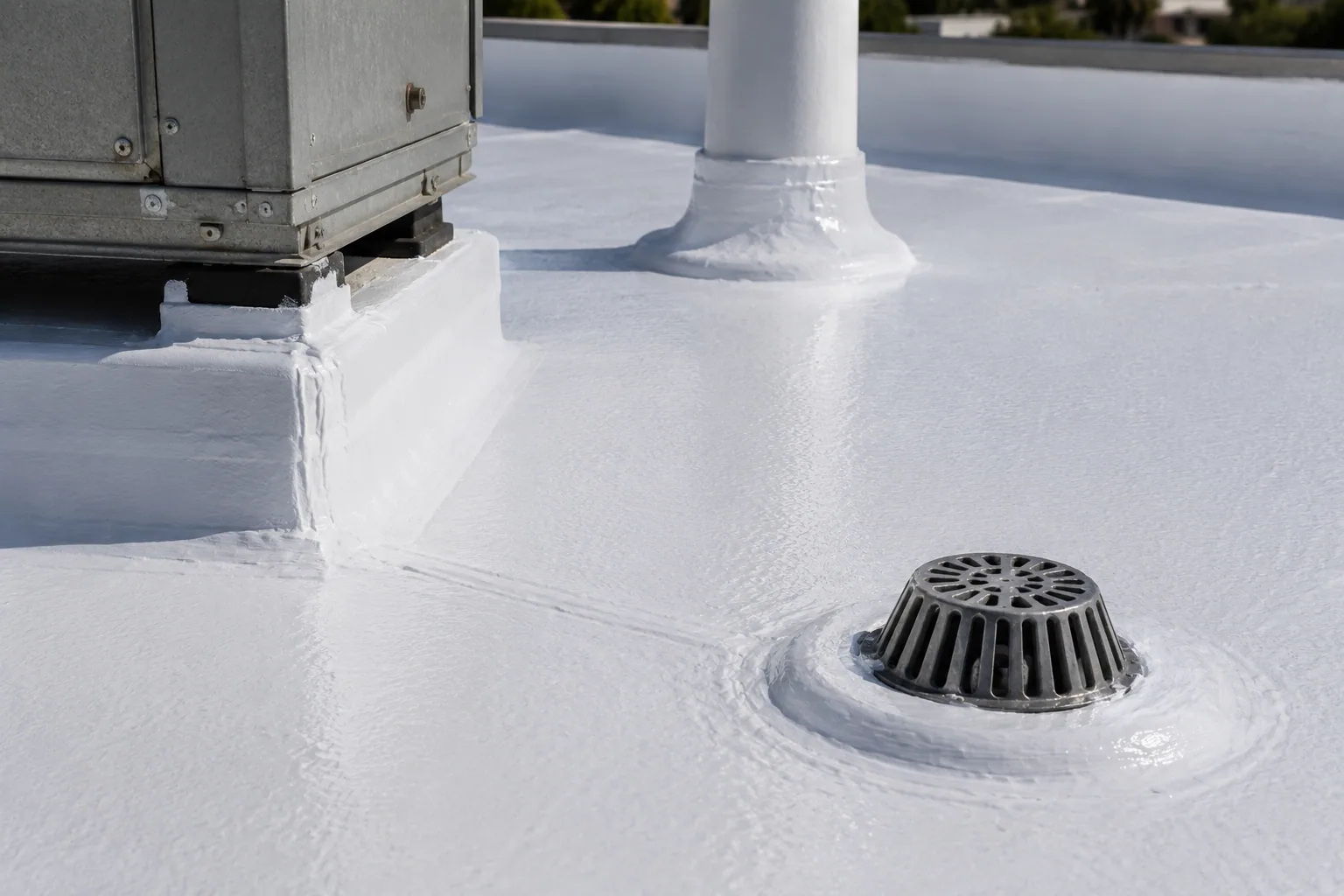
We walk the roof after a rain or a thaw and mark every place water lingers. Then we trace each drain to its outlet to confirm it runs freely. A downspout that discharges against a foundation wall or onto a frozen lot is as much a problem as a clogged scupper. Fixing the drainage path is frequently the least expensive item on the list and the one that protects the rest of the work. If the roof edge has a gutter, we also check that the hangers are tight and that the gutter slopes toward the downspout, since a sagging run holds ice through the whole cold season and pulls the fascia away from the wall.
Use Highway 200 as the Delivery Plan
Highway 200 runs northeast from Twin Creeks about 35 miles to Ovando, and it carries every load that reaches the site. A flatbed with membrane rolls and insulation needs a safe place to pull off, and a crane needs firm ground off the shoulder. We settle both on the first walk and mark them on the site plan.
If the lot is small, we split the delivery in two and shift the first drop to the heaviest items. The material hoist is set where it never reaches over a customer door or a vehicle. Keeping the laydown yard compact leaves the owner's parking intact and keeps the roadside clear of equipment, which matters on a state highway where traffic does not slow down. Flaggers or cones are added only when the setup truly needs them, and the plan names who places them and when they come down.
Check the River-Side Conditions on the Roof Surface
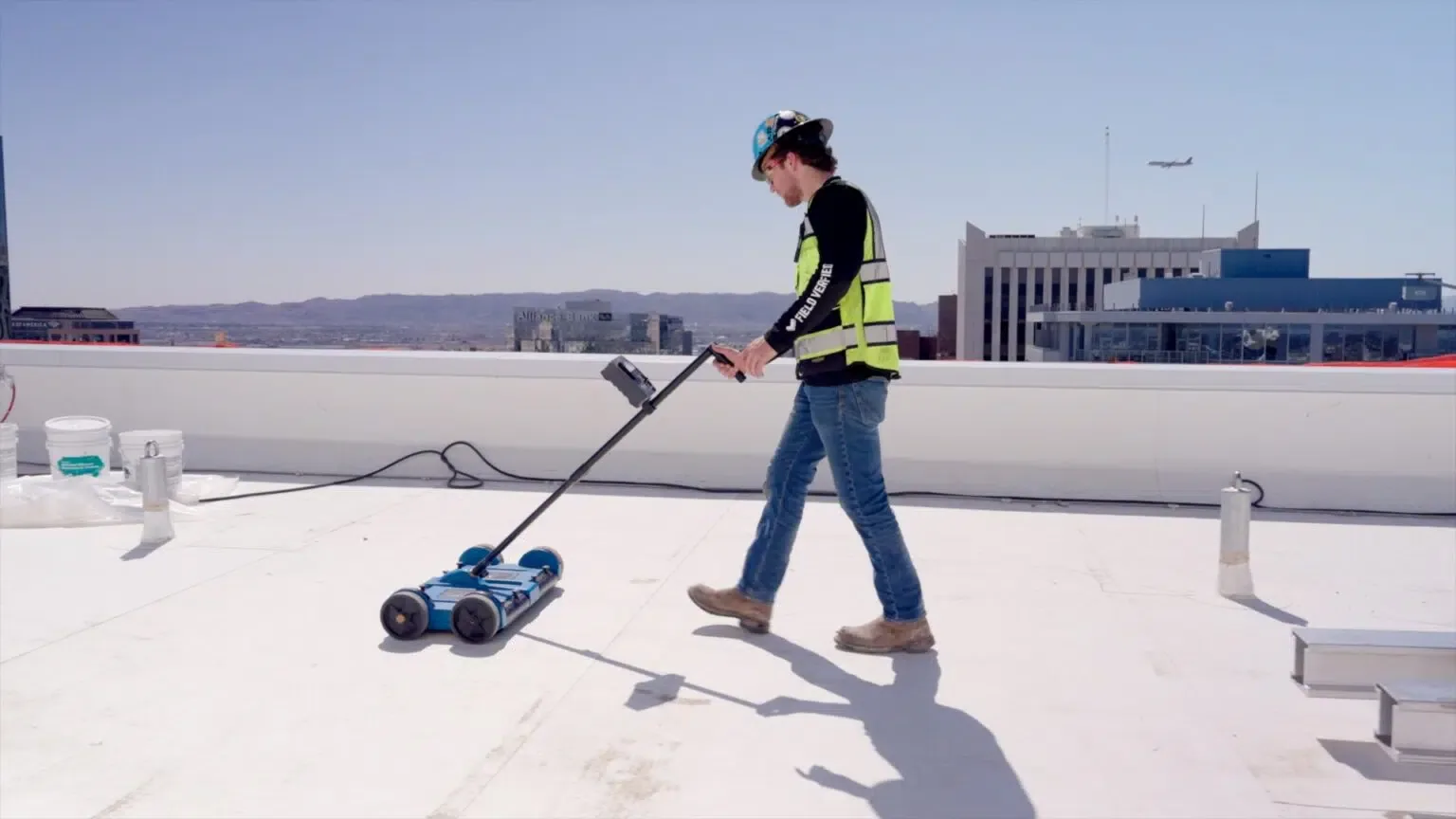
Beside a river, we look for the things that damp conditions leave behind: algae growth, damp insulation near drains and corrosion on exposed fasteners. These do not show from the ground. We test with a moisture meter and, on larger roofs, an infrared scan at dusk when wet areas hold heat longer than dry ones.
Missoula averages about 120 days a year with snow on the ground and about 45 days that never rise above freezing, so the thaw cycle repeats many times. Each cycle drives water into small gaps in sealant and flashing, then freezes it open. Our infrared moisture survey is how we separate a wet area that needs cutting out from a dry area that only needs resealing. Marking the wet zones on a roof diagram with dimensions lets the owner see the exact area that must be replaced, and it keeps the quantity of new insulation in the estimate tied to measurements and not to a guess. Once those zones are cut out and replaced, the surrounding membrane is lapped and welded back in.
Decide Between Patch, Section Repair and Full Replacement
Not all damage justifies a new roof. A patch is right for a puncture in an otherwise sound membrane. A section repair suits a failed seam run or a cluster of saturated insulation around one drain. Full replacement belongs to a roof where saturated insulation, brittle membrane and failed flashing all appear together.
We label each finding as patch, repair or replace, and we price each. The owner sees what a repair buys in years, what replacement buys, and what waiting costs when water keeps getting in. Standard commercial roof repair handles the first two, and seam failure repair handles the failed seam run, with hot-air welding on thermoplastic membranes and fresh adhesive on others. The decision rests on the moisture results and the age of the system, and we put the reasoning in writing.
Protect Occupied Space During the Work
Most roofs we work on stay in service. Before the first day, we confirm which rooms sit under the work, move sensitive items away from the ceiling and lay protection under any open penetration. We keep the entrance clear and run a covered walkway where the edge is active.
Dust and noise are scheduled for the hours that cost the tenant least, and we arrange any shutdown of rooftop equipment so it runs for the shortest possible time. A small building rarely has a facility manager on site, so the owner receives a daily summary of what was opened, what was closed and what is planned for the next day. Photographs of the open areas go with each summary, so a decision about a surprise, such as a rotted deck board, can be made from the owner's phone without waiting for a site meeting.
Hand Over the Roof With a Calendar
The closeout walk covers every flashing, seam and drain, each recorded in photographs, and the punch list gives every open item a date.
The roof then goes on a two-visit calendar, with one pass in autumn to clear the drains and one in spring to check for freeze damage. The same calendar suits properties near Bonner-West Riverside and Potomac, where the same highway and weather apply. Our roof insurance claim assistance uses those photographs if a storm leads to a claim.
Related Roofing Pages
Send the Site Plan and Drain Locations
Send the roof plan, the drain locations and the occupancy schedule so the phasing, the crane pick and the staging area can be mapped before any material is ordered.
Call 555-555-5555 or email [email protected].
Questions About Twin Creeks
What decides whether a blocked drain is a quick fix or a sign of a bigger problem?
Slope and the condition of the membrane decide it. If the drain is clear after cleaning and the water drains, the fix is done. If water still stands, the roof has low spots and may need tapered insulation or a new scupper.
Can you stage a crane on a lot beside Highway 200?
Usually yes, if the ground is firm and the pick can be set well off the shoulder. We check outrigger placement and overhead clearances on the first walk, and we move the setup if the traffic pattern is a concern.
How do I know whether the insulation under the membrane is wet?
A visual check cannot tell you. A moisture meter and an infrared scan show wet areas, and a small test cut confirms them. Those results decide whether a recover is acceptable or the insulation must come out.
Does a river-valley setting change the system choice?
Damp conditions push us toward systems that tolerate moisture and resist algae, with seams welded and edges sealed. Pitch, drainage and snow load still drive the final choice, and we compare membrane and metal options in writing.
How far in advance should work on a flat roof be booked?
Booking in late summer lets us finish before the first snow. Snow on the ground about 120 days a year in the Missoula area means the work window is short, and early booking secures a place in it.