
Auto Dealership Roofing in Missoula, MT
Auto Dealership Roofing
A dealership has three roofs in one: the showroom, the service bays and the canopies and covered display areas between them. Each fails differently, and the repair order depends on which one is above vehicles worth more than the roof. If the crew opens the service roof first and a storm arrives, the damage lands on customer cars, not just on a building. In Missoula, MT, hail fell on central and south Missoula in 2016, and a lot full of vehicles is a large hail exposure for any property owner.
We sequence dealership work by value at risk: the roofs above showroom inventory and customer vehicles first in the weather window, the roofs above storage later. The owner sees which sections open on which days and where cars are moved, and the sales manager sees the weekend calendar with no loud work on it. A restaurant or a hotel next door shares the corridor, and we coordinate staging so neither blocks the other. The plan also names a rain-day procedure: tarps on site, a standby crew and a rule that no section stays open overnight with a front in the forecast.
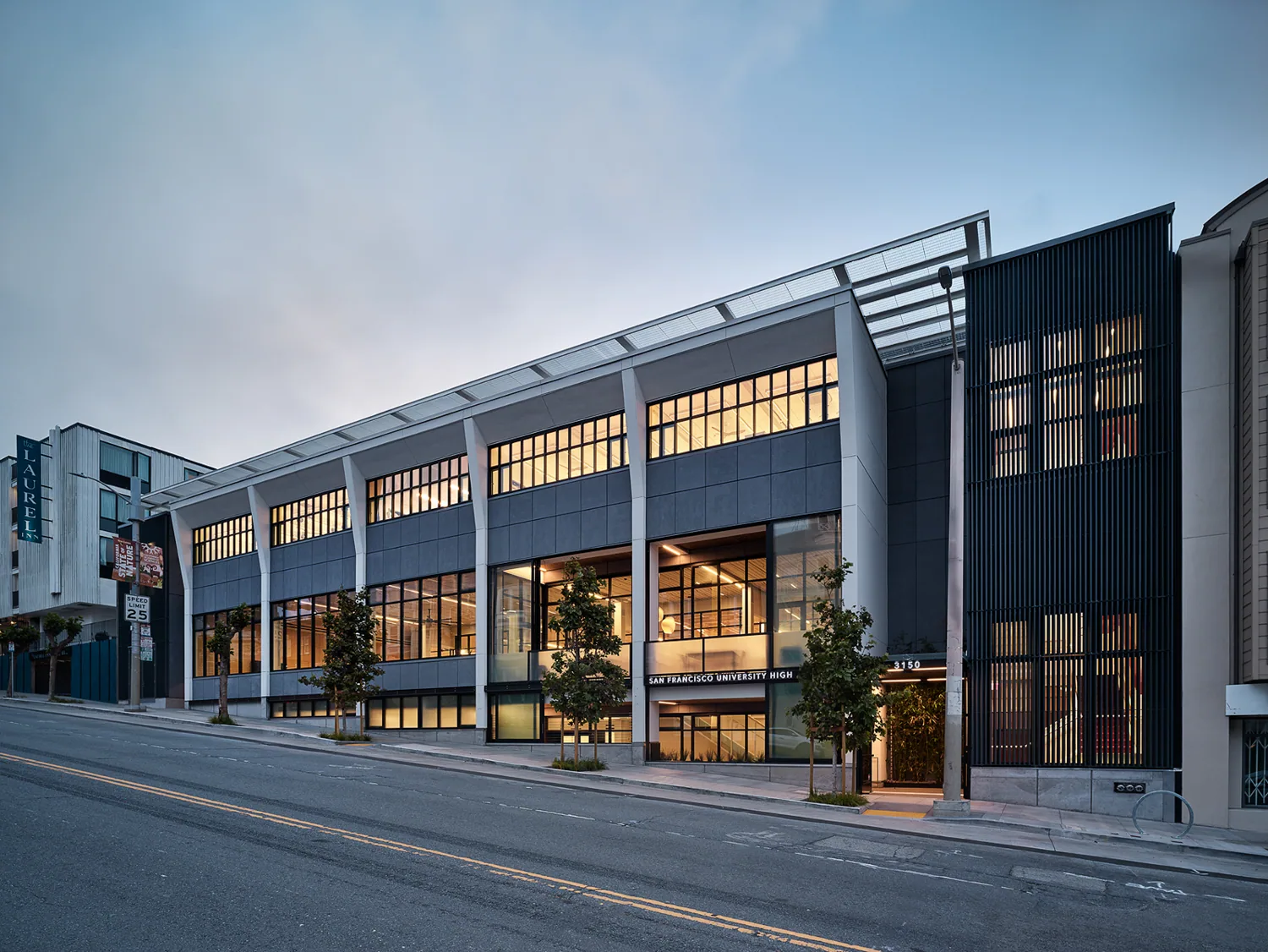
Find what fails first
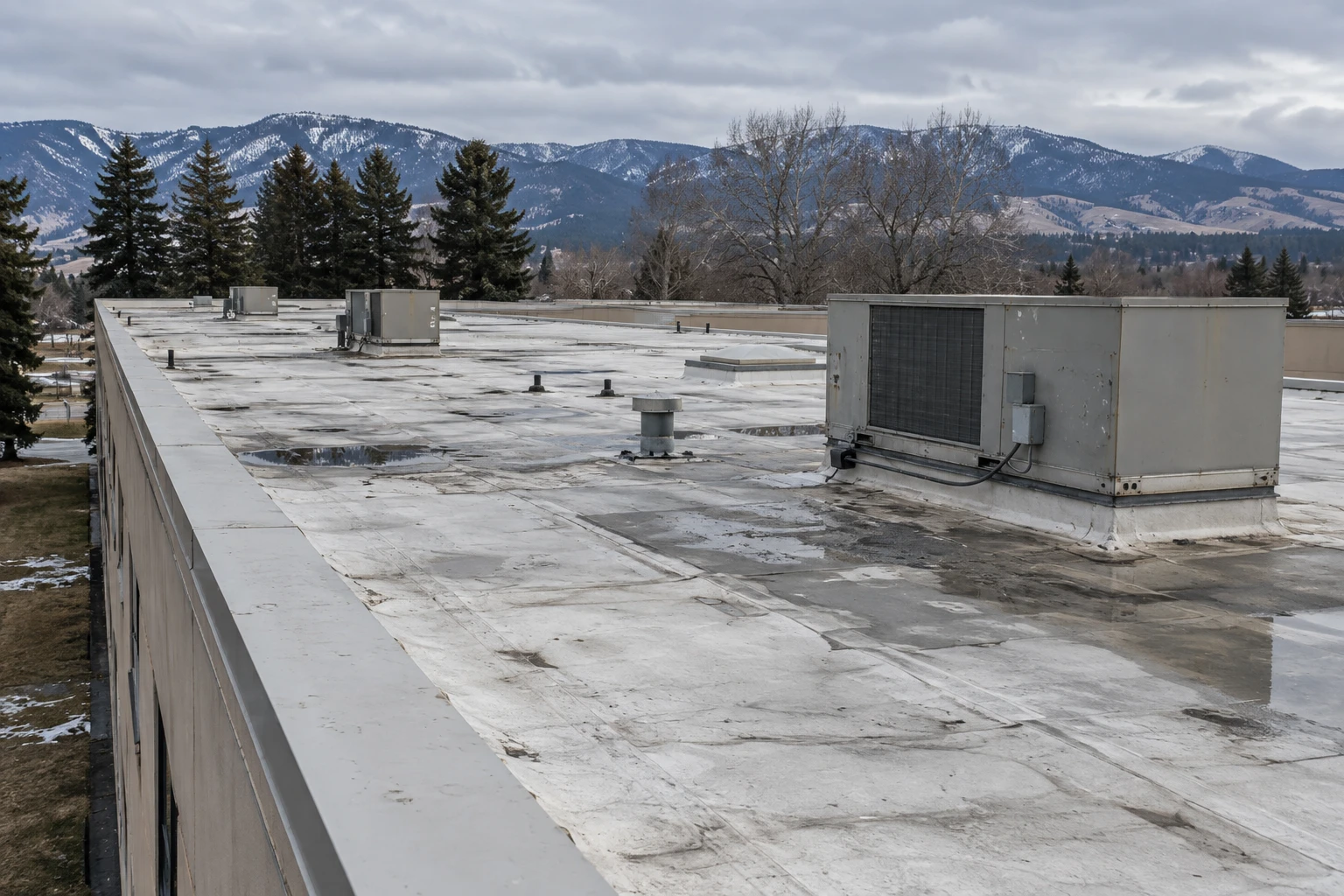
Showrooms often have large glass walls and a flat or low-slope roof with parapets. The wall-to-roof joint above the glass, rooftop units and drains are the weak points. Service bays have exhaust fans, makeup air units and overhead door headers. Canopies have gutters and drainage that serve large areas and discharge onto lots where cars park.
We walk each roof and record its system, slope, drains and penetrations. We follow ceiling stains in the showroom back to their source. Interior signs in the service area, such as rusted deck or stained insulation, tell us where moisture has been. The report keeps the three roofs separate so the owner can see which one is closest to the end of its service. Overhead door headers in the service area deserve a close look. They carry the load over the opening, and a leak at a header drips onto the vehicle in the bay. We check the flashing above each door and the gutter or scupper that serves it.
Check for hail marks
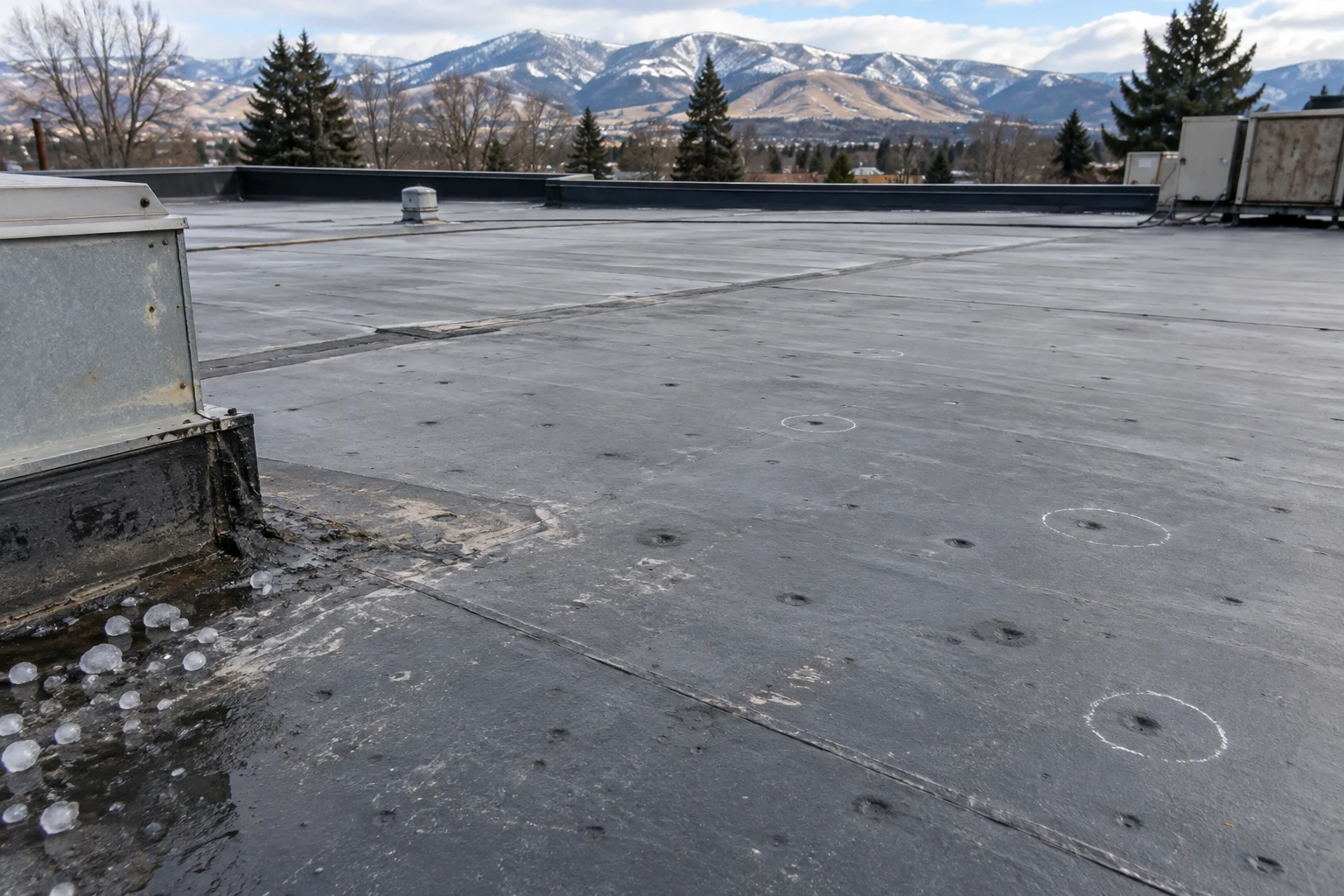
Quarter-size hail hit central and south Missoula in 2016, along with a 20-minute downpour that overwhelmed the storm drains. Hail can bruise a membrane, dent metal and crack canopy panels. It can also damage vehicles on the lot, which raises insurance questions that sit beside the roof questions.
After a storm, we inspect the field for bruises and punctures, the metal for dents and the canopy for cracks. We cut a small core where a mark looks deep, since the core shows whether the damage reaches the insulation. Dated photographs go in the file. If the owner decides to file a claim, our hail damage repair scope and photographs support it. A regional storm is context. It does not prove damage to a given roof, and the walk is what answers the question.
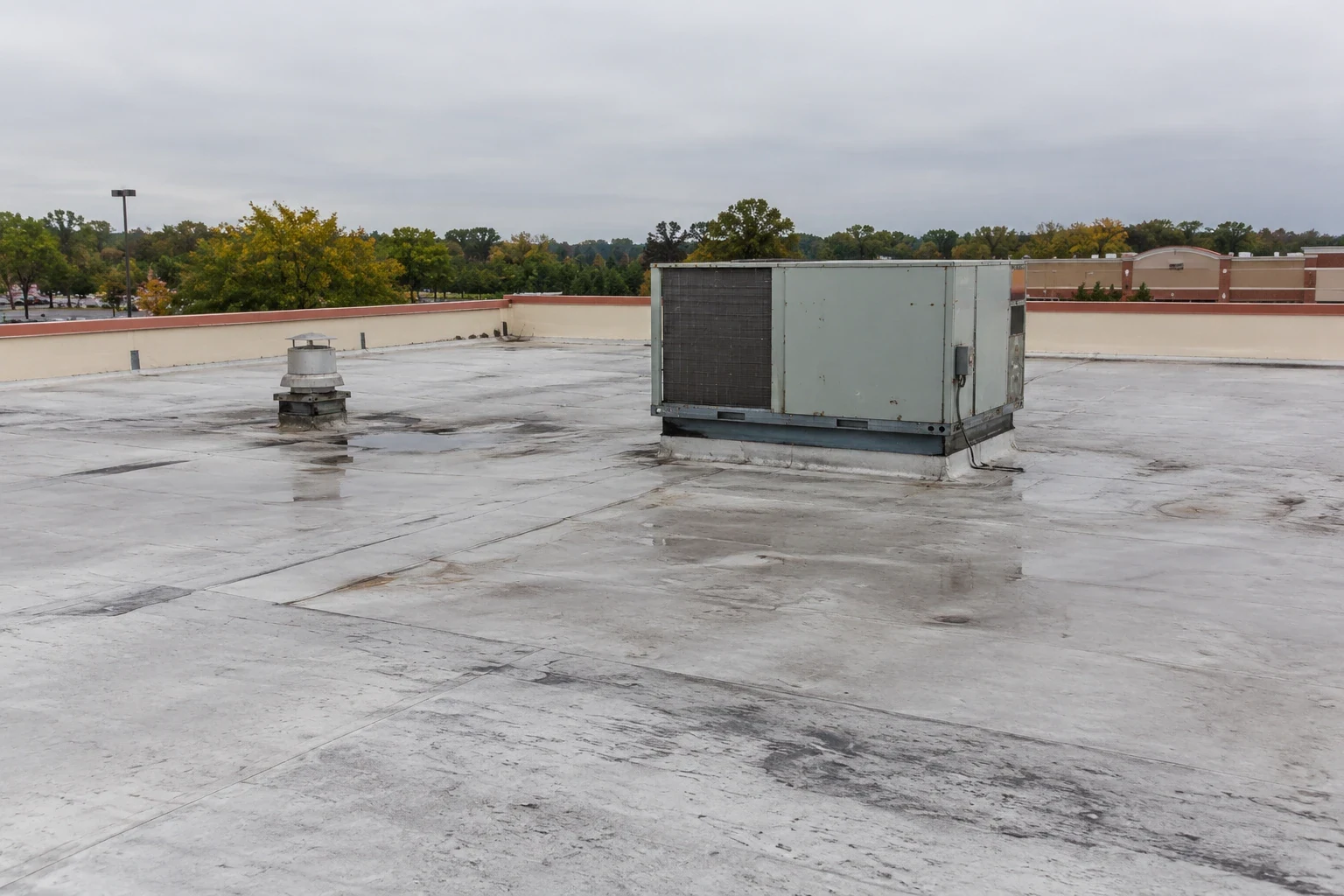
Work around sales and service hours
A dealership earns on weekends and evenings. A noisy crane pick above the showroom on a Saturday is a sales problem. We schedule loud work for weekday mornings and keep weekends quiet. The service department has its own rhythm, and bays need to stay available.
The staging area sits at the edge of the lot, away from customer parking and the delivery lane for new vehicles. Cars are moved before the work starts, and a clear zone is marked below. The material hoist runs early. Each section is dried in before the crew leaves. Interior protection goes in over the showroom floor and service equipment. The manager gets a daily note on what moved and what comes next. Sales staff are told which entrances are open, and the schedule avoids product launches, promotions and the end-of-month push when traffic peaks. If the dealership hosts an event, we move the crane pick to another day.
Plan for snow, ice and thaw
Roofs here are designed for a 40 psf ground snow load, and a typical winter drops about 39.5 inches. On about 45 days a year the temperature never gets above freezing. Showroom roofs collect drifts against parapets, and canopy roofs shed snow onto lots where cars sit.
We check the canopy drainage and the gutters, since ice in a downspout can split a joint and drop water onto vehicles. We add or check snow guards where sliding snow could hit cars or people. Thaw cycles then work water into every flashing, so the fall walk checks parapets, curbs and the glass wall joint. A flashing failure found in October is cheap to fix. Found after a thaw, it can mean a stained ceiling above a new vehicle. Glass walls move with temperature, and the sealant at the glass-to-roof joint cracks first. We probe that joint along its whole length and photograph the sealant, since a leak there lands on the showroom floor.
Know the corridor you are on
Dealerships sit on the busiest roads, close to other businesses with the same weather and the same wind, such as a big-box store a few lots away. North Reserve Street carries more than 30,000 vehicles a day, and any lot along it is visible to every driver. A dealership on North Reserve Street or on Russell Street and West Broadway has staging and delivery constraints that differ from a lot at the edge of town.
We ask about them at the start and put them in the scope, down to the day and hour a delivery truck may cross the lot. A dealership group with several stores can rank the roofs on one list and fund the worst first. The same method works for a shopping center with a tenant mix, where the lot and the roof need the same care. A dealership with a body shop adds paint booths and exhaust, which bring their own penetrations and their own chemical exposure to the roof. We follow each duct to the roof, check the flashing and look at the sheet around the stack, then price repairs by item so the owner sees what each one costs.
Close out with the general manager
At closeout we walk the roof with the general manager, test the drains and clear the punch list. The file records the systems, the photographs and the next review date.
Related Roofing Pages
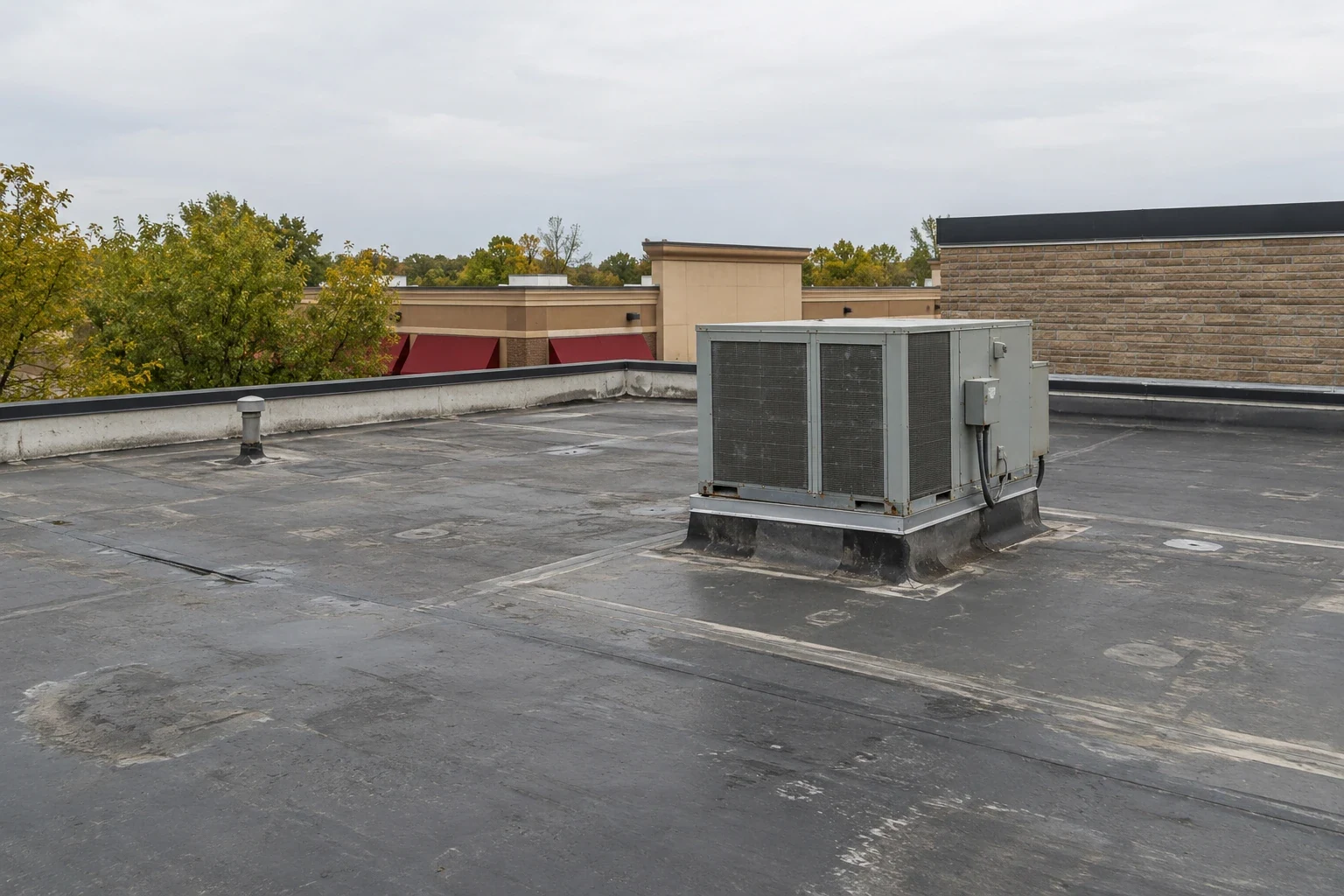
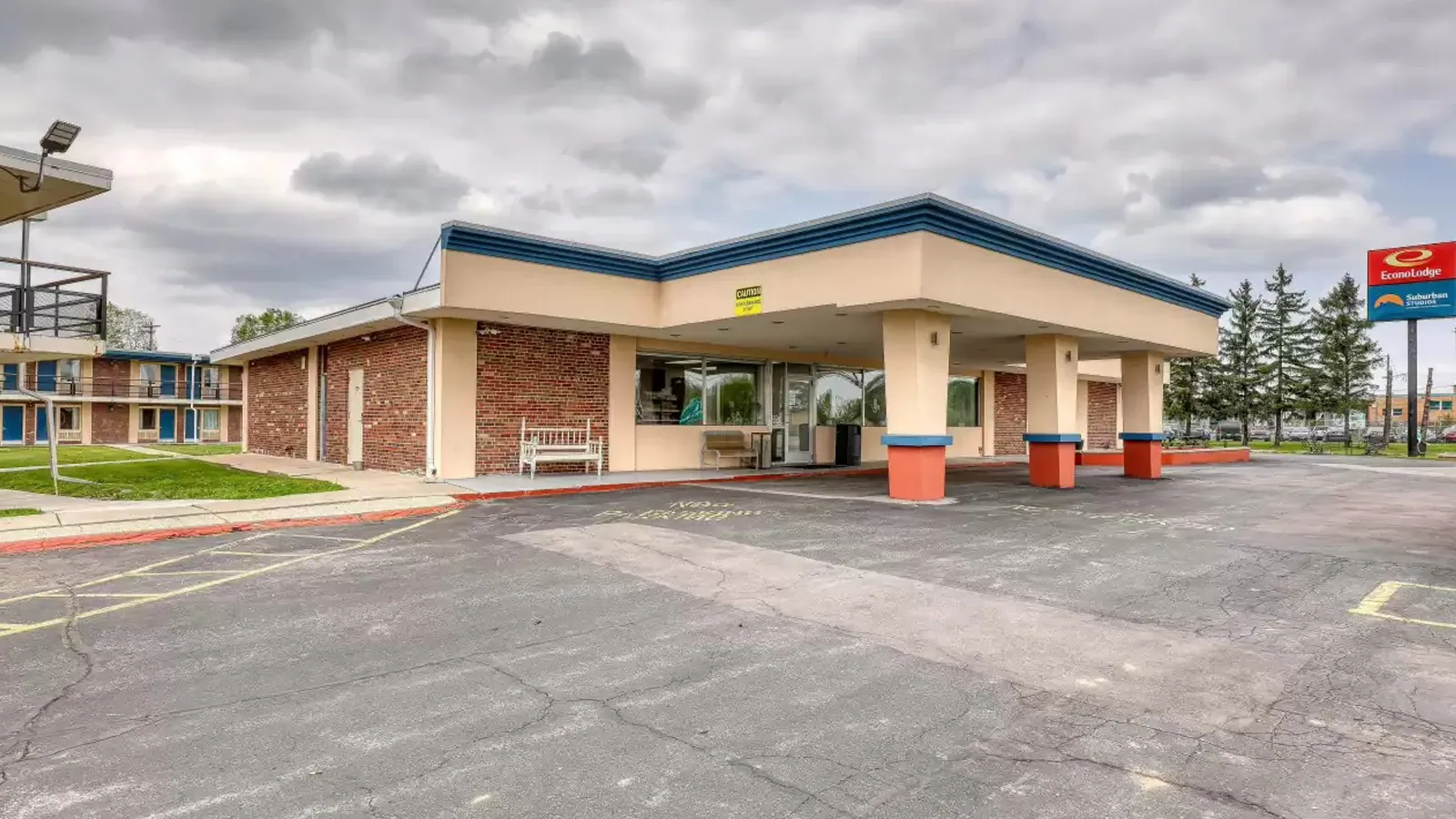
Send the lot layout and the sales hours
Send the roof plan, the lot layout and the sales and service hours, and we will map the phasing and the staging area before any material is ordered.
Call 555-555-5555 or email [email protected].
Questions About Auto Dealership Roofing
Do I have to move my vehicles during a roof project?
Cars below the work area and in the staging zone are moved before the work starts. We mark the clear zones and tell the manager the dates ahead of time.
Can hail on a dealership roof be documented for a claim?
Yes. We photograph marks, cut a core where a mark looks deep and keep dated records. A regional storm is not proof, so the walk matters.
Which roof should be replaced first?
Whichever is closest to the end of its service, weighted by what sits below it. A leak above showroom inventory costs more than one above a storage bay.
How do you avoid disrupting weekend sales?
We schedule loud work for weekday mornings and keep weekends quiet. The staging area stays away from customer parking.
What should the dealer send to start?
The roof plan, the sales and service hours, past leak notes and the lot layout. With those we lay out the phases and the staging area.