
Roof Surveys and Capital Timing for Missoula, MT Investors and REITs
Investors and REITs
On an acquisition in Missoula, MT, the order of diligence decides what the buyer learns in time. A roof survey done after the inspection period closes can only describe a problem. One done in the first week can change the price, and the order of the walk matters: drains and sumps first, then edges, then field membrane, then the cores. Snow stays on the ground about 120 days a year here, so a winter closing can hide a roof that is covered in drifts. We plan the survey around that, and we tell the buyer what could not be seen and what step would answer it.
The result is a sheet a committee or a lender can read, with a date for each roof and a range for each repair.
Walk the roof in the order that finds failures
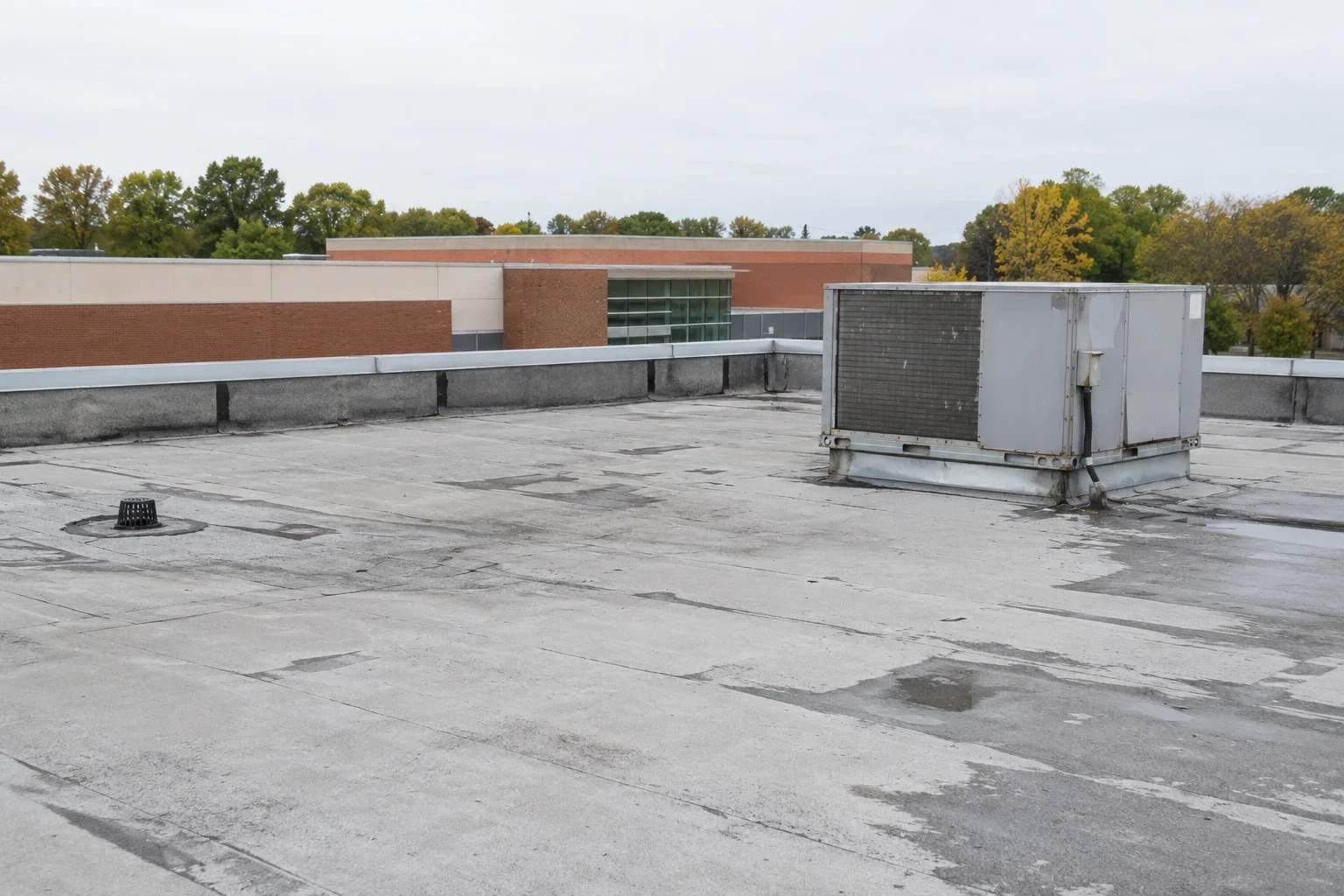
A roof fails in a predictable order, so we walk it in that order. Drains and drain sumps come first, because a blocked sump turns each thaw cycle into interior damage. Edges and flashings come next, because late-summer swings past 30 degrees move them most. The field comes last, followed by cores at the spots the scan flags.
An infrared moisture survey on a cool evening shows saturated areas under a dry-looking surface. A probe and a core cut confirm them. We patch every cut the same day and record its location. The due diligence roof surveys we write sort each finding into repair now, repair within the hold, and can wait, with a price range for each.
If snow or ice covers a roof, we say so in the sheet. A roof we could not walk is a roof with an open question, and the buyer should price the question.
The sheet closes with a short list of questions for the seller. Who repaired the roof last, and with what? Where were the last leaks? Have tenants added equipment? Many of the answers are in a drawer, and a direct question gets them out before the inspection period ends.
Check the load path before the membrane
Missoula's design ground snow load is 40 psf, with roof snow loads calculated from it under ASCE 7-16. A roof that has carried years of drifts against taller walls and mechanical rooms can show sag, ponding lines and cracked fasteners. Snow brought down much of the former Bonner mill roof in 2011, a reminder of what an unchecked load path can do.
We look at the deck, the framing visible from below and the places where equipment adds weight. We do not stamp structure. Where we see sag, soft decking or distress, we recommend that an engineer review the area before any capital plan assumes a simple recover. That one line in the sheet can change a hold strategy.
A replacement in this market usually brings insulation up to the state energy code enforced since June 10, 2022, and the buyer should carry that in the cost range.
Match the survey to the asset type
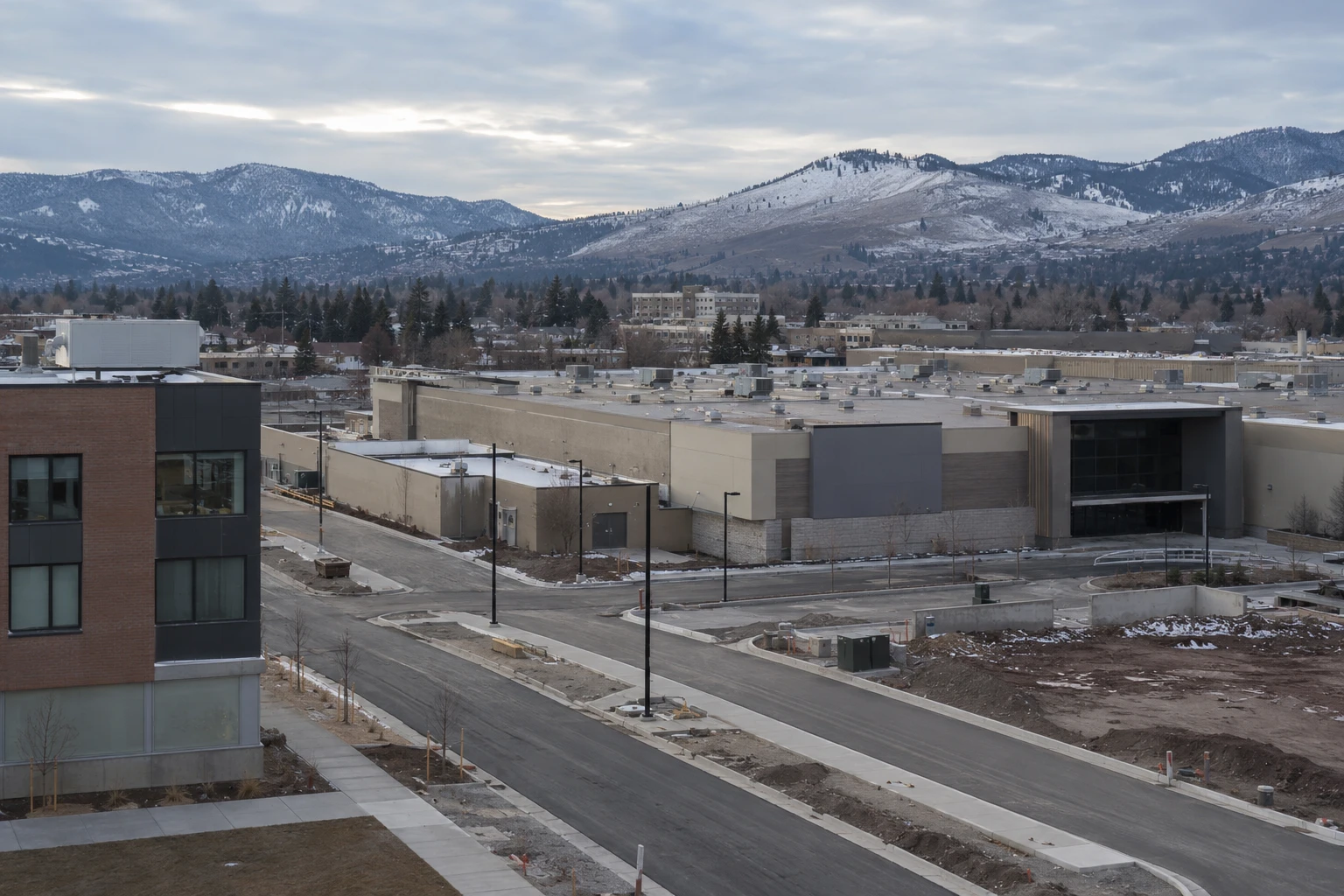
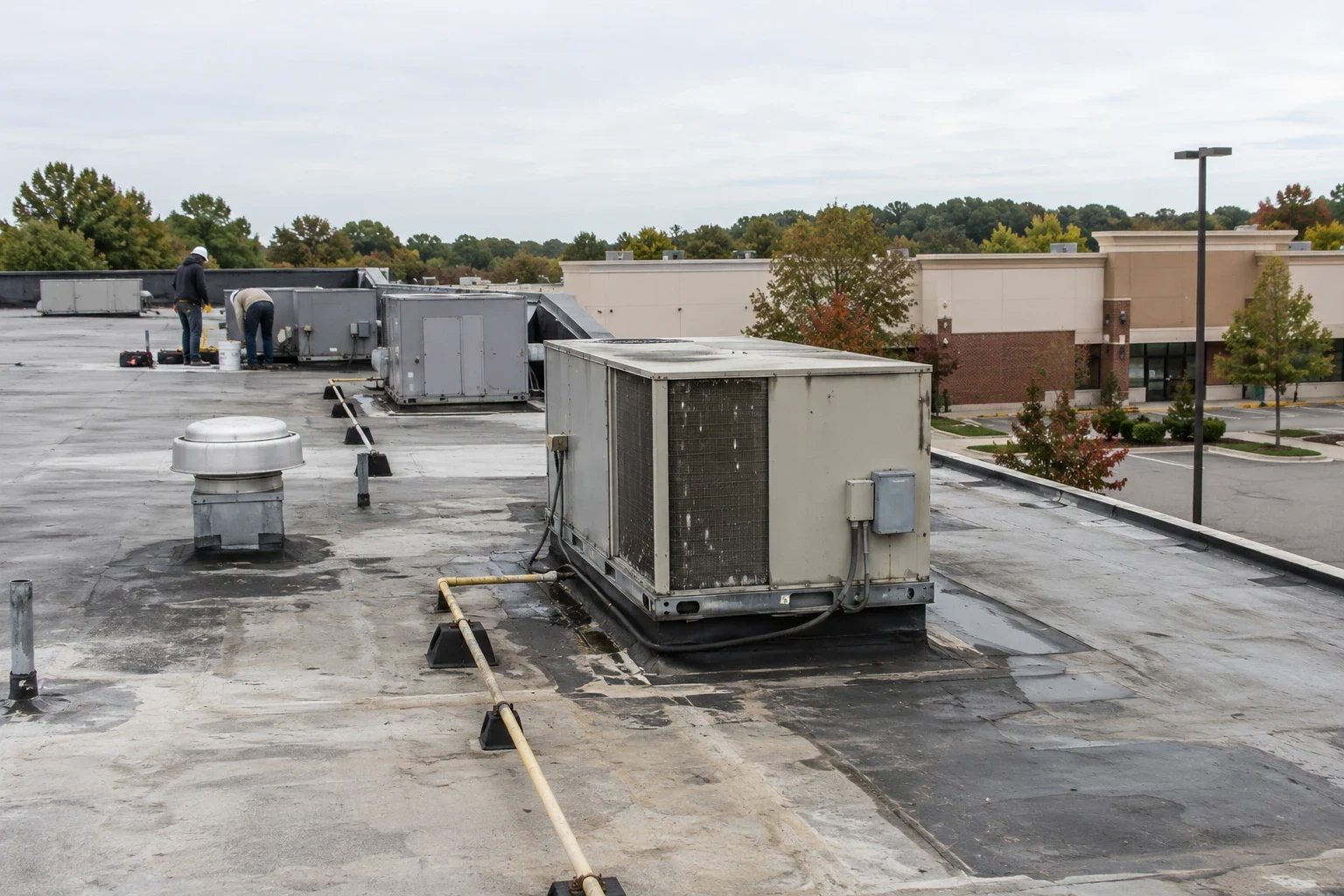
Retail is the broad category. Big-box stores and hotels cluster on Reserve Street, with Costco, Lowe's and Walmart as the largest stores, and the Brooks Street and Southgate Midtown area is planned for more housing and density after a renovation and expansion of Southgate Mall announced in 2016. Retail roofs carry rooftop units and shared drains, so foot traffic and lease lines shape the findings. Our approach to shopping center roofs applies there.
Industrial stock includes the county development park near the airport, where about 400 acres south of the airfield is planned for light manufacturing and industrial use, and the redeveloped Bonner mill site. Industrial roofs are large, so drain count and snow drift behavior drive the findings. The Missoula Development Park and Mullan Road buildings are surveyed the same way.
Hotels and offices add tenant access and noise limits to the plan.
Reserve Street hotels, including a Hilton Garden Inn, a Courtyard Marriott and Homewood Suites, belong in the survey too. A hotel roof is several roofs, and a leak takes rooms offline one night at a time. The hotel owners and hospitality groups who hold them think in room nights, so we express the cost of delay in the same terms: how many rooms sit under the failing section and how long the repair takes.
Sequence the capital line across the hold
A fund needs a schedule it can post. For each roof, we give a year when work is expected and a range for cost. We then lay the roofs on one timeline. A year with three roofs due is flagged, since crane and crew capacity in a short weather window may not cover them all. Our roof capital planning moves some of that work earlier or later and shows what each move costs.
Winter closings change the plan. If a roof cannot be surveyed until spring, a holdback can cover the unknown. We write what the holdback should cover and which finding would release it.
The same sheet feeds the manager's calendar. A property management company on site uses it to schedule tenant notices and crane picks.
Hold period matters as much as age. A roof with eight years of remaining life is a maintenance item on a five-year hold, and a roof with two years left is a purchase-price item. We say which case applies for each building and show what an early coating or repair does to the date. If a coating can move a replacement past the planned exit, the buyer sees that choice priced on one line.
Drainage deserves its own line. Central and south Missoula saw storm drains overwhelmed in 2016 when hail came with a 20-minute downpour. A roof whose drains are undersized for a burst like that carries a risk the age alone does not show.
Read the warranty against the roof
A warranty is worth what its file is worth. We compare the paperwork with the installed system and note repairs made by others. We flag equipment added after installation, because a penetration made outside the manufacturer's details can affect coverage.
After closing, warranty management keeps the file current with dated visits and repair photos. When the asset is sold, the next buyer reads the same record. A clean file can protect the exit price. A missing one invites a discount.
Related Roofing Pages

Send the target list and the inspection deadline
Send the addresses, the inspection deadline and any roof records the seller has provided, and we will plan the walk, the scans and the core locations so the sheet arrives before the period closes.
Call 555-555-5555 or email [email protected].
Questions About Investors and REITs
Can a survey be done in winter?
Partly. Snow and ice limit what can be walked, so we survey exposed areas, check drains from below and use scans where conditions allow. The sheet states what was not seen, and a holdback or a spring follow-up covers the gap.
How long does a pre-purchase roof survey take?
One building takes a day on the roof and a few days to finish the sheet. A portfolio is sequenced so sheets arrive as each building is finished. Tell us the end of the inspection period and we plan to it.
Do you take core samples?
Yes, where the seller allows. Cores show layers, thickness and moisture. We take a small number at spots the scan flags, record each location and patch it the same day.
What will a lender want to see on the roof?
A dated condition report, a priced list of deferred items and proof that a maintenance program exists. We put all three into one binder.
What if the seller refuses a core cut?
We report what the walk, the scan and the probes show, and we mark the layers as unconfirmed. The buyer can then ask for a credit or a holdback sized to the unknown.