
Roof Insulation, Tapered Systems and Cover Board in Missoula, MT
Roof Insulation, Tapered Systems and Cover Board
The insulation is the layer that decides how much the roof holds, how it drains and what it can survive, and it is installed before anything the owner can see. In Missoula, MT it has to carry a 40 psf design ground snow load, meet the 2021 IECC with Montana amendments and hold up under hail like the quarter-size stones of 2016. Install it out of order and the membrane is only as good as the board beneath it. We set the sequence first: deck check, vapor control, insulation layers, tapered slope, cover board, then membrane, with each layer inspected before the next goes down.
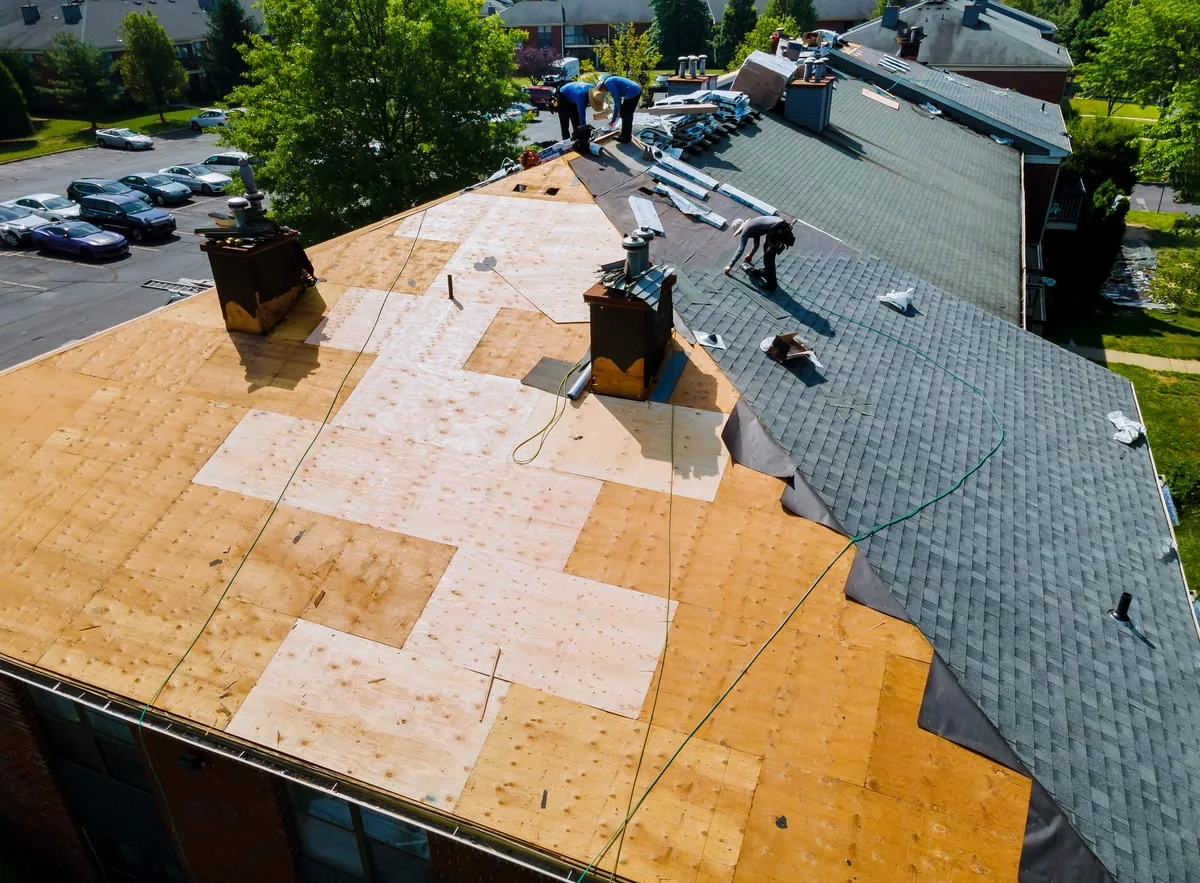
Check the Deck Before Adding Weight
Insulation and cover board are heavy when stacked, and snow is heavier. Before any layers are added, the deck is checked for deflection, corrosion and fastener hold. A deck that sags under dead load will pond water, and a deck that cannot hold fasteners will let the board lift in the first strong wind.
Missoula roofs are designed from the state snow table and ASCE 7-16, and added layers change the load. We note the existing and new weight and, where the building is near its limit, ask for an engineer's review. The Bonner mill roof collapse in 2011, at the site now known as Bonner-West Riverside, is a local reminder that dead load plus snow can exceed what a roof can hold.
Older buildings need the most care. The Wilma Building in Downtown Missoula, finished in 1921, was the city's first steel-framed structure, and the city lists more than 60 National Register buildings. A roof on a building of that age is checked for framing capacity before any new layer is added.
Set Thickness by Code and by Condensation
The state's energy code, the 2021 IECC with Montana amendments, has applied since June 10, 2022. When a roof is replaced, insulation thickness has to meet the code's requirement for the climate zone, and the building department confirms it. Reroofing can trigger an upgrade. The University of Montana, with 64 buildings on 220 acres, holds roofs of many ages, and a recent building and an older hall will not need the same thickness.
Thickness also controls condensation. A warm interior meeting a cold deck in a Missoula winter drops water inside the assembly if the insulation is too thin or the vapor control is missing. We check the dew point in the assembly calculation and size the layers so condensation stays above the membrane, not below it.
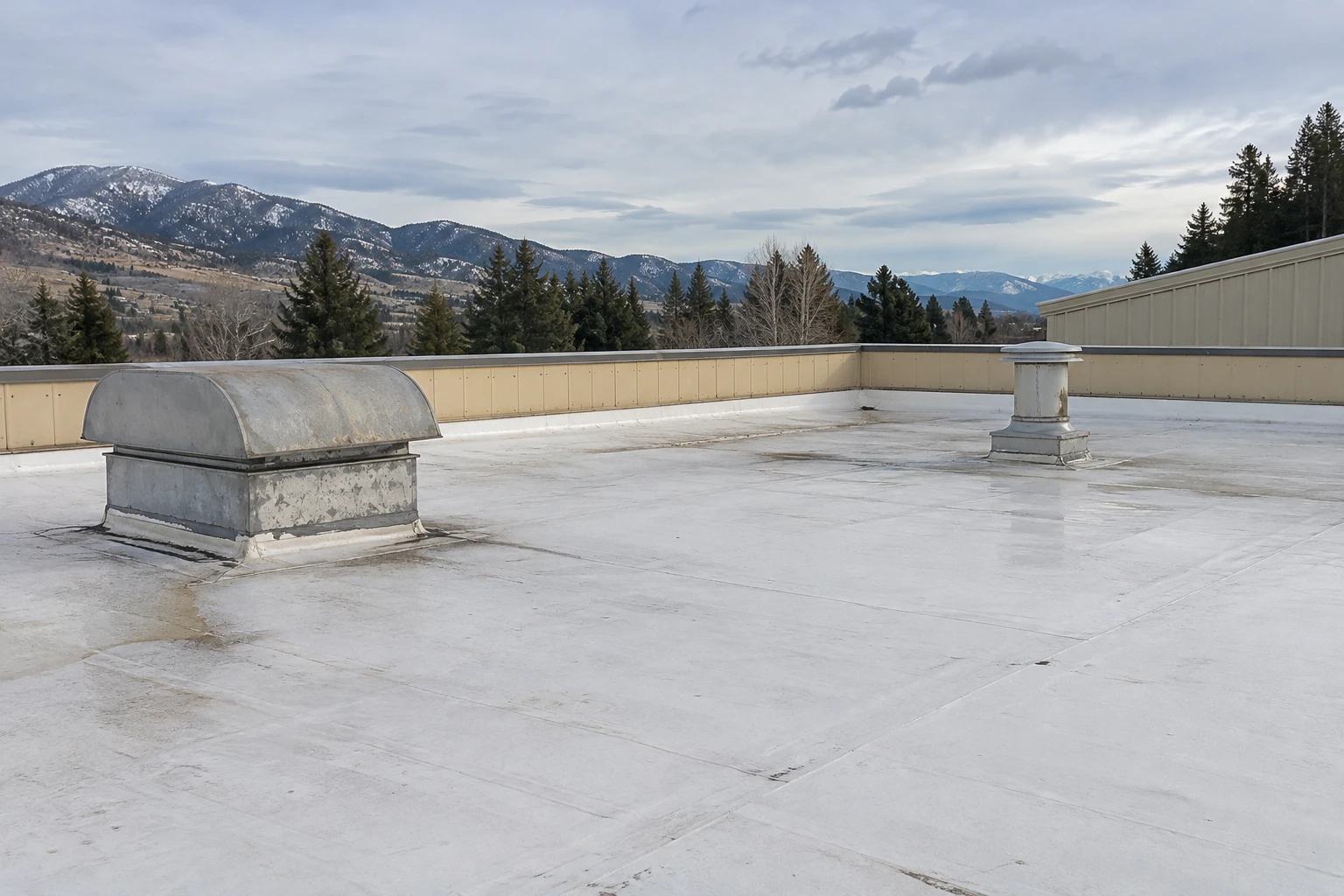
Choose the Insulation for Cold Weather
Polyisocyanurate gives high resistance per inch, but some products lose rated resistance as temperatures drop, which matters where about 45 days a year never rise above freezing. Extruded polystyrene holds its value in cold and wet, and is used where moisture exposure is likely. Mineral wool resists fire and holds shape under heat.
Each has a place. We compare long-term resistance, compressive strength, cost and compatibility with the membrane. A roof with heavy foot traffic needs a firmer board than a quiet one, and a roof over a pool room or a kitchen needs moisture-tolerant material.
A hotel on North Reserve Street is the kind of building where moisture load can differ across one roof, from guest-room wings to laundry or kitchen space. We assign materials by zone and mark the zones on the plan.
Taper the Insulation to Move Water
Tapered insulation builds slope into a flat roof, directing water to drains and scuppers. It is cut and numbered in sections, laid out from the plan, and placed in the order marked on the board. Crickets behind curbs and units divert water around them.
Slope correction is also ponding correction. A roof that holds water for days needs a drainage plan, and the drain and scupper layout and the taper layout are drawn together. The minimum slope is usually a quarter inch per foot, and the plan shows where it is met and where it is not. A roof that misses the slope in one corner will hold water there first, and a ponding water repair later costs more than slope built into the first layer.
Add Cover Board Where Hail and Traffic Land
Cover board is a rigid layer between insulation and membrane. It resists hail, spreads foot load, improves fastener hold and gives a flat surface for adhered membranes. In 2016 quarter-size hail and a 20-minute burst of rain hit central and south Missoula, and a roof with cover board is better placed to take an impact like.
Gypsum, high-density polyiso and fiber boards each behave differently when wet. We choose the board for the membrane system and the exposure, and we protect it from moisture during installation, since a board left out in a snow squall is not a board you can use. Where a roof will be repaired after hail, the board is often what kept the damage shallow.
Attach in Layers and Test the Pull
Each layer is attached to the one below at a pattern set by the wind zone. The basic design wind speed here is 102 mph for a Risk Category II building, so the corners and perimeter need more fasteners or adhesive than the field. Layers are staggered so seams do not align, and large panels are cut to fit around drains and curbs.
A pull test confirms the fastener pattern before the membrane is installed. The test results go into the closeout file with the layer schedule and the product data sheets. A full replacement adds a final inspection of each layer before the next goes down, with a photograph of each stage. When a roof is added in a recover, the same pull checks apply to the new layers over the old. Board arrives at the laydown yard in loads sized to the day's coverage, and the material hoist runs only as fast as the crew can cover what it lifts.
Related Roofing Pages
Send the Roof Section and the Energy Code Path
Send the roof section if you have one, the existing insulation type and the drainage problems you want solved, and we will schedule cores and a slope survey. The first report gives the layer schedule and the load check.
Call 555-555-5555 or email [email protected].
Questions About Roof Insulation, Tapered Systems and Cover Board
How much insulation does my roof need?
The code sets a minimum for the climate zone, and the assembly calculation sets the thickness that keeps condensation out. The larger of the two numbers governs, and the proposal states both so the owner sees why the board is as thick as it is. The building department confirms the code path when a roof is replaced, and the confirmation goes in the closeout file with the layer schedule.
Is cover board required?
Not by code, but many manufacturers require or recommend it for a full warranty on some systems, particularly mechanically attached ones. It adds hail and traffic resistance. We state the board in the specification and the reason, and we note which manufacturers accept which boards under their warranty.
Can I add insulation without replacing the membrane?
Not easily. Adding insulation means removing or covering the membrane, which turns the job into a recover or a replacement, and a recover over a sound roof can accept new layers. The moisture survey shows whether the existing roof is dry enough, and the cores show whether the existing deck will hold the added fasteners.
Why does tapered insulation cost more?
Tapered boards are cut to a layout, numbered and installed in sequence, which takes more labor and planning than flat board, and the extra drawings are part of the price. The saving is in fewer ponding repairs later. A roof that sheds water within a day or two also keeps the membrane cleaner and the seams drier through the thaw.
Does insulation affect snow melt on the roof?
Yes. Well-insulated roofs shed less heat, so snow melts more slowly and drifts hold longer, and Missoula's average of 39.5 inches of snow a winter builds the pile. The structure is designed for the snow load either way, and the plan notes the drift zones.