
College and University Roofing in Missoula, MT
College and University Roofing
On a campus, the first roof to fail is rarely the oldest one, and the order in which a facilities office repairs them decides how much money is spent twice. The University of Montana campus has 64 buildings on 220 acres, which means dozens of roofs of different ages, systems and exposures that cannot all be replaced in one summer. We start a campus program by ranking the roofs, because a replacement queue built on remaining service gives the budget a logic that a list built on complaints does not.
In Missoula, MT, that ranking has to account for snow, thaw and a short construction season, and then for terms, move-in weeks and events that close off parts of the campus. The sequence problem is as much about calendar as it is about membrane. Residence halls, lecture buildings, labs and athletic spaces each have different access and different tolerance for noise, so the program is built building by building and not as a single bid.
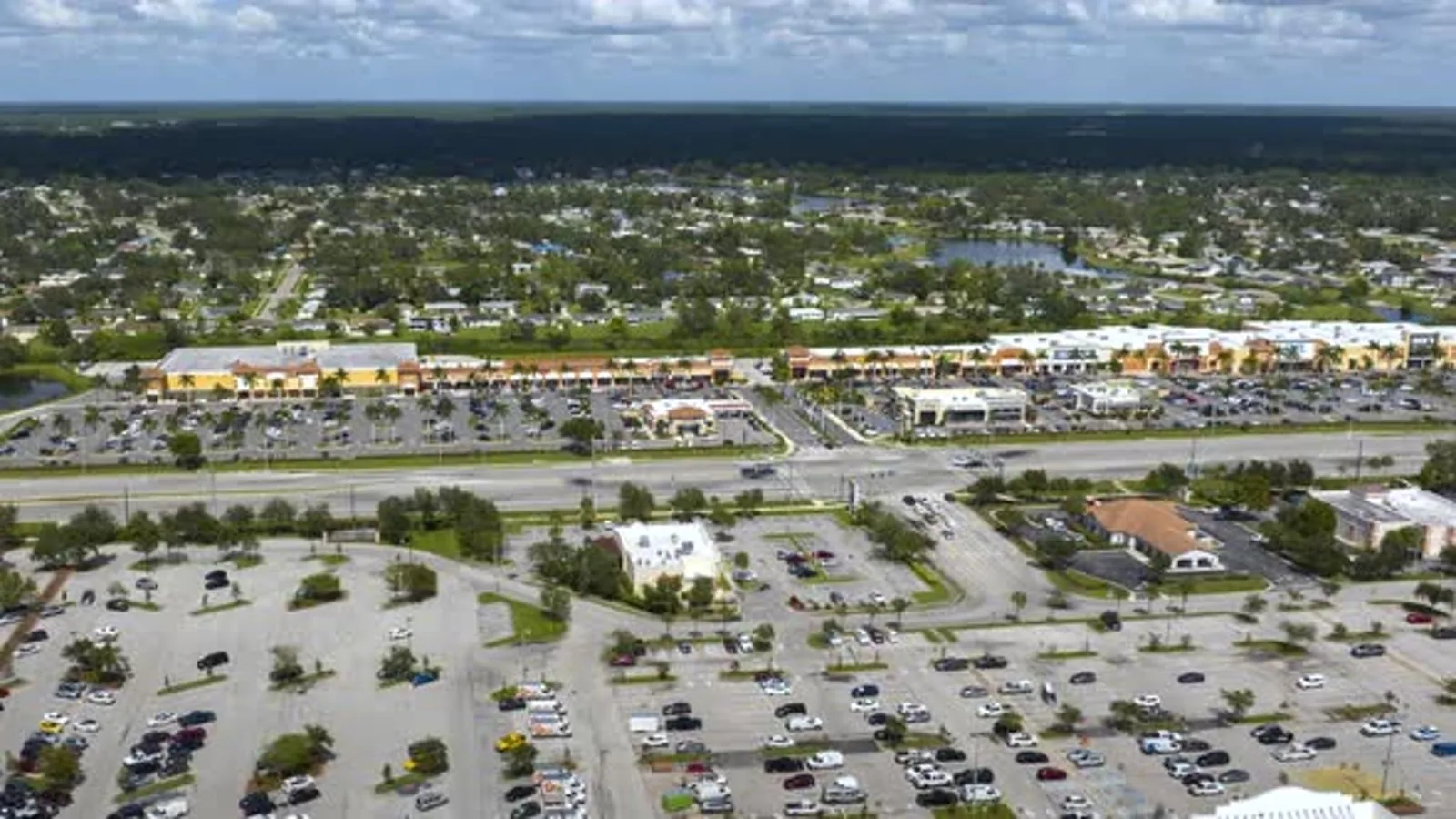
Build the roof inventory
The inventory begins with a walk of every roof. For each building we record the system, the area, the number of penetrations, the condition of the drains and any history of leaks. We take core cuts at representative locations to see whether the layers are dry. Photographs go into a dated set, one folder per building, so the next walk can compare like with like.
A campus with 64 buildings does not need 64 identical answers. A residence hall with a low-slope roof, a lab with heavy rooftop equipment and a historic hall with a different structure each get their own entry. The inventory ends in a table that sorts buildings into replace, repair and watch groups, with cost ranges. A facilities director can then plan several years of spending and see what each year buys.
Schedule around terms and events
Campus work has fixed dates. Move-in week, finals, commencement and home athletic events all bring people and vehicles to areas where we would like to stage a crane. The University of Montana is the area's largest employer at 2,842, and the campus is occupied far beyond the classroom hours.
We lay out the staging area and the material hoist away from pedestrian routes, and we agree with the facilities office on closures before any roof is opened. Where a building houses research space, the dry-in sequence is planned so no section stands open while an experiment depends on the envelope. The calendar gets mapped on the roof plan, and each phase gets a start date, an end date and a weather allowance. Material deliveries need a path too. A truck bringing rolls of membrane and pallets of insulation cannot cross a pedestrian plaza at class change, so the route is written down and shared with campus security before the first delivery. Crane picks happen early, before the paths fill.
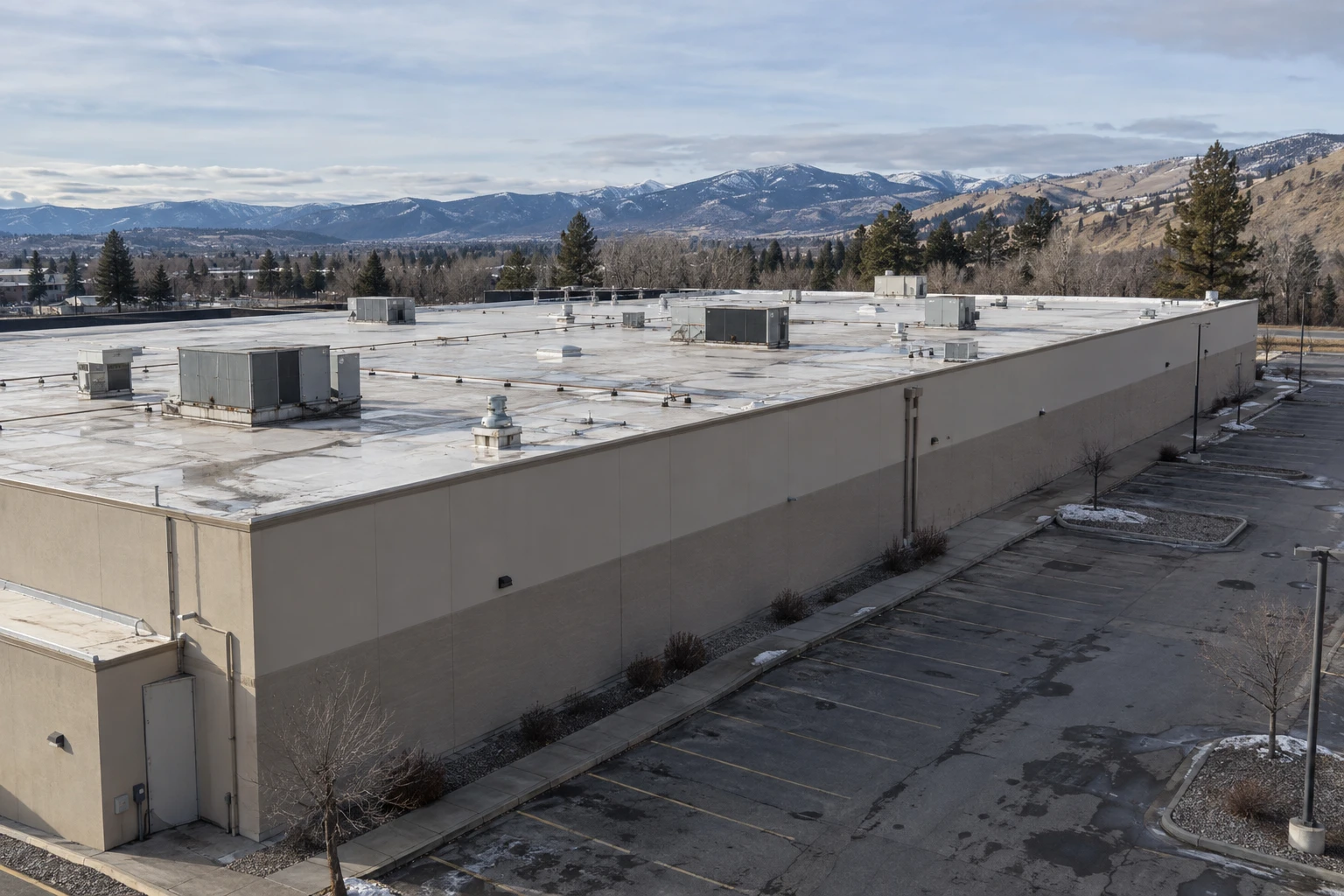
Manage snow load and thaw
The campus sits in a place with about 39.5 inches of snow a winter and about 120 days a year of snow on the ground. The design ground snow load is 40 psf. Roofs on a campus see drifting against taller walls and mechanical rooms, and the load at those points can exceed the load on the open field.
We map likely drift lines before the first storm and check the drains and scuppers nearby. We also look at the edges, since ice dams and sliding snow can break metal and damage gutters. Snow guards over entrances protect people below, and we check their fasteners. The thaw cycle is when most leaks appear, so the fall walk is the best time to find and fix them.
Handle older and historic buildings
Missoula's inventory includes a downtown with more than 60 National Register buildings, and a campus often holds older halls with their own character. We do not assume the roof system on any historic building. The walk identifies it, and the owner confirms what approvals and materials are required before work is scheduled.
Older masonry buildings often have parapets, copings and gutters that need as much attention as the field. We check the top of each wall, the flashing at the roof edge and the drainage path. A repair that fixes the roof but ignores the parapet leaves the building exposed. The report lists both, so the facilities office can fund them together. The same questions arise for a government building or a church in an older district such as Downtown Missoula: what approvals apply, what materials are allowed and how the work looks from the street.
Choose repair, restoration or replacement
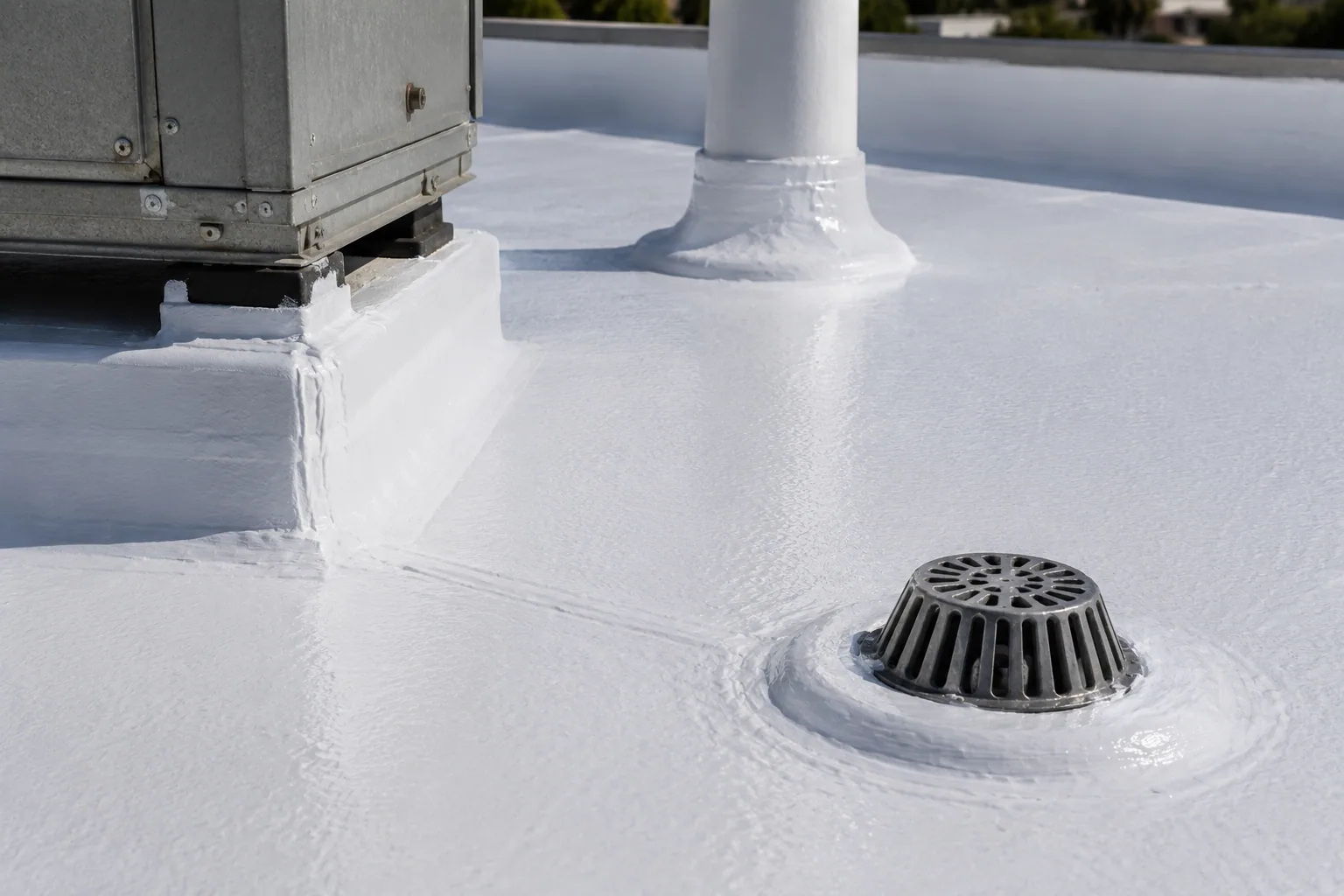
For each building, the choice follows the core cuts. A building with dry layers and a few failed details takes targeted repair. A sound surface over dry insulation can take a coating through roof coating restoration. A building with saturated insulation or a deck in trouble needs full replacement.
We show installed cost, expected service and repair path for each. When a campus holds mixed makers and systems, the roof file records them in the same fields, so a board can compare a school building to a residence hall without translation. A campus in the University District has the added question of how its roofs relate to neighboring buildings and drainage. Roofs that share a wall or a drainage line with a neighbor need a shared plan, and we ask early who owns what so no leak lands in a dispute. Another useful comparison is with a school roof in the same city, since the two share a calendar logic.
Close each phase with a punch list
Every phase ends with a walk, a punch list and a set of photographs. The drains are tested, the flashings are checked and the surface is cleaned. The facilities office signs off, and the record goes into the campus inventory with the next review date. A campus program grows more useful each year, because every roof gets a dated history. By the third year, the inventory shows which roofs aged as predicted and which did not, and the replacement queue can be adjusted with real data. Facilities directors can then defend each year's request with photographs and cores, not with a general sense that the campus is old. A campus roof file starts with one building and grows by group, so the second summer builds on the first.
Related Roofing Pages

Send the building list and the calendar
Send the building list, the academic calendar and the access constraints, and we will map the phasing and the staging areas before any material is ordered.
Call 555-555-5555 or email [email protected].
Questions About College and University Roofing
How do you rank roofs across a large campus?
By remaining service, using core cuts, seam probes and drain checks on every roof. The ranking puts the roofs closest to the end of their life at the top and shows cost ranges for each group.
Can roof work happen during the academic year?
Repairs can, with barricades and a daily closeout. Replacement is better placed in summer, when fewer people are on campus and the weather window is longest.
What about labs and research spaces?
We plan the dry-in sequence around them, so no section is open when a building's envelope matters to an experiment. The facilities office tells us which spaces are sensitive.
How are historic halls handled?
We record the roof as it stands and the owner confirms any approvals before work begins. Parapets, copings and drains get as much attention as the field.
What should the facilities office send to start?
A building list, the academic calendar, any known roof reports and the access constraints for each site. With that we can map the phasing and the staging areas before materials are ordered.