Fire and Smoke Damage Roof Repair in Missoula, MT
Fire and Smoke Damage Roof Repair
A fire claim on a Missoula, MT commercial roof runs on two schedules at once, and the roof repair has to be sequenced between them: the carrier's investigation, which controls when the scene is released, and the weather, which controls when anything can be installed. If the temporary dry-in goes on late, snow or meltwater reaches a deck that is already compromised. If the permanent work starts before the release, evidence is lost. Snow stays on the ground about 120 days a year, so a fire in October can leave a building under a tarp through the winter. We plan the order before the first crew arrives: safe access, photographs, temporary cover, mapping, structural review, permanent repair.
Each step gets a date, and the owner can show the sequence to a carrier and a lender.
Make the roof safe before anything else
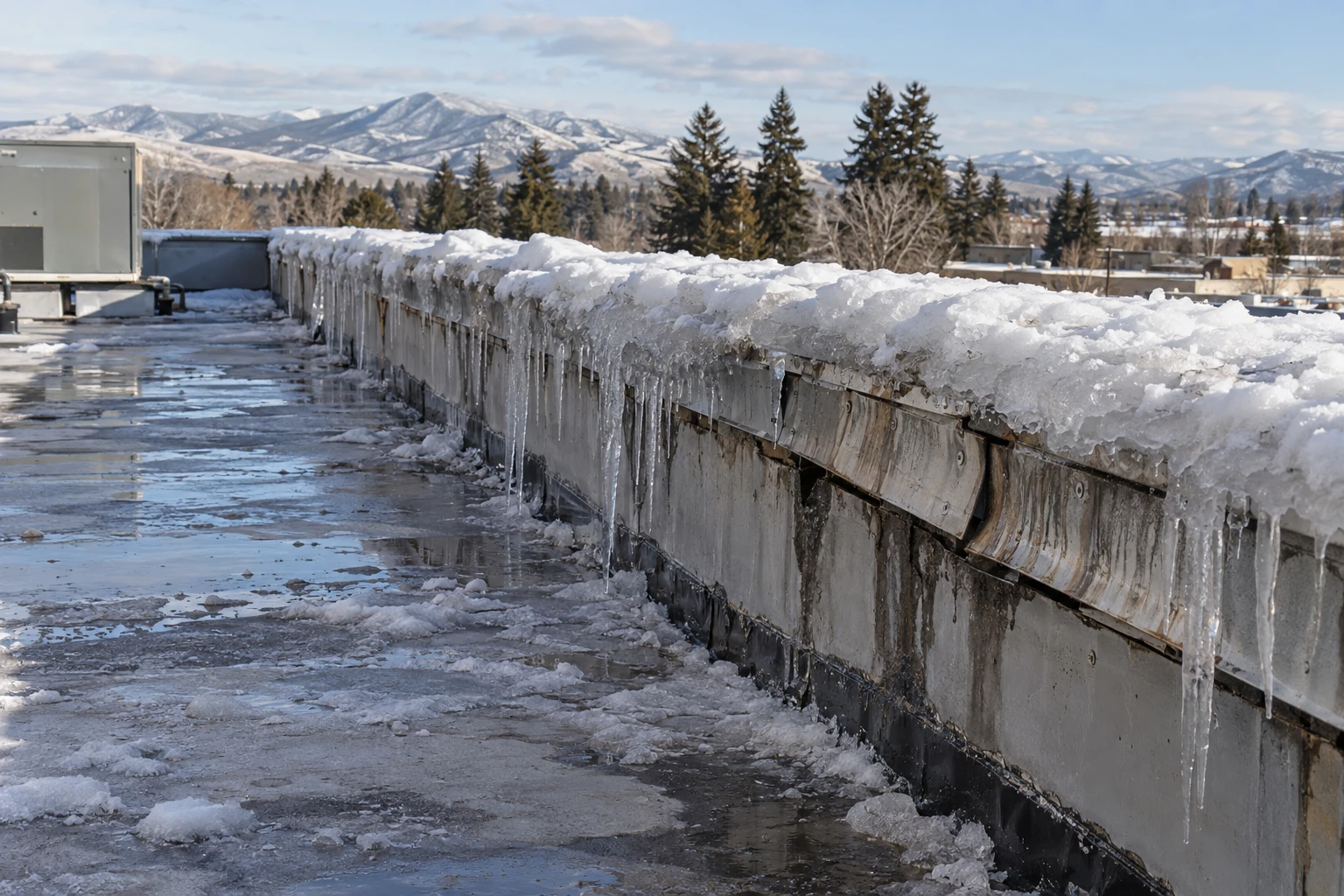
The first day has three jobs. Confirm the roof is safe to walk or confirm that it is not, protect the interior from weather and from suppression water still draining through the deck, and photograph everything before debris is cleared. A fire-damaged roof can hide charred decking, softened insulation and damaged supports that look sound from above.
We do not send a crew onto a roof until its condition is understood, and we use a drone for the first look when access is uncertain. Temporary measures go on next: tarps, sealed openings and diverted drains. These are priced as emergency roof repair, answered at any hour, with the expectation that they will hold for weeks and not years. In a cold month, we note how snow load will sit on a tarp, since a 40 psf design ground snow load means a temporary cover can carry real weight.
Map the damage in zones
Fire reaches farther than the visible char. Heat can soften and shrink membrane well outside the flame area, melt or deform insulation, warp metal decking and damage fasteners and flashing. Smoke leaves residue that affects the adhesion of any new material. Suppression water soaks insulation and sits in the assembly long after the fire is out, and in a cold month it can freeze there.
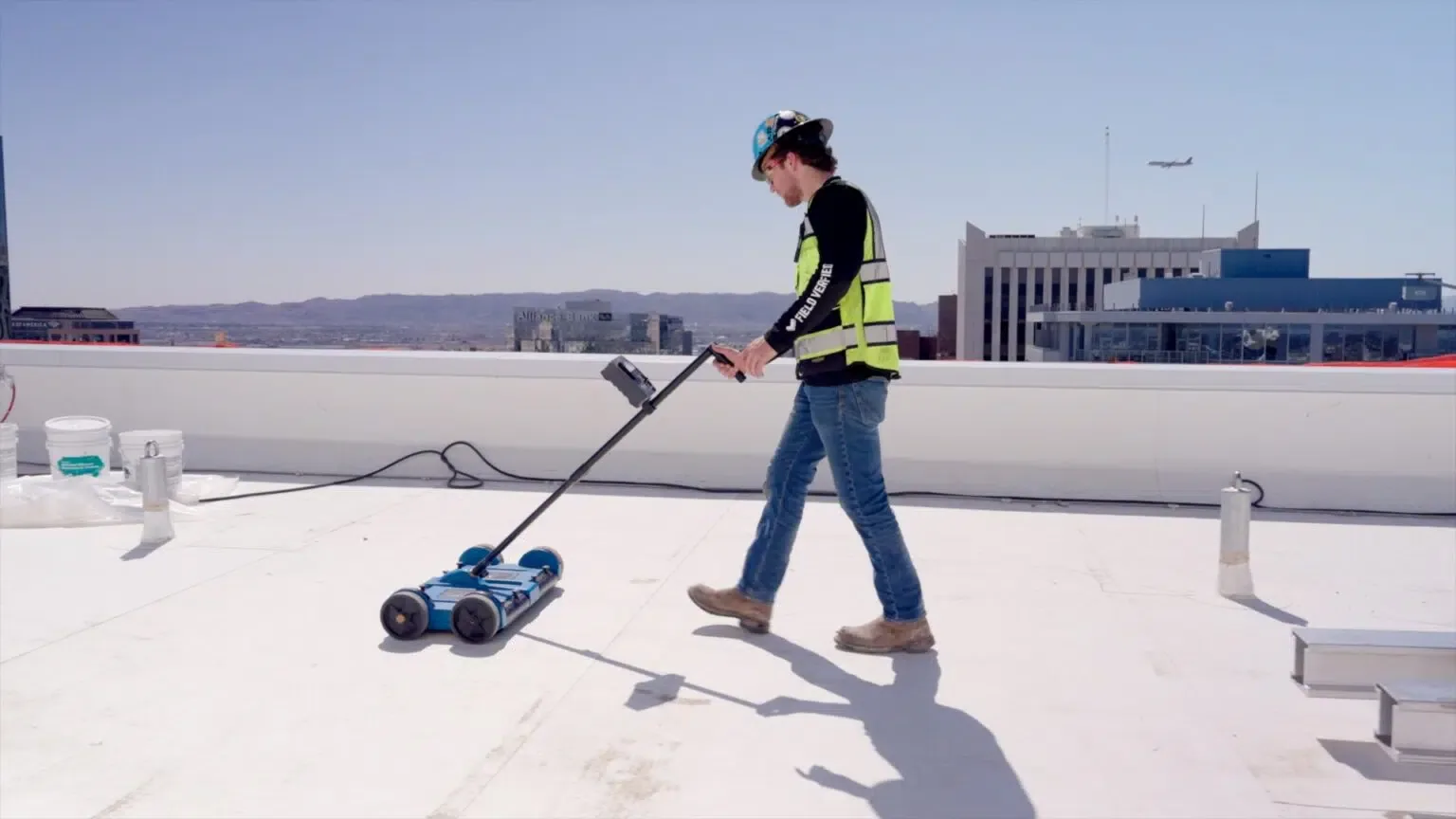
We map the damage in zones: burned, heat-affected, smoke-affected and saturated. An infrared moisture survey finds the saturated zone, which often extends beyond the area the fire reached, and probes and cores confirm it. The mapped zones become line items in the scope, each with a quantity and a repair method. Where the heat-affected area is a small share of the roof, a partial replacement with proper tie-ins can be reasonable. Where it is large, replacement of the whole assembly may cost less than repeated patching.
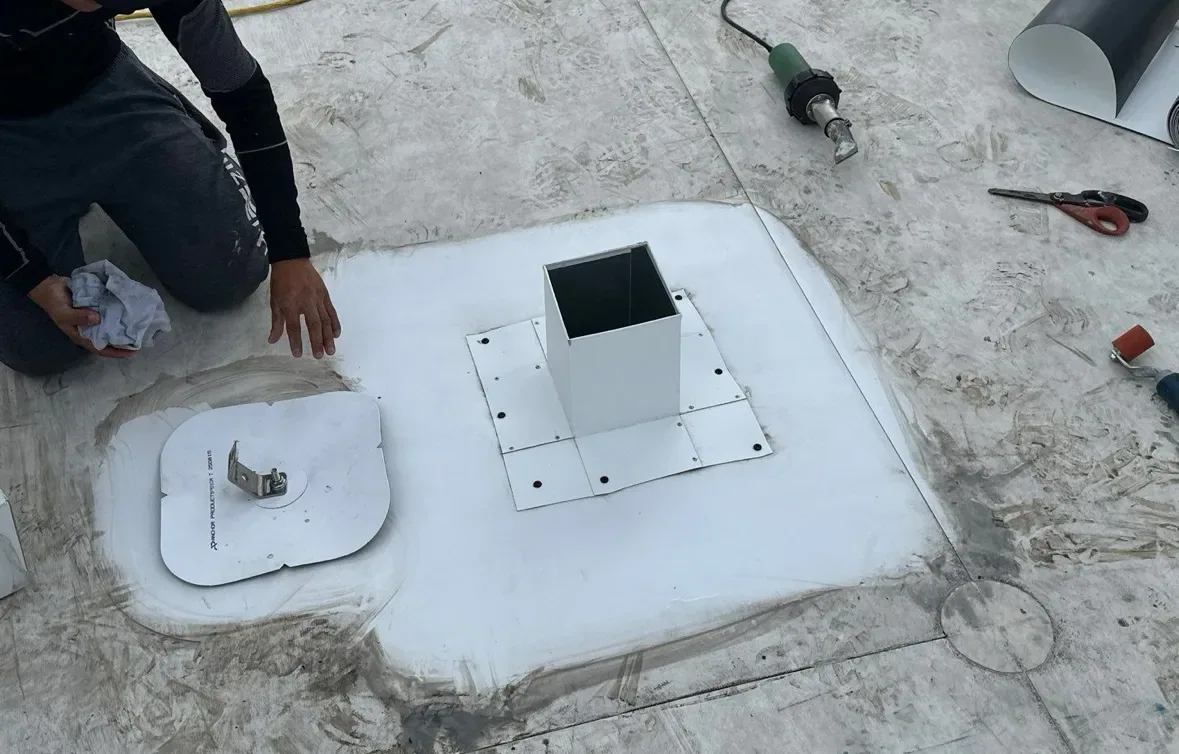
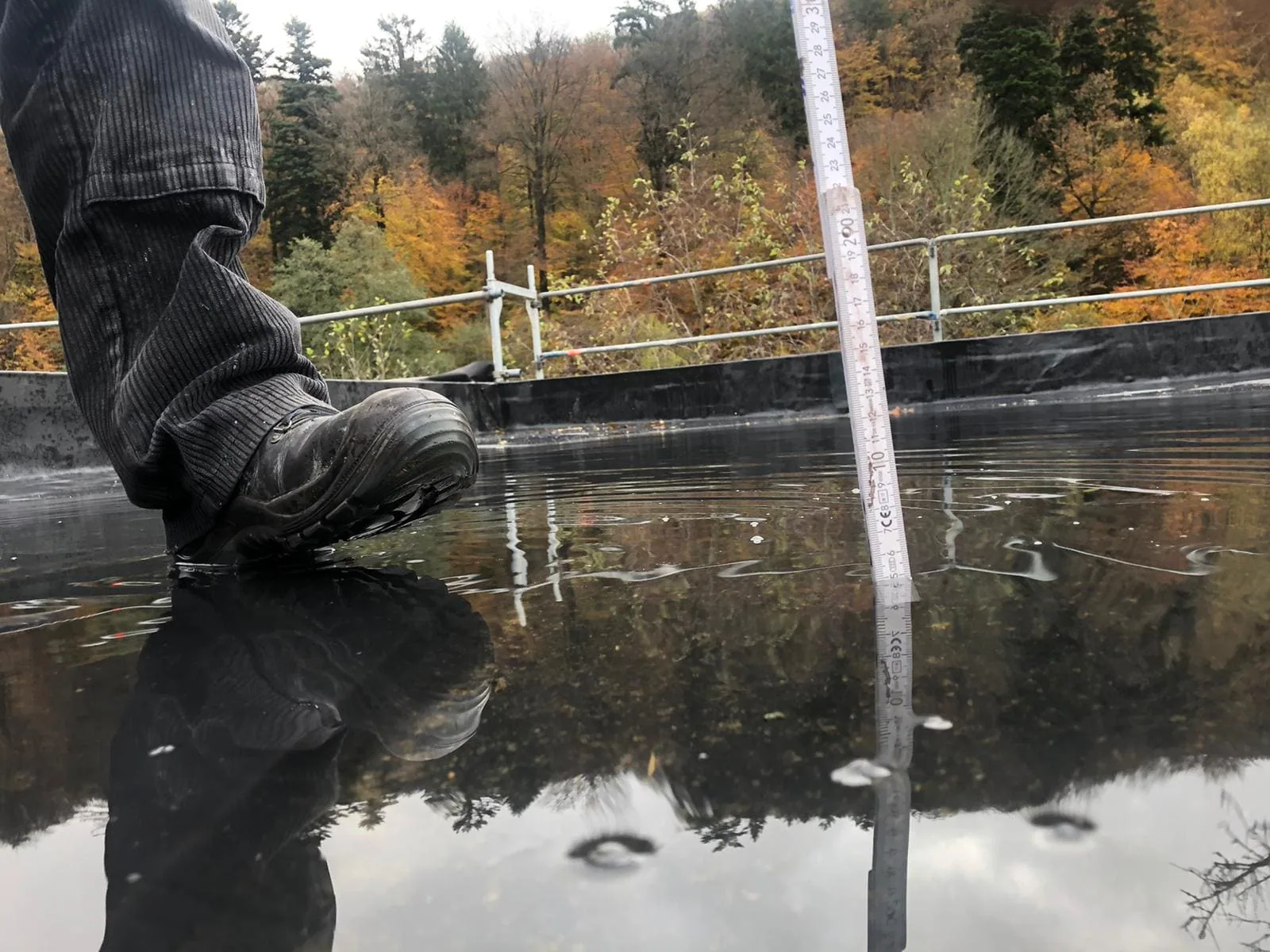
Equipment gets its own line. A rooftop unit that survived may still have a scorched curb or melted flashing beneath it. We list every curb in the burn zone and the heat-affected zone, note the condition and price the repair, so a replacement unit does not land on a damaged seal. Where fire has opened a drain or sump, ponding water repair methods apply to the basin it leaves.
Hold roofing until the structure is cleared
Any time the deck, joists or supports show heat distress, the structural review comes before roofing. Steel loses strength when heated, and wood chars and may look intact while carrying less load. A roofing contractor does not decide the question. We mark affected areas and recommend that an engineer review them before new insulation and membrane go on. The review may add days, so the schedule should allow for it.
The load path matters more in a snow market than in most. Missoula's design ground snow load is 40 psf, and a fire-weakened framing member under a drift is a collapse risk. At the former Bonner mill, heavy snow brought a roof down in 2011. We recommend clearing or limiting snow on a damaged roof until the engineer clears it.
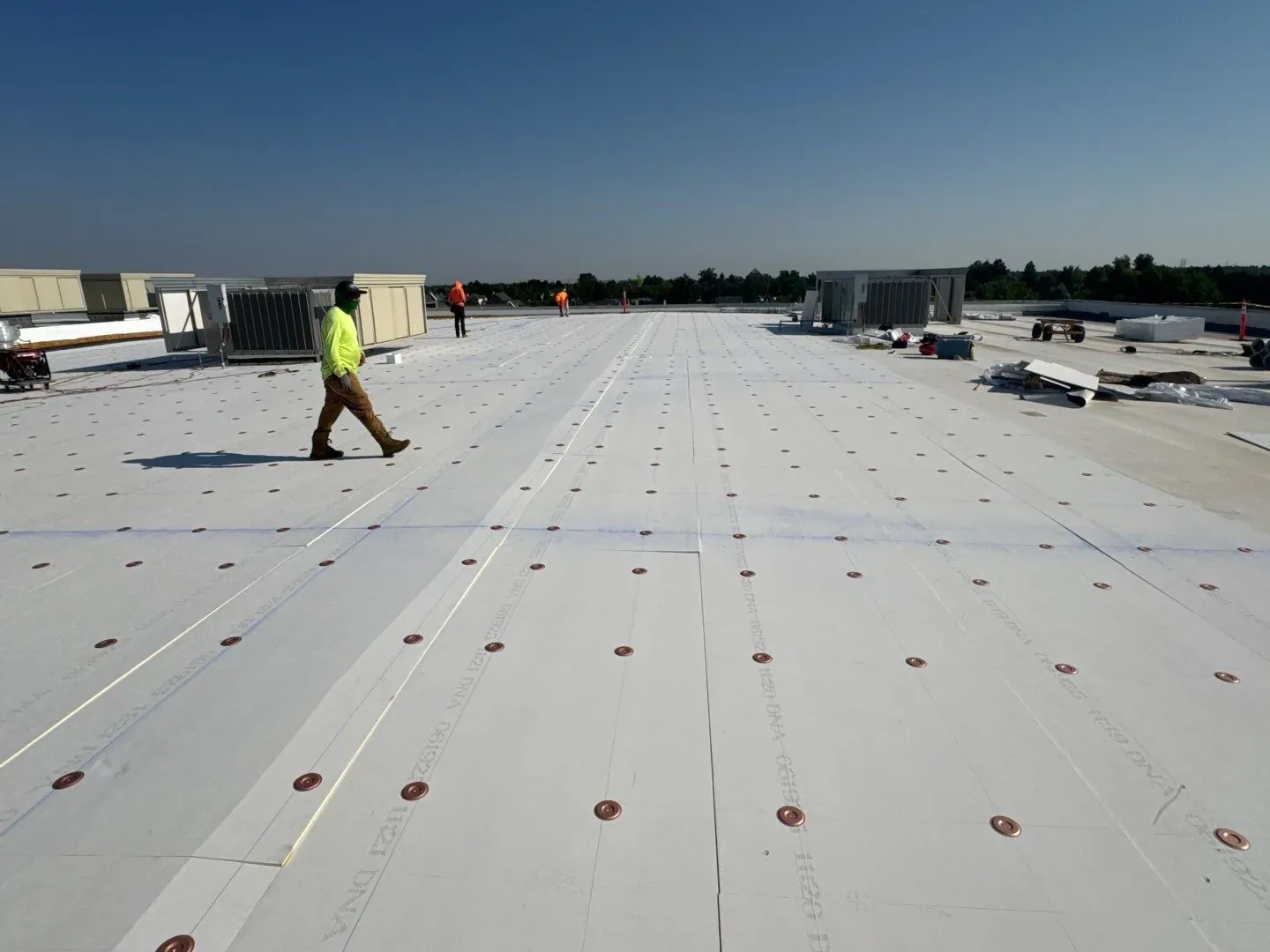
If the structure is cleared, roofing proceeds. If repairs are needed, the carpenters or steel crew go first and our work follows. Coordination with the general contractor keeps the sequence tight, since a fire rebuild involves interior trades who need the roof dry before they begin.
Match the repair to the building type
The ignition points differ, and the roof damage follows them. Kitchen exhaust fires start in the hood and duct and damage the roof around the exhaust fan, so a restaurant roof often shows damage concentrated in one area with heavy grease contamination around it. Hotels and apartment buildings have many penetrations and shared walls, and fire can travel through them.
Buildings in the Missoula Airport Area raise their own questions about neighbors, fire apparatus access and hangar doors. The scope records which areas were opened or cut by firefighters, since those openings are part of the loss.
Old mill and rail buildings carry another set of questions. The redeveloped sites at Bonner-West Riverside, reached from Interstate 90 Exit 109, mix new industrial uses with structures from the lumber era. Fire in a building like that can involve heavy timber, large spans and contaminated or reused materials. We survey the roof and recommend the structural and environmental reviews that the owner and the carrier will want before any permanent work is priced.
Give the carrier a scope it can rule on
The carrier needs photographs taken before cleanup, a roof plan with the damage zones marked, a log of emergency work with times and materials, and a repair scope separated into temporary, permanent and betterment items. A new roof that exceeds the like-for-like repair may involve code upgrades. A replacement may bring insulation to a higher level than the burned roof had, since the energy code enforced since June 10, 2022 (the 2021 IECC with Montana amendments) applies. The scope marks that line separately.
Our insurance and restoration process keeps those lines apart. We keep the file ready for the owner's lender, who often wants the permanent scope, a schedule and the warranty on the new work. The claim documentation becomes part of the building's roof file, and the next owner inherits a clear history of what burned, what was replaced and when. Wind or heavy snow after a fire can undo temporary work, so a check follows any major event, and snow and ice damage repair applies if a drift reaches the damaged section.
Related Roofing Pages
Send the incident date and the building address
Send the incident date, the building address and any carrier contact, and we will secure the roof, map the damage and return a dated scope that separates temporary from permanent work.
Call 555-555-5555 or email [email protected].
Questions About Fire and Smoke Damage Roof Repair
Can a fire-damaged roof be tarped through the winter?
A tarp is a short-term measure, and snow load and wind wear it down. We note an expected life for each temporary measure and inspect after any major storm. A structural review should come before a long cold-weather hold.
Does smoke damage require a roof replacement?
Not by itself. Smoke residue can be cleaned from many membranes, and replacement follows if heat damaged the sheet or insulation. The damage map separates the two.
What if the fire department cut openings in the roof?
Those openings are part of the loss. We seal them temporarily, record their size and location and include their permanent repair in the scope.
How long before permanent work can begin?
The carrier's investigation, any structural review, material lead times and the weather window all set the date. We prepare the scope and order long-lead items early so work can start when the release arrives.
Who holds the evidence if the cause is under investigation?
Investigators control the scene until released. We photograph what is permitted and do not remove material from areas the investigator wants preserved.