
Self-Storage Roofing in Missoula, MT
Self-Storage Roofing
A self-storage roof is a long row of identical sections, and the repair order is set by which row has customers' property under it. A leak in one building can soak boxes, furniture and paper records belonging to dozens of tenants, and the claim does not stop at the roof. The first decision is which buildings to open first, and the answer is the ones with the weakest roofs and the fewest occupied units below. Snow keeps the ground covered about four months of the year in Missoula, MT, so the season is short and the sequence has to be right before the crew mobilizes.
We lay out storage facility work by building, row and unit block. The owner sees which units are affected on which days, what tenants are told and when each building is dried in.
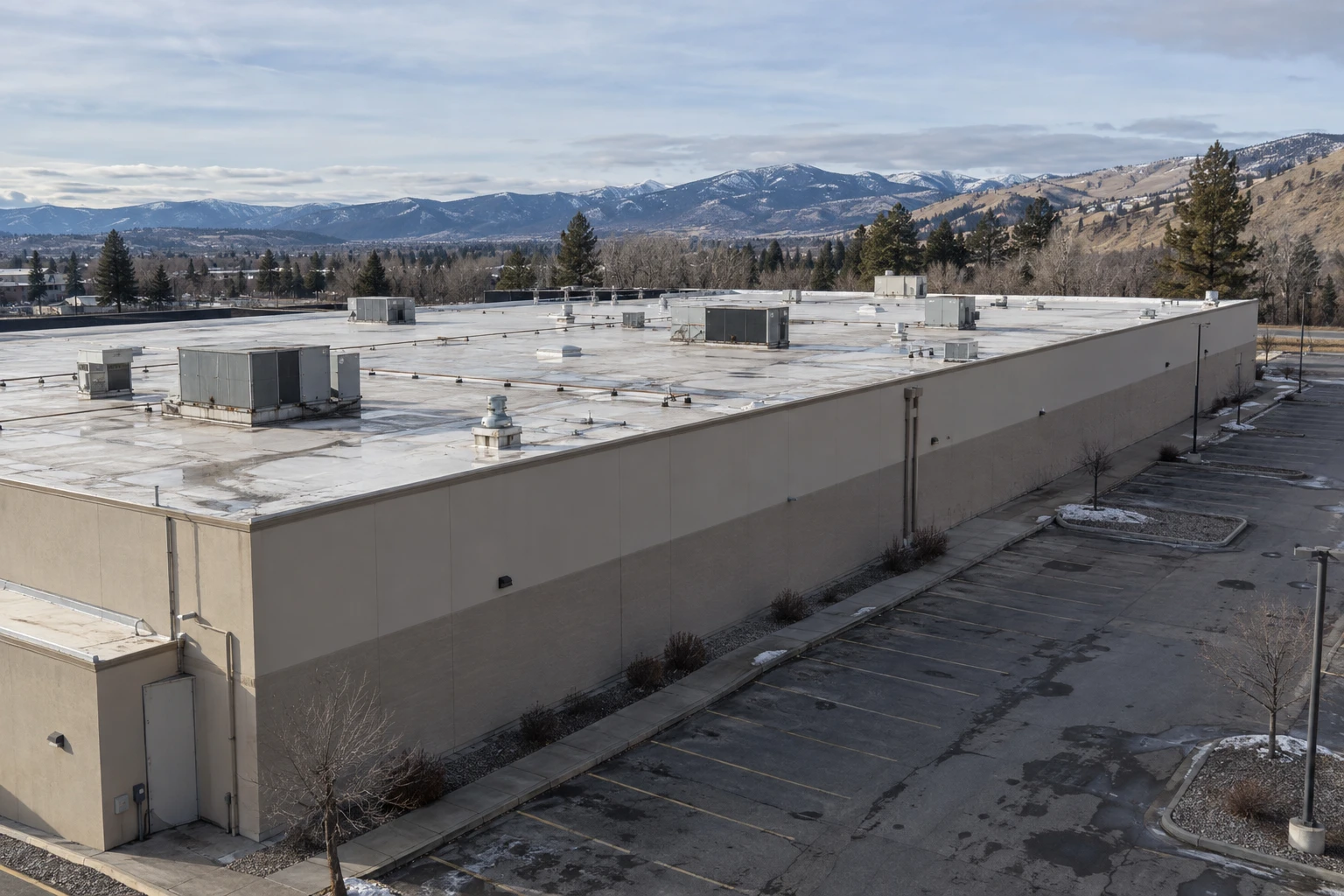
Find what fails first
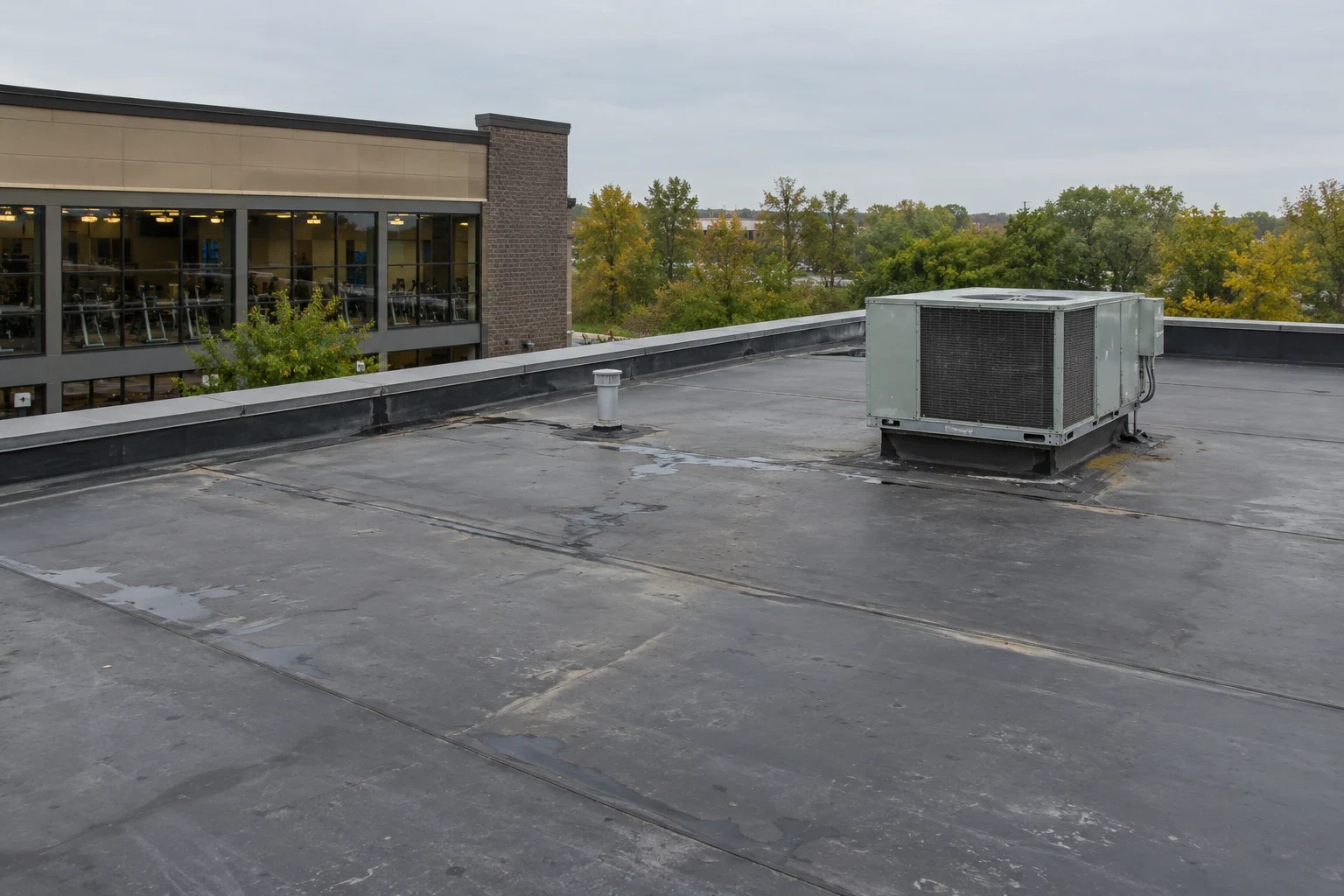
Storage buildings are simple, which means their failures are simple and repeated. Long runs of panel seams, ridge caps, eave closures, fasteners and gutters are the common places for water to enter. Roll-up doors and the wall-to-roof joint at the eave are others. On a flat-roofed building, drains and parapet flashings take the load.
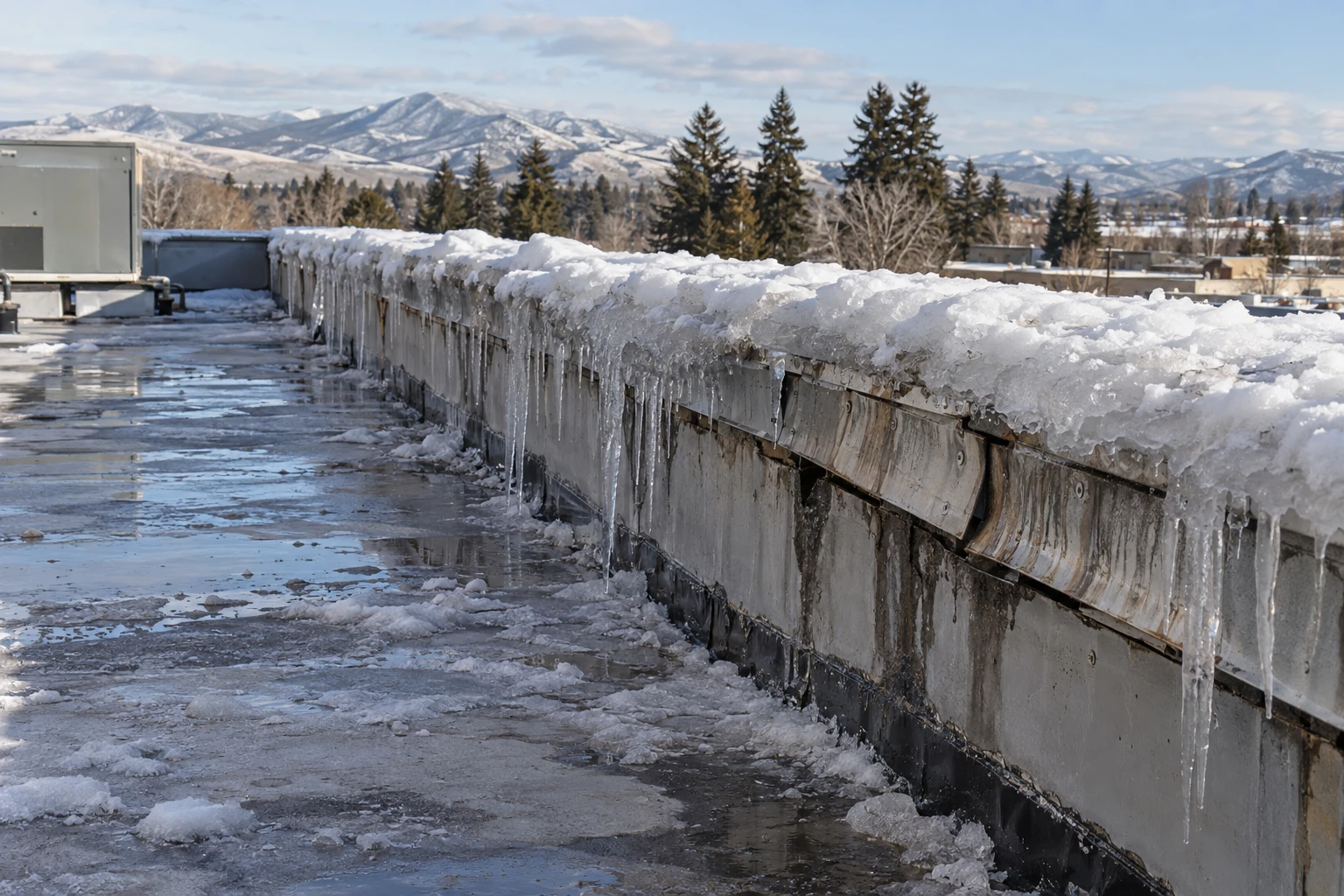
We walk the roofs row by row and record the system, the fastener condition, the laps and the sealant. A building with a tenant claim in the past gets a closer look at the same area. Since the buildings are alike, a failure on one often predicts failures on the rest, so we sort the whole site into groups and price a repair that fits each. The report shows which buildings share a problem. Eave closures and gutters deserve a second look on every building. Birds, wind and snow load push at them, and a gap at the eave lets meltwater into the wall cavity. Downspouts that discharge onto a drive lane freeze into a sheet of ice, and we note each one with a photograph.
Inspect metal panels and fasteners
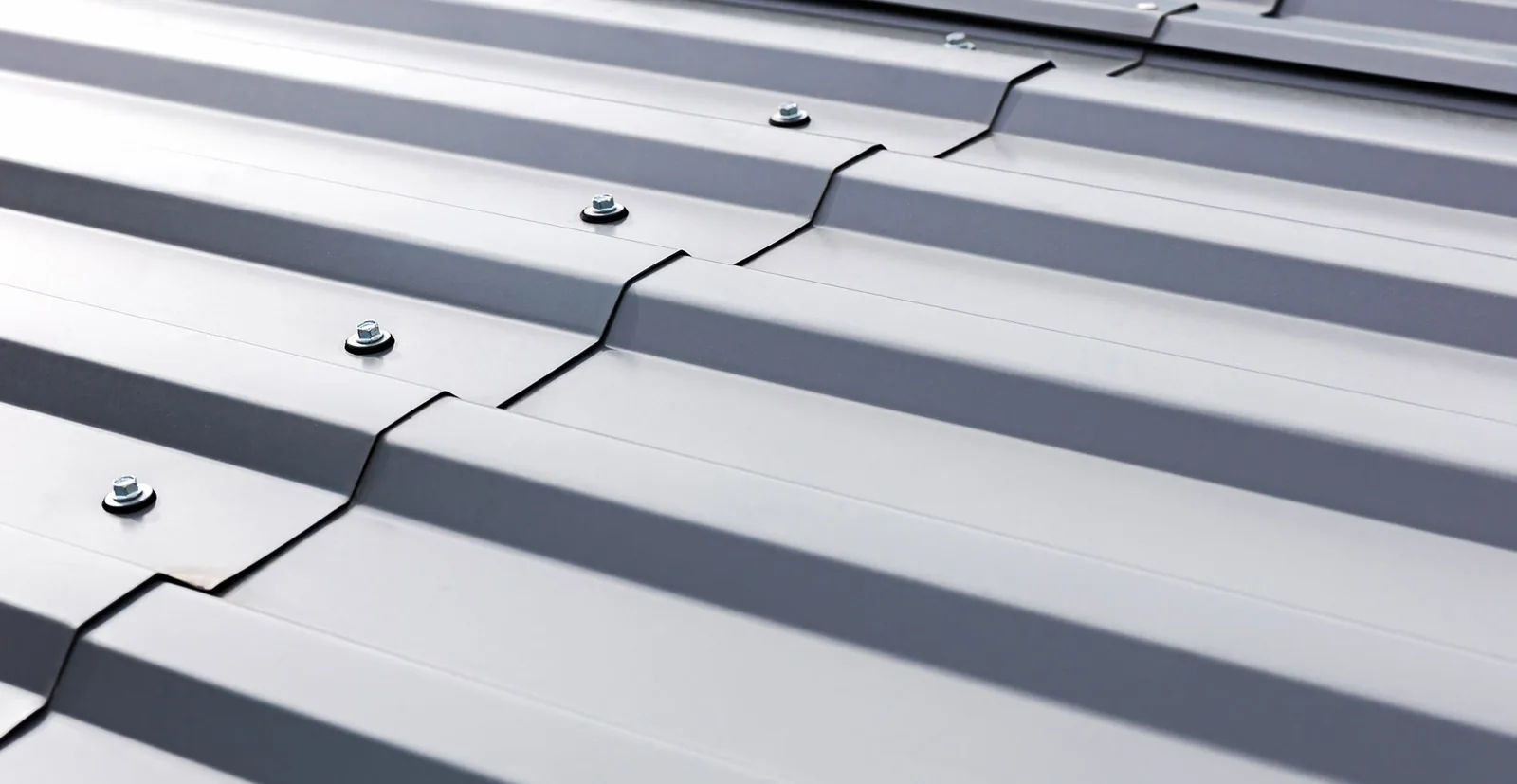
Many storage roofs are metal panels on a light frame. Exposed fasteners are the usual weak point, since each fastener has a washer that ages, a hole that enlarges with thermal movement and a seal that cracks. Missoula sees daily temperature swings averaging more than 30 F from late June through late September, and panels move with them.
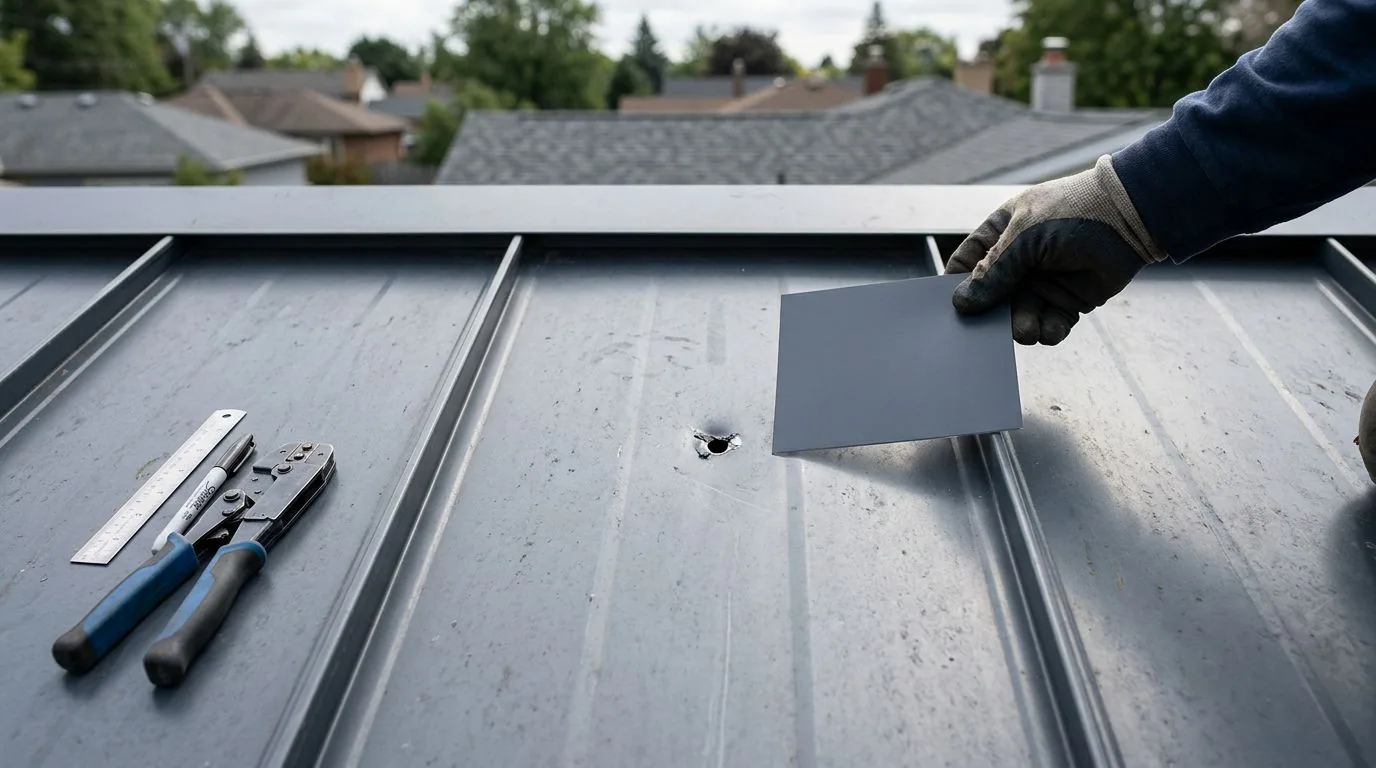
We count the fasteners that have backed out, tighten or replace them and reseal the holes. We check the laps for open sealant and the ridge cap for lifted edges. Where panels are worn or corroded, a metal roof retrofit over the existing roof may suit better than a tear-off, if the frame can carry the extra weight. A standing seam system hides its fasteners and moves with temperature, which suits long runs. Where panels are sound but the finish has weathered, a coating can slow further aging, and the price is a fraction of a new roof. We confirm with a fastener count and a corrosion check before recommending it, since a coating over rusted panels buys little.
Protect tenants and their property
Tenants rent space because they do not want to think about it. A roof job above their unit is an exception, and the manager must tell them before it starts. We provide a notice with the dates, the work area and what to expect. Units directly below the work are checked for leaks beforehand, and the manager can offer a different unit to a tenant who wants to move.
Access routes stay open. Drive lanes are blocked only for the minutes a lift or truck needs. The staging area sits at the edge of the site, away from the office and the gate. The material hoist and crane pick are scheduled for off-peak hours, and each building is dried in before the crew leaves. A daily note records which buildings were opened and closed. The office keeps a log of tenant calls, so a stain reported on a Monday can be matched to the building and row we opened on Friday. That log protects the owner and shortens any dispute about when damage began.
Plan for snow load and slide
The numbers behind a Missoula roof are a 40 psf design ground load and roughly 39.5 inches of snow a winter. The thermometer stays below freezing all day about 45 days a year. A long, low-pitched storage roof holds snow until a thaw, then releases it at once. Snow sliding off a metal roof can block drive lanes, crush gutters and endanger people and vehicles below.
We check snow guards and add them where the plan shows a risk. We inspect gutters and downspouts for ice and debris. Where two buildings sit close together, we look at how snow from the higher roof lands on the lower one and whether the eave can carry it. A snow and ice damage repair made in October prevents a lane closure in February.
Plan for the site and the neighborhood
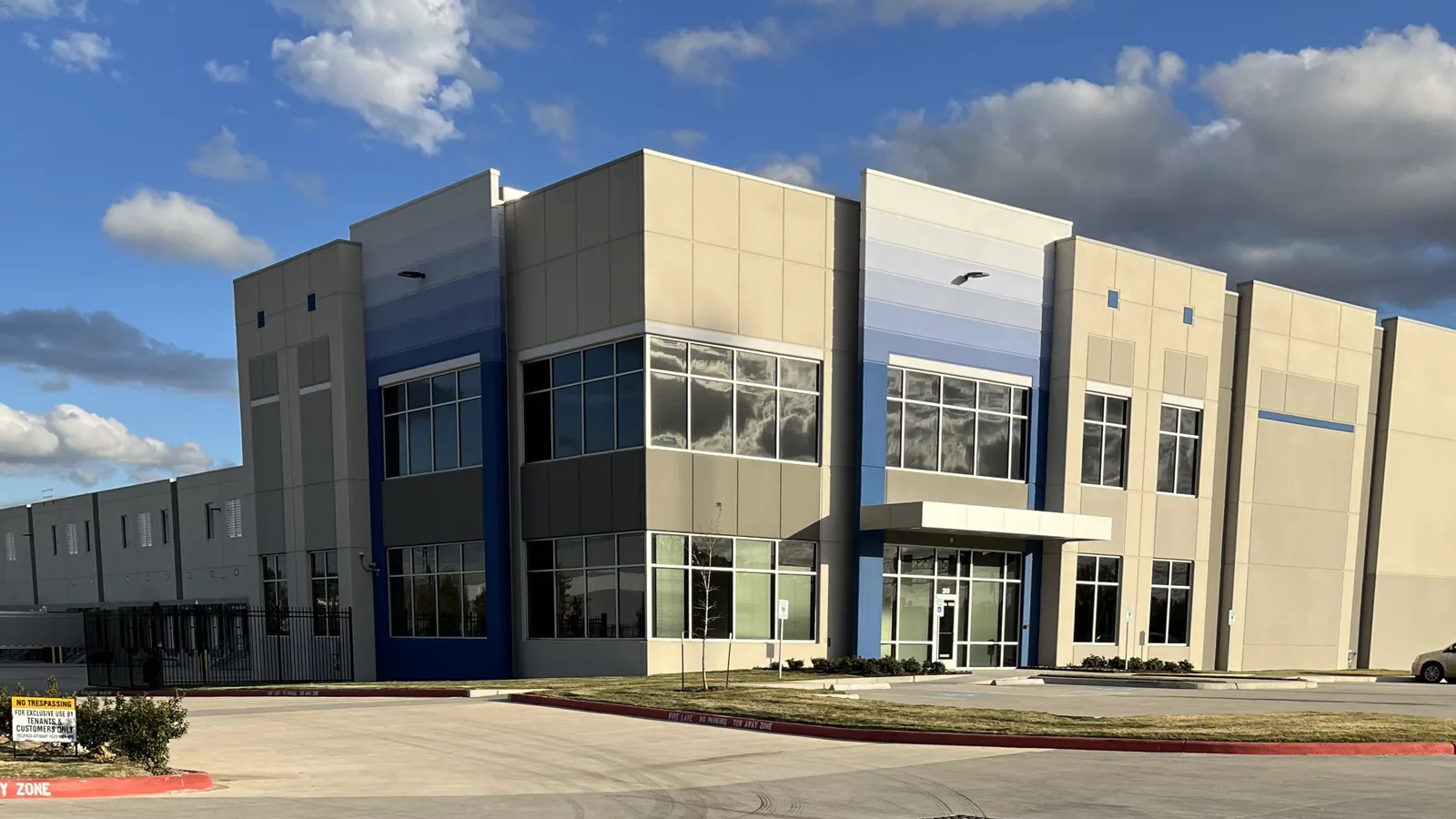
Storage facilities sit near major corridors and industrial areas. One near the Missoula airport area or the development park off Mullan Road has wide drive lanes and room to stage. One in an older neighborhood may have tight access and neighbors close by. Both questions go on the first call.
The county development park near the airport and the Bonner mill redevelopment are examples of industrial ground around Missoula. Owners with several facilities can rank them on one list. The file for each site records the roof systems, the repair history, the photographs and the next review date. A flex industrial building in the same portfolio is recorded the same way, and so is a warehouse. Storage in Orchard Homes or near the University District and storage by the airport each get their own tenant notice, drafted for who is renting there.
Choose repair, recover or replacement
The walk sorts each building into one of three groups. A roof with backed-out fasteners and open laps takes repair. A sound metal roof may take a coating or a retrofit. A roof with corroded panels or a failing deck needs replacement. Each option gets a price and an expected service life.
Close out building by building
A walk, a punch list and a photo set close out each building, and the manager gets a short summary of the work to pass on to tenants. The gutters are tested, the fasteners are checked and the cap is sealed. After the manager signs off, the file records the date and the next review.
Related Roofing Pages
Send the site plan and the claim history
Send the site plan, the building list and any claim history, and we will map the phasing and the staging area before any material is ordered.
Call 555-555-5555 or email [email protected].
Questions About Self-Storage Roofing
Do tenants need to move out during a roof repair?
Rarely. We dry in each building before leaving, check units below for leaks beforehand and give tenants notice. A unit can be swapped if a tenant prefers.
Why do exposed fasteners fail?
The washer ages, the hole enlarges with thermal movement and the sealant cracks. We tighten or replace them and reseal the holes.
Can a metal storage roof be retrofitted instead of torn off?
Sometimes, if the frame can carry the added weight and the old panels are sound enough to stay. A core cut and a structural check decide it.
What about snow sliding onto drive lanes?
We add snow guards where the plan shows a risk and check gutters for ice. Sliding snow can crush gutters and endanger people and vehicles below.
What should the owner send to start?
The site plan, the building list, any past tenant claims and the access constraints. They let us sequence the work and site the staging area.