
School Roofing in Missoula, MT
School Roofing
A school roof has to be finished in the order the calendar allows, and the calendar allows very little. The summer break gives a few weeks, the snow gives the rest of the year back to winter, and any job that runs past the first day of classes becomes a safety problem for children walking under a staging area. Missoula County Public Schools employs about 1,450 people, and school buildings in Missoula, MT carry roofs that must be dry before the first thaw cycle of the school year. We lay out school roof work by sequence first and price it second, so the district sees which weeks hold tear-off, which hold dry-in and which are held back for weather.
The first question is always what fails first, and on a school the answer is usually a drain, a flashing at a mechanical well or a seam that has opened through repeated freeze and thaw.
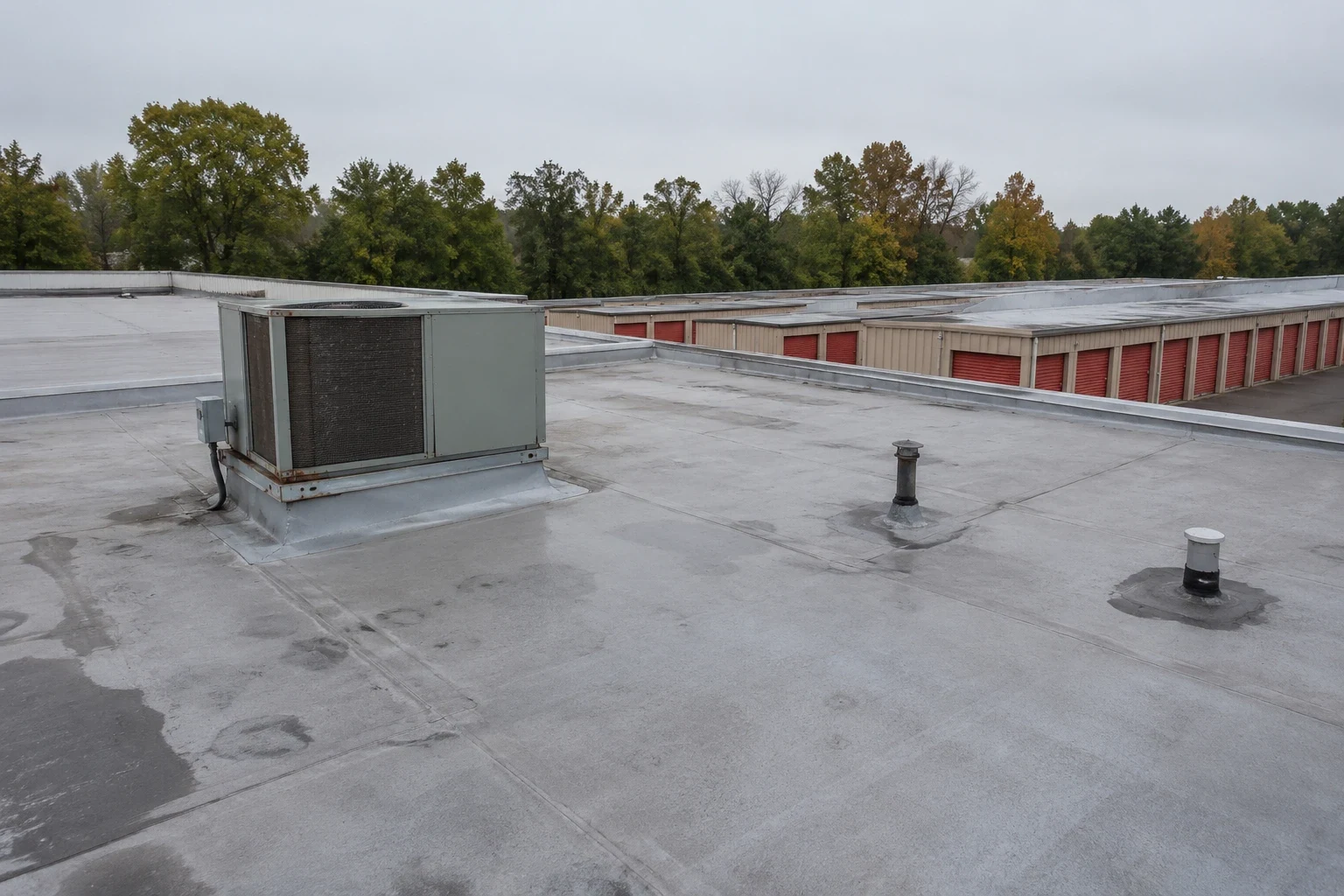
Find what fails first
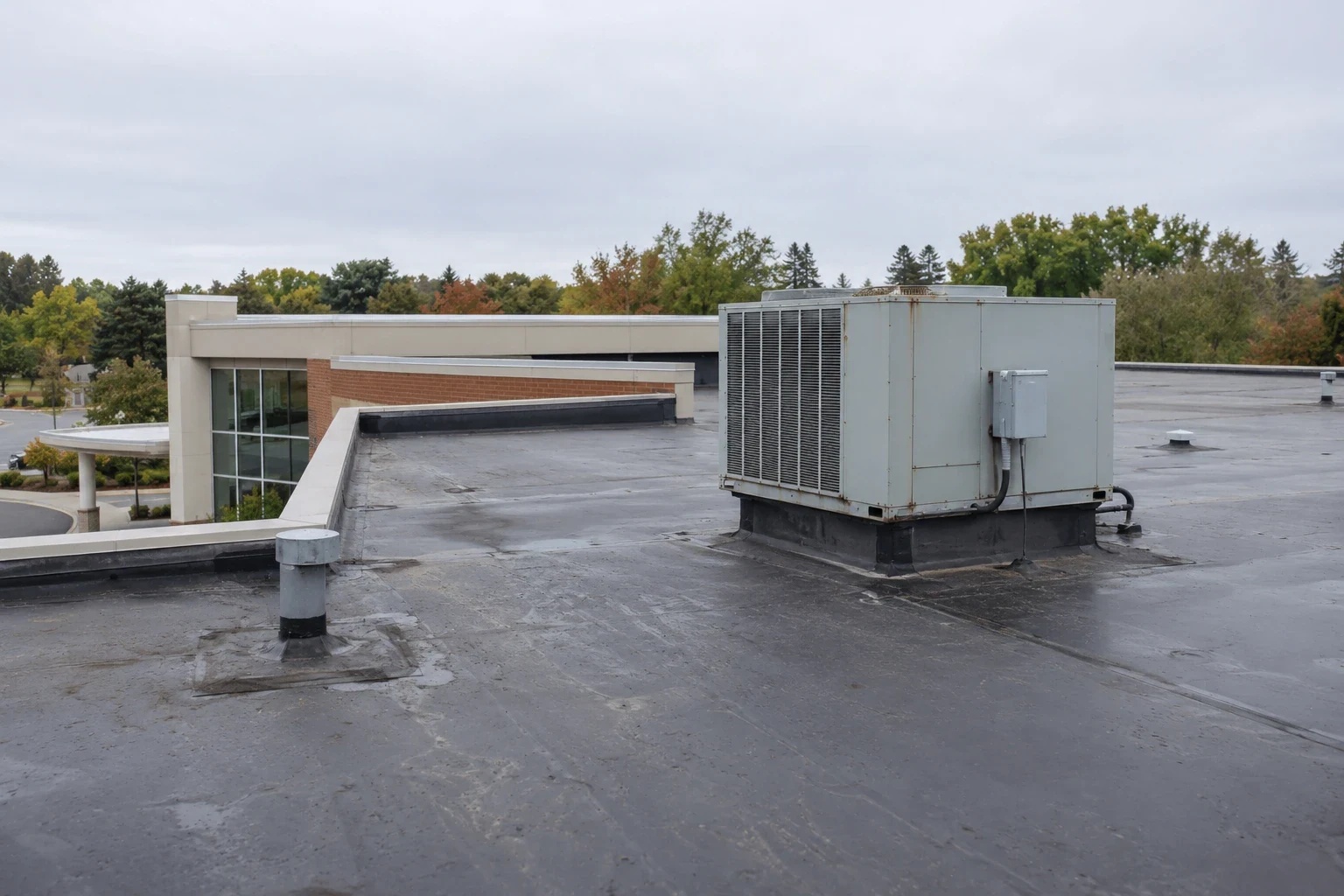
School buildings tend to grow in additions, and a roof that was extended in several phases has seams and transitions where the old and the new meet. Those transitions are where water finds the weak point. We walk each roof area separately and note the membrane type, the age if the records show it and the condition of each transition.
A Missoula winter averages 39.5 inches of snow, the cover lasts about 120 days, and the design ground load is 40 psf. A roof that carries that load for four months needs sound drains and an intact deck. We check the drain sumps for debris, the deck for signs of deflection and the edges for loose metal. A short list of fixes in September costs far less than a series of leaks in classrooms in January. Districts that also manage a college campus or a municipal building can put those roofs in the same inventory.
Sequence the work around the school year
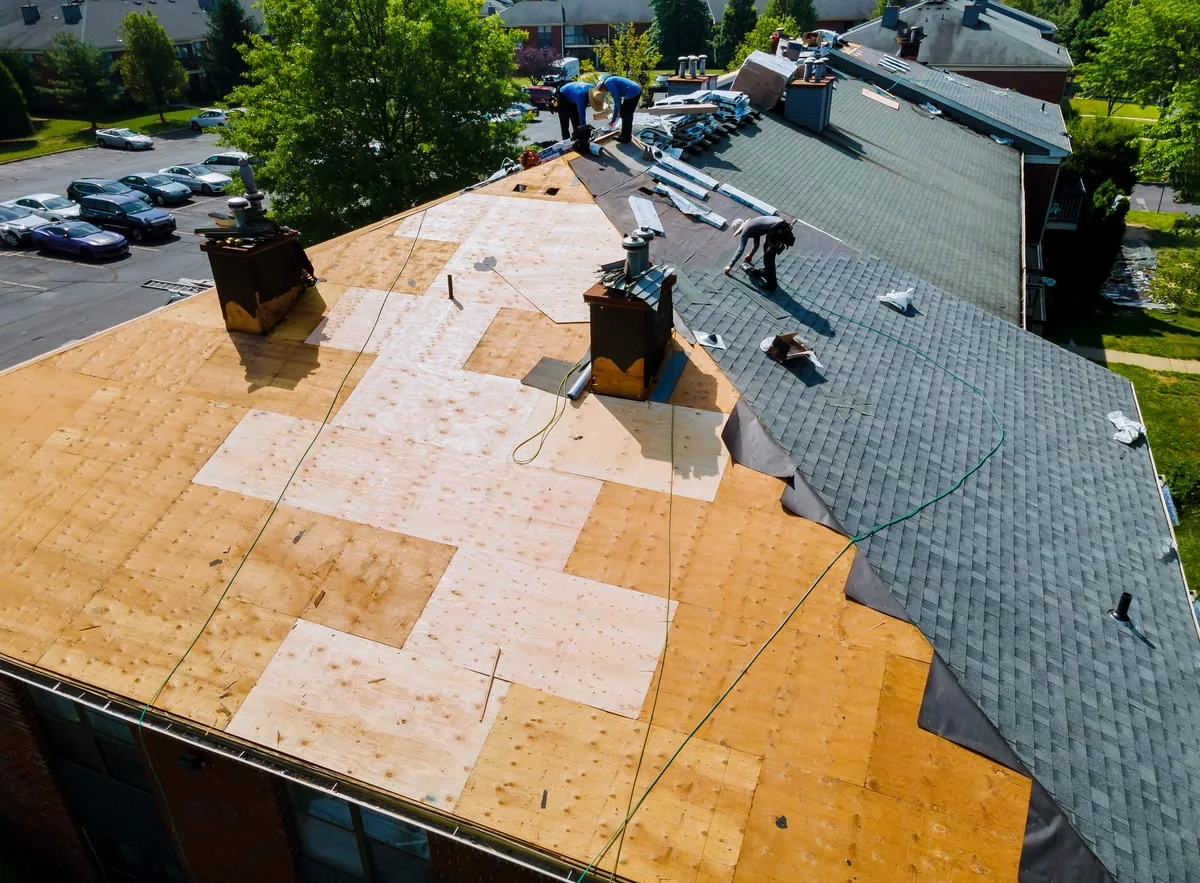
The sequence for a school replacement starts months before the crew arrives. Materials have to be ordered so the rolls and insulation are on site by the first day of summer break. The laydown yard has to sit where buses and delivery trucks do not cross it. The crane pick has to happen while the grounds are empty.
Each roof area becomes a phase with its own tear-off, dry-in and punch list. We never open more roof than the crew can close in a day, and we protect the interior with the usual temporary measures when a section has to stay open overnight. When a district has several buildings, we rank them by remaining service and spread the work across summers, so one budget year does not carry the whole program. A commercial roof replacement on a school near North Reserve Street or in the University District that starts in June and finishes in August leaves the building with a full weather window in reserve for punch-list items.
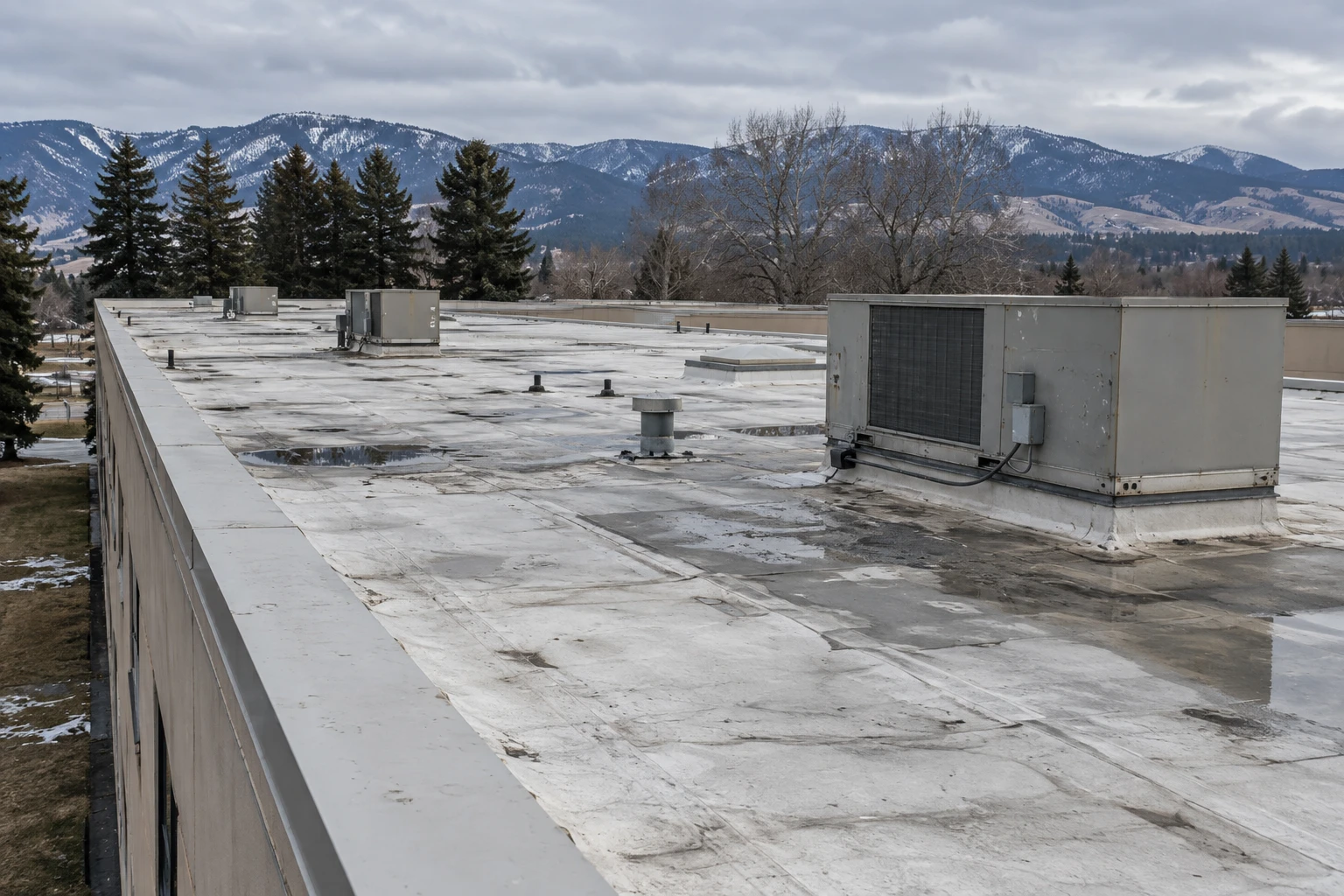
Control access and staging
Children, staff, buses and delivery drivers all use the same few acres, so staging is a safety plan as much as a logistics plan. We map the material hoist away from entrances and away from play areas, mark the fall zones and agree on a single route for trucks. The scope names the hours the crew works and the hours the site is quiet.
After school hours, after-school programs and athletics can still bring people near the building. We plan for that with barricades and a daily closeout, so the site is safe at the end of each shift. Where a school sits near the University of Montana campus or shares grounds with other buildings, we coordinate with the facilities office so lifts and deliveries do not collide with bus loops or parent pickup lanes.
Plan for snow, thaw and hail
Winter does most of the damage on a Missoula school roof. About 45 days a year never rise above freezing, and thaw cycles then work water into every opening. A drift against a gym wall or a mechanical penthouse can far exceed the load on the open field, so we map the likely drift lines on the roof plan and check those areas first.
Hail is the other risk. In 2016 central and south Missoula took quarter-size hail and a downpour that outran the storm drains. Events like that raise the question of whether a given roof was hit, and the answer comes from a walk and a core, not from a news report. We document marks, test the suspect areas and keep the dated photos. If the district files a claim, the record is ready, and our hail damage repair scope starts from the same photographs.
Decide among repair, recover and replace
A district with limited funds usually has three choices for each roof. A targeted repair fixes the failed details and buys a few seasons. A recover overlays the sound membrane when the layers below are dry and fastened. A full replacement is the answer when the insulation has taken on water or the deck is compromised.
We lay the three side by side for each building, with installed cost, expected service and the years each is likely to hold. A roof recover can save tear-off and disposal cost, but it only works when core cuts show dry layers. We also compare membranes, such as TPO and EPDM, against the building's roof traffic and drainage. A school close to the University District and a school out in the valley may choose differently for the same budget.
Close out with a punch list
A school roof is not finished when the last roll is down. It is finished when the punch list is cleared, the drains are flowing, the flashings are sealed and the photographs are in the file. We walk the roof with the facilities manager, test the drains with water and note every item that still needs attention.
The closeout record lists the membrane, the attachment, the insulation and the date. It goes into the district's roof inventory, along with the next review date. That record is what a board reads at budget time, and it lets the next walk start from a known baseline.
Related Roofing Pages
Send the roof plan and the school calendar
Send the roof plan, the school calendar and the access constraints, and we will map the phasing and the staging area before any material is ordered.
Call 555-555-5555 or email [email protected].
Questions About School Roofing
When is the best time to replace a school roof in Missoula?
Summer break gives the longest uninterrupted window, and the dry months of July and August are the most reliable for adhesives and welds. Shoulder-season work is possible for repairs, but a full replacement belongs in summer with material ordered early.
Can a school stay open while a roof section is repaired?
Small repairs can proceed during the year with barricades and a daily closeout. Larger work is better placed in the summer, when the grounds are empty and the crane can pick without risk.
How do you protect classrooms during tear-off?
Each section is dried in before the crew leaves, and interior protection goes in below the work area. We schedule the sequence so no more roof is open than we can close in a day.
What records should a district keep for each roof?
The membrane type, install date, repair history, dated photographs and any warranty papers. We keep the file current after every walk so the board can see which roofs are next.
What should the facilities office send to start?
The roof plan, the school calendar and the access constraints for each building. With those in hand we can map the phasing and the staging area before material is ordered.