
Church Roofing in Missoula, MT
Church Roofing
A church roof is repaired in the order that protects the sanctuary first, because a ceiling stain over the nave is a problem the whole congregation sees. Services, weddings, funerals and holiday gatherings set the calendar, and a crew that arrives on the wrong morning disrupts more than a schedule. In Missoula, MT, snow stays on the ground about 120 days a year, so the dry window for work is short and the congregation's calendar has to fit inside it. We begin every church project with the question of which dates are off limits, and we write the answer at the top of the schedule so no crew member can miss it.
The roof itself often has features that a standard commercial roof lacks: steep sections, a steeple or bell tower, valleys and low-slope additions. Each has its own failure, and the sequence has to reflect them. A congregation that has added a fellowship hall, a classroom wing or a parish office over the years has a roof assembled in layers of time, and each junction between old and new is a risk. We look at those junctions first and draw them on the plan.
Find what fails first
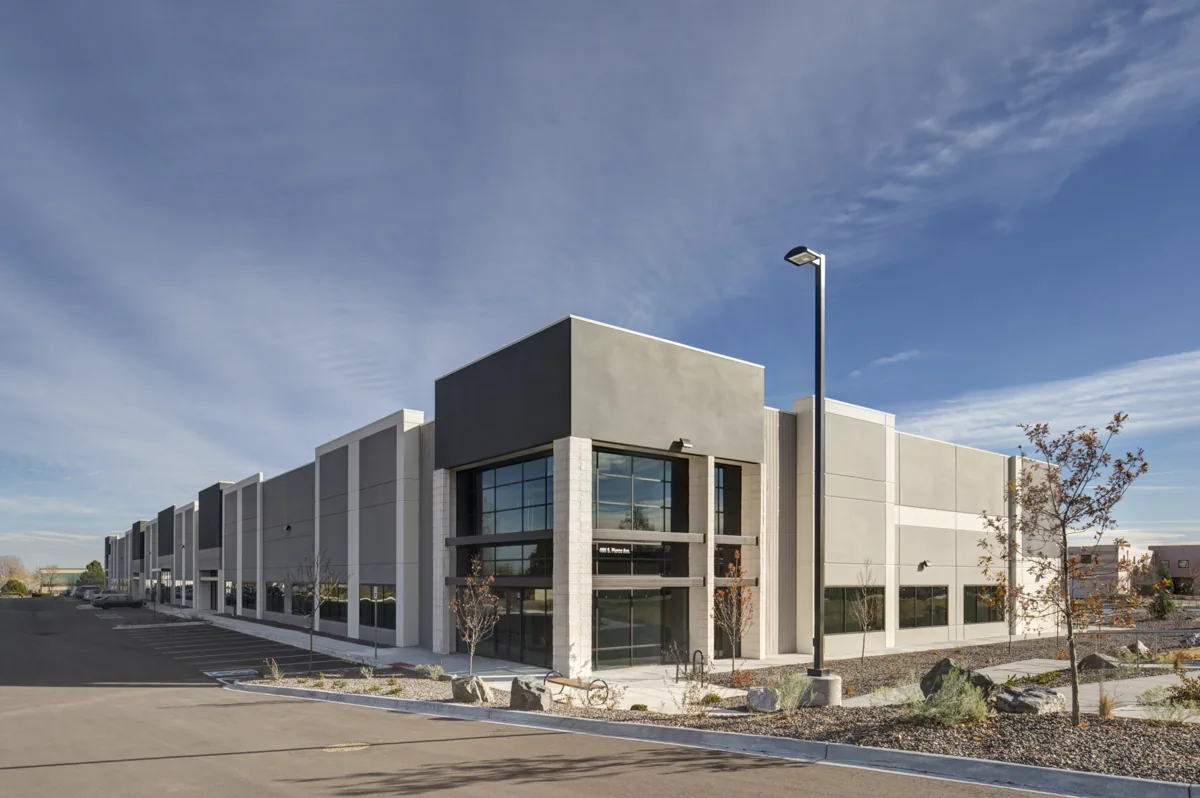
Church roofs fail at their complications. A steeple base, a valley between two roof planes, a flashing at a bell tower and a low-slope addition tied into a steep main roof are all places where water finds a way in. Gutters and downspouts on a high roof fill with debris and ice, and they hold weight that eave details are not always built to carry.
We walk the roof, from the main ridge down, and note each transition. We probe flashings, check valleys, look at the gutters and examine the steeple base from a safe position. Interior signs matter too: stained plaster, peeling paint and damp patches on a wall tell us where water has been. The report ties each interior mark to a roof cause. Church interiors often include plaster, wood and painted surfaces that react slowly to moisture, so a leak can be present for months before a stain shows. We use a moisture meter on walls and ceilings near suspect areas and record the readings. A dry reading is as useful as a wet one, since it narrows the search and keeps the congregation from paying for repairs it does not need.
Schedule around services and events
We ask for the full calendar before the first walk. Sunday services, midweek meetings, weddings, funerals, choir rehearsals and holiday events all matter. Where possible, we schedule noisy work for days with no event and quiet work for evenings or weekdays.
The staging area sits away from the main entrance and the parking used for services. The crane pick happens when the grounds are empty. Where a funeral or wedding cannot move, we stop work and clear the area. Each night the open roof is dried in and the site is left tidy. The pastor or the facilities committee gets a short daily note, so the congregation hears the plan from its own leaders.
Work safely on steep and tall roofs
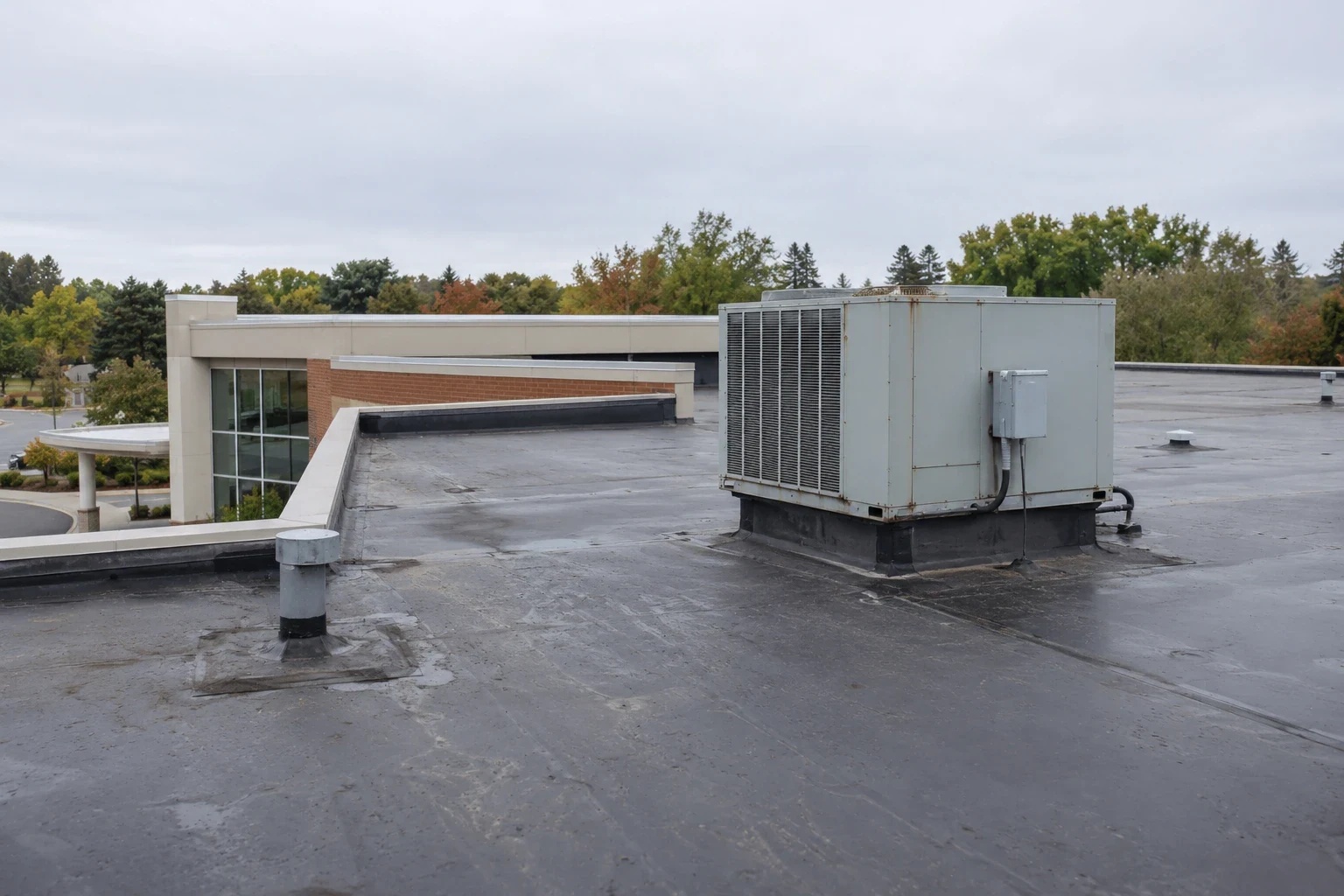
Many church roofs are steeper and taller than commercial low-slope roofs. They need different safety equipment, different staging and more care with materials. Slate, shingle, metal and membrane sections can all appear on the same building. We identify each system on the walk and note its condition.
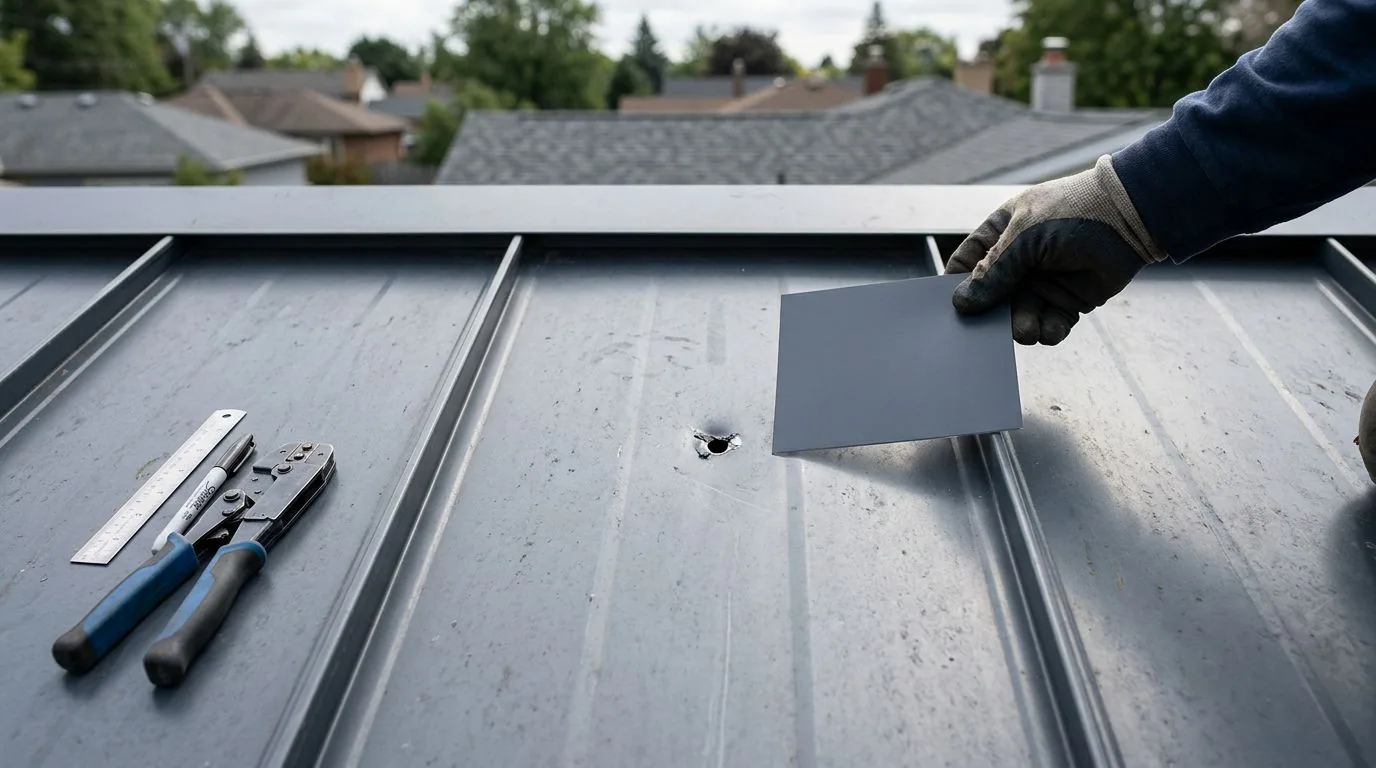
A standing seam metal roof suits a steep plane and sheds snow well, though snow sliding off can endanger people below. Snow guards over entrances and walkways protect them. We check the fasteners on existing guards and add them where the plan shows a risk. Low-slope sections, such as a fellowship hall addition, may take TPO or another single-ply system.
Plan for snow, ice and thaw
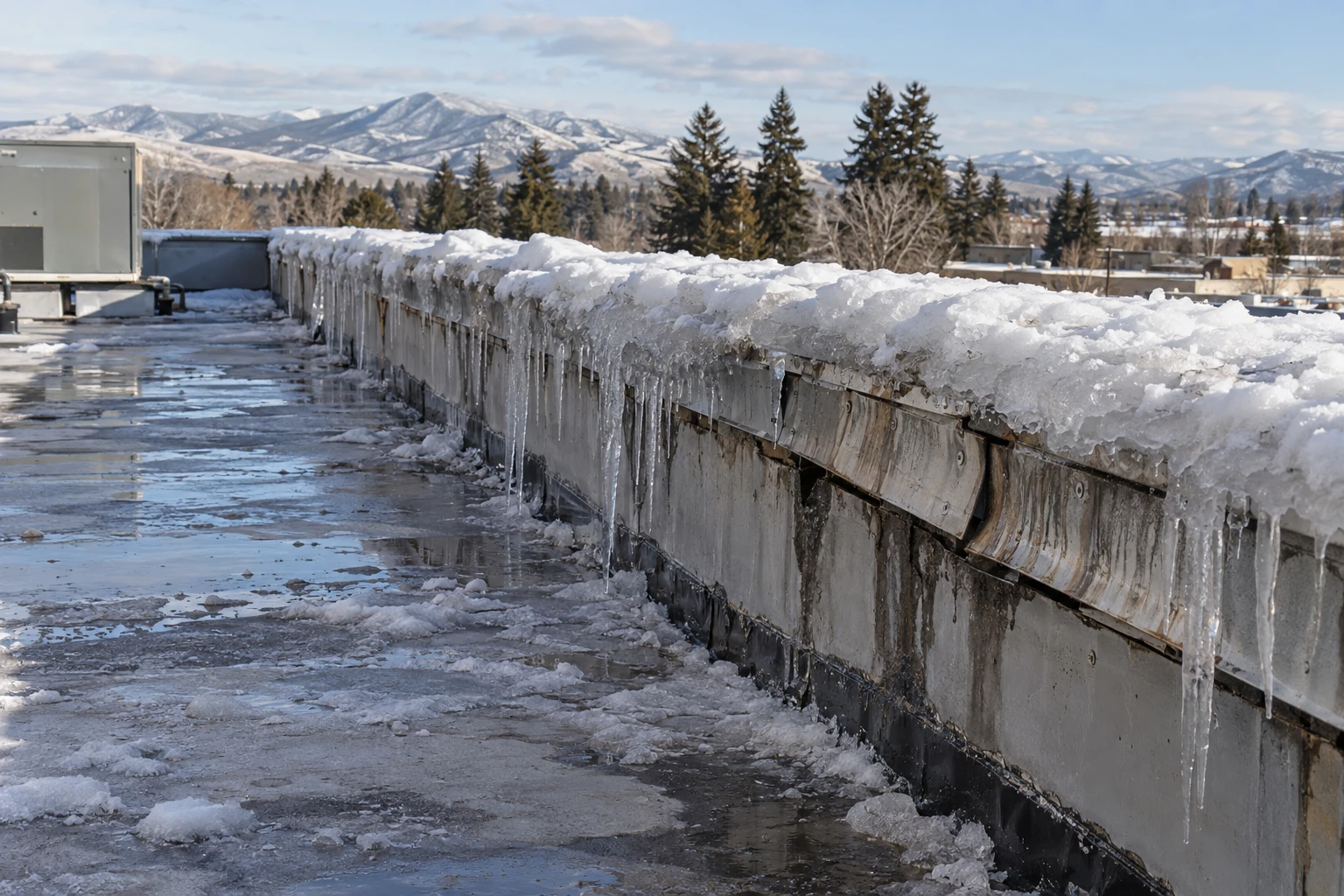
Missoula's 40 psf design snow load meets a winter average of about 39.5 inches. Around 45 days a year never climb past freezing. A church roof with valleys and changes in pitch can build drifts and ice dams in specific places, and meltwater finds the weakest joint.
We map likely drift lines and ice-dam zones. We clear gutters and check the eave details, which are the most common place for ice to push water under shingles or panels. A snow and ice damage repair scheduled in October costs far less than an emergency call in February. The fall walk is the best time to find problems, because the roof is dry and the crew can see every joint. Bell towers and tall roofs also catch wind. With a 102 mph design wind speed for Risk Category II buildings, a high roof edge sees more wind than a low one. We check the ridge cap, the hip fasteners and any loose panel edges, since a lifted piece in a gust can fall onto a walkway below.
Respect older buildings and records
Missoula has more than 60 National Register buildings, so an older church in Downtown Missoula can fall under historic review. The roof system and the approvals on any historic building are confirmed, not assumed. The walk identifies the roof, and the congregation confirms what permissions apply.
For an older sanctuary, materials and details matter. We record the roof as it stands, photograph valleys and flashings and suggest repairs that fit the building. A congregation that keeps a roof file, with dated photographs and repair history, can show a lender, an insurer or a grant committee what the roof is and what it needs. The same record helps a church that shares a campus with a school, as in a school roofing plan.
Decide how to fund the work
Churches often fund roofs from reserves, fundraising or grants, and the timeline follows the money. We give a ranked list: repair now, repair this season, watch. Each item has a cost range. The congregation can then plan a campaign, knowing what the first phase covers and what comes next.
Where the full replacement is large, we suggest phasing across years, starting with the section that leaks into the sanctuary. A church in downtown Missoula and one out in Lolo may phase differently for the same budget. A commercial roof repair on the worst section often buys the time to raise the rest. The report shows what the repair covers and what it leaves, so the committee knows how many seasons it buys. A public building faces the same question with a different funding source, and the record works in both cases.
Related Roofing Pages
Send the calendar and the leak notes
Send the event calendar, the leak notes and any roof plan, and we will map the phasing and the staging area before any material is ordered.
Call 555-555-5555 or email [email protected].
Questions About Church Roofing
Can roof work happen around services and weddings?
Yes. We ask for the calendar first, schedule noisy work for open days and stop work and clear the area when an event cannot move.
How do you protect the sanctuary during repairs?
We dry in each section before leaving, protect the interior below the work and prioritize leaks over the nave. A daily note keeps the facilities committee informed.
What about a steeple or bell tower?
We inspect the base and flashing from a safe position and note the condition of any louvers and trim. Repairs there often need specialty access, which the scope prices.
Are snow guards worth adding?
Over entrances and walkways, yes. Snow sliding off a steep plane can injure people below, so we check existing guards and add them where the plan shows a risk.
What should the congregation send to start?
The roof plan if there is one, the event calendar, past repair records and any notes on leaks. From there we plan the phasing and place the staging area.