
Cold Storage Roofing in Missoula, MT
Cold Storage Roofing
The vapor retarder goes down before the insulation, and the insulation goes down before the membrane, and none of it can sit open overnight. That is the order on a cold storage roof, because warm air that reaches a cold deck condenses and keeps condensing for years. Weather complicates the order in Missoula, MT: snow lies on the ground roughly four months of the year, and about 45 days never climb past freezing. A cold space below and a cold sky above leave a thin window for work, and we sequence the job so the cold side is never exposed.
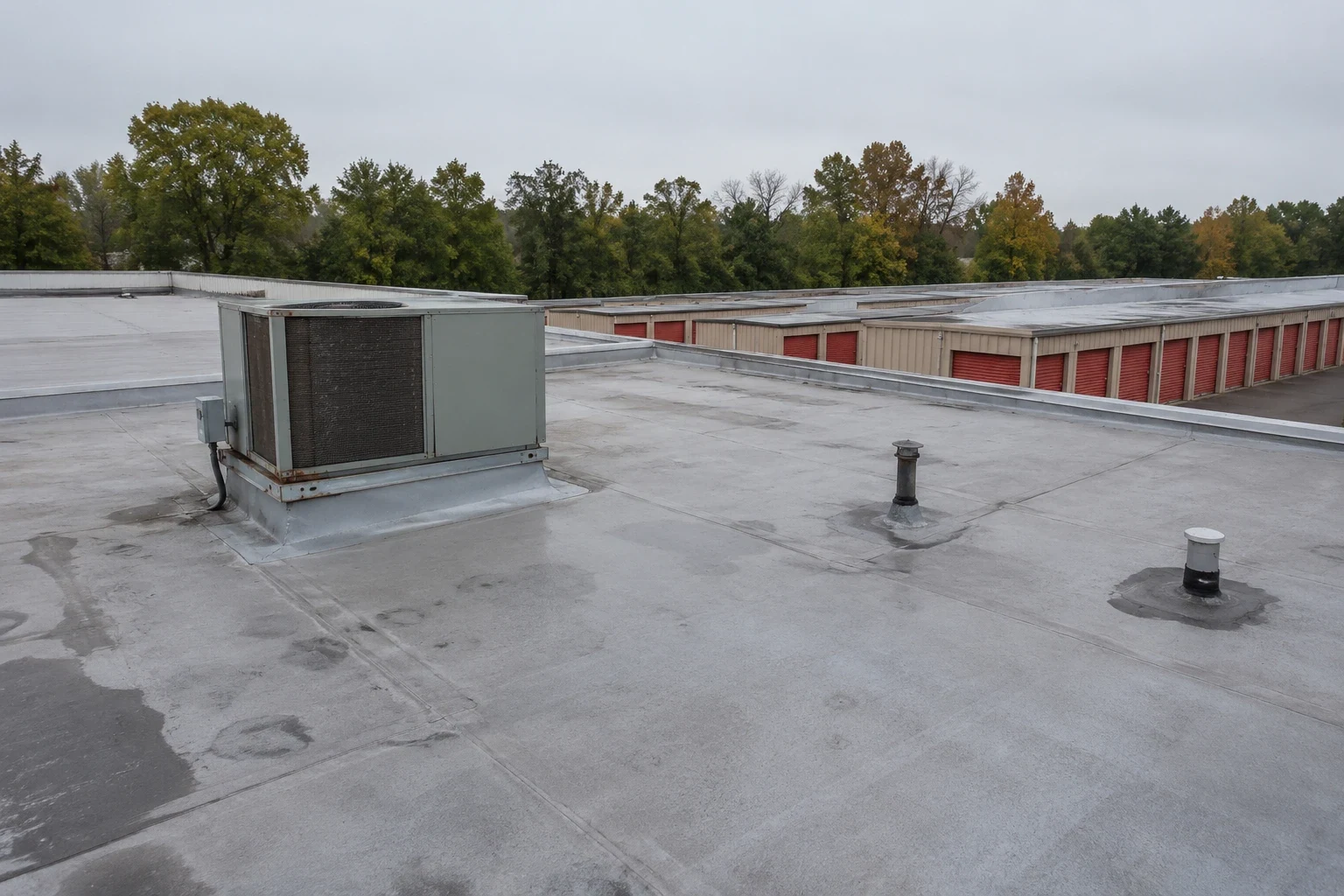
Trace how moisture gets in
A cold storage roof gets wet from two directions. Water from above enters through seams, flashings and punctures. Moist air from below rises through gaps in the vapor retarder and condenses on the cold underside of the roof assembly. The second source is the one owners miss, because the membrane above looks fine.
The gaps are at penetrations, at wall junctions and where the retarder was lapped badly. Over years, the insulation takes on water and loses value, and ice can form in the assembly. Late-summer swings past 30 F and the hard freezes of winter drive the moisture back and forth. We scan with infrared at dusk, confirm with core cuts and note whether the water came from above or below. The repair differs, and so does the bill.
Compare it with an ordinary warehouse roof, where a small amount of moisture is a repair item. In a cold building it is a running cost, since the refrigeration system works harder and the insulation loses value. We price moisture findings with that in mind and show the energy effect in words, not invented numbers.
Build the assembly in order
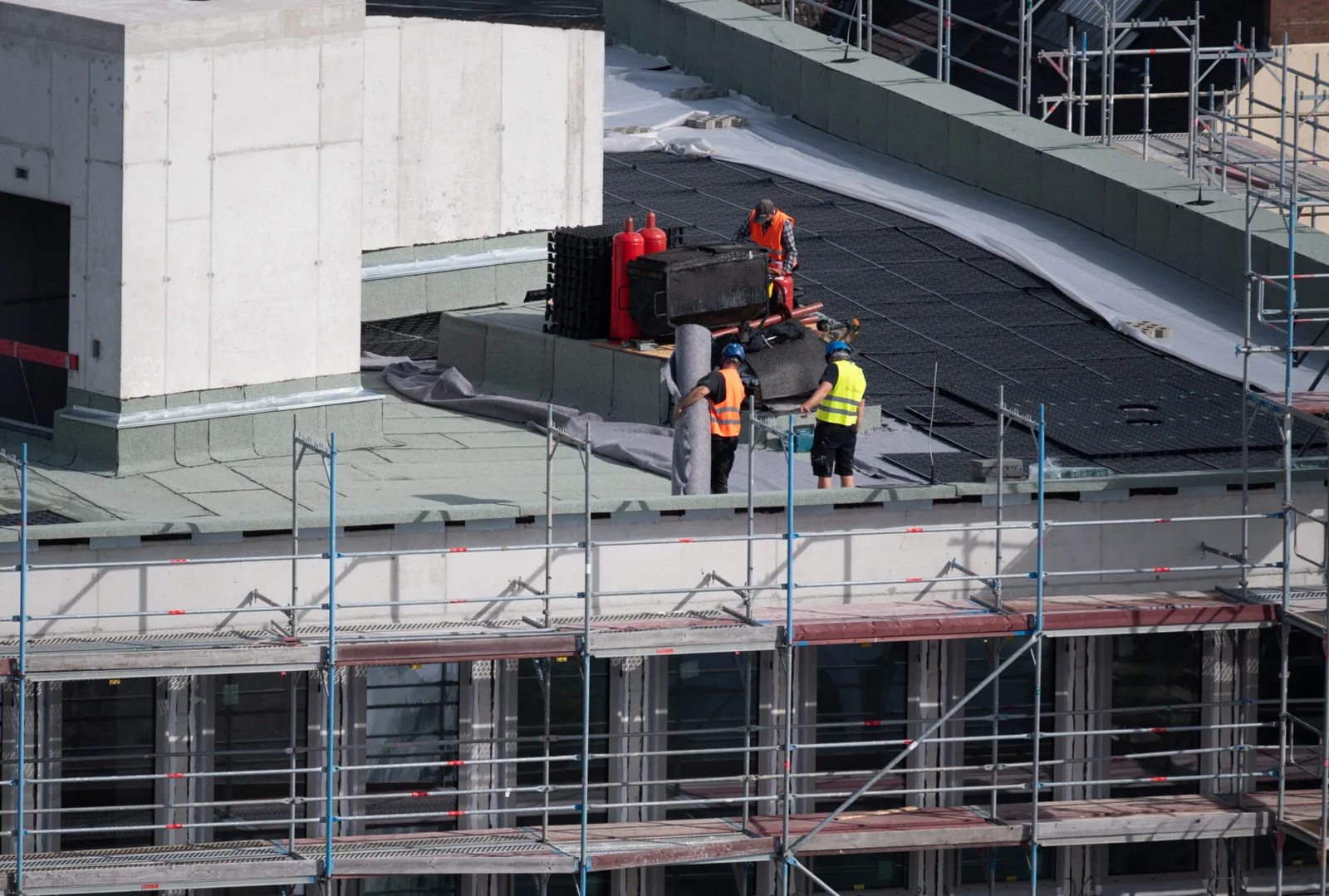
The sequence is fixed. Deck prepared and dry. Vapor retarder laid and sealed at every lap, wall and penetration. Insulation in staggered layers, with joints offset. Cover board where the system calls for it. Membrane last. Flashings are integrated with the retarder at every opening.
Thickness is set by the interior temperature and by the state's energy code, the 2021 IECC with Montana amendments. A freezer takes more insulation than a cooler. We calculate the assembly with the building's engineer where the stakes are high. Each layer is photographed before the next one covers it, and the photos go in the closeout file as proof the retarder was sealed.
Details at the wall are the weak point. The retarder must turn up the wall and seal to it. Penetrations get boots or sleeves sealed to the retarder, not just to the membrane. We draw each detail before the work starts and check it at install. A missed seal at a pipe is a vapor leak for the life of the building.
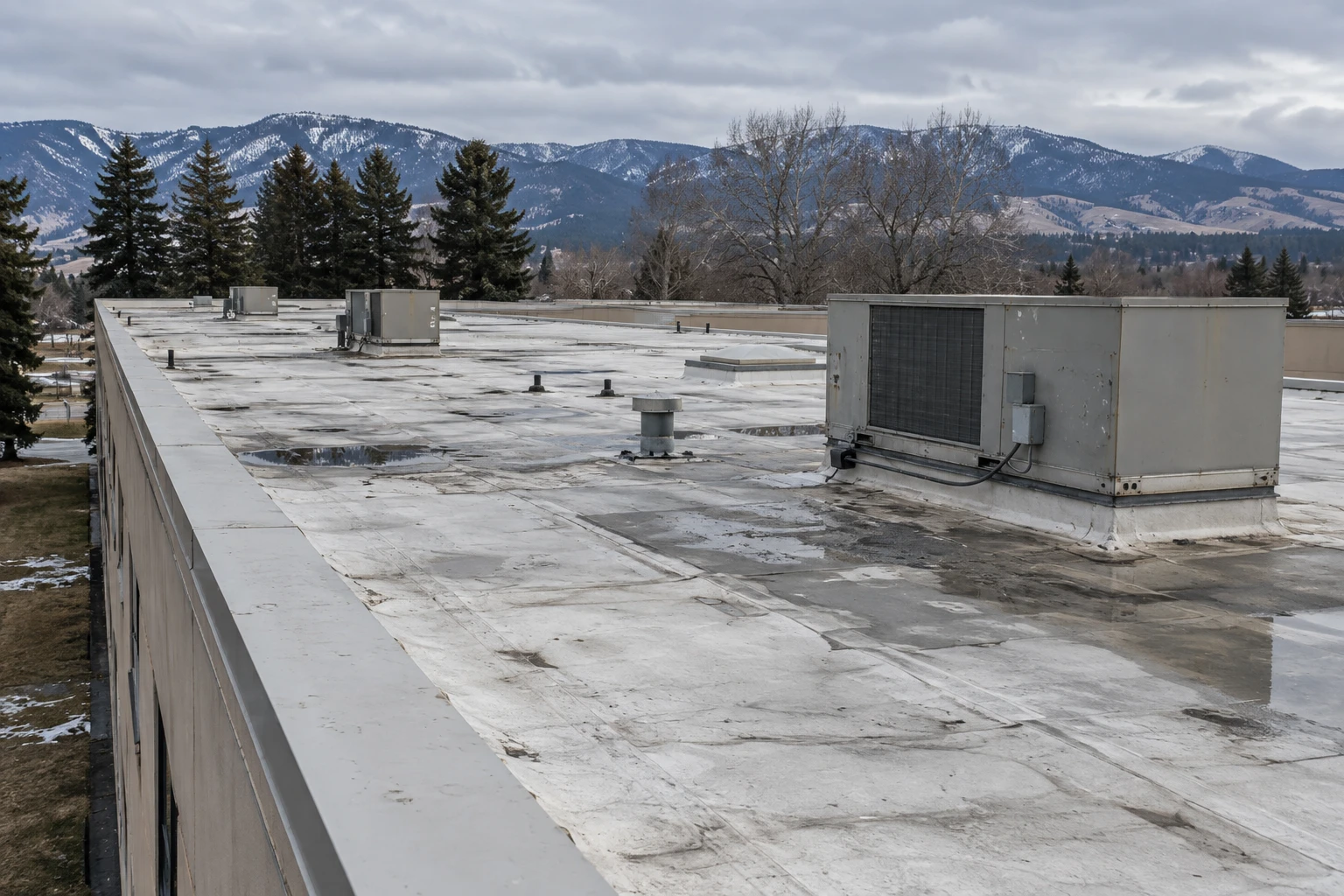
Never leave the cold space open
A cold room with a hole in the roof loses temperature and product. So the roof is worked in small zones that can be dried in the same day, and each zone has a temporary seal ready. Weather checks come first. If a front is coming, the open edge is closed and the crew stops.
Inside, the operator decides which rooms can tolerate work above them. Product is moved or covered. Refrigeration load is watched, since a roof opening raises it. A reroof on an occupied building works the same way, but a cold building has less tolerance. Staging stays clear of dock doors, where trucks load product, and the crane pick is timed for a quiet hour.
Freight is part of the picture. Interstate 90, US 93, US 12, Montana 83 and Montana 200 are the county's major highways, and a cold building depends on trucks arriving on time. A distribution center and a cold building share dock traffic rules, but the cold building cannot hold a roof open for even a short shift.
Handle condensers and refrigerant lines
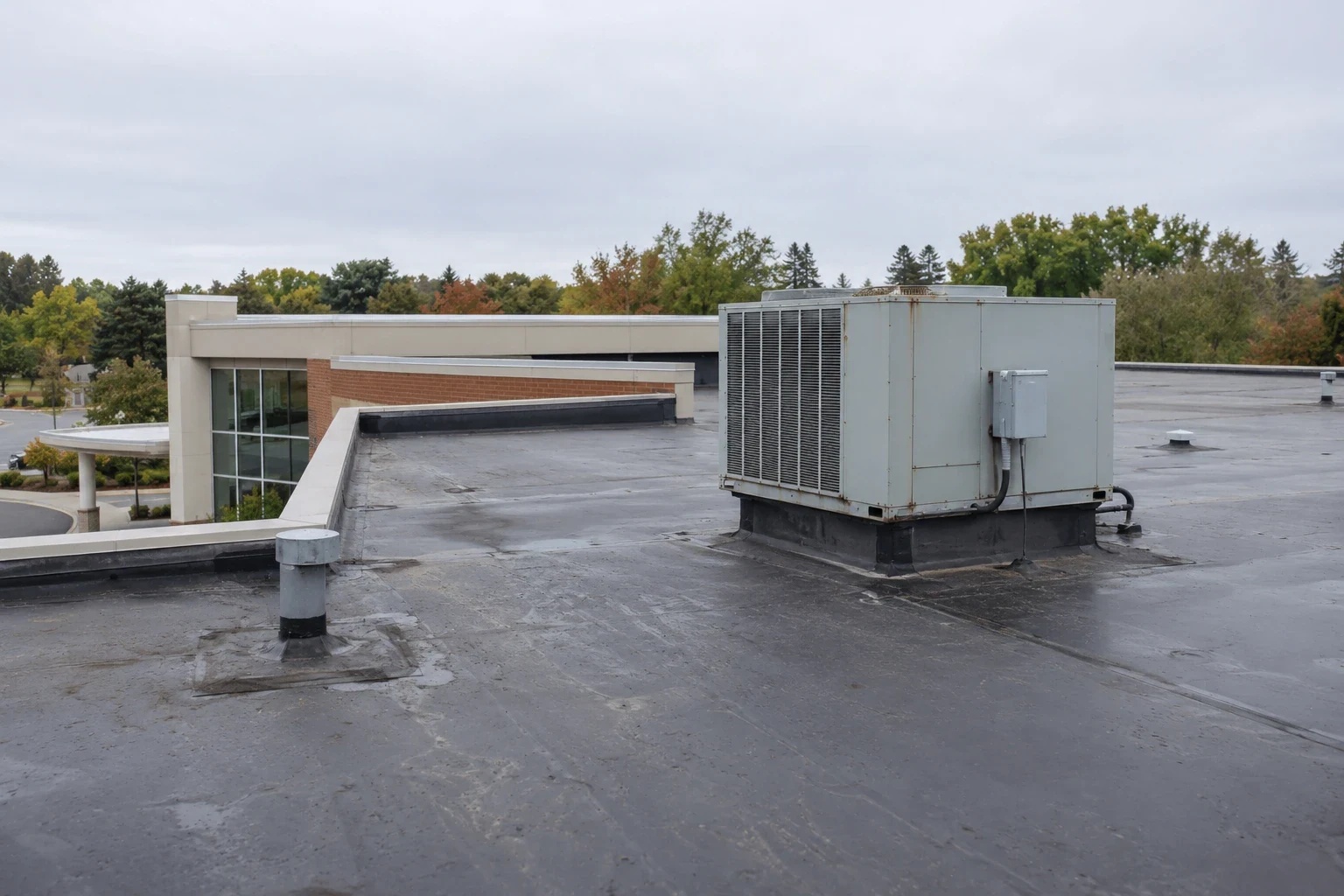
Cold storage roofs carry condensers, pipe racks and refrigerant lines. Each is a curb or a support with a flashing, and each sheds heat and condensate on the membrane. Condensate that drips in one spot softens a sheet and stains it. Pipe supports that sit on bare membrane wear it through.
We count and tag each piece of equipment, check its curb, pad the supports and reroute condensate to a drain or pan. A condenser change-out is planned with the refrigeration contractor so the curb is rebuilt in the same window. The curb and support register keeps the history of each unit.
Heat trace and defrost drains deserve a look. A defrost line that discharges onto the roof sends warm water to a cold surface, and it can freeze and build ice. We trace each one to its end and reroute where needed.
Plan for snow and the thaw
The design ground snow load is 40 psf, with roof loads from ASCE 7-16. A cold roof does not melt snow from below, so snow sits longer than on a heated building. It melts at the edges and drains, then refreezes. Ice at a drain bowl is a recurring problem, and an overflow route matters.
Snow guards go over doors and docks where sliding snow is a hazard. Drain heat trace, where the building has it, is checked before winter. The snow and ice damage checks after a thaw look at seams, drains and edges, and they include a scan for new moisture in the assembly.
Ice in the assembly is its own hazard. Where moisture has entered and frozen, the insulation can heave and lift the membrane. A raised, hard patch on a cold roof, firm under foot in winter and soft in summer, suggests a frozen pocket. We mark it and cut a core to see what is inside.
Choose the membrane for the cold
The membrane sits on a roof that is colder than most. EPDM stays flexible in cold. TPO and PVC work with proper welding conditions. A roof with condensate or refrigerant leaks favors a chemical-resistant sheet. A cold building on industrial ground such as the airport area, the county development park or the redeveloped Bonner mill site follows its own site and access rules. The owner decides by exposure, budget and expected life, and we price the options with their insulation.
Related Roofing Pages
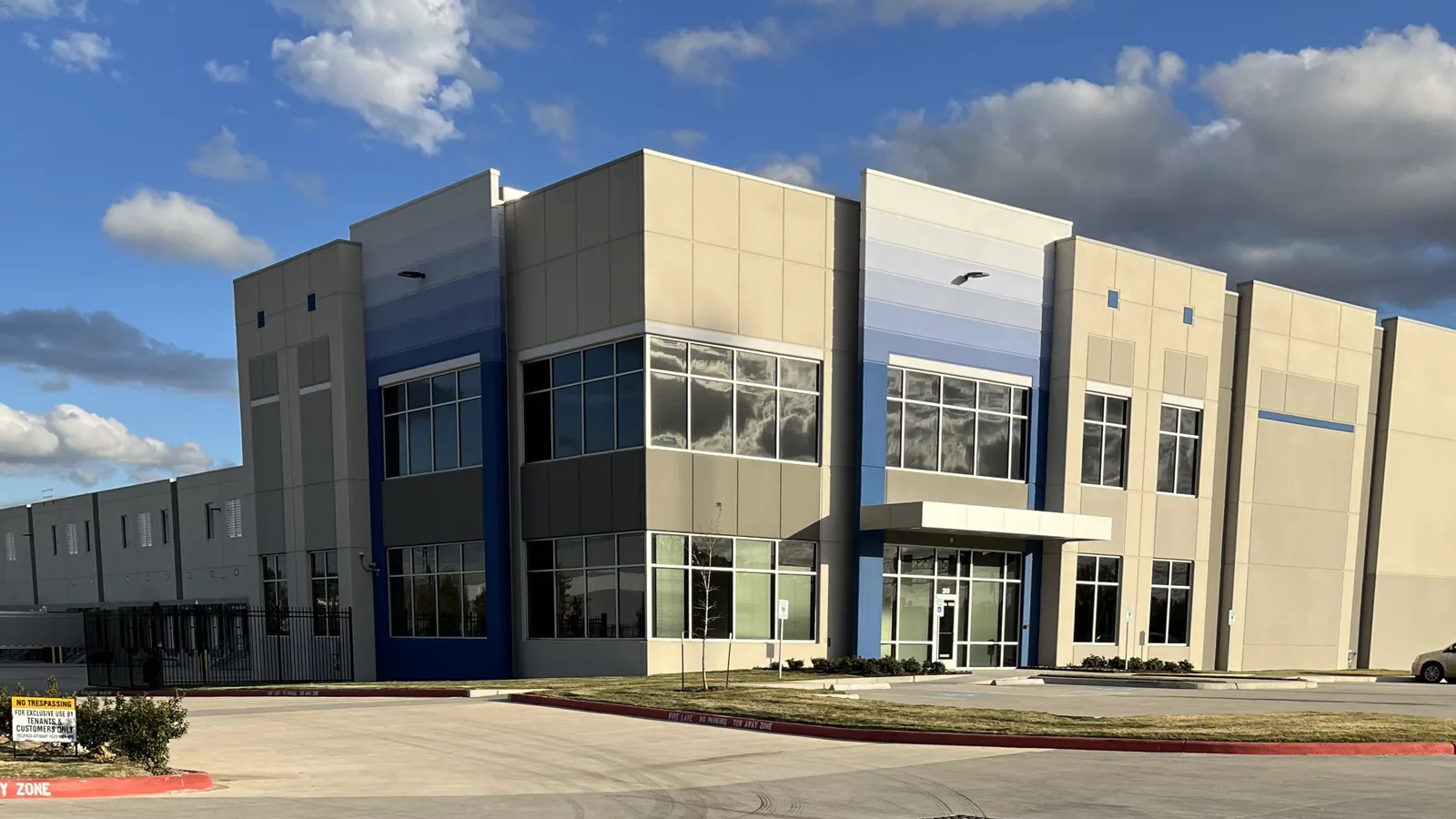
Send the roof plan and the interior temperature zones
Send the roof plan, the interior temperature zones, the dock schedule and the access constraints, so the phasing and the staging area can be mapped before any material is ordered.
Call 555-555-5555 or email [email protected].
Questions About Cold Storage Roofing
How do I know if my cold storage roof is gaining moisture from below?
Look for ice or frost at the ceiling, rust on the deck underside and a roof that tests wet while the membrane looks sound. An infrared scan and core cuts show the pattern. A wet area that does not follow rain points to a vapor leak.
Can the roof be replaced while the freezer runs?
Yes, in sections, with the cold space protected. The crew seals each zone the same day. The operator controls which rooms are worked above, and refrigeration load is monitored.
How thick should the insulation be?
It depends on the interior temperature and the energy code. A freezer needs more than a cooler. Montana's 2021 IECC with Montana amendments sets minimums, and the engineer may require more.
What does condensate do to the roof?
It softens and stains the membrane where it drips, and it can freeze in winter. Rerouting it to a drain or pan prevents the damage, and we note each drip point on the plan.
When is the best time to reroof a cold building?
In the warm, dry window, when welding and adhesives work and the refrigeration load is least affected. Snow and frost shut the work down, so orders and crews are set early.