
Distribution Center Roofing in Missoula, MT
Distribution Center Roofing
A distribution center does not close for a roof, so the order of work follows the shifts. Which bays are quiet at night. Which dock doors carry the morning trucks. Where the crane can stand without cutting off a trailer. If those answers come after the material is ordered, the schedule breaks on day one. Missoula, MT sits on Interstate 90 and US 93, two of the county's major highways, so freight moves through the area all year, and the roof has to be done around it. We map the shift pattern before we price the membrane.
Rail is part of the freight picture too. BNSF took over Montana Rail Link operations on January 1, 2024, and Montana Rail Link was among the largest Missoula employers with 1,056 workers. Freight flows by road and rail, and buildings that serve either keep schedules that a roof job cannot ignore.
Look for the failures that stop freight
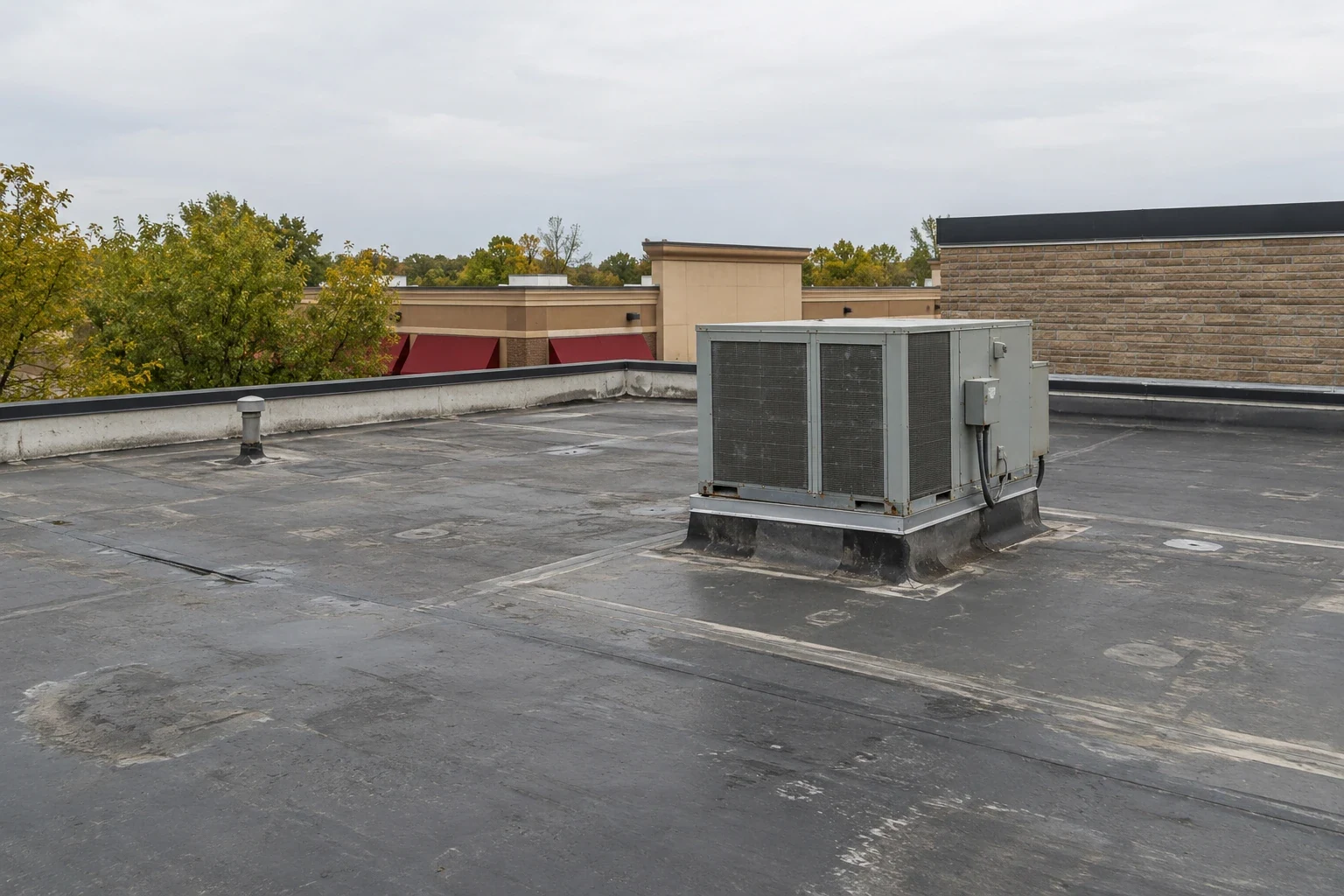
The roof problems that stop a distribution center are leaks over racking and dock doors. Water over racked goods spoils inventory. Water over a dock door floods the apron and creates a slip hazard. A leak over a sprinkler line or a panel is more serious still.
These leaks start at predictable places: drains, seams in low spots, flashings around vents and skylights, and dock canopy connections. The 2016 burst of rain that overwhelmed storm drains in central and south Missoula is the test a roof with only a few drains faces. We walk each drain, probe seams and press flashings, then rank findings by what is directly below. A leak over stored product ranks above a leak over an empty aisle.
Skylights and roof hatches over dock aisles deserve a closer look. Domes crack, curbs rust and the flashing around them opens. A leak through a skylight lands on the floor where forklifts run. We photograph each one and rate the dome, the curb and the flashing separately.
Phase the work around shifts
The roof is divided into zones that follow the bays. Each zone is torn off, dried in and sealed within a working window. Zones over the busiest docks are done when trucks are fewest. Zones over offices and break rooms are done when staff are away or in another part of the building.
Night work is an option when daytime operations cannot tolerate noise or traffic. It carries added cost for lighting, noise limits and safe access, and the bid shows that as its own line. Fastener noise, hot-air welding and equipment engines are the complaints. We agree quiet hours with the operations manager and post them. The schedule shows which doors and bays are affected each day, so dispatch can plan.
Fire protection stays live. Sprinkler lines, alarms and smoke vents are checked before work and tested after. Hot work, where used, follows a permit with a fire watch, and the closeout file holds the permit. The operator's safety lead signs the plan before the first day, so rules for forklifts, pedestrians and the crew line up.
Stage in the truck yard
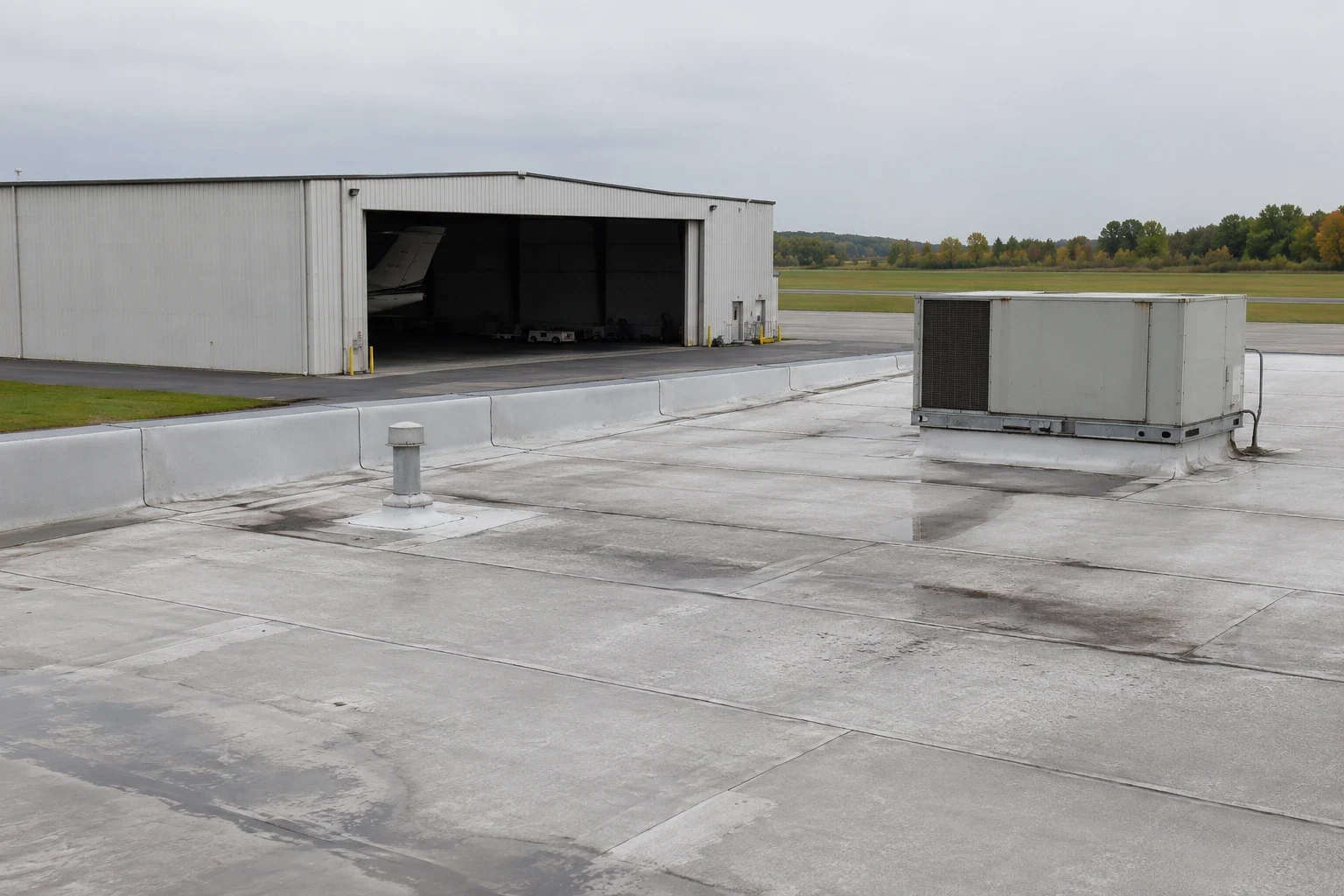
Truck yards leave little room. The laydown area must not block a trailer position, a fire lane or a turning path. We stage rolls and insulation on a few pallets close to the hoist and bring more as the day's coverage requires. A crane pick is scheduled for a quiet hour, with flaggers on the yard.
A distribution building in the Missoula Development Park and Mullan Road area, which includes the county development park near the airport, is staged to its own lot layout. The airport area has its own access and crane rules. Debris is hauled at set times. A site map in the closeout file shows where everything was and when.
Respect the wind on tall walls
High walls and large roofs catch wind. Wind design at 102 mph for Risk Category II loads the perimeter and corner zones hardest. Membrane attachment is denser there. Edge metal and coping are fastened to the framing, not just the substrate.
Wind also decides when material moves. Lifts stop above a threshold wind speed, since rolls and panels act like sails. A half-open roof in a gust is a bigger problem than the original leak, so each section is sealed before the crew leaves. The wind damage checks after a storm start at the edges and corners.
Rooftop equipment on a distribution building is often limited to exhaust fans and a few units, which keeps the field open and makes the install fast. Each unit still needs a curb check, and fans near the roof edge sit in the high-uplift zone. We tie them down to the wind rating and photograph the result for the warranty file.
Count the snow load
Roof loads start from a 40 psf ground snow load, and ASCE 7-16 turns that into design loads for the roof. A large flat roof with rooftop units and parapets collects drifts. The Bonner mill roof that failed under snow in 2011 is a local reminder that large roofs can fail under load.
We check deck capacity before adding insulation or a recover. Drain sumps stay open. Snow guards go above dock doors where sliding snow would block a lane. After the thaw we return to look for ponded water and seam damage.
Thaw timing matters for operations too. Meltwater that runs off a roof onto a truck apron can freeze overnight and create a hazard at the docks. Downspouts and scupper outlets are directed away from drive lanes, and the plan shows where the water lands.
Decide the system and the schedule together
The choice of system depends on the schedule it permits. A fast-installing TPO roof shortens exposure. A slower multi-ply system lengthens it. A silicone coating on a sound roof avoids tear-off and keeps disruption low. Against a warehouse roof, a distribution center puts more weight on speed and on the cost of an interruption, and that cost belongs in the comparison. The state energy code sets the insulation level for a replacement. We price each option with its schedule.
Compare it with a cold storage building, where interior temperature adds a vapor question. A dry-goods center avoids that, but any conditioned zone inside it brings the same issue on a smaller scale. We ask which areas are conditioned before we write the specification, since moisture control changes the assembly.
Related Roofing Pages
Send the roof plan and the shift schedule
Send the roof plan, the shift schedule, the dock plan and the access constraints, so the phasing and the staging area can be mapped before any material is ordered.
Call 555-555-5555 or email [email protected].
Questions About Distribution Center Roofing
Can roofing be done while the center is operating?
Yes, in sections around the shifts. Each zone is sealed before the crew leaves. The operations manager marks quiet hours and protected docks, and the schedule follows them.
What does night work add to the cost?
Lighting, noise controls, safe access and sometimes shift premiums. The bid shows these as lines. Night work can pay for itself where a daytime interruption would cost more than the premium.
What happens if a storm arrives while a section is open?
We seal each section before leaving and keep temporary protection staged. A forecast check precedes every start. If a cell is coming, the crew closes the open edge and stops work.
Do we need to move racking?
Usually not. Racking below a tear-off zone may be covered for protection. Where the structure or sprinklers are affected, we coordinate with the operator. The plan lists any item that has to move.
How do we handle the dock canopy roofs?
They are worked when trucks are few, and their drains and edges are checked because water from a canopy lands where people and forklifts move. Repairs are sequenced to keep a dock open.