Roofing for Multi-Location Retail and Restaurant Brands in Missoula, MT
Multi-Location Retail and Restaurant Brands
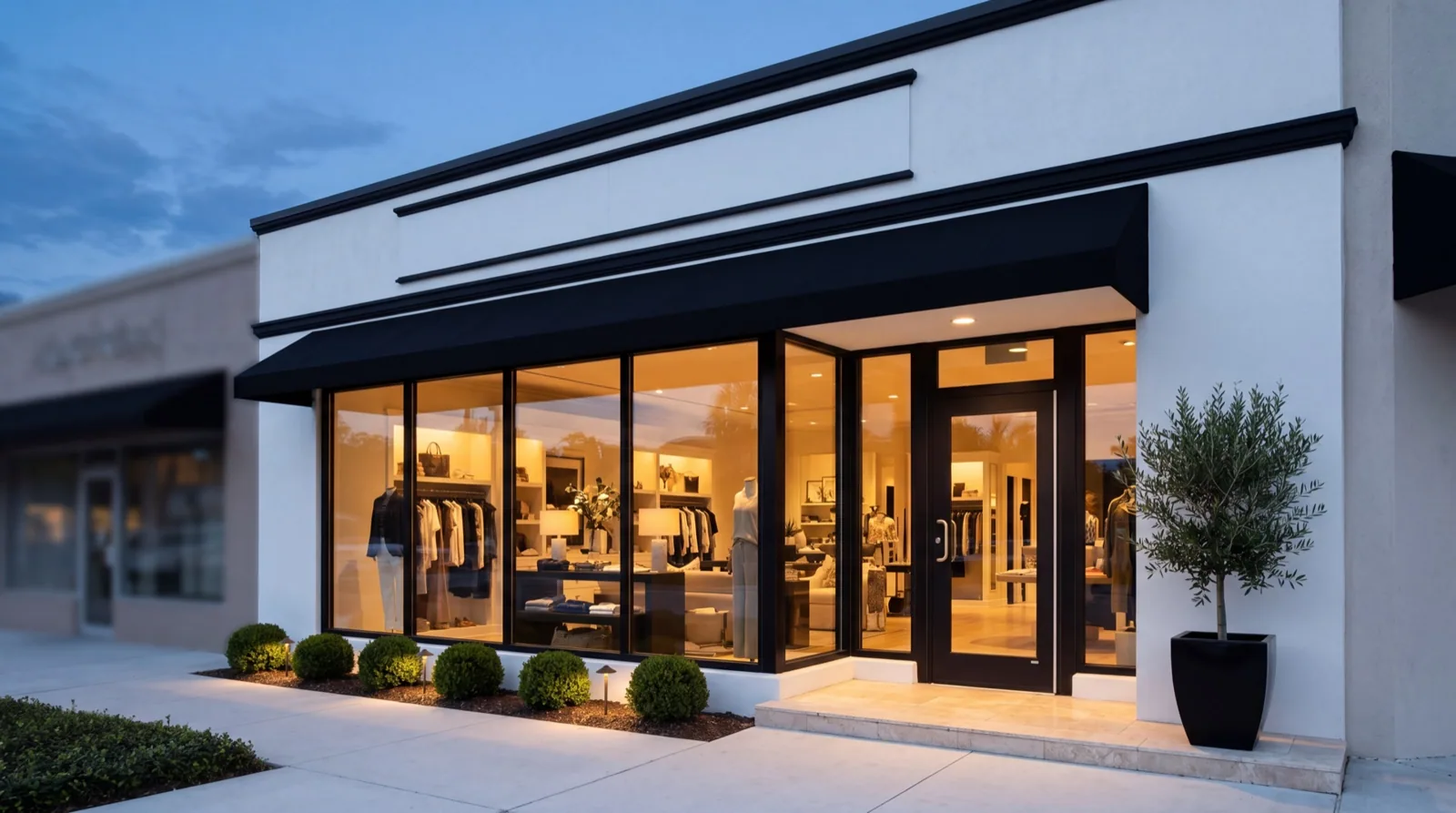
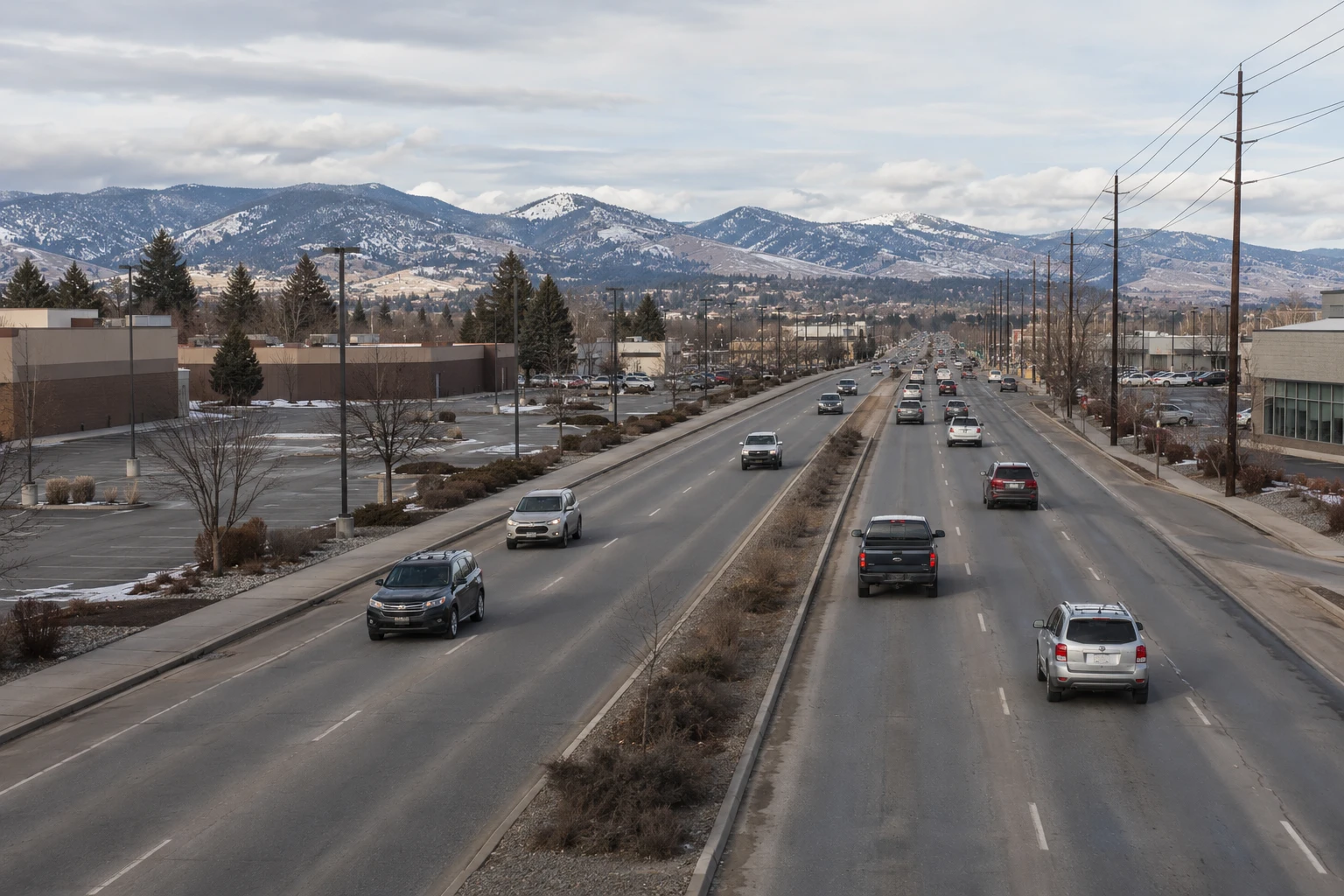
On a store roof in Missoula, MT, the question that comes first is where the crane pick goes without blocking the customers who are already in the lot. More than 30,000 vehicles a day use North Reserve Street, and the stores along it share entrances, loading lanes and parking with neighbors. If the staging area is set in the wrong corner, a roof project closes a drive lane in the week before a holiday. Phases, hoist position and dry-in sequence are mapped before material is ordered, and the plan reaches the store manager and the landlord on the same day.
A chain facilities lead can then treat a Missoula store like every other store on the list.
Know where the stores sit
Reserve Street holds a cluster of big-box retail and hotels, with Costco, Lowe's and Walmart as the large stores. US 93 meets North Reserve Street near the old Mullan Road. About 55% of Missoula employment is in service and retail.
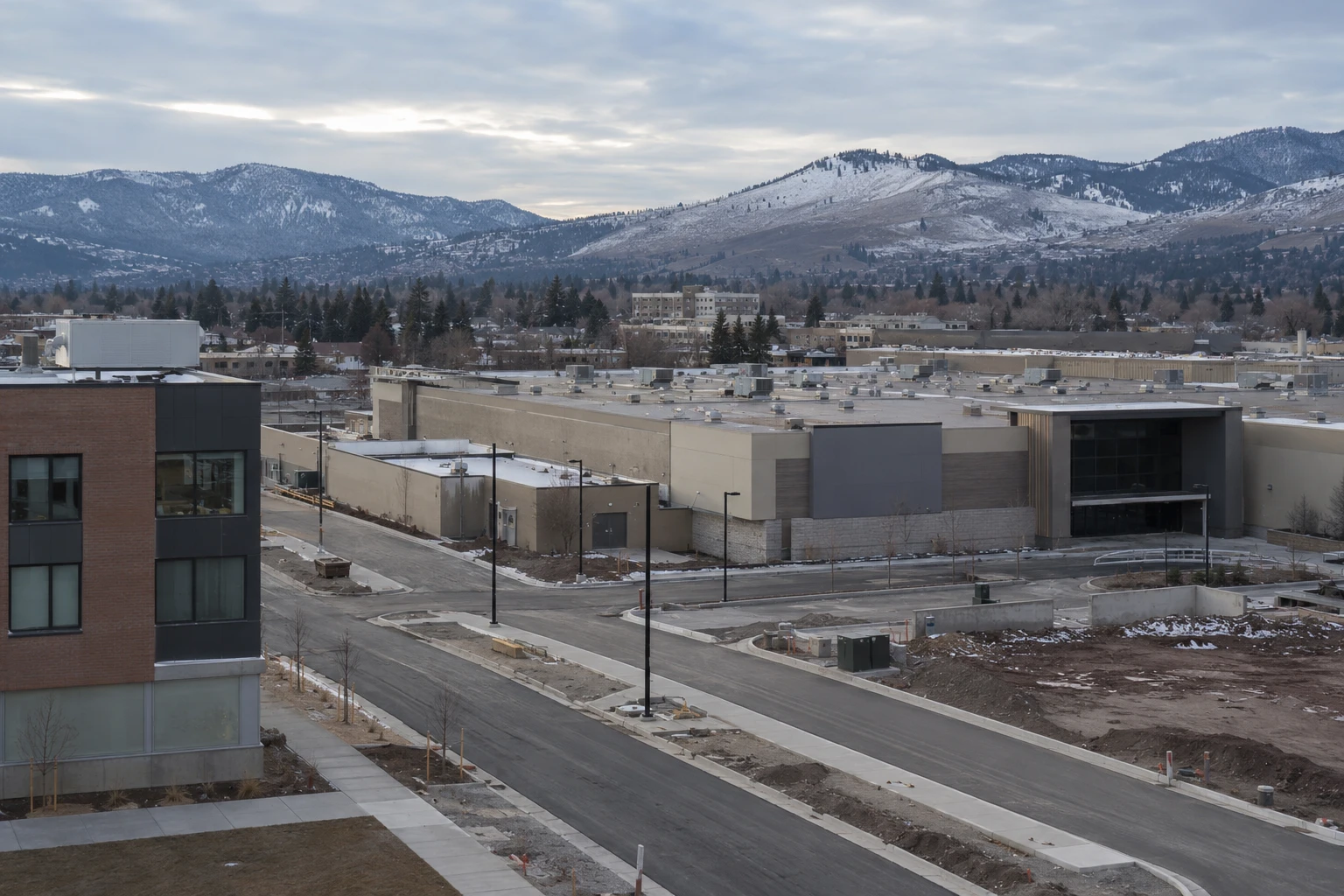
South of the corridor, Southgate Mall Associates announced a renovation and expansion in 2016 that included an AMC dine-in theater and a Lucky's Market in part of the former Sears building. The Brooks Street corridor vision calls for greater density, more housing and a transit center. Stores in the Brooks Street and Southgate Midtown area may see construction around them.
Stores in the North Reserve Street corridor face a different problem: shared drains and shared edges with their neighbors.
Listed buildings along and off Reserve Street include a two-story retail and office building of about 7,012 square feet and a showroom and warehouse of about 28,512 square feet with 23-foot ceilings and grade-level loading. A building that small and a deep box that size need different plans, and the walk sets the drain and unit counts for each.
Find what fails first on a store roof
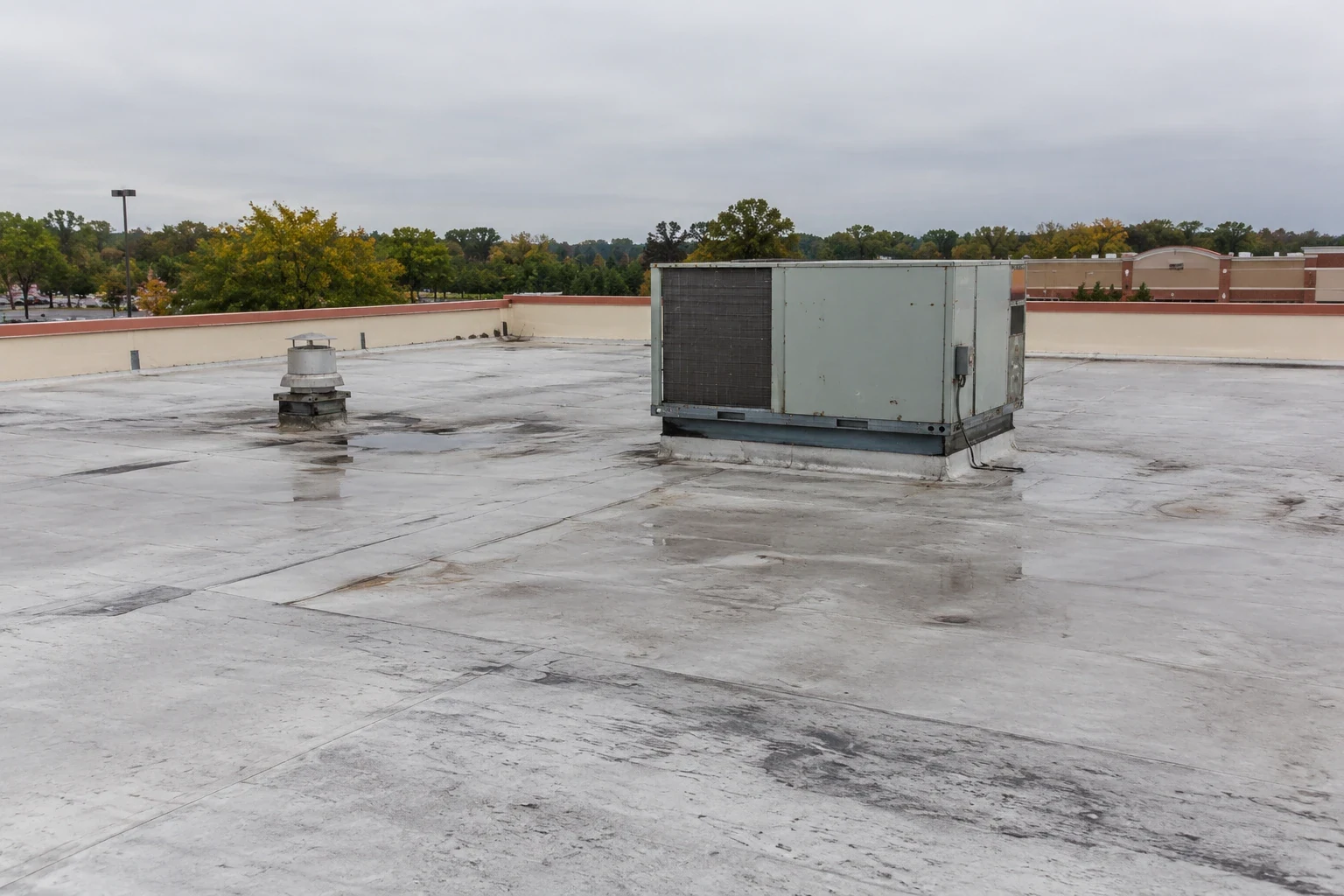
A store roof fails at its details before its field. Curb seals on rooftop units dry out. Drain sumps pack with grit and leaves, then freeze. Flashing pulls from the parapet in the thaw cycle. Walk routes wear through where vendors cross, and old patches stop holding.
Restaurants add one more cause. Kitchen exhaust leaves grease on the membrane around each fan. Grease softens some roofing materials and traps dirt, and it can run to a drain and plug it. We check the area around every exhaust fan for staining and soft spots, add a grease-resistant pad where the wear shows and set a cleaning schedule with the kitchen.
Grocery roofs add refrigeration lines. Condenser supports shift with temperature and tear the membrane under them. We walk each run and check every pad, as on any grocery store roof.

Plan around snow, drifts and thaw
The design ground load is 40 psf, set against about 39.5 inches of snow in an average winter. A wide retail roof builds drifts against taller parapets, signs and mechanical screens. Weight at those spots can run past the open-field figure, so drift lines go on the plan.
The thaw comes next. Roughly 45 days a year stay under freezing all day, and meltwater off a big roof can refreeze in a blocked sump, so sumps are cleared in fall and rechecked after the first thaw. Snow sliding over an entry or a drive-thru lane is a safety problem; slopes that can shed onto a customer path are noted, with snow guards recommended.
Hail is the third risk: in 2016 hail and a 20-minute downpour overwhelmed storm drains in central and south Missoula. After any storm like it, the roof is walked and each bruise photographed.
Separate shared roofs from stores you control
An inline store in a center shares its roof with neighbors. The landlord owns the structure, and the tenant often pays a share through common area charges. When one tenant has a leak, the cause may sit in a neighbor's space or on a roof the landlord controls.
Photos settle it. We document the leak with moisture readings and photographs from above and below. The sheet shows where the water entered and whose area it crossed, which gives a chain's real estate team something to bring to a charge dispute. The roof side of that dispute is the same on any shopping center roof.
Free-standing stores are simpler. A big box roof belongs to the owner, and a restaurant pad may be ground-leased. We read the lease clause and note who pays for what.
Sequence work around trading hours
Work that touches the sales floor goes at night or before opening. Loud work over a dining room goes in the slow part of the day. Debris chutes stay away from entries and drive-thru lanes, and the crane pick is timed to the gap between deliveries. For a restaurant, we agree on exhaust shutdowns with the kitchen so fans never stop during service.
Holiday weeks are off the table, and so are remodel dates. We ask for the calendar and place the work in the stretch between the thaw and the first hard freeze, when adhesives cure and the crew can dry in a section the same day.
At the end of each visit we clean the roof and the lot. A store manager gets a short note with what was done and what comes next.
Snow season has its own rhythm. Icy surfaces and cold that stops adhesives from curing halt roof work; drain cleaning and flashing prep fill the gap, so a cold week still moves the job. Emergency calls in winter usually start at a frozen drain or an ice dam, and we set a temporary dry-in before the permanent repair is scheduled.
Keep one report format across stores
Under a multi-site roof program, every store gets the same inspection method and the same report. A regional lead can compare a Missoula store with one in another state. Stores in buildings run by a property management company can share a copy with the landlord, and a hotel on a neighboring pad has its own questions, which hospitality groups face with guests in the rooms below. A short checklist travels with every store: roof access contact, hatch location, last walk date and the next scheduled visit. A district manager can read it in the time it takes to open the file.
Related Roofing Pages

Send the store list and the blackout dates
Send the store addresses, the prototype roof plan if you have one and the dates your stores cannot be disturbed, and we will map the phasing and the staging area for each location before any material is ordered.
Call 555-555-5555 or email [email protected].
Questions About Multi-Location Retail and Restaurant Brands
Can one contract cover several stores?
Yes. A single scope can list each store as a line with its own schedule, photos and price. Each store keeps its own file, and pricing stays steady without forcing the same date on every location.
How fast can a leak at a store be stopped?
Calls to the emergency line are answered around the clock. Often a crew sets a temporary dry-in that day, covers stock and fixtures and photographs where the water came in. The permanent repair follows once the cause is clear.
Does a roof leak affect a food permit?
It can, since water over food prep or storage raises a health concern. We record the repair and the dry-in date in a note you can show an inspector.
What causes leaks around rooftop units?
Curb flashing that opened from temperature swings and vibration, or a unit replaced without resealing its base. Both are cheap to fix early and costly once water reaches a ceiling.
Should a chain recoat or replace an aging store roof?
A moisture scan and core cuts answer it. A dry base can take a coating, which saves cost and downtime. A saturated base needs replacement. We price both.