
Roof Asset Management in Missoula, MT
Roof Asset Management
A portfolio of roofs fails in a ranked order, and the owner who knows that order spends in the right sequence. In Missoula, MT the ranking is set by snow, because the ground carries about 120 days of snow cover a year and the city averages 39.5 inches a winter. A roof that has already lost a drain, a flashing or a seam is the one that thaw cycles will open first. We build a register of every roof, rank it by what is most likely to fail next, and attach the dated photographs that justify the rank. The owner then sees which roof needs money this year and which can wait.

Build the Register Before Ranking Anything
The register is a single table with one row per roof. Each row records the membrane type, the approximate age, the area, the drains and scuppers, the rooftop equipment and the date of the last walk. Without those fields a ranking is a guess, and a guess is hard to defend to a lender or a board.
We fill the register from a walk, not from old drawings. Drawings show what was designed, and a roof in a snow climate is often patched, recovered or extended after the drawings were made. The register therefore starts with what we find, and it carries the photographs that prove it.
Each row also records access: the hatch or ladder location, the key holder, the hours the building can be entered and the staging area a crane pick would use. Those entries look administrative, but they set how fast a repair can start when a leak call comes in on a January afternoon, and they keep the first visit from ending at a locked door.
Rank Roofs by the Failure That Comes First
Failure-first ranking asks one question per roof: what opens first when the next thaw cycle arrives? On a roof with a clogged drain sump, the answer is ponding at the low spot. On a roof with a lifted seam, the answer is the seam. On a roof with an overloaded rooftop frame, the answer is the load path under it. Each answer carries a different cost and a different deadline.
We score the answer on two scales, likelihood and consequence. A leak over an empty storage bay scores lower than the same leak over a lecture hall or a hotel lobby. The product of the two scales orders the portfolio, and the order becomes the spending sequence.
Some roofs rank high for a reason that has nothing to do with age. A young roof with a drain sump placed at the wrong end can pond meltwater against a parapet every spring, while an older roof with good slope sheds water cleanly. The ranking follows the failure, not the calendar, and the photographs show why a given roof sits where it does.
Track Snow Load and Thaw Cycles Through the Year
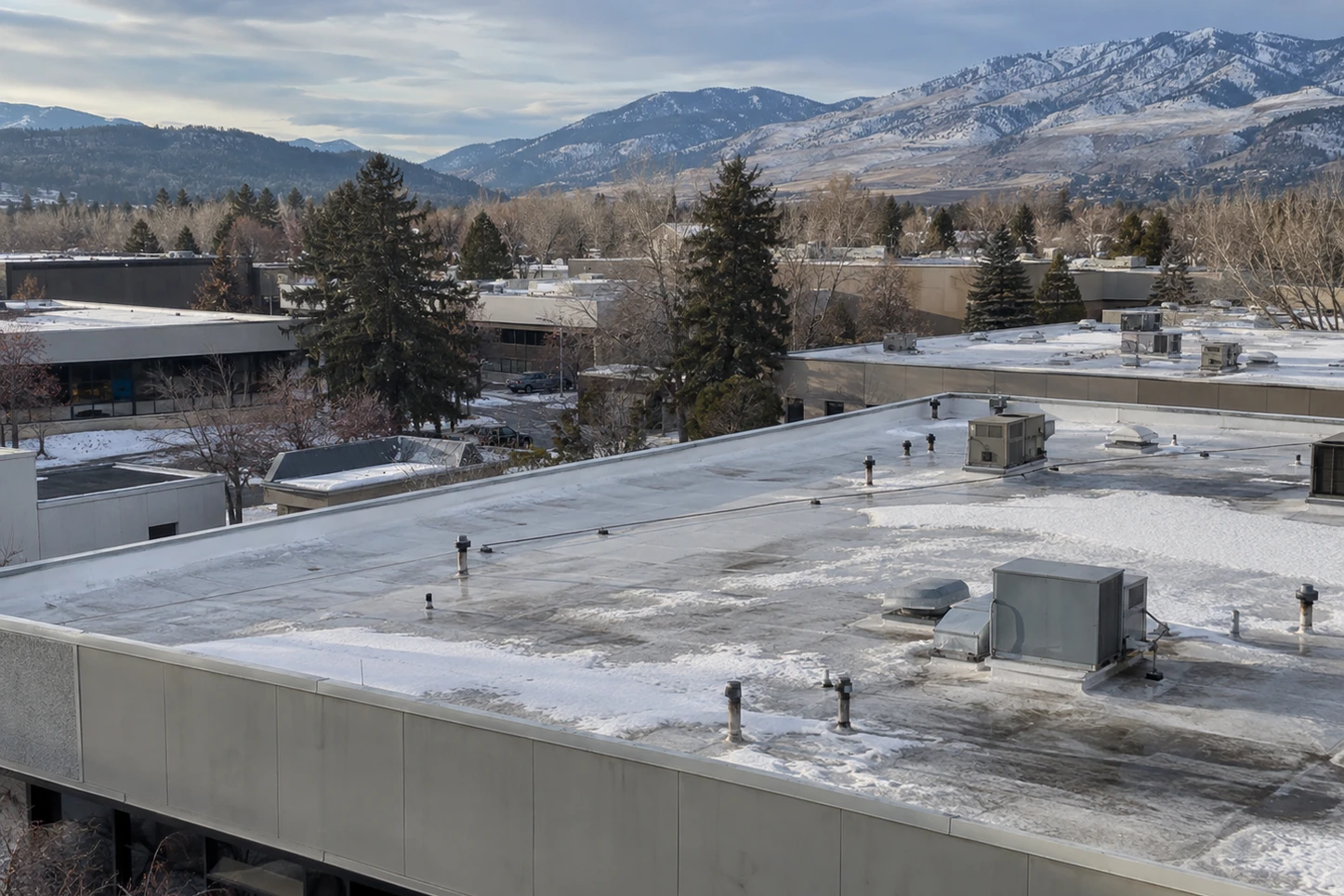
Design values here are a 40 psf ground snow load, a 102 mph basic wind speed and a 36 inch frost depth, with roof snow loads figured from the ground value. A register that notes deck type, framing and prior drift areas tells the owner which roofs are working near their limit. The 2011 collapse of much of the former Bonner mill roof under snow is the lesson for any owner: track load paths and not only membranes.
Thaw cycles are the other clock. Expect around 45 all-day freezes a year and summer temperature swings beyond 30 F. Each visit therefore adds a dated photograph of the same drains and seams, so the owner can see change over time.
Hail belongs in the register too. After the 2016 quarter-size hail and 20-minute downpour that overwhelmed storm drains in central and south Missoula, a register would carry a line for every roof walked, noting any bruising or displaced granules and whether the drains kept up. That line starts an insurance record if damage is found.
Match the Tracking to the Building Type
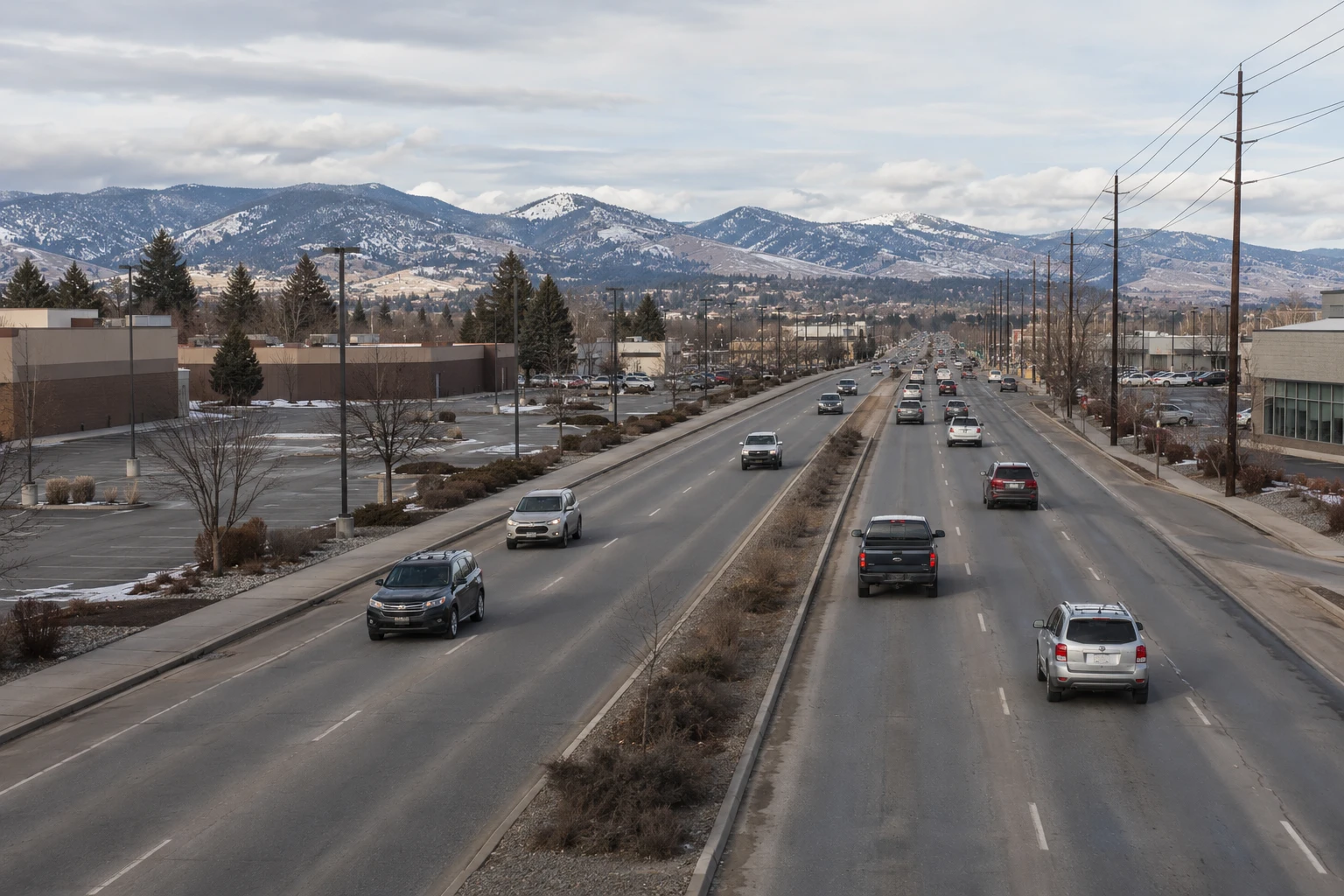
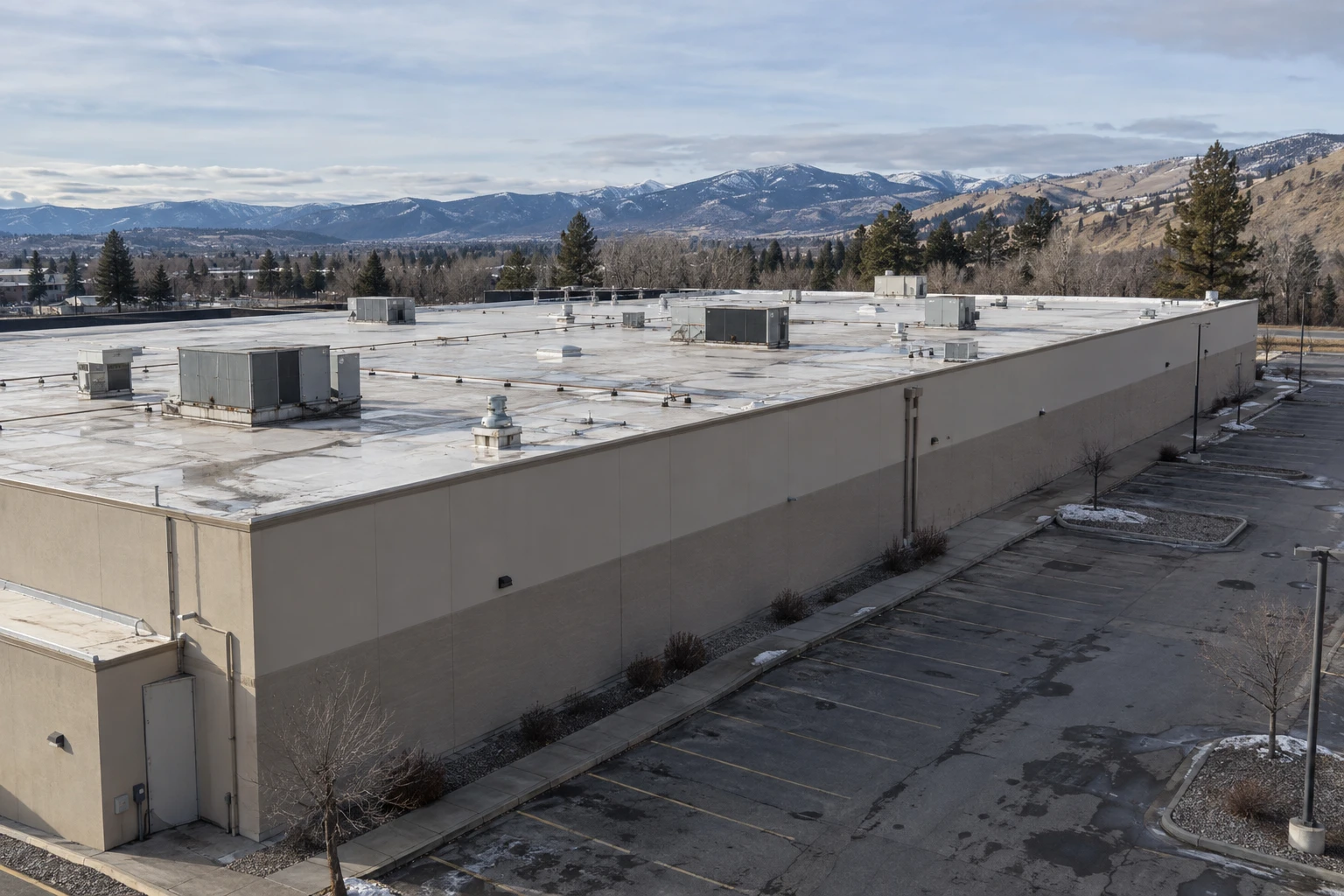
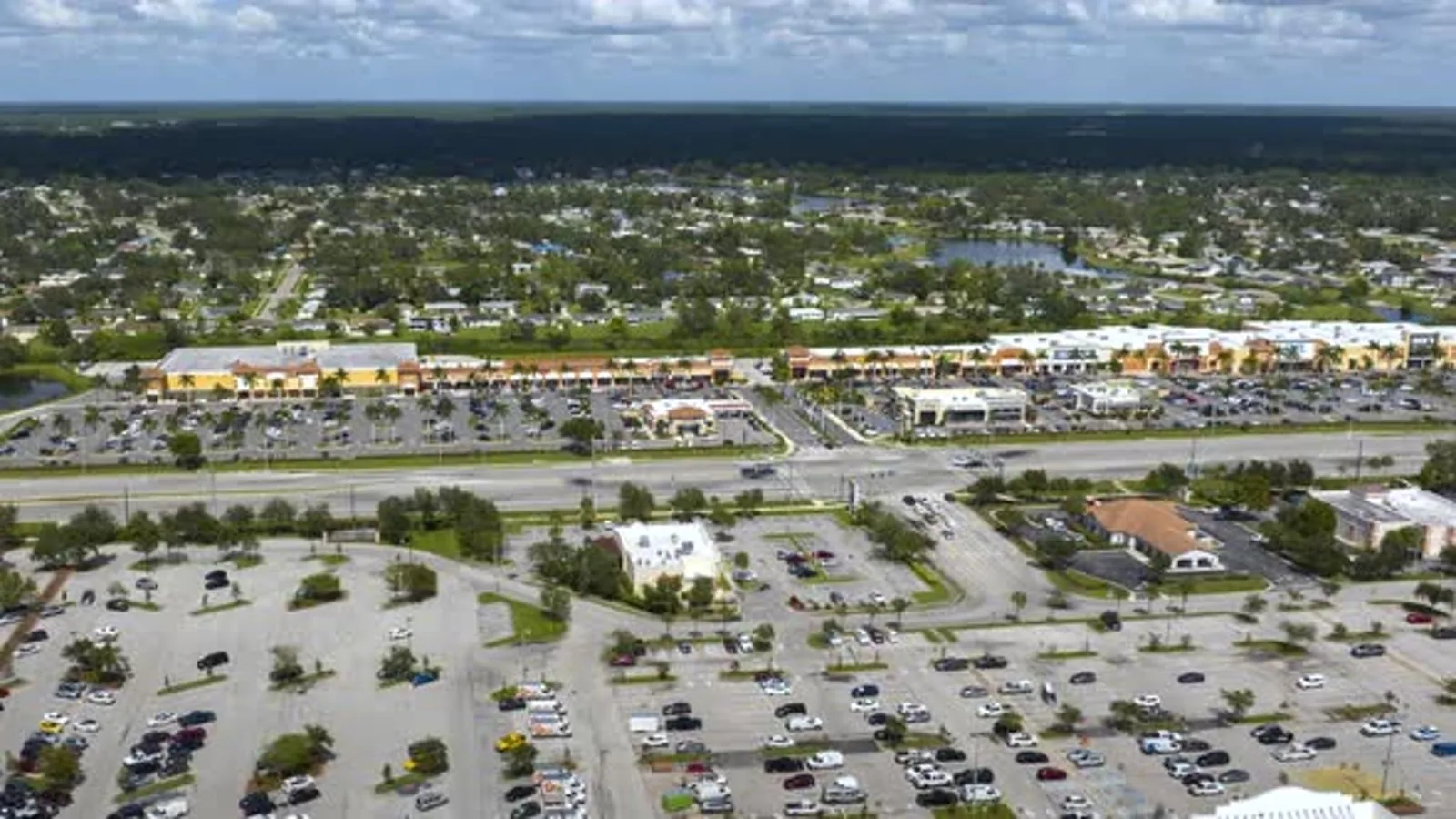
A campus, a retail strip and an industrial site need different registers. The University of Montana campus has 64 buildings on 220 acres, so a register there is organized by building group and by occupancy calendar, with lecture halls and residence halls ranked above storage. North Reserve Street carries Costco, Lowe's and Walmart as lead tenants, and the large roofs of the North Reserve Street corridor are ranked by drain count and by how many tenants share the roof.
Industrial roofs near the Missoula airport and at the redeveloped Bonner mill site add equipment loads and vent penetrations, and the register records each one. A big-box retail roof and a shopping center roof are tracked on the same fields, so an owner with both can compare them directly.
Take the Register to the Budget Meeting
The register is built to be read by someone who has never been on the roof. It lists the roofs in rank order, the recommended action for each, the cost range and the deadline set by the weather window. The first tier is repair now, the second is plan within two years, and the third is watch. A roof capital plan turns those tiers into a multi-year budget.
Every row links to its photographs and its latest roof condition report, so a board member can open any line and see the evidence. When ownership changes, the register moves with the building and the new owner starts from a record instead of a blank page. Rows can be sorted by tier, by building type or by access difficulty, so a board that asks which roof it can afford to leave alone gets an answer that is already ranked and photographed.
Related Roofing Pages

Send the Building List and the Access Rules
Send the list of buildings, the occupancy schedule and any roof access constraints, and we will map the walk order and the register fields before any crew goes on a roof.
Call 555-555-5555 or email [email protected].
Questions About Roof Asset Management
How many roofs make a portfolio worth tracking this way?
Two or more buildings are enough, because ranking only matters when money must be spread. A single large roof can also use the register, with each section ranked separately. We start with the walk and build the table from what we find, so the size of the portfolio does not delay the first useful ranking.
What does the first walk cost in time for the tenants?
A walk takes a few hours per roof and happens on the roof, so interior tenants are rarely disturbed. Roof access arrangements, such as hatch keys and ladder locations, are the main coordination item. We ask for the access rules in advance and note them in the register for later visits.
Which roofs go to the top of the ranking?
Roofs with open drains, lifted seams or ponded water over occupied space rank first, since a thaw cycle will find those defects soon. Roofs with high consequence, such as those over classrooms or hotel rooms, outrank similar roofs over storage. The photographs show the reasons for every rank.
How often is the register updated?
Twice a year at minimum, once before the first freeze and once after the final spring thaw, plus a visit after any hail or high-wind event. Each update adds new dated photographs to the same rows, so the owner can compare this winter with the last.
Can the register be used for a sale or refinancing?
Yes, because it records age, condition, repairs and remaining life in one table. A buyer or lender can read the rows without visiting every roof. For a transaction we pair it with a due diligence roof survey that adds cost ranges for the next ten years.